
The diamond sparkles of starry night
The lunar beauty ever so bright
The sky becomes a gallery of light.
The diamond sparkles of starry night
The lunar beauty ever so bright
The sky becomes a gallery of light.
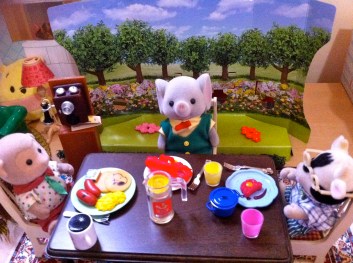 It’s one fine Saturday afternoon, and Hans Bauer and Zeus Magoo are as cheerful and loquacious as sparrows in the morning sky as they are talking away about the weekly panorama of Avonlea,families, and businesses at the delightful brunch hosted by their good business partner John Elephant, who has not only an acute business mind but also intelligence embodied in geniality out of his deep concern for humanity. So as a token of appreciation of individuality, John asked Hans and Zeus in advance of their choices of brunch rather than deciding the menu on his part (or his wife Rachel’s, to be precise). It’s in fact convenient for Rachel to prepare for the guests’ meals and also interesting to detect a trace of character and personality in each of the meals by its ingredients and condiments it accompanies. As tree is known by its fruits, a persona can be interpreted by what he eats to a certain extent because people tend to stick to diets of their choice.

“I must say it has been a fine week weather-wise, ” John says blissfully before having the first bite of his lobster cooked in his favorite vino by Rachel, “It’s spring in earnest, and we are entering Season of Summer as if we are flying on an airplane! Speaking of which, I am going to California next week to consider buying a two-story house there. My experience with treacherous weathers on the East compelled me to look westward. In fact, California reminds me a lot of Cape Town, where I came from. But I am unsure whether or not my whole family will have to relocate there. I am thinking of Rancho Santa Margarita in southern California. That’s where I am going to look around first.
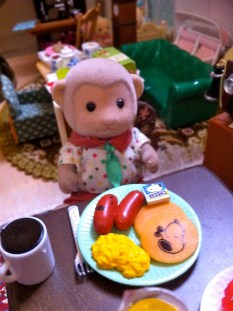 Zeus Magoo, who runs a convenient kiosk on 1291 Suhs Avenue, is surprised by John’s sudden intention of relocation to California because to Zeus moving a place of livinghood with a family, let alone his means of business seems to be too risky a business itself. “Well, it’s a nice idea to get away from the grim East, but I don’t think the nice weather should be the alpha factor to make you decide to uproot your livinghood, John. I mean, you can always vacation there with your family to escape from the blustery winter days, but moving there for good may ensue unforeseeable implications you can’t think of. Of course, you have enough resources to officiate a new residential and business addresses in the Sunshine State, but you need to think about this moving there carefully.”
 “Yes, I agree with Zeus on that.” Hans Bauer, a tram conductor of thirty years, chimes in with his quiet agreement. “John, you are a man of prudence and sagacity, so it is hardly to expect you to act on impulses or whims. Think again, and think good. We don’t want to lose our trusty John to the Wild West. Surely, the eastern climate is not the most cheerful not salubrious to the sunny temperament, such as you possess, but then it’s not too bad to live here. At least, it’s better than Hanover, where I cam from at the age of eighteen.” Hans is then momentarily carried away by the floaty recollections of his early year with a melody of nostalgia.
The Trio’s brun table is filled with delicious food and general bonhomie air mixed with a certain pang of farewell, expectations for fortuitous future, and memories of the good old days that each of them is feeling at the same time. All in all, there is nothing more like having someone to talk to in times of need. That’s why Epicurus once said, “We should look for someone to eat and drink with before looking for something to eat and drink.”

 The Flight Attendant by Chris Bohjalian
My rating: 5 of 5 stars
Maybe it was because of the hauntingly enigmatic cover page with a title that was both realistic and alluring associated with the popular image of the profession: Glamour, Romance, and Adventure in the high skies of the world separating the profession from its terrestrial counterparts. Or maybe it was because I had once wanted to become a flight attendant myself. But above all of these speculations, I had never imagined myself enjoying a contemporary fiction until I found The Flight Attendant by Chris Bohjalian upon reading the excerpt of the book; that it’s actually a thriller about a lone woman on the emotional run for her life tangled in a web of international intrigues and personal intricacies unraveled in the progress of the story, which compels the reader to stay tuned for each next chapter.
The story begins when the protagonist Cassandra (“Cassie”) Bowden, a mid-thritish flight attendant wakes up one morning with a terrible hangover in a hotel in Dubai only to find a dead body of a man, a hedge-fund company man partial to Russian literature whom Cassie met on her flight a day ago and spent a night with, lying next to her. Thenceforth, her reluctant adventure of escaping not only from a suspicion of killing the man she barely knows but also from all that has been troubling her mind as her anxiety is translated into a borderline paranoia. But Cassie is hardly a pathetic figure; she is a great functional alcoholic, prefers a one-night stand with a stranger she meets during her flight or at a bar. She also lies pretty well although most of her lies are absent from malice. And yet, it’s also hard to dislike her or stigmatize her as a loose woman, for in one way or another, the reader may find her related to herself in the deprivations of love and security, of intimacy and support. She’s the perfect embodiment of imperfect heroine not uncommon but exceptional to recognize.
In fact, Bohjalian’s superb narrative skills that show Cassie’s truculent inner crisis without using cerebral terms of psychology lucidly and effectively builds the development of the story all the more flawlessly and sleekly at the same time. Without using flowery words or baroque-styled sentences, Bohjalan’s unlikely heroine of the story seems convincingly realistic and vivid as if the reader were inside of Cassie’s mind. In terms of subject matters of the story, Bohjalian skillfully incorporates social issues of self-destructive alcoholism, white-color crimes, depression, and other types of addiction into the story without inculcating a moral undertone in the narrative. Also, Bohjalian’s choice of flight attendant as the profession of Cassie proves that writing truthfully and entertainingly about everyday life in contemporary setting always works best to attract the reader to the world of literary creation that seem so real. In this respect, Bohjalian follows the footstep of Lucy Maud Montgomery, the creator of Anne ff Green Gables, who once said the idea of a good story results from making use of the real to perfect the ideal which includes encompassing foibles and idiosyncrasies of the human nature because they can enhance literary imaginations viscerally and effectually to the extent possible.
All in all, The Flight Attendant by Chris Bohjalian achieves its purpose of entertaining the reader with pages filled with vivid characters, lucid descriptions of the scenes, and plots that twist even the most logical assumptions of each chapter thanks to Bohjalian’s diligent research of all the components of the story, ranging from the work routine of a flight attendant to FBI investigation procedures, behavior patterns of a functioning alcoholic, and to the world of financial espionages, all packaged fabulously in straightforwardly powerful language he employs. The reader will be engrossed in the story, wanting to know more about the fate of Cassie as if she were an acquaintance. It’s the art of Bohjalian that lured me into this riveting thriller. The Flight Attendant is a classic of our time that has a style without neologism, contemporary with our time with its powerful, fresh, and universal appeal to the reader of this modern time.
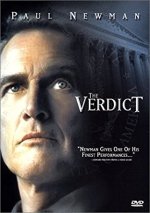
This is not a movie about a courtroom drama displayed by the verbal theatrics that we can easily see in today’s legal dramas. It’s a movie about a man’s redeeming of his honor tainted by his self-destructive resort to alcoholism and disorientation in life pursuant to the destruction of his youthful idealism as a novice lawyer. Once bitten, twice diffident, the lawyer’s god-sent chance to turn over a new leaf in his later chapters of life comes to him when he is asked by a woman to represent her sister, a young woman whose life is forever bedridden in a coma as a result of inadvertent administration of anesthetics by doctors at a Catholic hospital. As the lawyer works on the case for a trial, he regains his confidence, hope, and meaning for his own life.
Paul Newman’s excellent performance as the lawyer struggling with his own life is the gem of the movie, rendering the verisimilitude of the character that evokes the pathos. His trademarks of fierce blue eyes that seem to be the only distinct features of his weary, forlorn face symbolize a suppressed light of intelligence, bludgeoned confidence, and vanquished hope, all of which still struggle to be liberated from self-imprisonment at any moment. The viewer will never fail to notice the feelings and the emotions Newman’s character tries to subdue or express by his brilliant method acting.
“The Verdict” is indeed a thought-provoking movie about the human nature and a light of hope that we all have in our lifetime. Without any courtroom theatrics full of sensational machinations and exchanging of fiery tirades between the lawyers of the opposite parties, this movie proves how a well written script based upon a realistic subject matter that elicits universal empathy in concert with the excellent performances of fine actors could work a wonder.
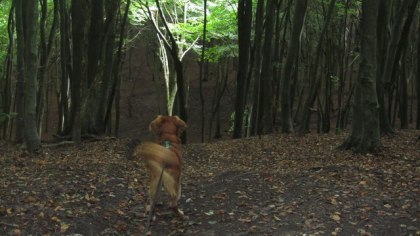
How far shall I tread upon the road to Alpine Path
As rigid as the road to Delphi days and nights
Across a wilderness of delights decayed in weary wrath,
To reach the peaks splendid in secret triumphs?
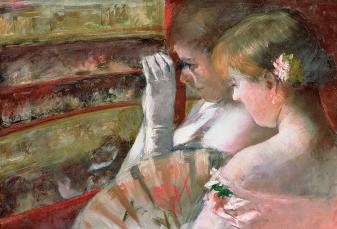
Life is a scriptless stage and a plotless play.
Learn to perform its demands with wits to the end,
Casting a heavy mantle of bleakness away
Or act in a shadow of sorrows at your wits’ end.
Set the stage with Oblivion and Memory:
Invoke Oblivion when times are gloomy,
Cherish Memory when they are flowery.


You must be logged in to post a comment.