Blog

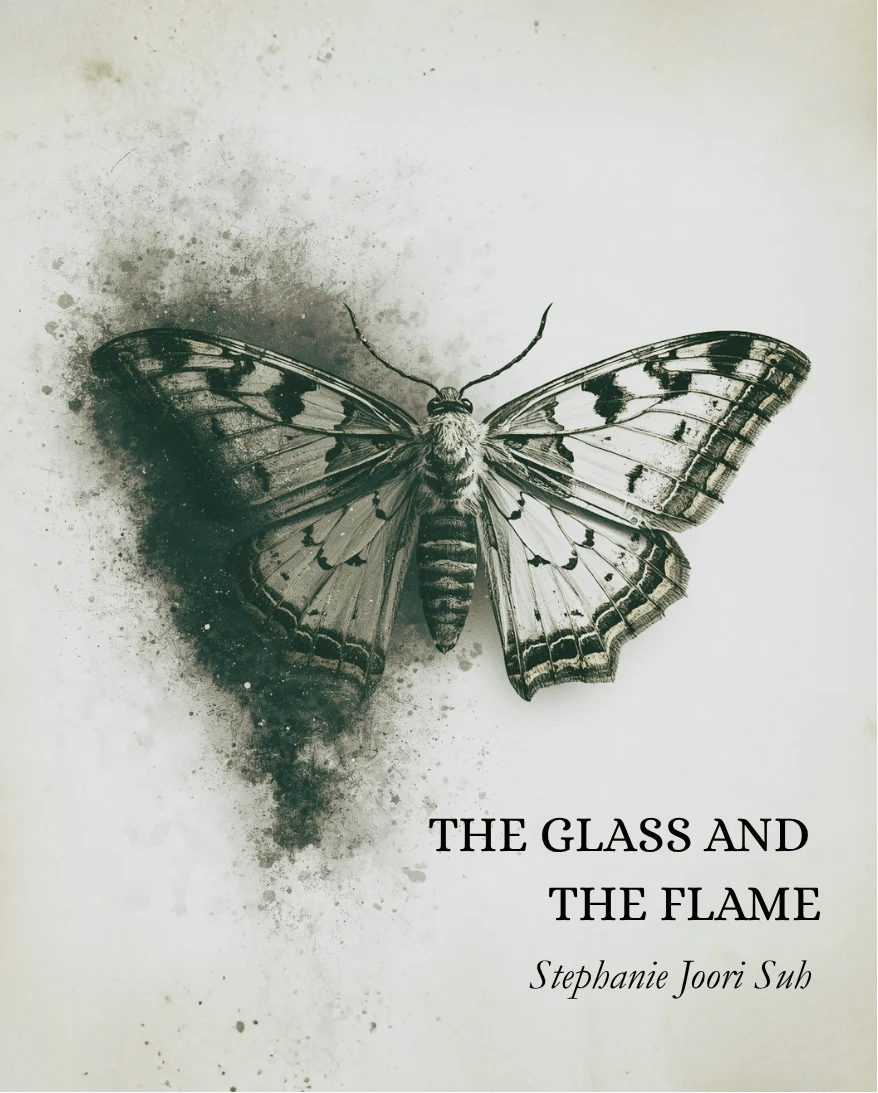
  • So This Is It: The Glass and the Flame

    My First book ever selected and published by an independent press. I knew that one day I would have my own book published. It is not arrogance disguised as confidence. Writing has always been part of who I am.

    The Glass and the Flame is a fugue of the heart, woven from multiple strands of longing and sorrow into a polyphony of eros and psyche. I have learned that you can write the felt without being met.

    The axiom that “you are who you are” is not necessarily true in my writing. Rather, I am what I write.

    In terms of Orwell’s reasons for writing, I write from aesthetic enthusiasm and sheer egoism. Neither political purpose nor historical impulse belongs to my work.

    If you dare, walk with me in the garden where Eros freely roams with Psyche.

    Listen to what I sing.

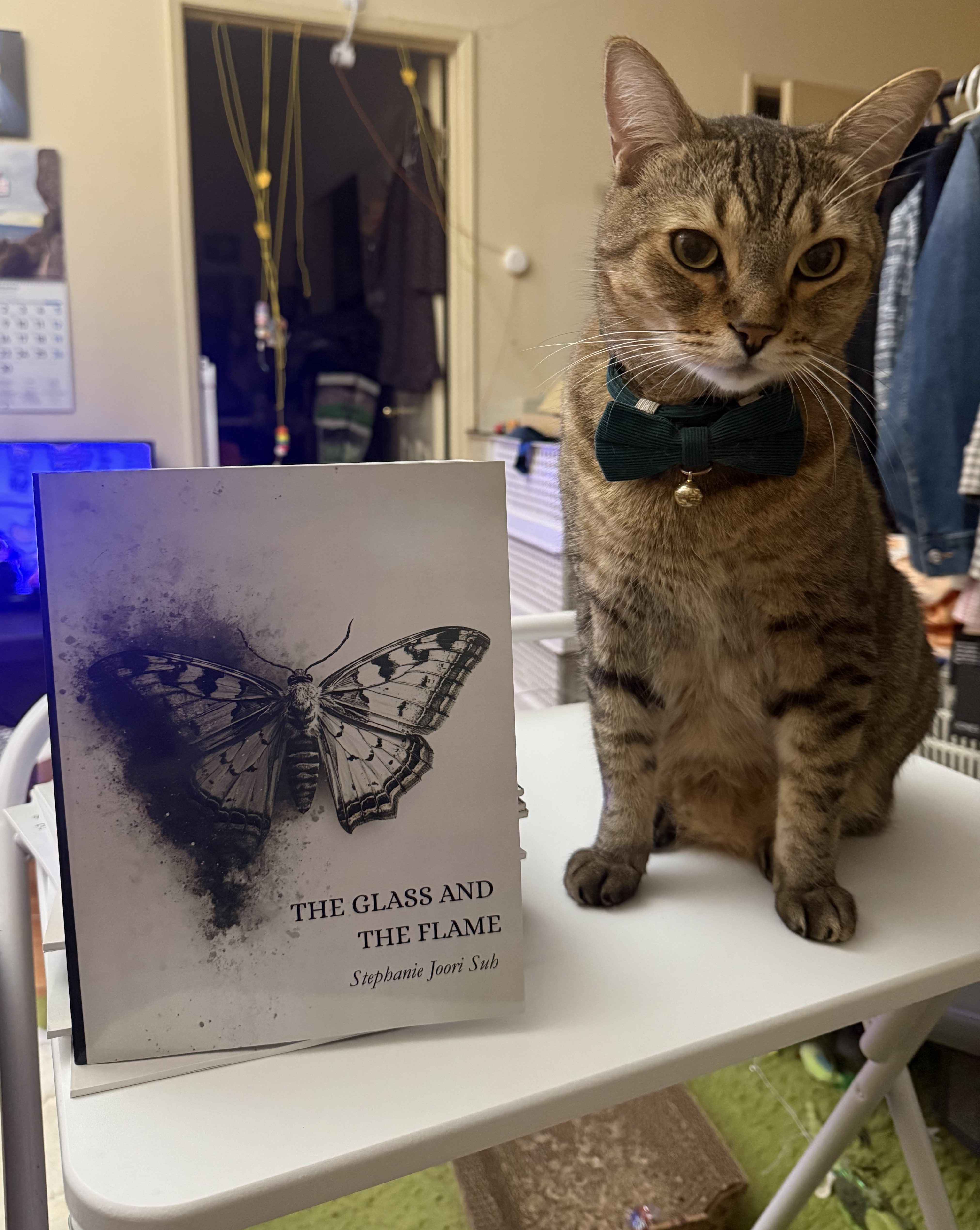
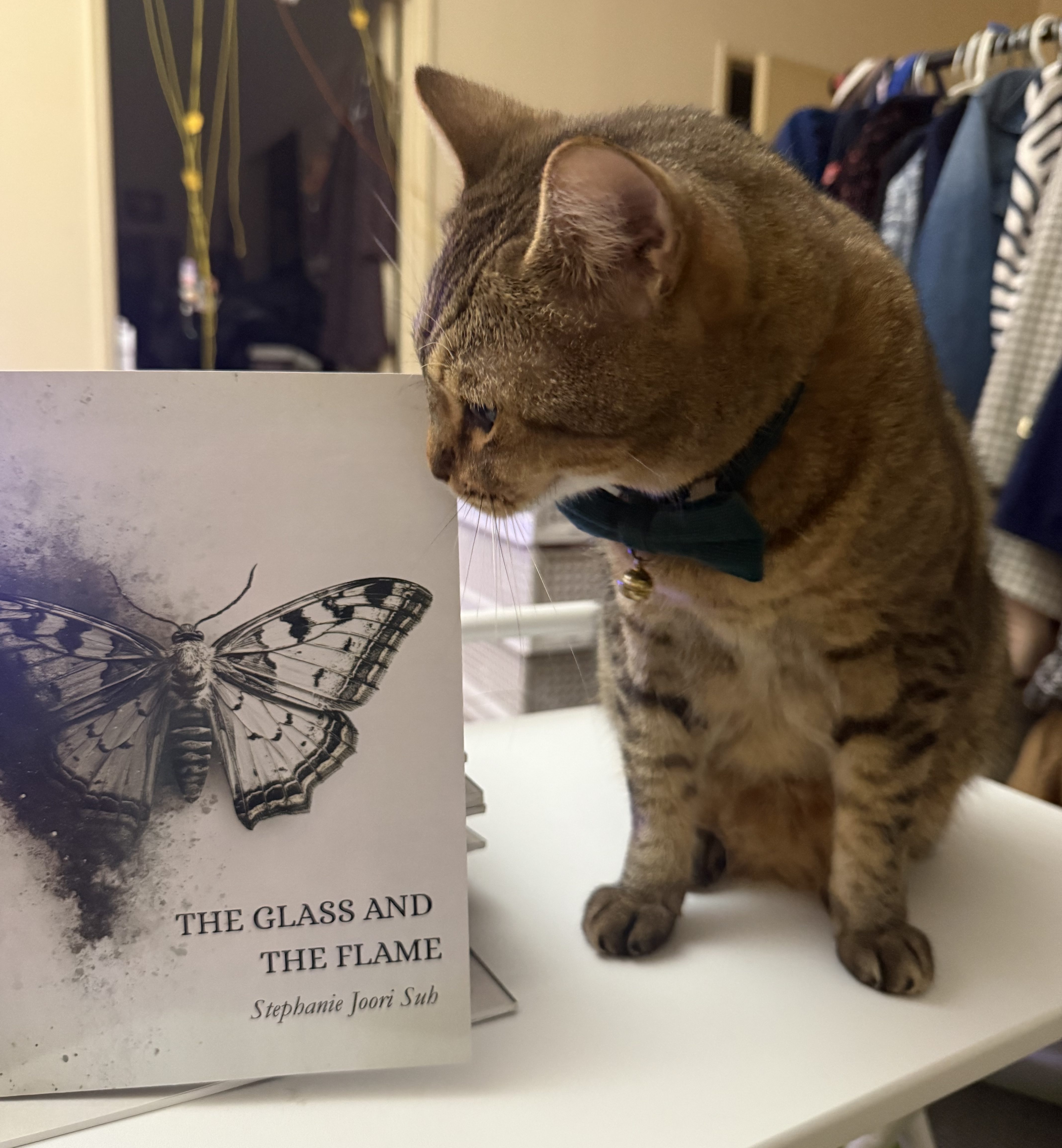
    The Glass and the Flame now lives in the world.
    You can find it here: https://dulcetshop.myshopify.com/products/suh

    Sincerely,

    Stefania

  • On Reading “Student of Desire” — Adelle Waldman

    Saturday, August 22, 2026

    “Can intellectual recognition itself become desire?”

    Will an intellectual man fall in love with a woman of equal or greater intelligence? The question has become so entangled with sexism that it seems to invite textbook answers such as, “Beauty is only skin-deep.” But this is not about feminism or social activism. It is an intimate question: “Can you love me even if I am smart but not so pretty?” Waldman’s disappointmentpromptss her to ask about her existential value as a woman, not merely as a writer or intellectual, because the personal stakes are toohighg to ignore.

    Seeing her ex-boyfriend with a beautiful woman is painful enough to prick the pride of an intellectual woman who is supposed to believe that real love resides not in looks but in the mind. Or so it seems. Waldman extends the existential question into the erotic hedonism of The Professor of Desire, whose protagonist seems to vacillate between a whore and a virgin but never reconciles himself to the truth, always yielding to the pleasures of the senses. While I understand Waldman’s disappointment at seeing a smart man fall for a bimbo, she seems to explain his gorgeous new girlfriend as the result of animal instinct: Eros alone, without marrying Eros to Psyche.

    Call it the male subconscious urge to prove sexual prowess. Or immaturity. To me, a man’s intelligence or cultural refinement does not necessarily equate to his moral fitness. Think of the ancient Greek symposium and its beautiful and intelligent courtesans. Men, I think, are often more readily stimulated by the visual than women are. I remember reading that Updike had a voracious sexual appetite and engaged in sexual excesses. And that’s not the end. Arthur Miller’s marriage to Marilyn Monroe—even though she was herself intelligent, read books, and took literature classes at night—and his novella Plain Girl: A Life tell us that intellect does not necessarily determine physical attraction. After all, the plain girl finds her soulmate in a blind musician who loves her not with his eyes but with his mind.

    I know how Waldman felt when she saw him with such a beautiful woman. I think Waldman wants to believe that she is right: that a woman’s intellect can stand equal to beauty—par pari. I think Shakespeare is great because he recognized this human nature in everyone, including the rivalries of love:

    “Love looks not with the eyes, but with the mind;
    And therefore is winged Cupid painted blind.”

    But remember: Cupid is blindfolded. He does not know whom his arrow will strike.

  • On Reading “The Thorn in the Flesh”

    Reading Day — Thursday, August 20, 2026
    On D. H. Lawrence’s “The Thorn in the Flesh”

    Lawrence must have hated the military. Well, more exactly, the rigid discipline used to tame the naturally untamed. It is against nature, against free will: the controlled mindset that conditions you to believe that if you fail, you are a loser to be put in the pillory. Not a man. Not man enough.

    Is that really so? Lawrence asks. No. A man is a man when he witnesses his desire being reciprocated in the body of his lover. Virility is true manhood because it requires no weapon of killing.

    The young German soldier in this story recovered his lost confidence through sensual passion, which collapsed the wall between institutional dehumanization and being fully alive. Naked with his lover, the soldier felt no shame in wanting and loving her. The erection of sexual passion restored physical vulnerability.

    We know Lawrence for his controversial Lady Chatterley’s Lover. So, it may be convenient to call him a sensationalist whose agenda was to challenge religious doctrine and restrictive social norms. Instead, he was a writer who stood at the heart of humanity and showed us the beauty of being human in the expression of passion, in wanting and being wanted.

    The Thorn in the Flesh is Lawrence’s version of Dostoevsky’s “Only beauty can save the world.”

    — Stephanie Joori Suh

  • The Scent of Dusk

    I still have a bottle of Old Spice  
    and a bottle of Johnson & Johnson baby lotion;  
    I don’t know why.  
    
    I have left them on my vanity table  
    among my bouquet of perfumes.  
    
    To withhold the last vestige of you from time  
    is like keeping a child you have left.  
    
    Do you still use them  
    on the skin of your dusk?  
    
    The mixed scent of man and boy  
    is the imprint of your paradox:  
    shyness and boldness,  
    beauty and violence.  
    
    It’s domestic intimacy against time,  
    against its force of forgetfulness.  
    
    When I breathe in the scents together,  
    I see my long fingers tracing your cheeks.  
    
    Languor intoxicates the grammar of absence  
    I have learned  
    since you left the vertigo of you here.  
    
    I hope you have forgotten them  
    so that I can keep them here  
    in my bouquet of scents—  
    yours and mine.  
    
    I keep the alphabet of your name  
    written on the palimpsest  
    of the summer night.

    — Stephanie Joori Suh

  • At the Harbour, Before I Know the Story

    Reading Day — Thursday, August 13th, 2026

    On Elizabeth Taylor’s A View of the Harbour

    My first time in the harbour: at the dock, standing in the sea breeze. English air. An unfamiliar coast, oddly familiar. But this is not a book about the cozy English sea town in a postcard.

    I have read only the first few pages of the book, and it has already given me its weather and atmosphere. I feel the harbour holding the secrets of the townspeople. I feel the sea carrying the flotsam and jetsam of life quietly and bringing them into the harbour—an always moving inside a never-arrival.

    The characters I have met so far are ordinary in the sense that none of them has that fierce individualism, existential malady, or anything that instantly piques the senses. But people may find pornography in Jane Eyre: the tension, the ache, the desire. They are not spoken but felt. People keep them in the mind, as if giving a voice to the forbidden would desecrate Jane Eyre.

    I think that is what the book wants us to see: what may seem ordinary on the surface, like a calm sea, hides a storm spiraling into a pillar of fury, discordance, and disorientation. I have not yet come to know the characters, except for Prudence, whose two Siamese cats love pushing their small heads against her legs. It is the cats that draw my attention to her, but she seems to have a story to tell as a beautiful young girl who does not act like a beautiful teenage girl.

    Prudence is Prudence: Quaker in name, puritanical in action. But she may turn out to be someone different from what I have seen as I progress through the pages, although I want her to remain as I see her now. I want her to be beautiful without being popular.

    That is life, isn’t it? Change is human, an uninvited grace. You want someone you like to remain the way you know them. That is what I want to know after I complete reading the book.

    The sea will remain the same. The harbour may not.

    — Stephanie Joori Suh

  • Queen’s cats

    Share a photo of your pet and tell us one thing that makes them uniquely them.

    Camile (L) and Toro (R) on their look out from Queen’s Castle

    My cats think they are human. They like Häagen-Dazs ice cream and want to lounge in the living room with me, let alone jump on my bed when I say good night each night. Did I also mention that they’re bilingual?

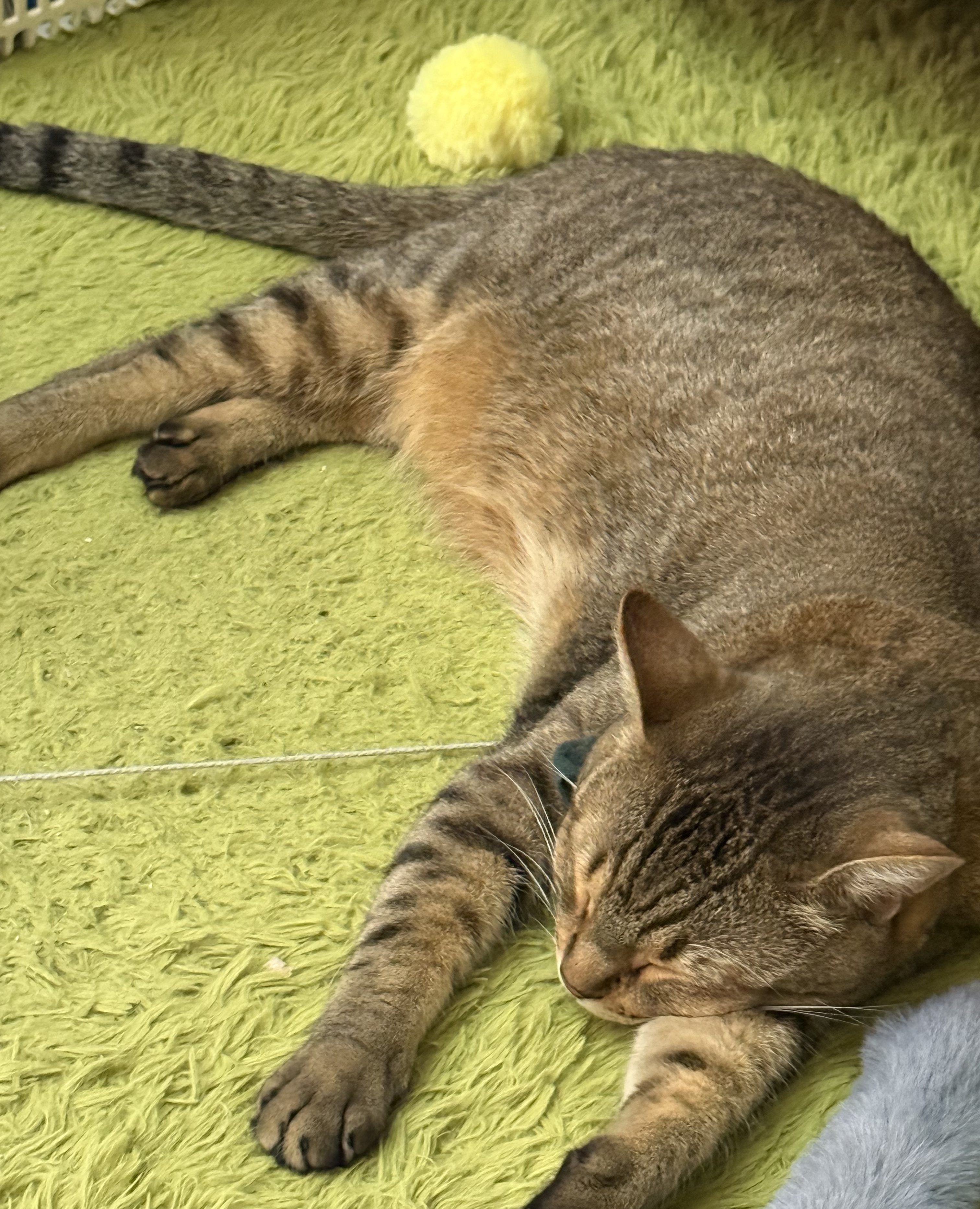
    Toro in Toga channeling into an ancient Roman aristocrat

    Toro, the 6-year-old tabby, is a little tiger who wants to help me when I work from home, always insisting on typing emails and notes on my work laptop, which need my spellcheck. He takes breaks and lunch with me, so I am never alone at home. And Toro’s being human doesn’t stop there. He knows when my brother calls because he always sits next to me, his little furry body resting on my side.

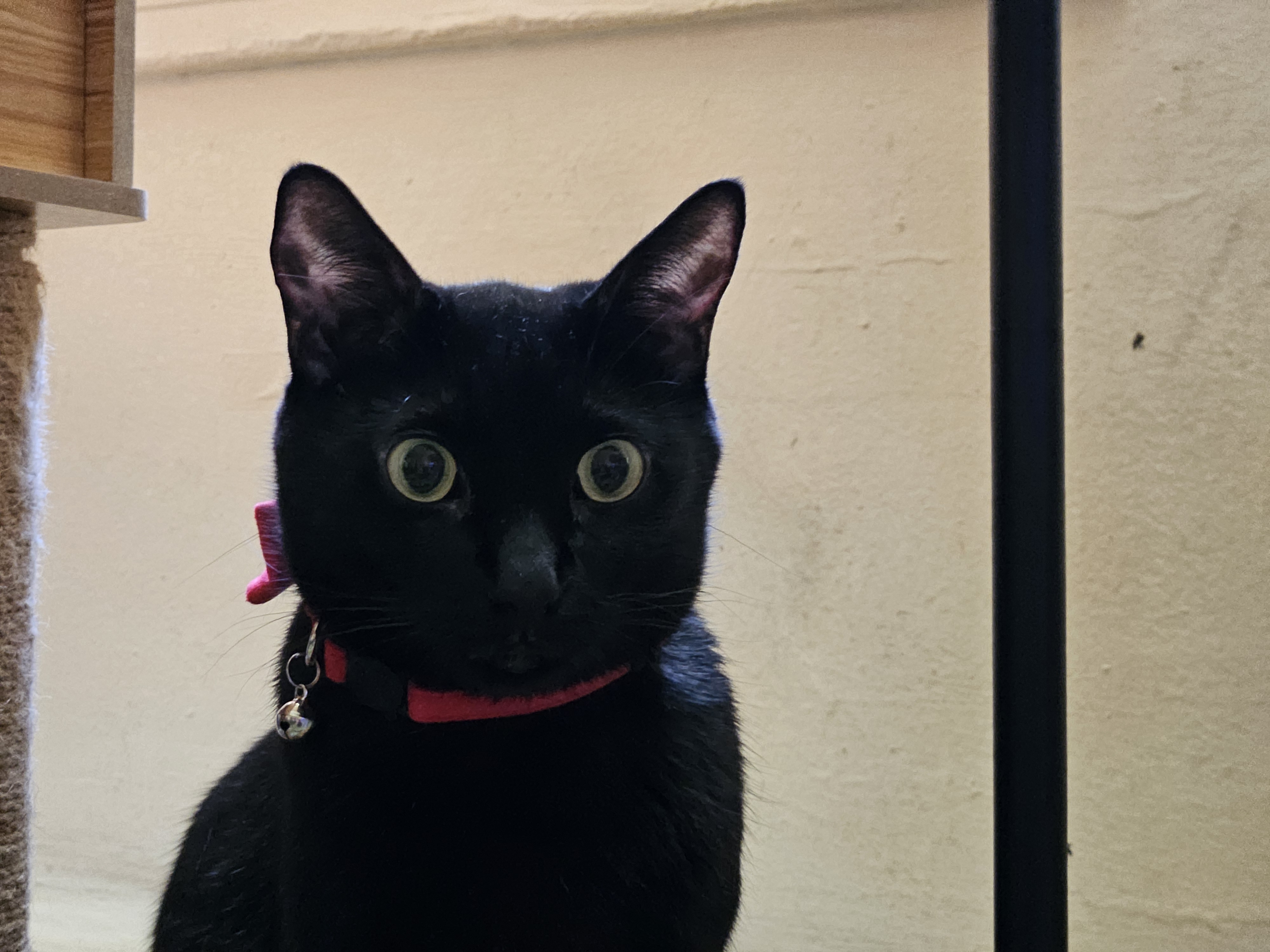
    Camille’s magic eyes

    Camille, the 4-year-old black cat, is a little black panther who looks just like Gigi from Kiki’s Delivery Service. Although Camille speaks no Korean, he understands when I tell him my secret wishes and how grateful I am that he lives with me because I am lucky to live with such an adorable black cat.

    Toro as my assistant

    Whoever says cats are naturally independent and feral has not seen Toro and Camille. They are very affectionate and loving. I see their spirits in amber and emerald eyes. I feel their little hearts on my chest and at my feet.

    And they slowly blink their big eyes and bunt their little heads when I say, “I love you so much in every universe.”