Author: Stephanie Suh

  • Prompt 3

    How has a failure, or apparent failure, set you up for later success?

    Truthfully, in every mistake I am making and have been making and will make, I am yet to learn. Perhaps, such a cycle of faux-pas will continue until I meet a psychopomp on my final day on earth. Yet, I move on and march forward to whatever my destiny is. I will most likely be making the same mistakes over and over, falling again and again. Yet the resilient spirit is indomitable, and even fate cannot destroy it unless I voluntarily abandon it to the force of darkness. And I think it is this spirit of resistance against a series of failures that strengthens my will to stand on my feet even after the losses, which makes all my attempts all the more sublime in triumph over despair like Santiago uttering, “Man can be destroyed, but cannot be conquered,” in Hemingway’s Old Man and the Sea.

  • Prompt 2

    You’re writing your autobiography. What’s your opening sentence?

    In the beginning, there was chaos out of silence between the earth and the sky. The Three Sisters of destiny were in a pickle because they ran short of the thread. So they were in haste without their lapidary meticulousness by allotting such hastily weaved fate to the new little star that traveled all the milky way from the celestial palace to be transformed into a girl at a cold snowy January night with the fire from the starlight still kept within her, glowing in her heart’s chamber.

  • Prompt 1

    What are three objects you couldn’t live without?

    Okay, this will be my first prompt blogging recommended by WordPress after I changed to Jetpack. I am glad that something inspiring will help me spark my spirit to write. Hence here it goes.

    1. My iPhone: Let’s be honest. Who wouldn’t these days? Forget a Galaxy phone, which I hate simply because it’s not user-friendly, as I have been an iPhone user since its genesis. All my information is in my palm: from the bank account to books on hold in an online public library to my shopping cart on Pandora.

    2. My Kindle (3rd generation): I am an ardent Kindle reader. Physical books may have that quaint charm that makes readers look intellectually distinguished from the mass. Still, Kindle is much more convenient to read in the dark, especially in bed, on the subway, on the bus, and almost everywhere. With my weakened eyesight, Kindle has been kinder than an actual book. Besides, I can always move from one reading to another, depending on my mood.

    3. My traveler’s notebook: I like writing short entries in my journal as well as jotting down my mind notes and reading points, so it is my writing companion I carry about. Of all the traveler’s notebooks, my favorite is Midori Traveler’s Notebook because of its smooth suede-like cover and slim size fit in my hand.

    So this is my first prompt. That’s it all, folks!

  • In spite of everything

    Today, whatever the Fates weave

    Shall still be worn with beauty by me;

    Today then don’t let you be told,

    How many chapters of life are turned;

    That you are old, and so I am indeed;

    Nor think dreams are waned with tears,

    And talk of the youth wasted with sighs.

    Tomorrow will be always tomorrow

    And nothing will change even sorrow. 

    But reason brings truth of the truth

    An everlasting and brilliant truth,

    Which can, in spite of all smirks,

    Open your eyes and and my ears

    To the evening star twinkling bright 

    With sweet soft winds fluting in twilight, 

    Made of fire, spirit, and dew like you and me.

  • I still want to see the world

    I still want to see the world
    even if it has hurt my heart
    even it’s full of the imperfect;
    The Sky, the Sea under the Sun
    The Moon, the Stars at Night
    Blue, Green, sparkling, iridescent-
    I still want to see the beauty
    if given one more chance to see it
    and not to lose it with a promise
    to keep the beauty in my eyes,
    even if the world still hurts me
    even if it will always be imperfect.

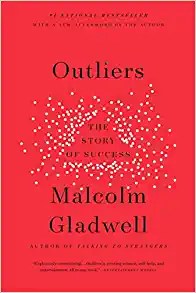
  • ‘Outliers’ by Malcolm Gladwell

    The personification of success equals the characterization of the person in our society that has established an unwritten pervasive eugenic rubric of material success in representing where you live. The stories of Rags to Riches are mainly to blame because they are modern-day mythology of heroes and heroines or fairytales to imbue the populace with slim hopes that can also be dangerous, like mass-marketplace placebo anti-depressants. From Hercules to Cinderella, those whose success from their humble origins we love is not self-made as they claim to be in their memoir or interviews but are made of chance and circumstances. This book reveals how these outliers are not outliers but are insiders of the leagues of winners in sociological terms and facts.

    The book opens with a remarkable bible passage from the Gospel according to Matthew, dubbed as the “Matthew Effect” thus: “For unto every one that hath shall be given, and he shall have abundance: but from him, that hath not shall be taken away even that which he hath.” It means that success results from accumulated advantage and vice versa. The accumulated advantage is a combination of one’s ability and ambition interacting with the particular circumstances surrounding their rise over difficulties or challenges. Indeed, people who make lots of money must have burnt their midnight lamps to arrive where they are, but they also have people who help them and time to achieve their goals without worrying about other cares of the world. Hence, I don’t like JF Kennedy’s proclamation, “Ask not what your country can do for you – ask what you can do for your country. You can criticize people on welfare as losers lacking motivation and diligence when they need personal structural guidance and constructive public assistance to help them stand on their feet. You can’t just leave those behind the race as being slow or inadequate for the race.

    In ancient Greek mythology, the human race was born of mud by Prometheus and imbued with intelligence by Pallas Athena. Prometheus then gave sacred fire stolen from Olympus to make a better life. In the Old Testament, God blessed Abraham with wealth, who also helped his chosen few from those who instigated his wrath. Although modern-day outliers are not prophets or demigods, they certainly have their lucky stars. As Shakespeare agreed, “it’s the stars that govern our conditions.” Even if you disagree, you should not judge people who make less money than you, or no employment, or live in humble housing, thinking their situations result from their faults.