Category: Film Review

  • Old People (2022) – Film Essay

    Old People shows the issue of the generation gaps between the young and the old, not in the adolescent revolt against the adult institution, but in the societal and cultural context regarding the weakening familial bond between wife and husband, child and parent, and grandchildren and grandparent.
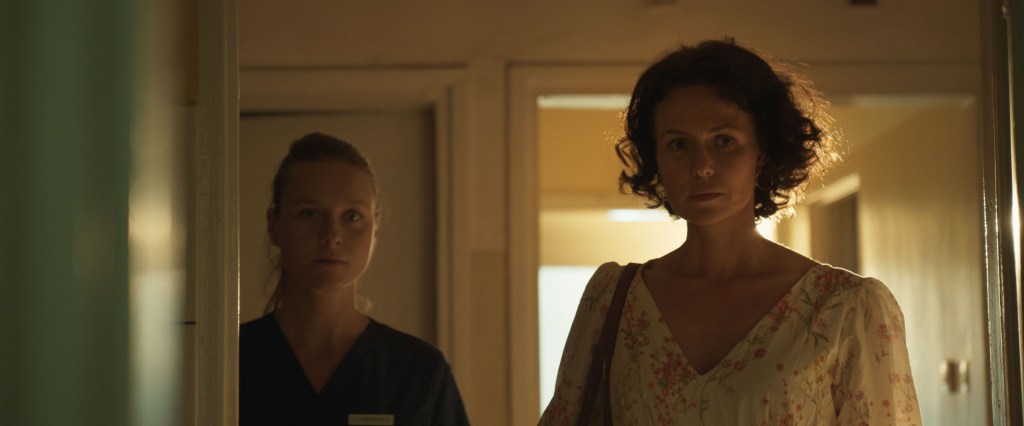
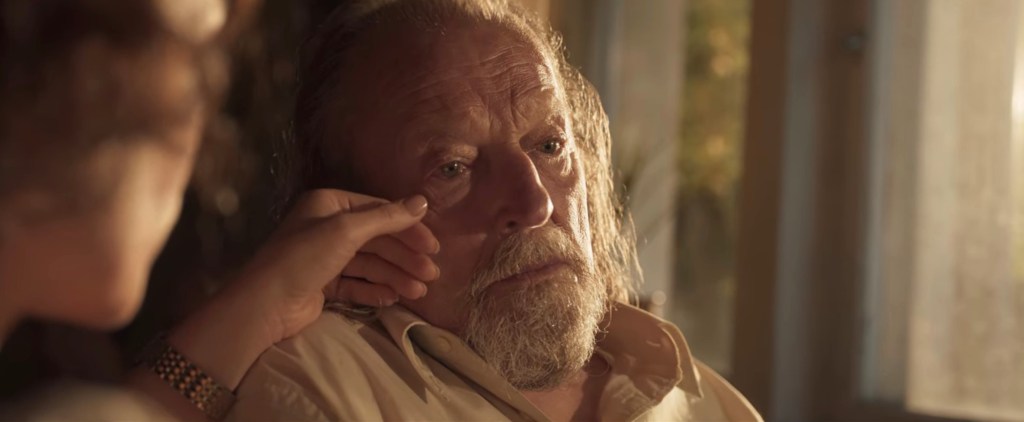
    Melika is a successful lawyer from a city heading with her children to her sister’s wedding at their childhood home in a village. Upon arrival, Melika finds her once beloved father, who loved her and her children so much, is sent to a nearby nursing home whose environment is no better than a mad asylum in atmosphere and appearance. Seeing her father spiritless and aimless alone in a dark room gives her a pang of leaving him behind for her ambitious future as a city lawyer, but she tries to suppress it by bringing him home just for the wedding day. But that is her self-induced wish to relieve herself of guilt, for her father is so broken with a shattered heart that his daughters deserted him, driven away from their home, their happy life that he still longs for. Such sadness is collected among all the old people in the nursing home, abandoned in dreadful isolation from the community that has put them into such an institutional grave and buried alive. The rest is a prelude to a symphony of carnage burning in the fury of the undead and neglected.

    Although this movie is presented as a horror movie, it really isn’t in terms of its thematic and contextual subject. It is a horror that we as a society have become Logan’s World, where ageism and lookism prevail over humanity and discriminate against those who do not fit in their touchstone of the ideal. And what is old, and how old is old? Are we not all advancing in age? Youth is wasted on the young, as Oscar Wilde cleverly concluded. Being old should not be a curse but a celebration of experience in life and, therefore, must be embraced with respect and dignity. Just because we become old doesn’t mean our feelings are dead, as the grandfather tells his beloved grandson: “Oh, yes! I love you so terribly much!”
  • All is Lost (2013) – Film essay

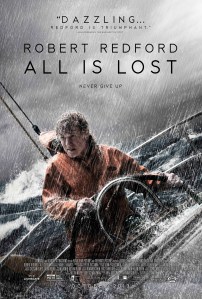
    Some movies should be noted, some memorized, but only a few should be applauded and taken by heart amid the luxurious streams of movies flowing from the screens. These movies chime the bell of your mind, enshrined in your dome of thought, and stay in your heart forever like beautiful memories that have become part of you, an inspirational lamp to give your life cheer and humor in times of need. In that light, All is Lost (2013), directed by J.C. Chandor, is such a movie that sheds light on your life when things are not going well for you, or you are lost in the middle of your voyage of life.

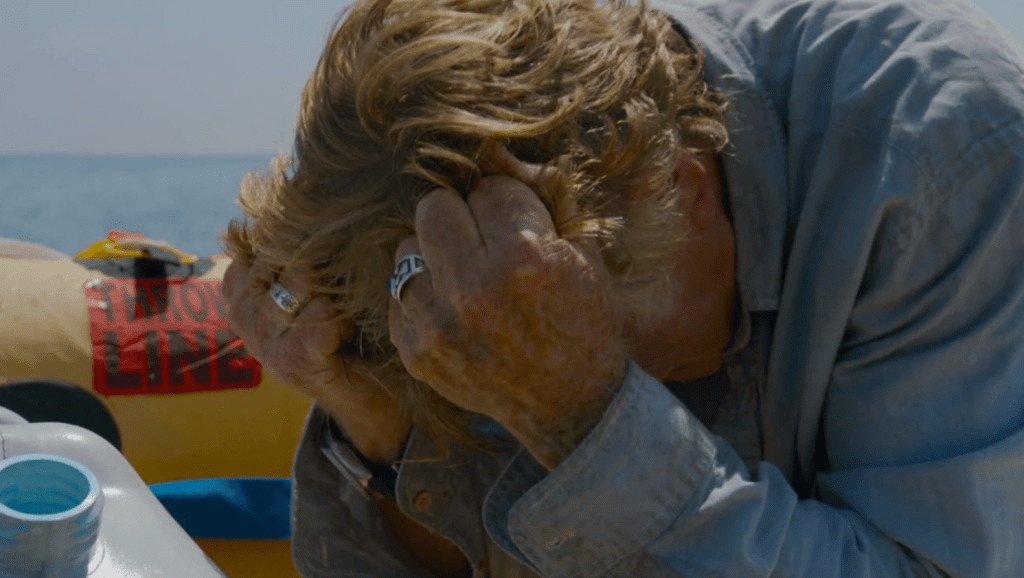
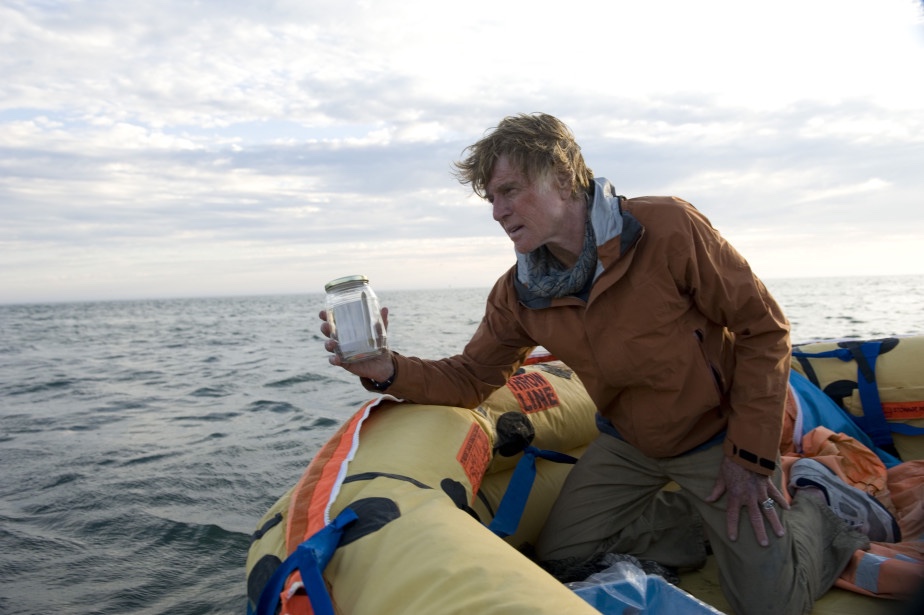
    The movie opens when a man (played by Robert Redford) wakes up, finding water in his quarter from a hall made by a collision with a stray container in the middle of the ocean. We don’t know the man’s name or where he comes from, except that he is somewhere in the Indian Ocean. We know that the man has the ambiance of a seasoned mariner whose demeanor is stoically calm and composed, rendering such an emergency look small and manageable. But it is the prelude to Nature’s test of Man’s Spirit, the beginning of his trial of hope when the damage to the yacht deteriorated due to storms to such a degree that he must abandon the yacht and sail on a lifeboat with a modicum of food and a navigational compass. But his will to survive and hope for rescue seems to be bludgeoned by the play of luck. He lights up rods to signal his location for rescue, but ships leave him alone on a vast ocean.

    Moreover, sharks steal his fish and cherish his flesh, swarming under his half-deflated lifeboat. These images immediately conjure up those of Santiago, a seasoned fisherman, and the formidable great shark from The Old Man and the Sea by Ernest Hemingway. Or the bright-eyed mariner from The Rime of the Ancient Mariner by Samuel Taylor Coleridge. Their silence speaks volumes of the voice of their strong spirits that can be destroyed but never conquered. Their aspirations, ambitions, and arduousness may be bent, but their souls are always ready to be rekindled by a passion for triumph over the darkness and fear, aided by a ray of hope.

    All is lost is an illustrious image of life in which we are alone in each yacht, sailing on the uncharted seas until the tailwinds carry us to the East of the Sun, West of the Moon. Illustrious it may sound, but the movie is never flamboyant, and Robert Redford plays the role of the mariner as if he were playing himself in dignified silence, wonderfully emoted by his face and action alone without overtly elaborating gestures or soliloquy. It is a realist’s story and as real as our daily sailing in life’s voyage. He has lost all his possessions but not himself or his life. And even if hope seems to dissipate into the fathomless abyss, there’s still a chance of hope, and we’ve got to give ourselves a chance to hope because while we breathe, we hope. Dum spiro, spera.

  • Zom 100: Bucket List of the Dead (Netflix- Manga and Live-Action film) – 1-minute Film review

    Zombie flicks are in vogue. From Netflix to Hulu and others, they are roaming across the boundaries of the digital world, hungry for popularity and craving high ratings. But none of them is ingeniously fresh, and all are infallibly doomed. If you hold on to it, apocalypse doesn’t necessarily kill off a human spirit. A dystopian world may overwhelm your sensory perception, but it won’t kill you if you don’t dwell on it with humor, a handmaid to strength and hope. That is what this film is about.

    The story develops around Akira Tendo, a young office worker fresh out of college, who soon becomes disenchanted with his innocent vision of the work he does because of the unreasonably demanding high workload and gaslighting of his boss. So, when he wakes up the next day and finds himself living among zombies because of an unexpected bio-weaponry disaster, Tendo becomes ecstatic, lest he should go to work any longer. The optimism galvanizes him to pen a bucket list of 100 things to do before he succumbs to the pandemic. What a jolt to live!

    The film stands out from all other dystopian worlds of zombies with humor, hope, and hooray. It weaves a unique perspective to a heartfelt story about a man finding meaning to live amid hopeless situations and ways to huddle through life’s challenging moments, which we can all relate to daily. Nietzsche was right. “He who has a why to live for can bear almost any how.”

  • About Backrooms

    It’s gone viral. Sensational it’s been. The latest scare, the newest horror, comes in Backrooms, a YouTube phenomenon that has swept the world’s compass in muffled terror. I have seen it through an algorithm, and I think I have entered the door into the backrooms – willingly by the winks of intrigued moments. Is this the way people get lost in the maze of horror? Even if they are fictional, or so they like to think, nothing is purely fictional without some foundation in reality. Be it ever imaginary, a mental void, emotional distress, continual depression, or perpetual heartaches will be of their backrooms with seemingly no way out. And I think this feeling of utter hopelessness is where Christianity fills or saves the wretchedness of a soul with a promise of hope, the existence of a reason to go on in a seemingly purposeless life.

    Watching a few of the Backrooms series makes me realize that this is how the present-day MZ generation sees a concept of a labyrinth where King Minos of Crete at Knossos kept his illegitimate half-man, half-bull son Minotaur and feeds him on Athenian youths until the Athenian hero Theseus with the help of Adrianne’s thread ball came to the rescue and killed the monster. Is it considered too cheesy for today’s youths to think of Adrianne’s thread ball? Backrooms are all devoid of Christian hope and Greek wit because new generation kids are too smart to believe the existence of such saving grace because there is none of such nonsense, and because they are simply the best of all generations wallowing in the advanced civilization only countable steps below the most advanced extraterrestrial beings in the universe.

    Notwithstanding the ingenious idea of creating such terrifying liminal places within a minimal budget, the whole series will shine in its brilliance as a genre of online game series rather than a film in the fashion of a fake documentary as a new Blaire Witch Project. As civilization gets more technologically advanced, the people become more highly primitive, returning to the laws of an eye for an eye, a tooth for a tooth with no signs of light-heartedness as if it were synonymous with simple-mindedness or backwardness. And I don’t know why Verdi’s “The Chorus of Hebrews” keeps playing in my mind these days.

  • “A Man Called Otto” (2023 Film)

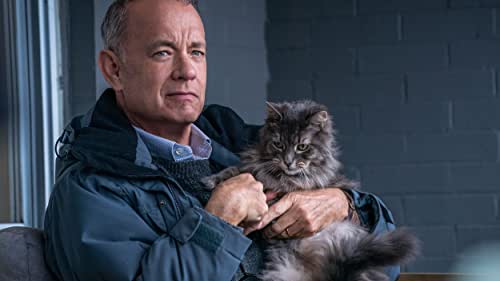
    If you run into Otto on the street or in a store, your eyes will see him as a grumpy old man who would cavil at one cent for everything. But if we look at him with the mind, he is quite a character for sure, and you will fail to dislike him once you know him and his secret. He is very good at fixing machines, from dishwashers to radiators, bicycles, and cars. He is also a fine babysitter and a great driving instructor. But as God is arguably fair in evenly distributing talents in us, Otto has a hard time mastering one thing: the art of killing himself. And boy, shouldn’t he thank God for such failed experience?

    Otto is a lonely man in his sixties who lost his love of life and dear wife, Sonya, to cancer. Sadness comes not in a single spy but in the battalion, for he has just been forced to retire from his long-term job due to the juggernaut of changing generations at his workplace, as with other places. He has no children but himself, and as Sonya was the beacon of Light in his already reticent and shy life, he sees no light, joy, or meaning in life. The world suddenly turned grim and dreary. Otto is wrapped in his sorrow and besieged in loneliness under the roof of distress. We are privileged to look into the psychology of the destitute in the darkest night of the soul distressed in utter loneliness, which can be broken with a light of kindness and humor as shown by Otto’s new lively and lovely neighbors Marisol and her family. 

    Humor is a handmaid of Hope, which Otto needs on the dark night of his soul. So, as the name suggests, Marisol and her pleasantly vivacious family bring the beauty of Sea and Sun to Otto’s Dungeon of Despondency with lots of laughs followed by tears and more laughs that will make anyone harnessed with a yore of life lightened. And since Otto is secretly a big-hearted person – literally and clinically – he slowly but surely warms to the warmth of friendship and love and shows his true colors as radiantly gorgeous as afternoon sunshine showering the brilliantly golden orange trees in summer. Oh, and there is a homeless cat that seems to be Sonya’s familiar in cat skin sent by her from heaven to be his company.

    Otto is one lucky person to be surrounded by a loving community of neighbors, who becomes an alternate form of a family with emotional support and care, often overlooked and ignored by overtly advocated individualism with no face of humanity. Indeed, that doesn’t mean returning to agrarian society or something to the effect of the notoriously puritanical Salem, where everyone cast a jaundiced and suspicious eye on the targeted loner in the community, with trademark gossiping and ostracizing. Showing care shouldn’t be complicated because one can just say hi by trying to understand why the person behaves the way they are. I believe that is how we can prevent suicides by detecting sadness from the person instead of devolving the person to a therapist or counselor or ignoring them as if they were invisible or a burden to care. Just like Marisol and his family have shown, Light defeats Darkness. And everyone deserves Laughter.

  • Dark Water (2005) – film review

    Here’s a young mother with a five-year-old daughter freshly divorced from her husband who thinks she’s delusional, paranoid even, and wants to keep sole custody of their daughter. The daughter is everything she has reason to live, a life that has been so hard to endure with an indelible traumatic childhood. Yet, because she sees herself in her daughter needing constant unconditional love, which she was not allowed to have, she will do anything to protect her from the harsh reality of life, even from the supernatural peril of the beyond reality.

    So the story of Dark Water (2005) narrates Dahlia, a young divorcee trying to take full custody of her daughter Ceci away from her assiduously hostile husband. Instead, he embarks on a legal battle to claim sole possession of Ceci because of Dahlia’s unstable mental state. Dahlia, a once copy editor from Seattle, takes a low-paying administrative position at a Manhattan Radiology office for livelihood in a delipidated apartment in Roosevelt Island with Ceci. The semblance of the apartment is the working-class version of Rosemary’s apartment. Dark water is leaking everywhere: from the elevator to their bedroom ceiling, and the laundry room, which is a prelude to the finding of a tank on the rooftop where the traumatic ends of a certain young Russian girl abandoned, unloved finds her and her memories. Or is it Dahlia’s phantasmal delusion of confronting her own child self in her painkiller-induced pill to alleviate the cruel migraine caused by the yoke of woes?

    Dark Water is an American adaptation of the original Japanese film Dark Water (2002) by Koji Suzuki, the famous writer of the Ring trilogy, excellently translated to an American audience who will find broad universal themes of human nature, psychology, and behavior. You don’t have to have perfect childhood fed on parental love to be a loving parent. Of course, unhappy childhood will affect the development of one’s character and behavior pattern more or less, but it all boils down to one’s nature to be loved and be loving. Dahlia wants to counteract the demon of the past, which still grabs her with its tenacious tentacle of recurring nightmares and murderous migraine, by being constantly -and eternally – loving and kind to Ceci despite her unhealed scars left in her child self. Perhaps that is why her name is Dahlia, whose flower word is loyalty, dignity, courage, and support due to its withstanding of harsh conditions.

    Jennifer Connelly, playing Dahlia, is not only beautiful but also talented in a way that few actresses on screen possess in our time. Her presence in scenes is unique in that her character is downright realistic yet oddly out of the world in a riveting way, as exhibited in this film. No wonder the late film critic Roger Ebert admired her for the same reason. With her exceptional performance and the storytelling that grips the eyes and ears of the beholder, Dark Water is a worthy film for those who delight in supernatural horror without blood and screams.