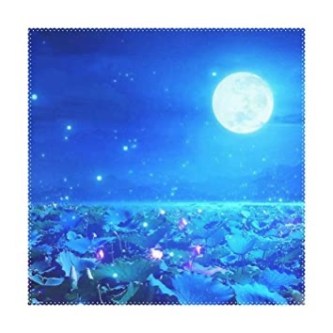
P.S.: The moon has been an inspiration for many a writer, ranging from Ben Jonson, who revered it as a seat of chaste goddess Diana, to W.H. Auden, eulogizing it as the one and only lunar beauty. I took the liberty of joining Jonson and Auden by writing this with the image of the moon I have in mind.
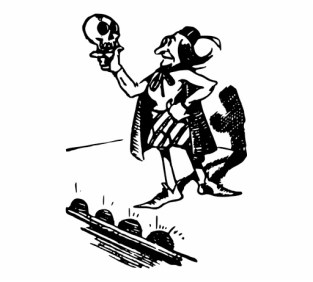
P.S.: While I was watching an episode of my favorite old western drama ‘Laramie’, a character of a falsely convicted ex gunslinger uttered, “I am seven kinds of a fool, ain’t I?” As a lover of fanciful words, I was immediately piqued by the expression, and in the subsequent search of the meaning thereof, instead, I happened on the expression of “The Five Faces of a Fool,” because of its sheer witticism from the wise King Solomon.
It’s derived from Solomon’s fatherly advice to his spoiled crown prince son Rehobam, circa 930 BC. It’s a verse consisting of five-fold warning against the fall and the decline of the kingdom as a result of refusing steadfastly to listen to the wise and surrendering to God’s will out of audacious laziness in the guise of princely hubris.
Obviously, the prince son was not a model student of his father’s school of proverbs, but the readers beyond the boundaries of time and place have taken the advice to heart and applied it to where it is deemed fit. In writing this poem, I was wondering which face of a fool I might be wearing… How about you my dear reader? But take heart! For there’s always redemption thru hope and faith.
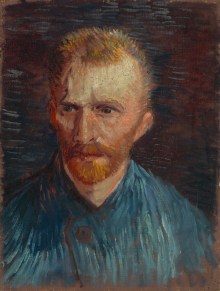
P.S.: I have recently come across an article about the nature of Vincent Van Gogh’s mental illness that eventually resulted in his suicide in May 1889 with a pistol that punctured his heart in Saint-Paul-de-Mausole asylum in Sant Remy, France.
It is said that Gogh had shown symptoms of disturbed mental states since he was 17 years old when his parents tried to get him committed. He was later seen eating coals while painting and told of hearing voices and seeing hallucinations. As a matter of fact, Gogh was from a family with a history of mental illness: his maternal aunt was epileptic, and two of his siblings died in asylums and two others by suicide. Surely, this doesn’t aver that mental illness is hereditary and therefore brings grist to the mill of eugenists.
In my opinion, it seems more likely that Gogh’s tragic life story comes from a combination of Gogh’s disappointment with the failed reception of his works and frustration with his ability to deal with the existential reality interacting with the unfavorable circumstances surrounding his struggles to mark his existence through a medium of art, which deserves of recognition for its beauty of his highly innate artistic sensibilities that glow in the dark night of the soul. To me, whether Gogh was clinically insane is to miss the gift of the artist to humankind that always thrives in the beauty of arts.
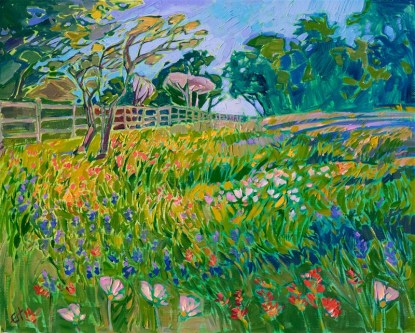
P.S; I was reading a book this afternoon and heard a bird singing from the bough of a tree outside the window; it was very pleasing and made my spirit flit in a mind’s garden. It was a beautiful Saturday afternoon, which resulted in this improvisational little poem.
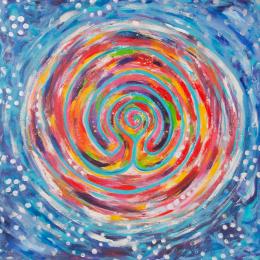
Concealed in its untrodden paths of dazzling mysteries:
Light and dark, birth and death, mastery and terror
All curled in wreaths of coiled bewilderment in alterations
Encircled in the visceral entrails of great serpentine
Paths that allure you with a riveting promise of delights
From erotic games of licentious pursuits of pleasure hunts.
Lo! Somewhere in the corners of paths hides a blue marble
That promises you magical power of all that you want to be
Immersed in the deepest bottom of your secret bleeding heart
Wrapped up in the divine power of the magical beauty,
Which is the messier, the prettier, the madder, the better.
P.S.: The inspiration for this poem comes from the Greek mythology of the Labyrinth. The story, pattern, and design fascinate me and evoke a wide arc of thousands of imaginations. Riveting.
When the night gently descends upon the day on the earth’s bed
And he silences her secretly with a force of darkness
Whispering softly in delirium, murmuring faintly in fever
blinding her with an extraordinary frisson of ecstatic fear
the spirts of tragic heroines of love – Dido and Ariadne-
run to the top of the hill where the sky lies above the earth
and lament their earthly journeys that ended in love alone
as Hounds of Love howl beside the beautiful losers in love
till the lovers’ tryst ends in a mist of passion and intoxication.
P.S.: I am always inclined to the stories of beautiful losers whose loves for their figures of the affairs of the hearts are not returned because there’s something tragically beautiful in them. Dido, the beautiful queen of Carthago, was cruelly forsaken by trojan refuge and founder of Rome Aeneas and chose to end her own life thereafter. Ariadne was a Cretan princess who helped Athenian prince Theseus to kill the Minotaur and to bring out the Athenian youths from the labyrinth with her inscrutable ball of threads as a guide to a route out. But Ariadne was also later deserted by Theseus and let alone on an island and forced to marry Dionysus, the god of wine. Hence this poem about those who are unlucky in the affairs of the hearts.
You must be logged in to post a comment.