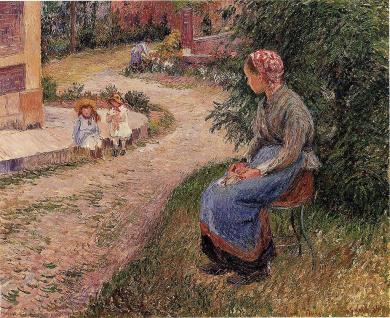
Small things do not pontificate,
For they present you
A pleasantry without much ado
And a lasting, simple delight.
Small things do not pontificate,
For they present you
A pleasantry without much ado
And a lasting, simple delight.

There are magical elements in religion, and there are religious facets to the practice of magic, as succinctly summed up by Sir Walter Raleigh: “The art of magic is the art of worshiping God.” That’s how I feel and what I see during my Dutiful Sunday Morning Masses, the ancient rite of the Church, a perennial panoply of syncretism with its splendid paraphernalia of prayers and the liturgical ceremony of rites and mechanical recitation of prayers; it is the melding of religions or beliefs of the similar elements but of different origins. Hence, to come upon an article in the recent issue of BBC History Magazine about an academic study by a certain British scholar of the existence of fairies in the context of the validity of cultural and historical artifacts gave me an uncanny pleasure.
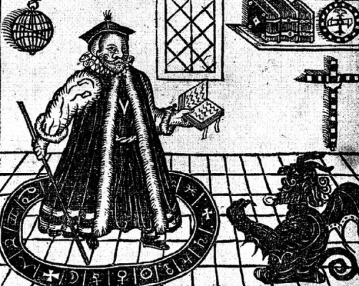
In fact, Religion (that is, Christianity) and Magic (in the forms of divination and sorcery) are not to be seen as polar opposites and antithetical systems of belief because they are interdisciplinary agencies of attempting to seeking and offering a panacea to our dilemmas – physical, metaphysical – competing for supremacy in propitiation. Such mysteriously syncretic elements of the two different agencies of beliefs became the academic subjects of intellectuals, such as Francis Bacon and John Aubrey who accepted the potentialities of physiognomy as an infallible guide to predicting one’s character and argued for the validity of non-Christian practice based on certain intellectual bases therein. With this in mind, you would not be surprised to learn that fairy summoning rituals were all the rage in the Renaissance period (15th~17th centuries), indiscriminately practiced by all strata of society, learned or ignorant, rich or poor, Christian or pagan. The author of the article informed the reader that the early Renaissance idea of fairies was pretty nebulous and varied with a wide arc of wonder and trepidation and that the dainty image of ever famous “Tinker-bell” was a Victorian construction of the whole fairy race.
Then, how did the “real” fairies look? Although there is no magisterial, definitive version of the physiognomy of a fairy, a collective description gleaned from various records boils down to it as a supernaturally attractive man/woman imperiling the souls of whoever it was summoned to, which is reminded of incubus/succubus, consecutively. Notwithstanding the dubious nature of fairies, the invocation of fairies halfway between angels and devils was widely used in hope to (1) acquire medical knowledge, such as whereabouts of herbs and their properties; (2) delight in the highest degree of sensual ecstasy; and (3) reveal the future and prevent from misfortune in advance. Be it as it may seem wholly pagan, the summoning ritual was surprisingly required for God’s intervention because it included periods of purification through abstinence, fasting, and prayer in preparation, all of which would testify to the sanctity of the performer ministering to the moral and ethical character. God willing, a fairy at request manifested to the summoner, but he should not come out of the circle he had drawn because it protected from sudden maleficence of the ambiguous fairy.

In sum, the article was an elegant primer for a further interdisciplinary study of literature, religion, and folklore from the medieval times to the Reformation period and possible stretching to this date. The exemplary texts that spring to my mind are Religion and The Decline of Magic by Keith Thomas and Christopher Marlowe’s version of the legend of Dr. Faust, both of which are excellent testaments to the contextualization of the esoteric knowledge on the grounds of intellectual bases into academic studies of social, cultural, and historical facets of different zeitgeists, which also serve as invaluable literary artifacts to epochal changes. But for all that is worth, this relation between religion and magic is commensal, exhibiting a mesmerizing consilience of gods and God, profane and holy, pagan and ecclesiastical, forbidden, and disciplined, as superbly unfolded in the Sistine Chapel fresco, prodigiously expressed by Michelangelo.

A wondering changeling
fairy-born ever drifting
bewitches beasts and men
and spirits them away in
one fell swoop then flies away.
P.S.: This very short poem about a woman whose peculiarities estrange her from groups of people where she goes despite her beauty due to a reason none other than her solitary nature born out of a pretty fairy mother and a peripatetic, feckless wayfarer. Plus, this poem of mine is an appendix to my prose entitled “Fairy summoning in Florentine Renaissance period”,” which is basically a review of a scholarly article about historical texts of summoning fairies in the Renaissance period, published hours ago.
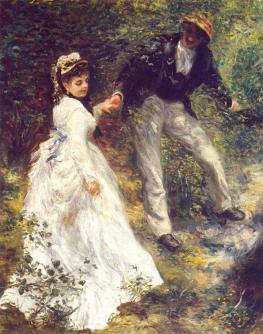
She can’t be at ease,
He persisting,
She escaping,
When will Lovers’ play cease?
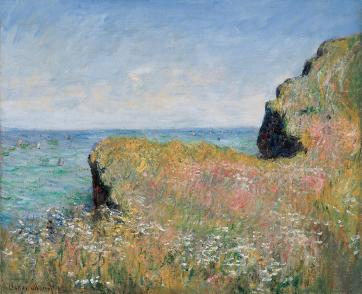
Albeit delay
You may fret,
Sometimes it may
prove to be fortunate.
P.S. According to Herodotus, an ancient Greek historian who is regarded as the Father of History for his pioneering method of compiling historical records in a narrative form, the Germanic tribes in the Rhine considered repose from war as a time to recuperate their spent vigor and stamina for the next round of the battleground. They spent the repose doing absolutely nothing but performing their physiological and biological functions to the point of sloth and gluttony. (The accompaniment of German beer was primary, if not absolute.)
In the eyes of the learned and culturally sophisticated Greek, however, it was a sight to behold, a wondrous admixture of lackadaisicalness and prudence in a way that looked effective for rejuvenation.
My repose is not as starkly static as those ancient Germans, but it is a time of getting my hands off the helm of existential duties and responsibilities for a little while – to write a new chapter of my life in the continuous search of meaning and purpose thereof as a pioneer woman on the 21st century western frontier. Hence I wrote this very short poem during the current repose.

Into the dark of the night, we all travel
tranced in the eurythmics of rainfalls
outside the moving coach in a dazzle
of somebodies packed full of stories
to carry them over the westerly end
of our dreamscapes, half-assured but
willing to take on Fortune’s loose end,
as we head for our unknown Fortune.
P.S. Ralph Waldo Emerson once said, “Thinking is the function, and life (i.e., putting thoughts into actions) is the functionary.”
Along the line of this maxim, anyone who’s been on a long distance cross-continental bus travel contracts sociological and psychological strains of Stockholm Syndrome; that whoever rides on the same bus with you will be an aggregate of the ad hoc assembly of accidental passengers, a surrogate band of battle soldiers from all walks of life, vivacious or lugubrious, voluntary or unintentional, funded or impecunious, assured or doubtful. That’s also an elemental attribute of the travel because there’s always something unexpected that happens along the way, which is what makes it all the more interesting and enriching for our life experience.
After a long but worthwhile travel by bus, you will understand what made the former British Prime Minister Benjamin Disraeli during the reign of Queen Victoria declaimed about the lesson of travel thus: “Travel teaches toleration.” Which is also to be yoked into the ever truthful Nietzschean tenet of existentialism: “What doesn’t kill you can only make you stronger.” I can vouch for it on account of my own veritable veni vidi vici empirical learning acquired alone after five nights on two Greyhound buses from New York City, NY to Los Angeles, CA . I have lived thru it. I take the liberty of positing that I am now also become something of a student of life and literature following the existential experiences of George Orwell, Viktor E. Frankl, Henry David Thoreau, Stephen Crane, Bill Bryson, and Jane Eyre (the fictitious but realistic character) into the bargain.


You must be logged in to post a comment.