Category: 미분류

  • The princess fairy tale

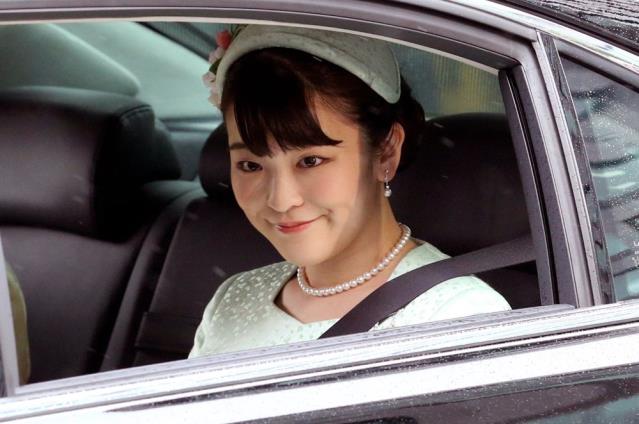
    First of all, let me clarify that I don’t believe in fairytales where beautiful poor girls achieve social escalations by marrying handsome princes and kings. Nor am I keen on the affairs of modern-day royalty whose lives are not even desirable. And yet, the news of Princess Mako’s marriage to her college sweetheart despite forced delays and oppositions is worth writing about because it is a fairytale of the most beautiful kind becoming a truth in reality. Would it be a bit of a stretch if I relate Mako’s heartaches and ordeals to Psyche’s Wanderings and Trials set by Aphrodite to separate her son Eros from the insolent mortal? It also shows that the crowned cannot escape from the intoxication of the heart that is worth denouncing the pomp and circumstances.

    Marrying a commoner is no new in modern-day history, starting from Edward VIII’s marriage to the American divorcee Wallis Simpson and his descendants Princes William and Harry. While those mentioned above British royal members married those outside the peerages, they were not the average commoners working nine-to-five or even more or fewer hours in ordinary situations where they had to depend on the whims and caprice of their employers for the secure livelihood. But Mako’s case stands most excellently because she was determined to give up the whole royal privilege to live as a commoner by marrying the one who is not from a wealthy, not even above average family. Moreover, Mako refused to receive a considerable amount of money as a gift from the royal family for marrying a commoner. On the contrary, Harry and Meghan are considerably wealthy, living without day-to-day financial insecurity about what might happen tomorrow. Their surrendering the titles publicly will not forfeit their assets as in the case of foreclosure that many struggling hard-working Americans are unfairly subject to. After all, why do they need to hold the titular positions to make more money outside the palace? People flock to the brave Meghan and her ever-supportive husband, but why do they do when their happiness illustrates no emblem of sacrifice without a sense of proverbial entitlement?

    I cannot help but compare Mako and Kei to the famously showcased ex-royal couple Prince Harry and Duchess Meghan. Besotted by the sensual charm of his renegade, free-spirited wife, Harry decided to move his young family to Los Angles, California, for good. He joined her Dissent Division to criticize his long-time family for being racist and cold-hearted. On the contrary, Princess Mako never decried her dissenting royal families against her marriage to a commoner, nor did she rebel loudly against the constitutional monarchy outside Japan. Instead, Mako kept all of her affairs of the heart discreetly, remaining true blue to her beloved Kei despite public uproar about his below-than-expected family background for being of a problematic single-mothered household. Forget the stereotypical Japanese politeness and the prejudice on the East Asian women’s submissiveness. Her graceful acts and decencies flow from her natural disposition and upbringing, which I have hardly seen in the famous royal family members.

    Watching Mako and Kei looking at each other with the eyes exchanging affection with radiant smiles in their serenely happy faces put me into a pleasant mood to make me wish for their long and happy life together. Mako is a brave princess who surrenders herself to the love of her choice, even if it means giving up her title and privilege that would make her married life comparatively comfortable to ordinary people. Mako’s decision to live the life of an ordinary wife seems anachronistic and incongruent. Still, not everyone wants to be an Amazon or Scythian warrior, nor does she want to climb up the career ladder to prove her abilities. Mako’s declaration of independence signifies an act of exercising her right to happiness by living with someone she loved dearly. What else could she do to prove her worth for love? It is a beautiful fairytale dissolving to the truth.


  • Beam Me Up, Scotty: Admiral Kirk’s onboard

    The skies were clear blue, and the wind mild and agreeable. The day was ripe for the moment the star returned to the galactic heavens in rejuvenated buoyancy of jubilee that he would be out to the extraterrestrial world again. “Beam me up, Scotty,” the man said as he boarded on New Shepherd, treating it like his beloved ship USS Enterprise. It was art imitating life in the former captain’s bright eyes; it was life imitating art in the old star’s beady eyes. For William Shatner, aka Admiral Kirk of Star Trek, it was a one-of-a-kind experience, equivalent to an out-of-body experience in which you fly from your corporeal vessel and wander in all whither, floating weightless, groundless. It was his very Real McCoy galactic trip to outer space.

    On Wednesday, October 13th, Blue X, Amazon founder Jeff Bezos-owned spacecraft enterprise, took off from its launching site about 20 miles away from Rural Texas town of Van Horn with civilian passengers who paid astronomical sums for their space trip. But not Shatner, who spent nothing at the courtesy of Amazon founder Jeff Bezos said to be a long-time Trekkie and something of a billionaire with a flair for space cowboy. The motive for a publicity stunt to outshine Blue X over entrepreneur rivals, Elon Musk’s Space-A and Richard Branson’s Virgin Galactic Holdings Inc., is impossible to ignore, yet why not when it also produces positive effects of provoking the imaginary in the real? Shatner, at age 90, seemed no longer the dashing brilliant, just young Admiral Kirk any longer. Still, his spirit beamed up as he experienced overview effect outside the orbit, profoundly mesmerized with the deep fragility of Planet Earth, the Galaxy Blue. Shatner articulated the face of the Earth as so ethereal and impossibly gorgeous vis-à-vis the blackness of outer space that he had a eureka moment of what distinguished Light (Life-Earth) from Darkness (Death-Outer Space). Methinks that such pareidolia of the overview effect has something to do with his nonagenarian age, the last age in Seven Stages of Man, one foot closer in the grave. However, when I watched him in the news, overwhelmed by the ineffable emotions, Jeff Bezos removed his shades and embraced the old actor; all looked genuine, not an act staged for a post-trip publicity event. And even if it so, then it is a likable sort of entertainment that does viewers of all kinds good.

    Criticisms on the expensive space trip only the haves can afford are worldwide and understandable amid the unequal distribution of wealth makes earthlings live and die or live and suffer. Yet the veteran movie star reminds me of an old soldier who has lived through the vagaries of life. Overall, the 90-year-old Shatner’s space trip materializes the earthling voyage of the USS Enterprise, boldly searching for new life and new civilizations into the galaxies.

    Captain Kirk coming home
    Floating under a parachute
    Touching down on Mother Earth
    in a soft haze of excellent dust,
    Calling it home, Roger out.

    Welcome back to Earth, Admiral Kirk.

  • Letter from the West

    Eight hundreds of suns and moons have passed since I was uprooted to Southern California from Northern New Jersey, and I have to say every day is still a new day on the frontier home in the Wild West. Cowboys, gunslingers, and drifters looking for chances and time for winning the Wheel of Fortune in life may have gone with the dust of wind. Still, I feel like a hardscrabble but resiliently brave and adventurous frontier woman I have seen in western TV dramas and movies with the central theme of Little House on the Prairie surrounding as a leitmotif for the story of My Life So Far in the Wild West.

    The great French writer and humanist George Sand once said that every place has place memories that influence the spirits of the site and people without them knowing it. Given this, the place memories of Southern California fill the domes of the spirits and palaces of the souls living in it with the characters endemic to the nature and shaped by the events artificers made based upon my empirical observations. People I have come across here are a curious mixture of friendliness and brusqueness added with a dose of saloon bravado and air of southern plantation riches under a high Californian sun.

    The charade of Californian Rhapsody continues thus: people reading in public, such as public transportation or coffeeshop, is as rare as finding Nemo in a vast ocean. In such an environment, I feel awkwardly vain to read in such places as if I were a showy blue-stocking, contrary to New York City, where readers are part of the landscape under the Manhattan skyline. It brings me back to my reading of Horace Greely’s experience of an overland journey from New York City to California. Greely, the famous 19th-century journalist, the editor of the now-extinct the New York Tribune and the rival presidential candidate of Ulysses Grant, also noticed the lack of intellectual cultivation in many Californians and thus called the attention of young single, educated woman from the East Coast to go west in a proliferation of civilization from the cultured East Coast.

    Part of me still longs for the convenience of city life in New York City, where people of all walks of life ride on the same bus and subway and eat at the same place. Nevertheless, what holds me to this immigrant land is its gorgeously untamed wild nature that whispers to my ear, “Tarry with me,” like a beautiful paramour. The wildflowers in the fields over the ridges are sweetness to the weary soul seeking a place for visual pleasure after being exposed to a miasma of an unpleasant office environment, even though I am still unaccustomed to the sight of palm trees with long unruly hair. Still, I like to think of myself as a 21st-century frontier woman living with an elderly ailing mother and a young tomcat in my care, trying to keep my foot on the ground and my eyes on the stars, to claim my happiness on a new land against all odds in this Wild West, Still and Ever.

  • Democratizing Delicacies

    The delicacy of life that sprinkles flavors to our otherwise mundane routine of everyday life is not a prerogative of the rich. American Catholic saint Dorothy Day once gave a diamond ring donated by a wealthy woman to a poor demented old lady and riposted to a chiding onlooker thus: “Do you suppose that God created diamonds only for the rich?” In this light of democratizing luxuries, Chef Marie-Antoine Careme championed the world of haute cuisine available to all walks of life and shared his knowledge and experience of Haute culinary arts for the use and enjoyment of the public.

    Born into a poverty-stricken peasant family in 1784, Crame was abandoned at ten by his father, who told him to make use of his cleverness for his future. Before long, Careme found an apprenticeship to a famous patisserie. That was the beginning of his long, epoch-making legacy of master patisserie. With an innate intelligence and passion for culinary art, he opened his patisserie within a couple of years. His ingenuity for culinary art and a happy chance led him to a top diplomat’s chef to cook diplomatic banquets, for which he became the most sought-after chef in Paris. The success catapulted him to opening a famous patisserie at 19 on the rue de la Paix, baking the wedding cake for Napoleon and Marie-Louise of Austria. If Napoleon conjures up an image of a scrumptiously layered piece of Napoleon, Careme is smiling in a constellation of artists in heaven. Careme’s popularity endowed him with a celebrity figure in post-revolution, industrial age Europe where the luminary la dolce vita aristocrats commandeered was beginning to shine on those on the low rungs of social ladders. Careme might have been an ambitious entrepreneur to mark his name all over Europe with the crowning glory of lucrative success, but no one else but he tried to share the taste with the crowd indiscriminating class distinctions in his time.

    Careme’s success story has a familiar rags-to-riches repertoire with a combination of chance and apposite time surrounding his rise to success interacting with his talents. But why not the taste of the fame when his triumph of will over strife inspires achievable hopes and approachable aspirations? Careme personifies overcoming the mantra of existentialism that experience precedes essence. The fact that his own indigent family abandoned Careme didn’t dispirit his connatural intelligence nor did it plunge him into a Slough of Despondency. Or that didn’t really matter to Careme with his eyes, nose, and hands tuned for the world of delicacy that used to be exclusive for the rich and whose heart made it accessible to all. Indeed, the man was not a saint, nor do I intend to canonize him. But at least his actions and legacy deserve appreciation and admiration adorned with flowers and bonbons.

  • Not impossible

    It is supposed to be about being a woman that binds all women regardless of race and ethnicity across a great divide of time. Forget all others and let us focus on the parallel circumstances and kindred experiences as women. But alas, that seems only a tale told by a romantic fool such as I am. If you think this is hyperbole, then I suggest you read the tweets and comments on the recent news that a black actress plays the role of Anne Boleyn, the second wife of Henry the Eighth and the mother of Elizabeth the First, in the upcoming British periodical drama, which went viral among the learned and the general.  In addition to the vehemently acrid narratives on the racial authenticity of Anne Boleyn – especially from fellow women-, the juxtaposition of the two women’s images, the actress Jodie Turner-Smith and the queen Anne Boleyn itself, belies the popular sentiment as though to mock the actress’s appearance in the fashion of the Tudor period by making parallels with the classical portraiture of the Anne of 1000 days.  It has produced vociferous tweets full of fury from people who regard the role as audacious cultural appropriation faithful to the PC ethos of the time. 

    Actress Turner-Smith’s playing the Tudor woman Anne Boleyn is indeed an innovational idea of breaking the typecasting based on the physical distinction for the roles thinkable and conventionally conceivable for the specific attributable characteristics of certain characters. Thus, non-whites playing the roles conceived for whites are seen as usurping the equilibrium of cultural heritage, upending the very foundation of national identity translated into racial identification, a sentiment prevalent even among the professed liberals anti-everything related to Trump, Republicans, and racism. The rejection of the race crossover representation on screen is supposedly due to the difficulty of following the story’s fluid narrative, unable to be absorbed in the story, not least because performers’ distinctive physical attributes mar the harmony of racial fluidity. But do we really?

    I have watched a few good dramas (British) in which the races of performers do not pin down them to the racially charged roles. To illustrate, in Benedict Cumberbatch’s Frankenstein, the wife of Victor Frankenstein was played by a black actress. Besides, his father, M. Frankenstein, is a black actor, a fine ensemble of excellent thespians whose energetic performance brought Mary Shelly’s original Gothic story to a theatrical feast to the eyes and the mind. While watching the drama, I was not distracted by the black performers’ appearances being the father and Genevan Victor Frankenstein’s wife. Instead, the powerfully emotional and assiduously methodological performances resurrected the textual characters to real humans, full of pathos with vigor and wonder. Also, British Asian actress Gemma Chan, who played the role of Elizabeth Hardwick in ‘Mary Queen of Scot’s,’ is known for her versatile roles transcending her racial background. Her recent performance as a cyborg with a touch of humanity named Anita in ‘Humans’ is as naturally harmonious as streams of a river flowing into a great ocean, not highlighting her physical differences.

    L-R Laura (Katherine Parkinson), and Mia (Gemma Chan) from ‘Humans’

    So why the fuss full of sound and fury of the people who cannot accept the black queen in the Tudor drama when they are boastful of the most advanced mind since the age of Enlightenment? In the wake of the global Black Lives Matter movements, people have become afraid of the wind of changes as a frightful tsunami to subvert social foundations, upending the social orders adverse to their belief systems. Although I don’t eschew their concerns for the wind of changes as I am also conservative, not conventional in belief, the current vehemently acrid opinions about the black woman becoming Anne Boleyn are tokens of latent racialized hostility surfaced by the deluged dissents pouring forth from the socially suppressed sentiments. Indeed, you can’t ignore the differences between the two Anne Boleyns. Still, there are more commonalities than the images seen through your optical sensory input: that they are both women of elegance and confidence who are not afraid of expressing what they can. The actress shows she can pull off the character with what she has, and the queen her the courage to confront the criticism for being the cause of subsequent religious turmoil that changed the face of Christendom in spades. Let not prejudice darken entertainment. 

  • wordless

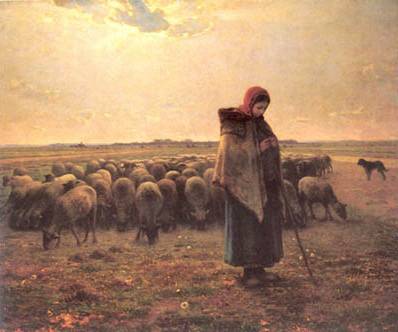
    Shepherdess with her Sheep Jean Francios Millet

    A myriad of thoughts stifled by
    a hundred of words with no sequence
    shall be given free reins to express
    without hindrance of the poor locution.

    Daily diligence, firm perseverance, and strict discipline
    may save me from the darkness of inexpressible soul.

    To that end, keeping a tight rein on the foregoing principles
    is my principal guide to the Paradise of Words.