Blog

  • The legend of the Catskill Mountains

    480E3F4F-A245-44AE-8BD9-A2EE798EFE8C
    courtesy of google

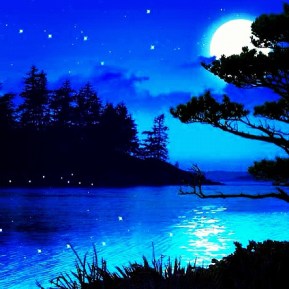
    Where the earth meets the sky on the mountain, 

    An old mountain spirit opens and closes the doors

    Of Day and Night every day at the proper hours

    And works the wonders of nature in the divine design.


    The vault of heaven, the dome of Sky God’s palace

    She frescoes with celestial ephemerals every night

    With new moons hung and old moons cut into stars

    Sprinkled across the nightly firmament golden bright.


    The garden of the earth, the parterre of Earth Goddess

    She waters with rains spun out of soft summer clouds

    Woven by early morning’s gossamer cobwebs and dews

    Flake after flake, like those of fluffy white cotton balls.


    The wise mountain spirit, the wonderful divine artist

    Adorns the heaven’s frescoes every night with cheer;

    The wise mountain spirit, the wondrous fairy gardener

    Cherishes nature’s garden every day with delight. 


    P.S. This poem is based upon my reading of Washington Irving’s ‘Rip Van Winkle’ in which the fictional historian character named Mr. Knickerbocker relates to the native American legend of an old squaw spirit living on the Catskill Mountains in New York. I envision her as a fantastic fairy version of Michelangelo frescoing the vault of the Sistine Chapel and as a fabulous gardener tending the earthly garden with tenderness and quiet assiduity. What a fascinating vision of a magical magnitude it is!

  • fee-fi-fo-fum, fee fi-fo-fum

    tumblr_p90r2uwPnN1vuvoufo1_400

    The owl hooted on the oak,

    The crow cried in the dark;

    Dogs howled on the hills,

    Cats purred in the bushes;

    The Night was ripe and ready.


    Fee-fi-fo-fum, Fee-fi-fo-fum,

    The Three Witches began to hum

    Standing in the grim gray garbs

    With the gray eyes glaring in silence

    They were ready to tell his destiny.


    “Scotland, the jewel of thy crown,

    The sword calls for thy title to own,

    The blood is thy sacred power,

    As it runs redder and deeper.”

    Thus, the prophecy of his fate’s cast in

     Fee-fi-fo-fum, Fee-fi-fo-fum, Fee-fi-fo-fum!


    P.S.: This week’s #FairyTuesday theme on Twitter liberally encompasses witches, ghosts, and other supernatural beings, so my choice is the Graeae, the Three Sisters personifying the Fate of Man in the ancient Greek mythology. They had only one eye and a tooth to share, but the pre-Herculean Mycenan hero Perseus intercepted the eye when the Sisters fumbled with it in the air and forced them to answer the whereabouts of Medusa. They ultimately relented to the demand, whereupon Perseus set about killing Medusa. 

    This image of the Three Sisters is then also wondrously associated with the Three Witches of Shakespeare’s Macbeth by the sheer dint of the somber, dismal greyness of the three uncanny women. But as Mcbeth was a tragic figure consumed by guilt and greed, so were the Three Witches, malevolent and dystopian, vis a vis the somewhat faltering and fumbling Grey Sisters menaced by Perseus bullying them to elicit what he wanted to know. 

    This poem, however, is more of Macbeth’s Three Witches leading him to perdition because the grim image of the witches conjured up by Shakespeare is terrifically atmospheric and dismally spell-bounding without the pageantry of words and expressions. 


  • ‘Fairies: A Dangerous History’, by Richard Sugg – review

    Fairies: A Dangerous HistoryFairies: A Dangerous History by Richard Sugg

    My rating: 5 of 5 stars

    According to the races of the supernatural world, there are classes of spiritual beings that humans have arbitrarily defined with ostentatious pedanticism. For we treat the otherworldly guests of honors, such as archangels, angels, principalities, vampires, werewolves, trolls, big-foots, and even extraterrestrial aliens with awe-inspiring reverence. In contrast, fairies are regarded as sort of the underclass, juvenile guests reluctantly invited to a terrific festival of supernatural beliefs. Such spectral discrimination, argues author Richard Sugg in his Fairies: A Dangerous History, results from the fact that unlike demons, angels, and other ethereal beings of educated Christianity, fairies are in want of respectful scholarship codifying their existence and nature, cultural influence on arts and literature, and spiritual elements of faith/belief traditions in lettered authority.

    The book is a meta treatise on why the author himself believes in the belittled mystical beings’ existence. Sugg takes us to Shetland’s remotest area to listen to a nonagenarian man whose vivid memories about fairy sights are amusing. Thenceforth, the author brings the readers to the fantastic feasts of fairies as seen and described by William Shakespeare and Edmund Spencer as the rulers of the Vegetable Kingdom in their Elysium of poetic fancy, Sugg keeps us hooked on pages after pages filled with his magic spells of words because he sees and believes in fairies with their own dangerous history. It is dangerous because the truth about them is theologically reasonable, spiritually potent, culturally dominant, and physically palpable.

    In sum, this book is one fascinating account of fairies that serves the author’s purpose of educating and entertaining readers. The book is filled with the glamour spells of the author’s erudition. This book is something of the authorial account of the Fairy Folk.

    View all my reviews

  • The Wild Swans

    bd89b1323a2812ff7f637940f9384d74_74
    The Wild Swans (1962)

    Once upon a time, in a kingdom of the shore

    A wicked witch queen out of envious spite

    turned her eleven stepsons into swans, wherefore

    Elisa the dolorous sister drifted away in a plight

    Till she chanced upon the fairy queen in her chariot

    Who saw the golden heart of the princess that moved

    The fairy caprice and told her with thorny nettles to knit

    Shirts for the swans to break the spells with her lips sealed;

    Such was Elisa’s vow, and the vow took her to her encounter

    With a gallant beauteous king of the strange land faraway

    Falling for her silent beauty, keeping her in his chamber of amour;

    But the zealous archbishop and his ilk viciously sent her away

    To a stake for witchery, for her silence was otherworldly;

    As the ambers of fire were bursting around her fast and faster

    The swans with crowns appeared in the dusky sky from the yonder

    And Elisa threw the shirts at the swans, and lo! the men stood there;

    Then the fiery fires blossomed into pretty white flowers around Elisa

    Lying on the bed of the flowers, which the king plucked and placed

    Upon his lover’s bosoms with drops from his welkin eyes, whereupon

    Her spirit returned from a departure to the ether exalted, elated

    By the end of the old and the beginning of a new life in the kingdom

    Where there’s no other world beyond the lovers’ union heart-to-heart. 


    P.S: One of my favorite fairytales of all time is “The Wild Swans” by Hans Christian Andersen because of the travails that the princess Elisa endured for the love of her brothers and her fathomless patience akin to that of martyrs of the early Church in spite of unthinkable pains of horrendous tortures and gruesome ways of execution for their unswerving faith. What’s more, I love the fact that the king was not only infatuated with her external beauty but also her internal virtue distinguished from all other beautiful women who would vie for his kingly attention. Their love was no less glorious than that of Romeo and Juliet, for the king loved her for the dangers she had passed, and she loved him that he loved all about her, still and ever. Hence this is my contribution to #FairytaleTuesday whose theme for today is a fairytale with an element of lovers in love on Twitter. 

  • top of the world

    What then if there’s no time for leisure

    to stand on the top of the hill in solitude;

    No time for pleasure to view the theater

    Of nature’s play on the stage of magnitude?


    P.S.: I think the music ‘Top of the World’ by the Carpenters strikes the chords of my impression on the view I witnessed on the top of the loop. So here I made a little video for a lark. 

  • spirited away

    IMG_1708

    Where the sky endless and boundless

    Touched the curves of hills and vales

    Adorned with pristine wildflowers;

    My eyes gazed at the wonder in silence

    And my heart filled with longings

    for the bounties of beauty in bliss.


    The restive soul, the ever doleful

    In want of the joy of beauty wishful

    Of the realization of desire fanciful

    Coveted the beauty of nature graceful

    In the eye of the beholder hopeful

    Of sprinkles of the magic wonderful


    Suddenly, I was a wandering lonely cloud ever

    Floating on high over the canyon in the ether

    And the top of the misty mountain yonder;

    Then as a great lone eagle, I was flying near

    The shrill west sun as a sovereign ruler

    Of the serene beauty of magnificent nature. 


    I wanted no more, and nothing more- evermore.


    P.S.: Sitting on the top of the loop overlooking the creation down under, I felt like flying in the azure firmament freely without a shred of worries and anxieties binding me in the drab and dreary reality of the world below. That was my secret nature’s elbow room where I could willingly waste my time without a qualm about not doing anything but being transfixed to the beauty of nature for an indefinite time.