Blog

  • the changeling

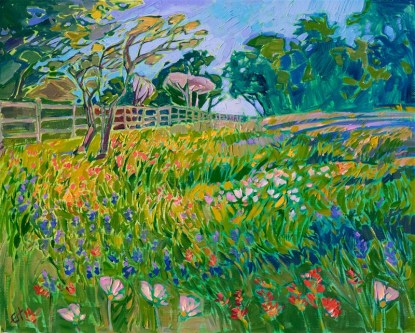
    coastal_wildflowers_poppies_point_buchon

    If she is pretty, she is never lonely because she is wanted and loved. This much is truth, no? Beauty works a miracle in the eyes of a dull man without imagination and of a cruel man without tears. Oscar Wilde, who always had something to say about beauty, affirmed that it’s better to be beautiful than to be good because beauty captures your attention. So, if you are bereft of beauty, then you must work very hard to get people to know who you are. Beauty is indeed a joy for all seasons, rain or shine, and is also a privilege to be loved first before loving.

    Judy always must be in love with someone who didn’t even know of her existence because the feeling of love would transform her from a plain Jane to a sultry Cleopatra as if a pixie had cast a glamour spell on her, pitying her denied sense of pleasure and detachment from a constellation of lovers. Judy, despite some flattering feedback on her appearance from onlookers, was always discontent with what she saw in the mirror that seemed to reflect her what she didn’t want or couldn’t see in her true self. She felt that her features were in want of spectacular beauty that would make herself loved, and her solitary disposition dipped in an exclusive flavor of selectiveness doubled the inaccessibility of the worldly sensuousness that even not so pretty or homely women were allowed as their feminine rights.

    Judy was sitting like a pillar of melancholy at the dinner table embarrassed by the ordinariness of her appearance in the presence of handsome Fred who made Judy feel like an awkward wallflower that nobody would pay attention to. You would say she obviously lacked self-confidence, but self-confidence is also built upon the kind of feedback you get from others. Judy was a firm believer of existentialism which says that experience exceeds essence and of Robert Cooley’s sociological theory of “Looking Glassed Self” that you become the way how others treat you. Or you might say what she lacked in appearance could be compensated by her intelligence, wits, or those other “inner” qualities, all of which she did possess. But let’s be honest, my dear readers. Beauty is the power and the wisdom of women regardless of leaps of times, distances of places, and differences of races. Any man- rich or poor, bigoted or liberal, young or old- loves a pretty woman and will act on his best behavior with kindness. Likewise, Judy, who was not drop-dead gorgeous, always kept herself guarded with a stern look at the sight of a man who might be unkind or curt. However, Fred was different. He was being very affable to her with a genuine smile. This time Judy wanted to claim her right of happiness and make her existence visible to her figure of love, so she secretly wished for a glamour spell to change herself from an insignificant wallflower to a beautiful rose that would make Fred crazy about her.


  • ‘Jonathan Strange & Mr Norrell’, by Susanna Clarke – review

    Jonathan Strange & Mr NorrellJonathan Strange & Mr Norrell by Susanna Clarke

    My rating: 5 of 5 stars

    Magic and fairies are not the proprietary subjects of teenage novels or esoteric pagan reference books that are exclusive to a select few. They were part of a belief system kept by your distant and not-so-distant ancestors, learned or unlearned, which was a fountain of their norms and mores and acculturated even into a Christian organized religion. So much so that the world of supernatural was thus believed to be hidden in this world of terrestrial, enveloping the outer circle of the earth with a gossamer of ethereal air, thinning the boundary of corporeal and incorporeal. This system of belief has survived particularly in the British Isles, where Celtic mysticism has produced its fairy progenies and dispersed them beyond the watery boundaries of the Isles. Out of such British fairy progenies comes this wonderfully imaginative Jonathan Strange & Mr. Norrel by Susanna Clarke whose mission is to prove the world that there are more things in earth and heaven than are dreamt of in your rational impulse.

    The story is a fascinating hybrid of history, adventure, and fantasy all entertainingly interwoven in the magical tapestry of literature. It’s also a great house of imaginativeness built upon Clarke’s erudition of the subjects ranging from the rise and decline of English magicians to the changing social customs and values, all the marks upon her mastery of storytelling that will make you steeped in the pages after pages as if you were enchanted by her alchemy of words. Her characters are extraordinary, but their personalities are not far from the ordinary, which endows a sense of verisimilitude upon the story and leads you to a seemingly obvious path to the maze of her fascinating tale. It is Clarke’s own magic that creates this wondrous make-believe world of magicians and fairies who are indeed very much alive in her mind’s theater to which she invites you to join her in the bewitching festival via witchcraft of literature.

    Her vivacious creativity doubled with her alchemy of words accounts for a thick volume of the handy little book, which is also extraordinary for a customary semblance of a paperback. This also shows Clarke’s ability to record supernatural events and things in the ordinary subjects with her dazzling narrative skills and ingenious composition of plots seamlessly connected to one another that would have been an infelicity of redundant multiplication of stories as a result of insufficient creative ammunition. Which is to say that this book will take you from the rut of your ordinary reality to the world beyond where you can summon a fairy to your service and make a wish, especially at this epochal moment of time when you need something delightful to read.

    View all my reviews

  • Fairy gold

    download

    A little green man with a beard was hiding

    A pot of gold coins at the end of the rainbow

    Not knowing that a man was approaching

    From behind the oak tree with his face aglow

    with the sign of fortune wheeled in his favor.

    “Gotcha! You mischievous Leprechaun!”

    The triumphant man held the fairy in terror

    And stole the pot of gold coins and ran.

    But the little green sprite had the last laugh

    For when the man arrived at his hut,

    The treasure turned into bread dough

    And the man fell aback into an old rut.


    Author’s Note: It’s sad that St. Patrick’s Day parades have been canceled all over the world due to the outbreak of the insidious Corona virus pandemic. Although I am not Irish, St. Patrick’s Day is my favorite feast day when I feel truly festive and jovial for reasons unknown. The Irish, I think, know how to have fun in a way that embraces and welcomes all with warmth and friendliness wherever they are based on my personal experience. So, I am celebrating St. Patrick’s Day with this little poem, wearing a green shirt. Happy St. Patrick’s Day!


  • fairy cowboy

    dogs-starry-night-3

    It is true; there’s magic in the web of all she saw at the moment even if it was just her optical illusion like a mirage of an oasis to a thirsty wayfarer or of an island to a land-searching seaman.  The tall beautiful strange man emerging from the inside was even stranger with a strangely radiant smile that was beaming from one end of his shapely formed masculine lips to the slightly slanted end of the enchantingly mischievous openings. He was wearing a blue long-sleeved shirt that matched his dancing blue eyes visible under a fluorescent light that filled the interior of the house and fashionably worn-off jeans held fast with a thick blue belt on the right side of which contained a holster to put a pistol in. It was the pair of light taupe-colored moccasins that seemed to give the man a status that fused the capricious power of an ancient pagan deity with the erotic charge of a modern movie star. The extraordinariness of the strange beauty was synonymous with witchcraft of love at first sight, the dangerous yet fantastical manifestation of her imaginations, desires, aspirations, and wishes, all the latticework of her spirit pining for the pleasures of the senses that Judy felt unjustly denied and ousted for outrageously unknown reasons.

    If the word ‘gobsmacked’ doesn’t give you a proper sense of realization because of its textual limitation, then one good look at Judy’s present face would make up for the incorporeal sense of the word: her big brown eyes were transfixed to the florescent blue lamps that riveted the man’s whole face. Her pouting lips were quivering with silent excitement concealing her pounding heart in the exaltation of her senses smothered under demands of daily duties imposed by the reality of life in which she had to carry many a burden that even a mule would long to emit a cry of exhaustion. All her worries were evaporating into the chilly nightly air, giving her instant anesthesia numbing the strains of her existential life. Judy was in euphoria, like the sailors of Odyssey who after eating the leaves of lotuses lost their memories, happy or unhappy, became unanimously blissful in an unknown land. She didn’t want to leave the moment, the place, and Him. It’s oh too good to be true, but it didn’t matter to her anyway because even if it had been a dream, she wouldn’t have wanted to wake up. Even the presence of her fido friend Nena by her side was forgotten to her. She was thinking of him, looking at him, him alone and him only, and none other in the world.

    Rufus, Ben, and Raphael were growing impatient about Judy’s prolonged initiation of being acquainted with the man of the house because they were all hungry and tired for hot meals and warm showers followed by good-nights of sleep to continue their always tomorrow journeys for the buried Aztec gold. So, as usual, Raphael went forward and broke the spellbound moment of enchanted silence: “Howdy, sir! We have been traveling all day long and would like to know if you have spare rooms where we could rest for the night. If there’s no such room, then we would be obliged to sleep in your stable.” Raphael couldn’t ask for hot meals which were what he and his buddies really needed with an increasing sensation of hunger that grew only stronger by a stronger rejection of the thought of food in their minds. For although Raphael was the most socially adroit of the trio, hubris was wanting in him, and a burst of momentous bravado was quelled by the resistant hunger. Raphael felt remorseful about foregoing the request for food, while his buddies were standing behind, watching the solicitation, and feeling famished.

    Maybe the pitiful sight of the whole scene might have moved even the mind of this strangely beautiful man, who finally greeted them with a jovial gesture. “Yes, sure! Guys, please come in, and I will let you use the second floor for sleeping. As a matter of fact, I was having dinner by myself. What great timing! Let’s have dinner together. I have some salad, oatmeal bread with butter and fruit jams, fresh milk, juices, wines, and water enough to feed us all. By the way, my name is Fred Faun, the foreman of Las Posas Ranch. It’s getting cold out here. Come on in quickly!” The jovial invitation from this strangely beautiful foreman of the ranch amounted to a discovery of gold in a derelict mine or a backwater of an insignificant stream running behind a haunted ranch. The consorted bliss of being accepted to a feast gave the traveling band instantaneous magnanimity of loving all humans, evil and good. With an alacrity of departure from a terror of uncertain rejection, Rufus, Ben, Raphael entered the house. Judy and Nena were the last to enter while Fred Faun was holding the door for them. Now Judy was inside of the man’s house, and her heart was pounding harder as the man was coming toward her closer. It was her first time for everything happening to her.

  • ‘Stupid Ancient History’, by Leland Gregory- review

    Stupid Ancient HistoryStupid Ancient History by Leland Gregory

    My rating: 5 of 5 stars

    The purpose of history is to transcend the subjectivity of times in the discovery of the truth about human nature with multidisciplinary approaches that aid in our understanding of the continuity of mankind. In this sense, history is an artifact of a collective human enterprise of culture and society, which mirrors how we humans have been, what we have done, and who we really are from the times immemorial to this date. If this sounds too stuffy and boring with the gravitas of an academic subject filled with dates and names and events to remember for exams, then you will love Stupid Ancient History by Leonard Gregory because it will make you both learned and amused with a course of delightful Amuse- Bouches throughout a solipsistic feast of reading to your heart’s content.

    Filled with many unknown tidbits of ancient Greek and Roman history, this book is a pleasure to your brain overtly fed by fake-news, ego-inflated memoirs of successful people, revisionist histories in favor of political ideology, and vehemently subjective narratives of self-proclaimed outsiders away from the realities of daily lives. It’s also refreshingly accessible to all, average and academic, which shows the humble and benign character of the author who, despite his wealth of knowledge on the subject, translates the words of an academic into those of a student seemingly with a general reader in mind. The book reveals it all; it ranges from Cleopatra VII Thea Philopather, (aka Mark Anthony’s Egyptian Lover, who wasn’t really Egyptian) to Pliny the Elder, who believed that pouring vinegar over ships gave them some slight protection against storms, to Emperor Nero, who didn’t play the violin during the Great Fire of Rome but paid out of his pocket for the provisions and housing for the homeless due to the fire, to the great ancient thinker Plato, the name meaning “wide, broad, broad-shouldered” betrayed his real name Aristocres, and to many others that will wow your brain conditioned to believe what they weren’t really.

    It’s a really a Eureka experience that you will get from reading this delightful book, and you will feel effortlessly erudite in the knowledge of history and positively enriched with the knowledge of humankind that has not changed a bit according to the racy but playfully innocent scribbles found in the ruins of the ancient city of Pompeii. What’s more, by adopting the in-vogue trend of using short episodic vignettes, the book doesn’t require your following the entire chapters to sequence the narrative and makes it a very pleasing and flexible read for the benefit of simple mental pleasure. So, if you want to be conversant with the history of ancient Greece and Rome without being overwhelmed by stuffy words and boring typography in one sitting, this book is the genie to your wish.

    View all my reviews

  • Life goes on

    img_1476

    Grandparents Mary and Hans Bovine are all properly concerned about the newest alert for the Kina-13 virus that the town’s mayoral government has addressed to its citizens on T.V., radio, Twitter, Facebook, and newspapers. Now a gathering of 200 or more people is recommended to be canceled or postponed to an indefinite date, including religious services and business conferences. Never did the power of a government feel so assuredly authoritative and legally bounding as now, and it has imposed on every one of them. 

    Mary: I can’t believe that it’s really happening now. When this pandemic panic arose at the beginning elsewhere, I thought that it would not come to our land. But now look at this commotion in our town. Masses are also suspended for three weeks from now following an announcement from the archdioceses of Sylvania. It’s unbelievable! 

    img_1475

    Hans: Yeah, can’t believe it myself, either. I went to the Pellmart right by the Chico’s this morning to get toothpaste and a roll of paper towel, and most of the shelves were empty! Besides, I had to get toilet tissues from Me-Bay online last night! What’s more, I must close my restaurant starting from tomorrow until the Mayor lifts the proscription. What a mess! Things are abnormal now. The panic reactions from the rabble remind me of the scenes from the movie “The Last Man on Earth.” 

    The grandparents think that the onset of the pandemic elsewhere in the world was really the baby figure of the giant mass of things according to the butterfly effect: the small falling of a butterfly’s wings can bring a hurricane on the other side of the world. However, nothing will break their resilient spirits united in humor, a handmaid to hope and courage.”Once more unto the breach, dear friends because though it is madness, yet there is a method in it. So take heart, and be brave – with a smirk against the fear. 

    htt