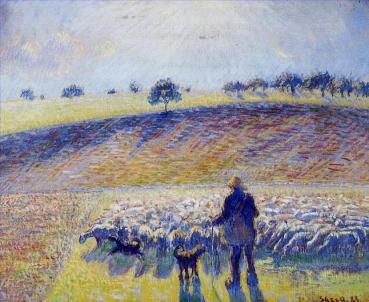
Life is a canvas; I am a painter,
Drawing the scenery of everyday
With the feeling of unbound duty
To see the beauty of it all hidden under
A veneer of reality, come what may.
Life is a canvas; I am a painter,
Drawing the scenery of everyday
With the feeling of unbound duty
To see the beauty of it all hidden under
A veneer of reality, come what may.

They saw him struggling and being done. He seemed to stop breathing with no vital signs of being “alive and kicking” any longer. They saw it all, they thought him dead up there on the scaffold, suspended for 50 good minutes on a sturdy rope tied around his neck on one cold November afternoon of 1740. Then this presumably dead man came to life as soon as a penal surgeon put a surgical knife on the body laid on a slab for anatomical dissection. This really happened, and so it did. Hence the phrase, “Dead or Alive.” The subject of this incredible case was 16-year old William Duell, condemned for the rape and murder of a servant girl.
This incredible cheating of death spawned doubts on the effective way of enforcing deference value of the penal law, religious musing on a possibility of divine intervention, and dilemmas of what should be done with this resurrected convict. It was concluded that Duell was to be transported for life to North America discreetly lest his survival should stir up any public imbroglio that would result in a call for abolishment of execution by hanging deemed to be ineffectual and thus inoperative in enforcing authority of the capital code in society. Accordingly, there are no known records of Duell’s transportation to North America and his after-life therein. What a chance of life he was given despite his cardinal sin!
Then how did it all happen? It was due to a miracle of our human body that will make the reader’s head swivel in wonderment: the fact that the execution was carried out in cold winter increased Duell’s chance of survival because the brain must have triggered the body’s survival mechanisms when in traumatic comatose. That is, the body in its own biological defense against such trauma lets the brain reduce the temperature and keeps the heart and lungs alive by maintaining optimum oxygen levels to prevent major brain damage in a trauma, such as Duell’s being hanged in the winter cold.
It’s a cracking case of “Ripley’s Believe It or Not,”which is worth the knowing if the reader is keen on uncanny things. But then nothing is more wondrous than our own human form. To the agnostic skeptics, it’s science of the body that works a divine feat of miracle in the sense that it can fight back threats from the outside and even death, such as being manifested in Duell’s incredible dead-alive illustration. On the other hand, as not all hanged men did return to life, it would be supercilious to conclude that only science rules in this strangely curious case, for there are more things in heaven and earth than are dreamt of in our modern rational mode of reasoning.

George Mallory, a Himalayan mountain climber perishing on Mount Everest three decades before Sir Edmund Hillary reached the highest peak of the selfsame mountain, gave the simple reason for doing what seemed to be impossible to an inquisitive interviewer: “Because it’s there.” The answer echoes Leonardo Da Vinci’s axiom of “Simplicity is the ultimate sophistication.” It also chimes the bell of my reason for writing: “Because it’s my pleasure.” It is what I like doing for the sheer egotistical practice and for the aesthetic pleasure expressed in my literary world. Hence, my blog is my library, a kind of the Mathom-House in the Shire, inhibited by Hobbits.
Here’s caveat emptor to using this library: (1) Frivolous subscriptions to a catalog of my writings without legitimate appreciation results in deletion; (2) Tramping by unidentified readers with fake accounts and cretin marketing websites to peep into the words of the mind is a violation of privacy; and (3) Whimsical changes of like and unlike of my writings for reasons clandestine are to be curbed. Since I do not write to cause a traffic jam in my statistics of posts, I don’t pursue a high number of the melee or rabble intent for awards or thousands of comments or fans for their “blogs”.
Writing is an act of translating one’s inner world into a textual reality in which others can pass over to the world of the author as members of Humanity. As William Wordsworth would have agreed, I fill my paper with the diamonds of my heart. Therefore, I write. Hence I deem it fit to conclude this post with the following axiom by C.S. Lewis: “You can make anything by writing.” Ditto.
P.S. One never learns. After I published this post, those lumpish ones kept following my Blog without even appreciating it. Woe to those who plague my sovereign library! Hark! I monitor my Blog every time I get notifications via e-mail and suss out the profiles of readers of my Blog. Deletions are, therefore, purely subject to my discretion. What else can I say? Albert Einstein speaks for myself:
“Two things are infinite: the universe and human stupidity; and I’m not sure about the universe.”
 Cat Power: A Good Woman by Elizabeth Goodman
My rating: 5 of 5 stars
I first saw Chan Marshall singing in 2007 Chanel Haute Couture, while models were swanning around like ethereal fairies in gorgeous Chanel wardrobes. Better known as her stage name “Cat Power,” she was the Queen of the Show in her graceful poise whimsically mixed with her super cool urban retro-chic fashion singing a soulful and powerful melody of ballads like a stylish bohemian troubadour. So I downloaded her songs from iTunes and loved her solitary lyrics imbued with Southern blues soul and offbeat timbres probably as a result of her elbow room in the beloved New York City. To top it all off, Chan Marshall became one of My Nine Muses.
Cat Power: A Good Woman by Elizabeth Goodman is a beautifully written memoir of the enigmatic singer as a result of Goodman’s own adoration of the singer as a fan. Of all other books on Chan Marshall, this book is par excellence in the context of regarding the beautiful play of words, the elliptical table of contents, the journalistic efforts to sleuth for buried truths, and the audacity to publish all of it against her adored heroine’s own disapproval thereof afterward because the book seemed to lay it all bare in public. But Ms. Marshall’s worries could have been assured, for the book makes her all the more human and real, imparting a sense of empathy and sympathy because all her frailties and foibles, in one way or another, strike the chords with ours as well. Does everybody not have a dark registrar and think the cold star on a wide sea seems to betoken one’s life? Goodman whose writing feat had achieved grace in the New York Times, Rolling Stone, and NME (“New Musical Express”) knew the universal ethos of such human conditions that had also enveloped the beautiful musician in the person of Chan Marshall. The title of the book is a summation of Goodman’s reality of the star.
In sum, the book is a comprehensive memoir of Chan Marshall, who reminds me of a cross between Francoise Hardy in style and Patti Smith in music. In the peculiar alchemy of literature, Goodman wielded her writer wand to conjure up the image of Chan Marshall in the book that also appositely strikes the cover of the book. Pace the criticism of the book as a rip-off from Ms. Marshall’s privacy and of the author as a jilted ex-friend for the reason unknown, it is worth the reading by the sheer enjoyment of good writing and Goodman’s affinity for popular culture, especially in music.
 Dog Man: Brawl of the Wild by Dav Pilkey
My rating: 5 of 5 stars
Half humanoid, half canine guardian of justice and humanity in league of his unforgettably formidable allies saves the city from evil villains set out to plague it in as much annoying way as fleas on a poor dog’s body. Hip, Hip, Hooray for Dog Man, our unlikely but likable hero that deserves of our heartfelt hoot and hollow. To contradict the usual glorification of hero-worshiping façade, Dog Man is none of your familiar super heroes in Marvel Comic Strips, nor is he like Batman, Superman, or even Iron man who seems to possess vulnerable human traits, and yet is equipped with wondrously technological gizmos or alien superpower. Contrariwise, Dav Pilkey’s Dog Man wonderfully embodies all things related to our unfavorable human tendencies that cloud our wondrous potential abilities – insecurity, disappointment, loneliness, and diffidence as deeply felt by Pilkey himself as a child diagnosed with Dyslexia and ADHD at school.
Pace the generalization of the book as being intent for children, this book is inclusive of literature, philosophy, and sociology contextualized in the story and delineated in the characters without gravitas of the academia. Take Dog Man, who finds himself estranged from his colleagues at his police station except his boss, Chief. Dog Man cannot talk for the reason because he’s a dog with a human body used to belong to his K-9 policeman killed in action. As the title “The Brawl of the Wild” adumbrates, Dog Man is in a way reminiscent of Buck, the sled dog in Jack London’s classic The Call of the Wild that comes to term with his fate and even reconciliation with a treacherous human in the person of Thornton. Then there are Petey, who is supposedly a sinister jailbird, but in fact softy inside, his cute young son Li’l Petey, who never gives up on his jail- bound father Petey in his joint collaboration with Dog Man in rescue operation of the city, and stern but benevolent Chief, who seems to defend Dog Man against unjust and unfair treatments from his fellow policeman/policewomen and the pompous judge. Wisecraking and heartwarming, hilarious and sentimental, intelligent and vivacious, each of the chapters is smoothly linked to the next one with amusing in-between intermissions that deserves of the separate theaters of appreciation.
The book is an enjoyable parade of laugh and compassion wrapped up in delightful amusement of vivid colors and elegantly profound dialogues, which can be made possible by an insightful and observant author who stands with the reader and sees hope and goodness mired in the despair of hopelessness and wickedness at the heart of humanity. I recommend this book to all who want to spend their time reading something jovial and funny after a long hard day or just to fill their minds and hearts with a fresh breath of air. This is a scintillating read that evokes a wide arc of thoughtfulness and imagination in the minds of readers both young and old, and the young at heart.


You must be logged in to post a comment.