Mania from menos the spirit or the mind the elevation of the senses the cultivation of imaginations with 4 shades of madness: Religious fervor in Dionysians Poetic possession by the Muses Erotic obsession by Aphrodite Pythias’s inspiration from Apollo. Thus is spoken.
Where I am from No one cares, But who cares When a country Whose borne We’re all wayfarers To the terra incognita Where journeys end By the Five Rivers.
Normal is an ideal, Calm is a rebel, Discord of malice Stalks her will To find her lost star; The gift of disaster From the Fates Keeps her secure Beneath the tree forever In Tartarus.
Tolstoy in Anna Kararina knows a thing about the Aristotelian school of subjective happiness thus: “All happy families are alike; each unhappy family is unhappy in its way.” Happiness is an antidote to depression out of hopelessness and envies out of disappointment in a purely subjective sense. It requires only self-will to choose the light and to follow it by constantly taming your brittle spirit via lifelong habit until you find a sense of why you are here in this world. If you doubt it as a cliche, then meet Aristotle, the student of Plato, who was the student of Socrates, and the private tutor of Alexander.
Along with his great predecessor Socrates, Aristotle was a thinker who billeted Philosophy from the heavens at the houses of mortals so that she could show them how to cope with the harsh realities of the world that discombobulated a sense of purpose in life. Aristotle’s main concern was that people weighed heavily on the outward material success as a sign of well-being and a carte blanche to happiness, which would lead people astray with a sense of emptiness inside. For example, we can’t know if all those glossy selfies on Facebook and Instagram reflect the real lives of those uploading them. Or the lives of Hollywood stars who predicate on images and styles are not, in fact, worth admiration, as revealed in the recent defamation trial of Depp v. Heard, in which Depp’s braggadocio of recalcitrant drug and alcohol uses combined with alarmingly repulsive backstage personality, is simply disgraceful. On the contrary, the Uber drivers I have come across appear to be more satisfied with their lives, content with their independent work mode, and love of families. This Aristotle refers to a state of eudaimonia, a feeling of bliss, however small it is, because it comes from a higher sense of pleasantness from within.
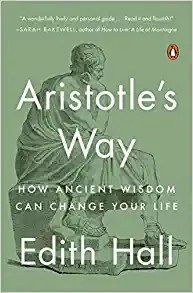
Of course, Aristotle’s way is not instant magic and may not show visible effects in one fell swoop, but it is a long-term remedy like a physical therapy that will show improvement. Aristotle’s way is not fanciful but practical with two recipes for the malady of hearts: (1) to keep everything in moderation, called the “Golden Mean”; and (2) training yourself continuously and actively to do the right thing like a habit. Aristotle reminds us that excellence is not an act but a habit. This happiness school parallels Emerson’s dictum that thinking is the function, and action is the functionary. So this is Aristotle’s simple but sophisticated stairways to your happiness, and I think it’s worth trying. No wonder his student Alexander became great.







You must be logged in to post a comment.