More in fear than in anger
Still the girl lost in time
She kept a pretty garden
With the sweetness of secrets
In a labyrinth of a thousand stories
Wondrous, rather than gorgeous
As a path to the garden was mysterious.
More in fear than in anger
Still the girl lost in time
She kept a pretty garden
With the sweetness of secrets
In a labyrinth of a thousand stories
Wondrous, rather than gorgeous
As a path to the garden was mysterious.
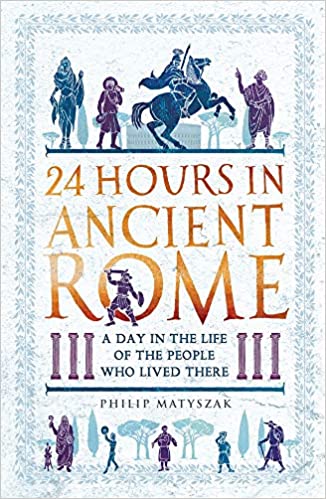
Ancient Magic: A Practitioner’s Guide to the Supernatural in Greece and Rome by Philip Matyszak
My rating: 5 of 5 stars
Magic in ancient Greece and Rome was an art of crafting natural force with a bit of help from the world of gods and spirits wonderous to the user without fully knowing them. Contrary to traditional orthodox Christian teachings, magic was not associated by default with sorcery privileged to an esoteric spiritual elitist often dark and sinister. To the ancient Greeks and Romans, magic was their belief system, part of their modus vivendi in everyday life from slaves to emperors in the sense that we go to doctors or counselors. In a word, magic, as we understand now, was not so much deviltry as a variety of rituals of individual petitions pleaded for the fulfillment, which even the tremendous ancient minds regarded worthwhile to record.
Before the era of Christianity, the concept of magic was often interchangeably used with the knowledge of natural and supernatural worlds, which the ancients saw as not impossible to cross in between and thus believed the ghosts and the afterlife. Plato and Pliny, the Elder, advised no mortals go to graves alone after dark because there the restless souls of the dead not crossing the Styx, wandered. The most significant of the ghost story is Pliny the Younger’s letter to his friend Licinius Sura. He tells of the philosopher Athenodorus, a stoic astronomer and tutor to Octavian, the future emperor, witnessing a ghost of an old man in shackles showing his improper burial site.
Magic encompasses auguries and omens by the flights of birds, spells, and potions to charm the figures of desires, and the astrological signs in the ascendant at births and the sun, all of which to make uncertain futures known as guides to walk the paths of life to arrive at the fates. Matyszak tells the reader in the capacity of a Virgil leading Dante to the Underworld that seers at Delphi and Cumae were relatively easy to foretell the futures, which were unchangeable. Their acute intuition took a dreamy leap to poetically versed oracle pronouncement in the background of ethylene atmosphere and told what the petitioners could do at their best to deal with what laid ahead of them because there was no more than one fixed future.
The book invites the reader into the world of magic like never before because knowledge is a composite of Herodotus, Plutarch, Pliny the Younger, Socrates, and Plato. They took the extraordinary subject seriously because it was part of their daily lives bordering on a thin line of the spiritual world that was as real as they were. The book is written in a language accessible to all spectrums of education and walks of life. It is philosophy, religion, and history magically mixed in the author’s magic potion of erudition that significantly produces learning charmed in natural wits.
View all my reviews
“Insidious” (2010), directed by James Wan is an intelligent movie with an entertaining flair to hold the attentions of both serious and light-hearted movie lovers. I am glad to have watched it last night on Netflix after reading a book on the history of ancient magic and ritual, and I must say there must be some kind of strange reason that I came upon the movie. It always seems so pat to find a supernatural movie orbiting around me and materializing at an apropos time that it gives me chilling fillip to my suspected element unrealized from within. Whatever it may be, and apart from all the mysterious signs hinting at something about my unknown anima, I am pleased to write about the movie herein.
The movie is anything but a faulty horror movie. Not “Insidious.” Hardly Ever the criticism of flamboyant cast. Never the limitations of a seemingly infinite range of imaginations that the writer wrote and the director portrayed. It is beautiful alchemy of the harmonious performance of the stellar cast and brilliant storytelling of the extraordinary event in the ordinary existence, all fascinating and riveting. Like an incantation of a professional sorcerer, the narrative slowly builds mystery around the atmosphere. It brings up images of the beyond at the zenith of the ritual when everything seems ready for demons or the superiors to appear before your very eyes.
The magnet of the movie is the Elise character faultlessly played by Lin Shaye, who began to change my perspectives on a psychic that if there is one like her in real life, I would love to chat with her and possibly work for her even as a part-time assistant. Elise reminds me of an ancient Cumaean Sybil who helped Trojan refugee Aeneas meet his father’s spirit in the Underworld with a gentle but powerful voice elucidating her beautiful spirit. But to call her psychic doesn’t do justice to her essence and vocation as a mystic helping people in distress. She balances her spiritual power with a rational mind by scientific methods to discern the origins of the spiritual maladies of her clients. And she does it in the gracefulness of a good witch performing white magic that I believe even priests would be envious of.
What makes the movie on par with the timeless supernatural film is the universal subject of the world beyond our sensory perceptions and across religious dogmas. It’s the world of “Further” where spirits lost wander around and dammed lurk in the darker corners of the crossroads. Elise helps the lost spirit of the boy in the Further find his way back to Here and goes further than she should save people’s lives from the evil power even it means to be at her expense.
“Insidious” is a thoughtful movie dealing with a supernatural thematic element that is harder to play on the screen than it is to envision in the mind’s theater. The movie’s impression spreads into a mind’s garden and stays there in alterations like an insidious charm of ghastly sightseeing so incredible that you can hardly dispel it. If you like to watch a good, decent ghost movie without mutilated bodies and ear-shattering screams, but ghosts or demons only, this movie may do.
Going to mass every Sunday morning has become a mechanical reflex of programmed biological locomotion ever since I realized that my beliefs were abstract ideals hard to fit in the real world. All those sacraments of the church I learned by rote as a child has become the artifacts of ancient esoteric religion that has turned into institutional paganism itself. In a word, I am on the verge of losing my faith altogether, if not already, still tempted to recourse to the fragments of the belief that I try to reason on my own terms, which I often find hard to win because something such as the message supposedly from the Holy Spirit I randomly picked up yesterday after a mass permanently binds me to the old religion.
I didn’t care much less about Pentecost Sunday when the Holy Spirit descended from heaven filled the hearts of the faithful with messages from God to each different individual. The little bookmark-like cards containing each of Seven Gifts of the Holy Spirit were randomly distributed to the attendants after the Eucharist. The priest said they were blessings from God curtailed to individual needs, never coincidental and ever mysterious. I picked up one that was not what I would like, but that what I had denied. It was not Wisdom, Understanding, or Knowledge that I still crave the most. But it was Piety instead, that not so wonderfully mysterious or romantically awe-inspiring banal word for showing respect for God, the church, and the religious people. St. Thomas Aquinas would rebuke me for my low regard for Piety, but it is rather clerical and prosaic virtue that even the most unlearned would have. After all, absolute obedience to God and the Church was what drew Luther’s bow of the Reformation.
But how could it be possible that my gift from God was Piety amid my own religious turmoil in soul’s dilemma? Indeed, there must be more than a respect for priests whom I think as presumptuous elitists inured to be respected, not accustomed to respect. Piety encompasses dutifulness, fidelity, allegiance, and loyalty, giving the impression of militaristic steadfastness. In my own words, I interpret this augury as indicating patience to endure and fulfill obligations till the ripe time and chance happen to me during my journey to a preordained end. My loyalty then requires fidelity of my consistent devotion to a job, filial duty, and the church by not falling wayside to the current instigation of a rebellious spirit. Am I not being an Oracle of the Holy Spirit?
I keep the card and wonder if it is a manifestation of synchronicity. Whatever and from whom it may be, one thing is sure that reverence for obligations arising from a sense of duty helps your ship’s sailing across life’s undreamed shores and unpathed seas against the thunderous maelstroms in nature’s whimsical and capricious temper. It might be just a random message, but then there is nothing as coincidence because we are made of such wonderful stuff of fire, dew, and spirit. What’s more, if I can use the message as a divine oracle to guide my journey into the unknown tomorrows, then it will be all the more beneficial, just as the people of the ancient civilizations did the same. And I think that is why religion exists.
Why is it that life is livable
When it is read, not spoken
It is nuanced, not shown?
What you say isn’t mine
A mass mantra I hear ever
Happiness is a matter of effect
Sadness is the truth of the heart.
Positivity kindles, hope revives
When I trust in your true colors
The wheel is spinning, spinning
When to stop only chance picks
How to pick hardly anyone knows
As the whims of Fortuna are steering
Blindfolded the divine lottery
Fair randomness but senseless.
The Fates divide, gods consent
The will and hubris unite in revolt
You must be logged in to post a comment.