Blog

  • A Tale of a Cat in Tote

    Finding a good vet is a challenging task

    It may sound funny but finding a good veterinarian seems parallel to Perseus’s finding the Hesperides’ whereabouts, the nymphs holding the weapons for destroying Medusa, as instructed by goddess Athene. The half-god and half-human Perseus had divine help from the goddess to accomplish his terrific mission. Still, the whole human Me, left with my limited mortal device, had to embark alone on a daunting quest for a competently proficient veterinarian who could precisely ascertain the cause of my cat’s gastrointestinal malady with the utmost professionalism and most profound care for animals. So, I want to relate my journey to arrive at the mission accomplished to Hercules’s Twelve labors to fulfill his moral responsibility for the beloved he had slain.

    Toro’s Arrival at the Hospital in Tote

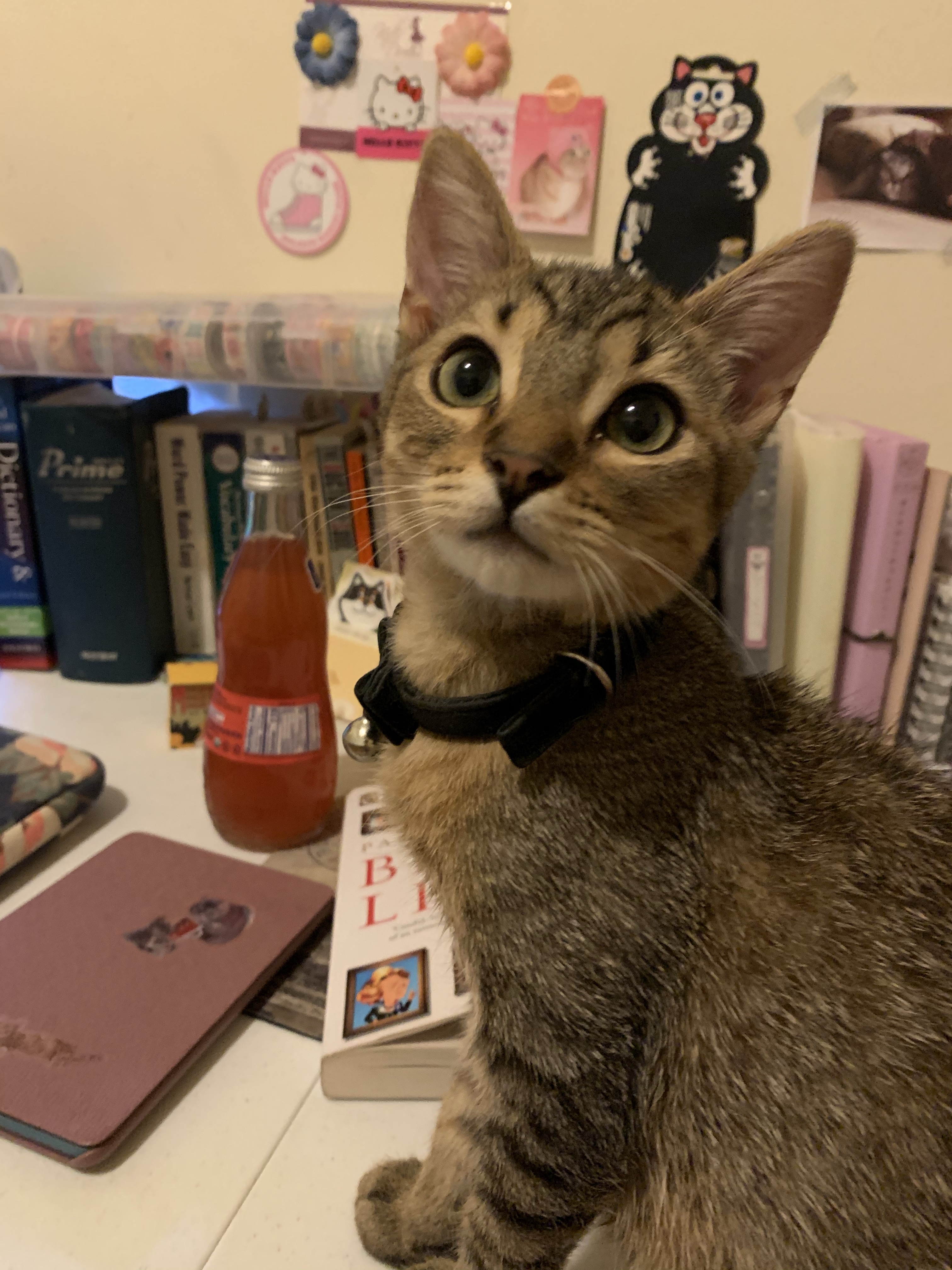
    No, not that I harmed my little sixteen-week old Toro. How despicable! But that he had been suffering from irregular bowel syndrome, aka constipation. Although well-potty trained, Toro had difficulty in releasing excrement completely with heartwrenching yowling, resulting in inappropriate elimination everywhere in my room. As his human caretaker/sister/mother, the onus of relieving him from the pain was naturally on me with an initial frustration of finding the panacea. In a new city with no acquaintance to recommend me an expert on cats, I looked up a list of veterinarians nearby on the Internet, mostly Yelps and Googles’ reviews. As a follower of Thuclyclides on hearsay’s integrity, not on the popularity of the subject from the masses, I eliminated the superfluously effusive complements of reviews suspected of blind bromides advertised by sponsored reviewers. I followed my instinct that led me to a particular veterinarian with less florid advertisements and more evidentiary results of curing cats, one of whom looked a lot like Toro. What can I say? It was more of my intuition, leading me to take Toro to the veterinarian of my choice.

    Toro’s X-Ray reveals his inner world, including a microchip

    The doctor listened to my plea for examining Toro thoroughly with his entire medical history obtained at his adoption from a shelter. He took Toro’s X-ray and explained that it was constipation and that he would inject enema to release due eliminations from his stomach. I was also given a bottle of lactulose solution to be administered to Toro orally three times a day. Besides, he gave me a bottle of Betagen topical spray for Toro’s infected buttocks due to the remnants of dried defecation, free of charge. It was certainly more than I expected of the care, now that the cause of the sickness had already been precisely diagnosed and adequately remedied.

    What an adventure I had today!

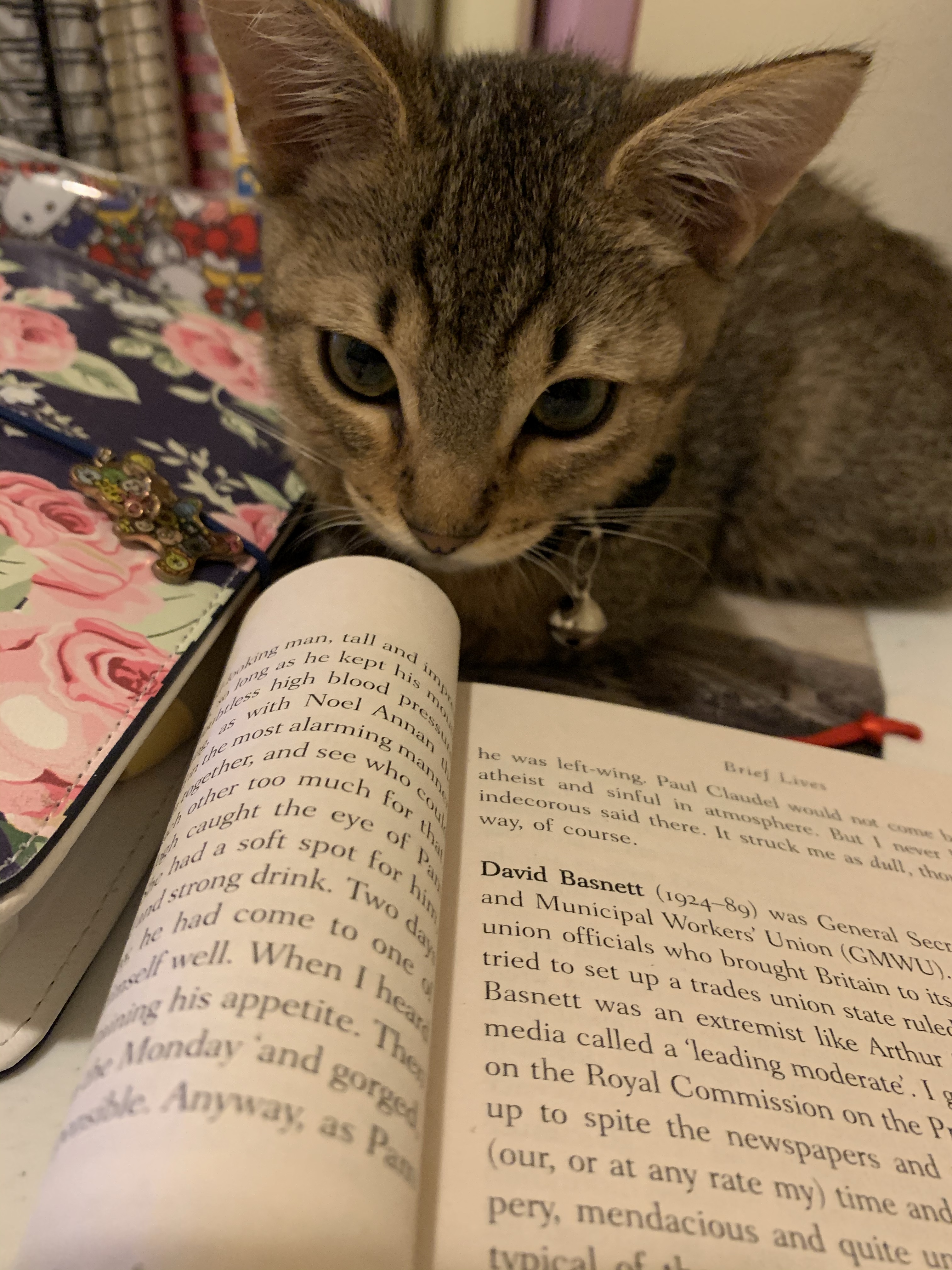
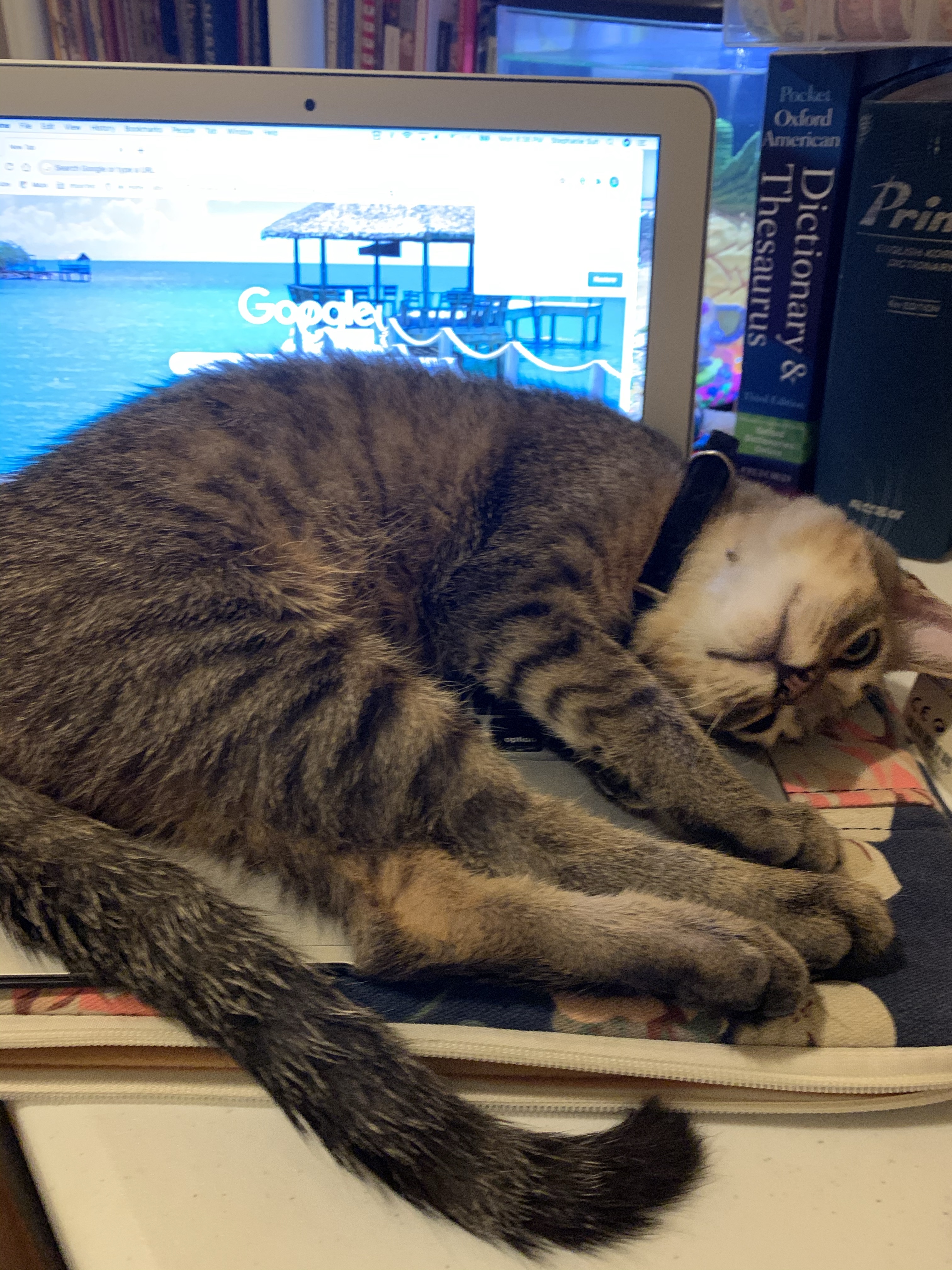
    Toro is now easily defecating in the letterbox. However, he seems to be a bit lethargic due to the oral solution that I have been injecting to him, which is a challenging task every time because of his apparent dislike. But Toro knows that he feels better now than before, so I guess he takes his medication as a daily ritual until the solution is finished. At the moment of writing, Toro is sleeping sweetly on the books shelved on my desk, and looking at him produces a phantasmagorical display of images of all things loving and caring and comforting I have seen from paintings and movies. Would this be the same kind of feeling when God sees his creatures made in love? It may be a bit of stretch, but I like the idea of it.

  • friends in loneliness

    Looking out the window,
    What does he see?
    A little chubby sparrow
    Twittering on the roof
    in his cheerful vivacity
    like a new good buddy
    with an invitation to play
    in their shared curiosity
    of each other in loneliness.

  • ‘The Language Instinct: How the Mind Creates Language’, by Steven Pinker – review

    The Language Instinct: How the Mind Creates LanguageThe Language Instinct: How the Mind Creates Language by Steven Pinker

    My rating: 5 of 5 stars


    People tend to judge who you are according to how you speak and write as an effortlessly conspicuous touchstone of your intelligence. The pesky lexical solecism in writing, funny way of talking with accents, and fumbling manner of delivering thoughts are the Three Capital Sins decreed by English Language Purists regarding English Undefiled. Since English is not my mother tongue, such derisive experience often forced me to conform to the notion that the language ability determines general cognitive ability, until I read Steven Pinker’s The Language Instinct.

    Pinker, who himself came from a French/English/Yiddish linguistic family background, asserts that the salient features of language should not be synonymous with the performer’s general reasoning ability. He expounds that the language is the instinct, a survival mechanism resulting from human evolution, universal in humankind, whether technologically primitive or advanced. It is a highly specialized mental module established through the passing of times by wonderfully flexible human faculty of learning by mutation, heritability, and isolation. The aptly fitting allusion to the biblical Tower of Babel illustrates the universality of language due to the innate universal human consciousness. Hence, different languages are the descendants of the proto-type language with its changeable nature according to the passing of times, calling for changes in social and cultural modes of life.

    In this sense, idioms and other forms of English-based pidgins demonstrate divergent evolutionary traits of English, not the illiteracy of the speakers of such languages. Pinker remonstrates with famous critics, editors, and writers, who are bulwarks of the Pure English since language is the instinct, not the mind itself. Their judging people based on how they speak and write shows the ignorance of the truth, seeing what they want from their designated vantage point of arrogant grammarians. Come to think of it, didn’t William Shakespeare, a former maker of leather gloves with a limited education of grammar school, ruffle the feathers of his university-educated colleagues in his time? Leo Tolstoy, Emily Bronte, and Jane Austen were not perfect spellers, nor was Jack Kerouac, who often stumbled into existential lingual vertigo because English was not his mother tongue.

    The book covers everything you want to know about language: how and when people started to speak the way they do now, where the origin of proto-type language took place, and why language is not a barometer of intelligence. There is no such thing as linguistic relativity, a principle claiming that how you speak affects how you think, which alternately means that you are not as intelligent as you like to believe because your English is imperfect. I could not believe why many people disagree with Pinker’s view of the language instinct. They pillory him for being something of a language eugenist when he is against those language mavens, one of whom publicly derided Pinker for defending his parents’ less than perfect English language ability. The depth and breadth of knowledge that Pinker shares with his reader become scintillating with his trenchant wit and feisty honesty, comparable to Samuel Johnson, author of A Dictionary of the English Language. This book addressed my soul-searching question of language and its relation to intelligence, and it prescribed to my wounded soul with a new perspective of language as the instinct. Whether or not you subscribe to Pinker’s theory of the language instinct is voluntary, but don’t forget that prejudice darkens the knowledge.


    View all my reviews

  • Theodore Tom’s Virgin Maid – ‘How To Be Owned By A Cat’, by Kate C. – review

    How To Be Owned By A Cat: Simple Action Plan For First Time Cat Owners Who Have NO Idea What They Are Getting IntoHow To Be Owned By A Cat: Simple Action Plan For First Time Cat Owners Who Have NO Idea What They Are Getting Into by Kate C.

    My rating: 4 of 5 stars


    Cats remind me of whimsical and capricious Greek gods and goddesses. Sometimes, cats are like Baroque European aristocrats with sophisticated finickiness. They are like spoiled children with no regard to manners in the sudden pulsing of stalking and jumping, rigidly dominated by their blindly unchecked ego. Whatever of the feline nature it may be, there is undoubtedly more than one of it; cats are convincingly intelligent, bracingly artless, and surprisingly affectionate with a display of individualities particular to each cat. No wonder there are celebrity cats as follows: A Cat in the Puss walking around as if he were man, Tom outwitted by Jerry, Garfield as laid back as his lookalike master, Felix the Car becoming a timeless icon of the style, and Theodore the Cat, who likes to challenge, “Who’s the Boss?” in this amusing read.

    With an imposing name associated with a man of outstanding achievement, Theodore likes to think himself as a lifetime resident of a presidential suite attended by his matron-in-waiting Kate, a virgin cat owner without prior experience of raising a cat. Her meeting with Theodore, whom she happened to adopt from a pet shop, is a match made on earth, orchestrated by time and chance, aka Fortune. Or it may be the stars that shine brightly above their heads. The journey both Kate and Theodore has thus far embarked is akin to a real one of a road trip by a small caravan, consisting of bumpy drives, drive-ins, park-ins, give-ins, give-outs, etc. Kate’s relationship with Theodore parallels that of the Chef and his stray gourmet cat named Apollo in John Steinbeck’s “The Amiable Fleas” regarding the narrative’s realistic atmospheres illustrating the significance of ordinariness in daily life. Both works celebrate the values of simple pleasures that give a fresh hold upon our problems and different perspectives on life.

    This charming little book also attests to Emerson’s tenet that thinking is the function, and action the functionary. In other words, the understanding of truth results from the successful union of knowledge and practicality on reality. Kate comes to the A-HA moment by realizing that her knowledge about cats from books and the media is not complementary to its applicability to tending her cat, Theodore.

    I picked up this read because in reading its summary, I felt related to the author’s case for being a first-time cat owner without initial interest in cats. Her daily interactions with Theodore has taught her that there are no bad cats but only misunderstood cats due to a lack of patience or a deficiency in compassion on human parts. What will happen when what you read from books and watch from Youtube about cats contradict the realities of your Toms and Mollys at home? Just as lawyers do not learn their trade at law schools till they practice, pet owners will not know about their flurry fireballs till they clean their poops. In light of the above, this book is a lightheartedly vivacious and entertainingly down-to-earth read that makes you emphasize with her experience as a first-time cat owner.

    Furthermore, for those who criticize the author’s poor writing style as posted on Amazon reviews, I want to tell each of them that being a purist regarding English Underfiled does not guarantee that you are not an ignoramus. Good writing means not in immaculate grammar but in the richness of sentiments and of thoughts. Therefore, I regard this book as an excellent read to read; especially, if you are a virgin cat owner like we are.


    View all my reviews

  • Our Mutual Friends

    Some say animals do not have a faculty of mind that translates the sense into meaning.  I always find it ironic that educated people can sometimes be heartlessly benighted, belittling a simplicity of nature. That they do not have the emotional spectrums, ranging from guilty to remorseful, and to resentful, gives free rein on arbitrarily judging animal behaviors according to human rational thinking that supersedes instincts common to all living creatures. Nor does it sound sane to cosset pets with outpourings of maudlin sentiments out of anthropomorphism for our convenience. We are fortunate to live in the age of the Brilliance of Science. Still, the overflux of information sometimes begets counterproductive results. Amid the deluge of information on animal behaviorism available on the Internet, I am often doubtful, if not fearful, of the way I am raising my cat.

    I observe how my 14-week old tabby Toro behaves from defecating in the litterbox to drinking from the water fountain, playing with his toys, and to watching his new finned friend, Hope, a Betta fish. Although they do not have the faculty to produce physiologically-driven emotional effects as complex as humans, my observation has yielded that cats exhibit a feline version of a continuum from pleasantness to unpleasantness. For instance, when I discipline Toro for not behaving, he does about-face and hides under the bed or goes to a corner of the room, sitting there like a mini sphinx statue, sulking and avoiding my eyes. Then in about 10 minutes or so, he slowly (and stealthily) approaches where I am while still keeping his feline pride in a way he doesn’t want to ingratiate himself with my favor. When finally arriving at his destination of Me, he announces his arrival with the unmissable “Meow,” with his eyes pleading for my petting. Cats may not have the same kind of grudge that we humans secretly harbor as in William Blakes’ ‘Poison Tree.” Yet, they possess the tactile feelings at the primary level, which can be akin to those exhibited by infants. Also, I don’t think raising a single cat will prevent her from socialization or emotional well-being. Most cats do not like to be with other cats unless they are littermates from birth.

    My a posteriori opinion about a myriad of scientific theories and expert dos and dont’s about raising cats happy and healthy is an intelligent hypothesis of feline nature. It attempts to explain why they act the way they do so that we, as caretakers, should take care of them better and more effectively. From my personal experience thus far, it is really up to individuals’ discretion to respond to their cats (or other pets) because each animal has different characters with particular likes and dislikes. So I try not to read more than I need in terms of feline care. (i.g., Toro likes no cat tree, no chasing ball but likes to climb on chairs, shelves, and tables that humans use.) Cats are solitary and egoistic, but that is why they are so affectionate toward us.  As the Victorian British writer George Eliot said, “Animals are such agreeable friends, they ask no questions, pass no criticisms.” Therefore, I would treat my furry little friend as he is, rather than turn him into an obsequious, listless pet whose existence depends on the mercy of his master.