Tag: afganistan

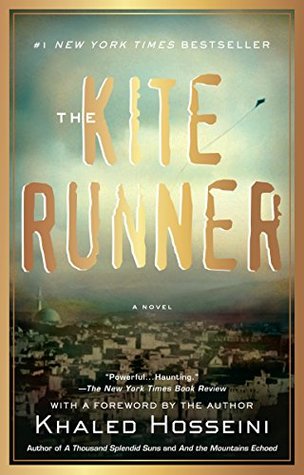
  • ‘The Kite Runner’ by Khaled Hosseini – book review

    The Kite Runner by Khaled Hosseini

    My rating: 5 of 5 stars

    Writing is the most solipsistic and democratic means to make people discover your secret histories or inner world so that they can understand why you are what you are. That is what Khaled Hosseini does enchantingly in The Kite Runner. It is a bildungsroman story reminiscent of the Au revoir, Les Enfantes-Esque ambiance surrounding the narrative of a grown-up boy who wants to reconcile with the stupendousness of mistaken guilt becoming a malady of the heart. But that doesn’t mean it is all too surreal or stark grim to make an accidental reader think it is a wrong choice. On the contrary, Hosseini vividly conjures up the faces and scenes, resurrecting the spirits of the places and times, by putting together the tesserae of his memories in this rivetingly heartrending read.

    The book incorporates the sociological theory of symbolic interactionist perspective focused on the relationships among individuals within a society and how political changes affect the lives of individuals and the sense of who we are and our relationships to others. The story’s narrator, a young Afghan boy of the upper-class named Amir Agha, gives the reader a ride to his childhood in Kabul to show the halcyon days of pre-soviet and Taliban reigned Afghanistan. First, you will see him and his best friend Hassan, a Hazara servant boy in his house, wallowing in reading stories and lost in kite flying. Then and thereafter, Hassan becomes a victim of the most horrific act committed by the half-German blue-eyed Afghan boy threatening him to win kite. Amir’s retrospective narrative becomes his public confession and ablation, all of which is a combined act of purging out the painful memories of the past and exorcising his demons tormenting him with the guilt of jealousy, ignorance, and cowardice. The whole narrative then becomes a plethora of pathos and empathy, resulting in a cornucopia of forgiveness and sympathy, drifting it all in a high-flying kite once and for all.

    It is a fitting story in this particular time of Afghanistan history and Abdulrazak Gurnah’s winning of 2021 Nobel Prize in Literature for his achievement of universalizing human travails transcendent of racial, cultural, and geographical differences. Vivacious at times but dolorous at most, the Kite Runner is synthetic literature that wears habiliments of memoir and novel. There truth and fiction dissolve into one another anchored in real life with factual geographical and historical facts smoothly amalgamated in the individual narrative account, which reminds me of Herodotus’s “Histories.” Or it is an alluringly pioneering memoir-making that resembles Realistic Fiction. For whatever it is, the Kite Runner bestrides the aisles of contemporary literature sections, alluring the public with simple language that magically juxtaposed in beautiful prose style with lyrical quality, all soul and mind in the marks upon pages evocative of the spirits of the memories materializing.


    View all my reviews
  • the world in my eyes

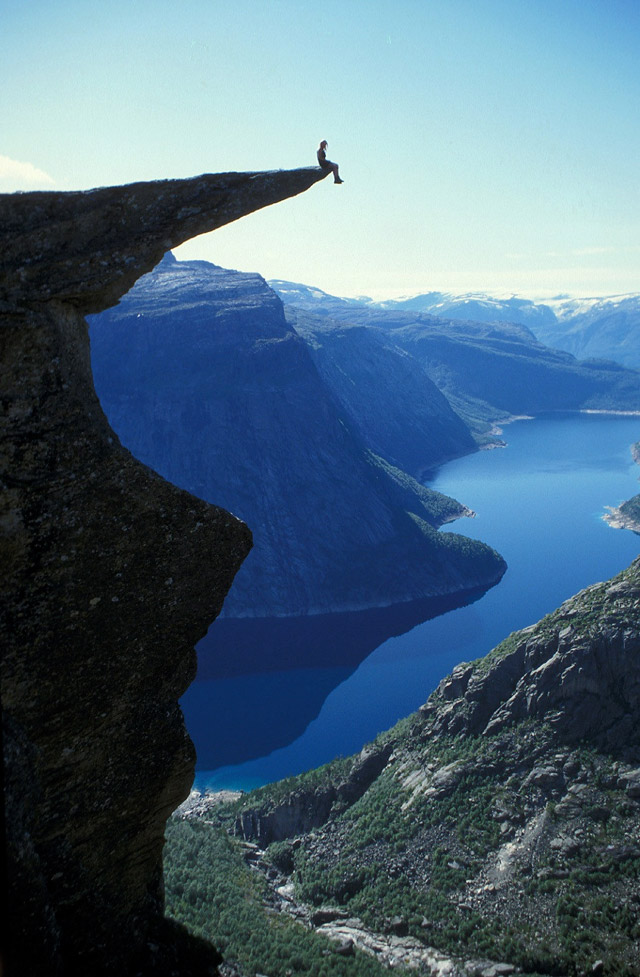
    On one fine day, a tiny Bushman in Southern Africa comes upon an empty coke bottle thrown from the cockpit of an airplane to desert sand. Thinking it is a gift from the gods, the man sets out a journey to return it to them. Along the journey, the Bushman encounters a pastiche of humanity in a kaleidoscope of the events he comes upon till he reaches an edge of a high cliff mysteriously enveloped by the rings of clouds and throws the bottle into the deep, exclaiming, “The Gods Must Be Crazy!” As I see now, I am in the chorus with him on the top of the cliff overlooking the world.

    Nevermore than now have I witnessed the epic moments of history that appear to be atavistic in terms of nature, motive, and consequence. A convenient way of relating the human tragedies to the scourge of gods and God will only put me on a par with Pangloss, the ever-positive pious philosopher who thinks all is God’s will for the best in the best of all possible worlds. The Taliban chanting the name of Allah in their will, Christians taking pride in being a new chosen people, and other zealots of any religion all have had recourse to their deities and used their belief systems as weapons of dominance over others. From the Coronavirus pandemic that forever changed our ways of life to the collapse of democratic Afghanistan by the Taliban and the devastating effects of Hurricane Ida in Louisiana, I see a phantasmagorical display of people’s faces in sorrow and distress in my mind’s theater.

    Following the news about the current situations of Afghanistan and its people links me to the Trojan War, which lasted about ten years with the Greek allied powers destroying Troy in the end. From the burning city of Troy comes Aeneas, a royal warrior who escapes the mayhem with his family, carrying his elderly father on his back, holding his little son’s hand besides. That image is always particularly heartfelt because of the Trojan hero’s humanness, unlike his more glamorous Greek victors. What happened in the past happens now and will always, such as the images of parents passing babies to soldiers across the sharp razor wire two young, Afghans falling from a plane climbing high in the sky, and the lifeless bodies of the young and the old, women and men strewn over the dusty ground outside the airport in the aftermath of suicide bombing.

    Back in the States, Hurricane Ida ravaged Louisiana, leaving thousands of people stranded, homeless without power (for about a month from now), and sufficient supplies of sanitation, clothing, and food. They lost everything, and nothing is what they have now. I cannot erase the image of a woman from a news interview who said the hurricane took everything from her family, then breaking into tears. Then there is news about an elderly man viciously attacked by an alligator in a flood presumed dead while his wife took a little boat to get help outside their flooded isolated community. Would the man have been swept away by the rapid stream of the flood? Would the alligator that had attacked the man have returned to him for more? Or would the man knowing or believing that was his end have let himself dissipated into the murky waters?

    Is this the same kind of significant feeling of epic moments I am experiencing as what George Orwell should have felt when witnessing the death of a Burmese condemned man on his way to the gallows, the carnage of WWII, and the tragedy of the Spanish Civil War? Orwell posited that one of the reasons he wrote was to record historical moments he was living with his own perspectives and feelings, not necessarily popular or compromising. My intention to write this essay is similar to Orwell’s but more with sheer egotism of getting the heartfelt sorrow off my chest and tears away from my eyes. But I am not so sure if that proves effective with the images still vivid in my mind.

  • Braveheart

    Beneath a new visiting sun
    Sees a woman through tears,
    Sorrow of the heart she feels
    As it deepens into a sea of pain.

    Beside her an ailing old woman
    Lies in natural amnesia for woes
    She wishes to send away in vain
    When a life’s grip is relentless.

    Fear crowded, tension soaring
    Zealots of God clad in weapons,
    Fierce eyes searching for victims
    Outside is the terror reigning.

    Demands of life, duties of care
    A caryatid bears on her head,
    She faces the faces of terror
    With a brave heart for the fate.

    Author’s Note: Yesterday, I wrote about my essay on the current situation of Taliban-seized Kabul in Afghanistan but still could not take it off my head because I felt for their fear for unknown futures. An article of the day from Reuters was about the ordinary Afghans who had to make livelihood even against a possibility of danger that lurks around everywhere where thousands of people are attempting to escape from the new Taliban regime, often futilely. Therefore, this little poem, albeit insignificant willy-nilly, is my small tribute to the brave ordinary people on the frontline with life in Afghanistan who are just like you and me. The heroine of this woman is another Me in Afghanistan who shares a similar life story.

  • Living in the historical moment – the Collapse of Kabul

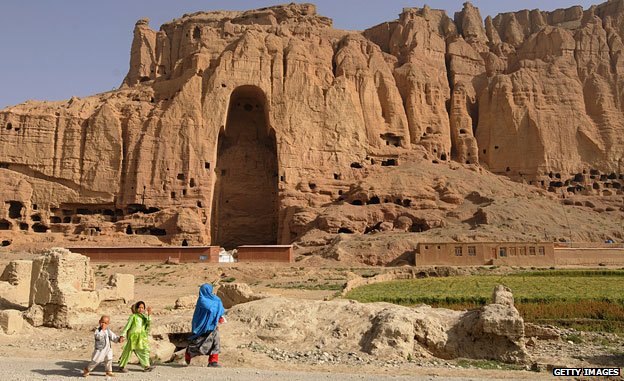
    The Buddhas of Bamiyan Valleys before the destruction by the Taliban

    One of the four reasons why George Orwell wrote was to record historical events in his time with a sense of writer’s responsibility to witness the moments for posterity. Imbued with the Orwellian spirit, but more egged on by the concern for the reign of terror, as a citizen of the world, I care to write about the current volatile situation in the Taliban regime of Afghanistan. Now I can see a danger of theocracy in which religion is a leviathan consistency master computer that controls people’s lives and psyches. Religion becomes an authoritarian Big Brother, the Demiurge that plays the absolute moral and ethical being in the mask of profoundly sacred deity leading to hatred of the physical world we live in. In this situation, the beauty of art intrinsic to our human essence is a decadent luxury, expendable to the bargain in the politics of heritage.

    The fate of Buddha before the killing

    The reinstatement of the Taliban government in present Afghanistan provokes the image of the great Buddha statues located in Bamyan, Afghanistan, until the Taliban obdurately and proudly destroyed in 2003 because the statues were idols opposite the teachings of Allah. The Taliban ignored pleas from the UN, including Islamic countries, that urged them to preserve the world’s treasure of civilization for humanity. The statues of Buddha represented Gandaha art, a wonderous syncretism of Hellenism of ancient Greek culture and Buddhism of Indus Valley civilization. It’s an exquisite synthesis of the West and the East, which tells us that people found a way to cross vast continents and seas and mingled to blossom into a new civilization even a millennium ago. Thanks to the one and only Macedonian Alexander the Great, emblematic of the wise and cultured political and military leader of all seasons, our human civilizations dispersed farther. They prospered further, as evidenced by the now begone great statues of Buddhas built by Bactrians, the descendants of soldiers in Alexander’s army who remained in modern-day Afghanistan by force and perforce and founded Hellenistic Bactria. By the way, there are still the descendants of the ancient Greek forefathers living in the area, even though their cultural expectation in the form of the statues of Buddhas have become mysterious wonders of the ancient world.

    The artifact of humanity is gone

    I am not condemning the religious whose faith is commensurate with their regard for others because a true believer of any faith is also a good person. The world’s representative religions do not promulgate violence and antagonism, at least not in their sacred texts per se. Still, misinterpretation or over-interpretation of the words have been the seeds of discord in history. I remember Mother Teresa of Calcutta once said that you don’t have to be a Christian to be a good person. If you are a Hindu, be a good Hindu, a Muslim, a good Muslim. I wish people of all faiths would take her words to heart. Then we could place the Republic of Heaven on earth.