Tag: american history

  • ‘American Made: What happens to people when work disappears’ by Farah Stockman

    Howard Stern might not be everyone’s friend, but he’s got the point when he articulated in his radio show a decade ago that what was eating out this great nation was not racism but classicism. The recent unionization movements among service industry workers, such as Amazon and Starbucks, indicate that the demand for the dignity of workers supersedes ideological politics that discourage the growth of American esprit de corps. American Made is a story about this American class consciousness that will put together disintegrated tesserae of the collective national mosaic made by the people and events.

    The author follows the three principal workers of the now-defunct Rexnord Factory in Indiana: Wally, a black man whose diligence and amiability promoted him to a coveted position in the factory; Shannon, a single white woman with an abusive partner taking pride herself in being a wielder, a male-dominated position, and John whose fortitude and conscience never left him during his long, turbulent unemployment days. Sex and race don’t matter when it comes to losing their jobs, let alone loving them because the importance of what they do for a living and the need for their livelihood are their commonalities that build a sense of camaraderie. In fact, class solidarity can never be achieved if class consciousness is transcendent of racial prejudice to be achieved first. Unfortunately, the antebellum wealthy southern plantation owners systematically destroyed the poor white laborers’ wage systems by replacing their workforce with the free labor of African slaves, thus planting the seeds of racial hatred in the hearts of the poor whites. The vicious cycle of devious racialized economic caste system has since firmly constituted the American economic system ethos under “Separated but Equal.” The author sees the absurdities of American society as a result of the disintegrated labor movements primarily due to racial prejudices, which is why worker’s solidarity is a way forward to achieve national unity.

    Wally, Shannon, and John are not just working-class Americans. The author emphasizes differentiating her elite station characterized by expensive private higher education and intellectual “profession” from those with hardened coarse hands of workers in the factory. They are ordinary people, a majority of Americans making up this country, ubiquitous in the landscape of our daily life. They are expendable at the whims and caprice of profit-driven employers who see their employees as no more than living at-will automates. That is what happened to the Rexnord Factory, where workers’ lives were no less than collateral damage for a successful operational mission of the company.

    At times, the author positions herself as a conscientious liberal intellectual, paralleling her fortunate environment with her unfortunate subjects. Perhaps it’s an occupational hazard for being an NYT journalist. Nevertheless, the book succeeds in pointing out a lack of national cohesion resulting from the politicization of racial rhetorics into bipartisan ideology, which falls by the wayside of solidarity of labor movement overcoming institutionalized racial prejudices. Recently, I have read that the workers of Starbucks and Amazon in New York have voted to unionize. American Made is a story about them and us too because the dignity of work makes us who we are.
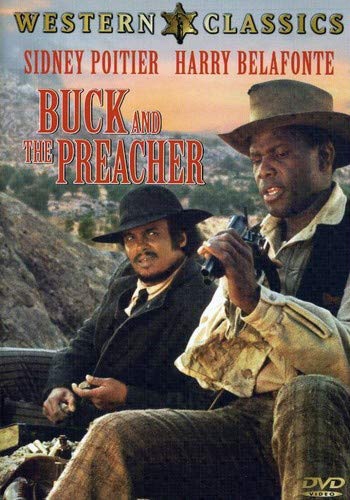
  • ‘Buck and the Preacher’ (1971)

    Rousseau’s dictum of “Men are born free and are chains everywhere.” fittingly describes the condition of what it means to be free from slavery after the Civil War. Even so, freedom was recalcitrant to belong to them, and the hardships that came with the price of liberty from the carnage of the war still beset the newly freed along the trail of exodus to the new promised land in the west as articulated in Sidney Poitier’s classic western film “Buck and the Preacher” (1971).

    Buck (played by Sidney Poitier), a former Union sergeant turned scout, leads a wagon of freed blacks from Louisiana to the west, where they hope to start their new lives without a shadow of slavery. But alas, the shadow of slavery still haunts them. It is up for grabs in the form of renegade ex-soldiers, probably both of the Union and the Confederates, hired by the former enslavers to bring the migrants back to the chains of slavery. They attack the wagon, rape women, and kill the old and the young, constantly intimidating them to return to where they belong. But the pain of loss and death is even less painful than the thought of returning to the past, and the journey marches on. Buck protects the journey, and the self-proclaimed preacher conman artist (played by Harry Belafonte) a former slave, chimed in, despite his original ulterior motive of money-gaining. This unlikely dup proves to be something of Moses and Aaron, so to speak, in a way that they guide and protect the persecuted people from the sordid bondage to a new promised land even if it takes a nearly decimal lot.

    Then there are Indians across the wilderness as gatekeepers to the land of freedom. They are no outsiders to the persecution with their land taken away and their very beings threatened to decimate. The Indians live by the toll fees migrants have to pay when crossing their territories, not the least due to the paucity of livelihood resulting from the government’s confiscation of the land. When Buck implores the tribal chief to help them against the white attackers because they are all brothers, the chief retorts him by saying, “But black people also fought against us with the whites.” The mistrust is natural, as is the confrontation of the two peoples whose rights are put to contests orchestrated by the forfeiter of the rights. The class consciousness between the Indians and the blacks needs a manifestation of shared injustice and empathy, which both of them attest to an objective reality where they prove to be on the same side.

    This film is one of the great Sidney Poitier’s and finest as I have been watching as remembering this brilliant actor who has recently died. Always poised with a commending presence filled with natural confidence and will without being febrile and vociferous, Poitier exudes his irresistibly graceful charisma on screen in this memorable Western about blacks and Indians, who are often seen in the peripheral characters contributing to highlighting main white characters. But this is not a revisionist Western at all to polarize the thematic elements of the genre. Hardly so. Instead, “Buck and the Preacher” is an eye-opening Western film about the peoples who are likely to be cast as outsiders even if they also rightfully belong to, to quote Lincoln, “the family of freedom with a jewel of liberty” called Americans.

  • The young heart at flame

    Who would have thought of it? The evening was alight with pillars of fire, and Washington was burning. The heart of the young republic streets was filled with a cacophony of screams, footsteps, and hollers as the king’s soldiers from the old country unfurled the British flag over the capital city. It was August 24th, 1814, thirty-eight years after the U.S. become a sovereign independent country from Great Britain.

    The British invasion of Washington resulted from a combination of a longing to bring back its former colony and vengeance upon the former colony’s brazen-faced act of independence. The U.S. invaded the British territory of Canada in 1812, attacking the city of York, modern-day Toronto as well as Port Dover, which saw American troops destroy a large number of food supplies. However, thanks to the Canadian militia and the Native American forces, the U.S. attempt to take over British-ruled Canada flopped and only fueled the British fury for the imperious behaviors of the young country. To destabilize American power from within, the British supported the Native Americans, who continued to resist the U.S.’s westward expansion and impressed American merchant seamen to become crew on British ships, alluring them with better pay and higher career prospects. Moreover, the British could devote their time to the American affair when the war against France ended triumphantly, exiling the French leader Napoleon to St. Alba in 1814. So, it was ripe time for the British to march into the streets of the American capital city during the presidency of James Madison.

    However, the British army was not altogether barbaric in ransacking civilian houses and burning historical and cultural artifacts like the Taliban. For example, the Taliban destroyed the ancient Buddhas of Bamiyan in Afghanistan in 2001 that were incredible historical artifacts showing a spectacular combination of Indus and Hellenistic civilizations. The British didn’t harm the U.S. Patent Office, whose then-superintendent Dr. William Ornton’s plea for preserving the artifacts of humanity chimed the bell of the universal mind. They also didn’t set ablaze on civilian houses or buildings, except for the Capitol Building and the U.S. Treasury building. However, they did capture many of the valuable pictures and works of art, including the paintings of George III and Queen Charlotte from the President’s House (modern-day White House), later transported to Bermuda. How duplicitous it was to find the portraitures of the royalty from which Americans bled to gain independence owned by the American President’s House!

    That might have become a great war between the two countries ended in the British retreat, thanks to the American blessing of untamed natural climate. An unexpected tornado pushed the British back to their ships and carried them back to their motherland, the Queen’s land. Come to think of it, America has been blessed with luck and timing, not to mention everlasting youth. Yet, this relatively unknown part of American history I have recently learned from a history magazine confirms that history is a series of vengeance on generations upon generations, as Herodotus observed. In that regard, the British burning of Washington reminds me of Julius Caesar’s burning of the library of Alexandria, the Greeks’ burning of Troy, and Nazi Germany’s burning of Paris. American is certainly no exception to the natural cycle of human history, invading and invaded, continuous in cycle and epicycle.

  • ‘Major Dundee’ (1965) – film essay

    download

    Ambition, made of sterner stuff, is the solder’s virtue that chooses gain, which darkens him. Bravery, comprised of nobler spirit, is the solder’s honor that elevates the soldier’s merit to the echelon of Homeric virtue of arete, the excellence of man leading to achieving a supernatural feat of heroism. An excellent soldier with arete knows no boundary of political, religious, social, or racial division and transcends the subjectivity of time. Major Dundee (1965), an American western film directed by Sam Peckinpah, cogently translates a balanced, objective equilibrium to test the validity of the soldiers’ virtues on the continuum of the Homeric arete in the background setting of the American Civil War.

    images

    Major Amos Charles Dundee of the Union Army (played by Charlton Heston) is a man of primitive ambition of glory sent to head a squalid prisoner-of-war camp in the New Mexico Territory. There he meets his former friend turned foe Confederate Captain Benjamin Tyreen (played by Richard Harris), who bears a grudge against Major Dundee for his betrayal of friendship. The notable tension between the two always remains even after their uneasy but necessary collaboration. Still, the esprit de corps consisting of unlikely but able-bodied characters sets to take out the Apache War Party in the new territories. Major Dundee sets out for the campaign not of pure divine patriotism but his glory despite his contentions with Captain Tyreen, who is more morally honorable and culturally sophisticated than himself.

    960full-major-dundee-screenshot

    It is Captain Tyreen, the renegade leader of the southern rebels who embodies the model of the arete, combined with moral integrity and soldierly fitness fabulously demonstrated in his effortlessly stylish habiliment. He is a dandy gentleman with decency and learning and an exemplary soldier and leader with justice and bravery. The refinement of civility as incarnate in the figure of Captain Tyreen is vividly contrasted with the rough intransigence of Major Dundee through the exterior appearances and actions of the two opposite characters. Even Captain Tyreen’s attitude toward the colored Union soldiers surpasses Major Dundee’s languid attitude toward his colored soldiers fighting for the same cause.

    images

    “Major Dundee” is a new type of western that abandons its common thematic elements consisting of noble savages, self-righteous lone gunslingers, the arch-villains, and beautiful women in pursuit. It is a new type of western that begins to be aware of the societal changes in the reflection of the nature of humanity with bold actions of likable bravado and admiring characters that are not circumscribed in the extreme ambit of norms and conventions with an artistic touch of vivid realism. Despite the rather unsatisfying commercial success of the film when it first came out, I find this film both entertaining and thoughtful in the historical background of the Civil War, showing true bravery equipped with respectful integrity of a person, friend or foe. There is no better sign of excellence in man than the bare demonstration of the act.

    download

  • ‘The Saga of the Pony Express’, by Joseph J. DiCerto – review

    The Saga of the Pony ExpressThe Saga of the Pony Express by Joseph J. DiCerto

    My rating: 5 of 5 stars

    19th Century America was rapidly expanding her territory to the west with the growth of population. So the inception of a rapid mail service across the continent to deliver important business documents, letters of importance both private and governmental, and newspaper articles was inevitable. But it was a risky business to do because crossing the continents at that time meant a perilous adventure fraught with hostile Indians, highwaymen, treacherous desert weathers and temperature, and other unforeseeable elements indicating danger.

    DiCerto tells the reader of historical and cultural backgrounds on which the birth of The Pony Express as a joint venture of William H. Russell, Alexander Majors, and William B. Waddel was founded against the odds, when the United States as a young nation in the world started to mark herself as a burgeoning western country with booming commerce and increasing population on a vast land in comparison with the European counterparts. During its operation, the service reduced the time for messages to travel between the Atlantic and the Pacific coasts to about 10 days, which is remarkable even for today’s standard of mail transit time. And it is a notable achievement of the Phony Express that the message carrying President Lincoln’s Inaugural Address was delivered from St. Joseph, MO to Sacramento, CA by a legendary pony rider Bob Haslam in record 8 hours.  In this book, the author explains about how the Pony Express came to exist despite its short lifespan (April 3rd 1860 ~ October 1861) with the advent of the transcontinental telegraphic system.

    The author also relates with his consummate story-telling skills venturesome tales of the fearless young riders of the Express and their work routine, work conditions, and their interesting anecdotes, all of which are based upon veritable document records with pictures. The book is never a bore with the scintillating discourse of the historical context smacking of wits and love of the subject matter by the author who, in fact, asserts that this book is his child out of a long labor of love and passion for this awesome historical enterprise in the American history.

  • By Ox Team to California by Lavinia Honeyman Porter

    By Ox Team to California: A Narrative of Crossing the Plains in 1860By Ox Team to California: A Narrative of Crossing the Plains in 1860 by Lavinia Honeyman Porter

    My rating: 5 of 5 stars

    I like reading historical and social accounts of writers both famous and ordinary, such as travelogue, diary, and letter because they reveal something about the authors’ personalities and the social milieus of the times that look to be beguilingly fictitious with frankness and stupendousness that reality brings about.  In this regard, this book is an informative and enjoyable read.  It’s a story of an intelligent and brave woman’s narrative of her six month journey with her husband, younger brother (although he later decided to stay in Colorado instead of venturing to California), and their little son overland to Sacramento, California by an ox-driven wagon. The story is read as if the author were telling her tale of pioneer adventure to West for a fresh new start. In the course of her narrative, readers can also peep into the general outlook on the Native Americans whom the author shows sympathy toward and the panoramic view of immigration trail usually congested with ox or mule driven wagons. This is a valuable record of an enterprising and educated woman unafraid of the perils of long journey overland with a “go-aheaditiveness” attitude which is still so uniquely part of the American character.

    저장