Tag: art

  • “On Falling In and Out of Love With Dead Artists as an Art Historian” by Allison Leigh, published in Literary Hub on November 5, 2026 (Saturday Reading)

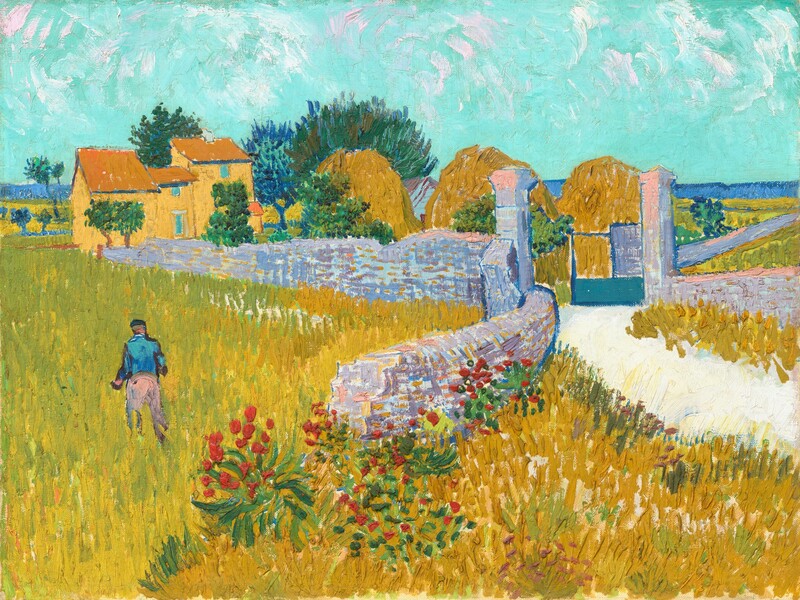
    FARMHOUSE IN PROVENCE
    Vincent van Gogh

    I have a confession to make. I am a ghost lover. A lover who finds love in language made flesh. Aeneas, Virgil, Sappho, Anne Brontë, and Clarice Lispector remain as I have read and thought of them, without the disappointment of their human foibles in life. My ghost love is not necessarily erotic; it is closer to the Elizabethan sense of the word “friend,” which could mean “lover.” Perhaps I don’t belong to the current period of time, or I am simply made that way. And I love it.

    “On Falling In and Out of Love With Dead Artists as an Art Historian” is an Augustinian confession by Allison Leigh, an art historian who fell in love with the artists despite their infamous misogynistic tendencies and appalling behavior towards women. Leigh described her growing attachment in the way a method actor becomes the character she plays. But to me, she seemed more like an investigative journalist covering an artistic scandal who then found herself infatuated with the artist. Or shall I call it erotic Stockholm syndrome?

    Honestly, it seems to me that Leigh’s love of the infamous misogynistic artists must have come from her attraction to men with similar tendencies, such as the handsome Russian Karl Briullov. I say this because I could never feel for an artist who enjoyed painting women being stabbed to death, as Eugène Delacroix did, or for Picasso, who slapped his girlfriends simply because they went out without his permission. And anyway, I never liked Picasso. While people rhapsodized about how creative and ingenious his art was, I found nothing to admire about him except his ability as a businessman.

    Artists, especially painters, express themselves in colors and shapes, unlike writers or poets. I do not feel as close to their minds, and honestly I couldn’t care less, except for Michelangelo, who endured Leonardo da Vinci’s contemptuous comparison of marble sculptors to bakers. I am not trying to stage a pugilistic contest between a painter and a writer or poet, but I see no reason to be attracted to abusive men, no matter how lonely they were when they tried to be artistic by forever sulking and being uncaring. In this regard, Vincent van Gogh was a romantic man before he was an artist, with his generosity, compassion, and warmth.

    You can’t put art before man. I can’t admire the art when I don’t admire the artist. How can you separate the creation from the creator? Artists need not be saints or model citizens. But art does not absolve an artist of vice. That is why my admiration for Charles Dickens has been tainted since I learned that he tried to send his sane wife away to an asylum.
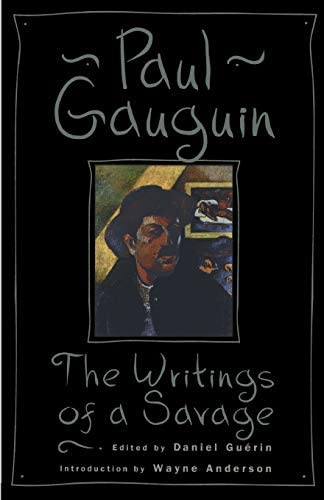
  • Paul Gauguin: With Sixpences Beneath a Visiting Moon

    The Writings of a Savage by Paul Gauguin

    With sixpences beneath a visiting moon, Gauguin could produce wonder. He was an artist in an endless pursuit of the rising sun at the dawn of a day with a flaming glory in dazzling magnificence. He was an intellectual with a wealth of knowledge drawn from a wide range of reading and classical Jesuit education. Gauguin was a man of irony, with contrasting colors reflected in the soul’s spectrum, from the passionate red to the sanguine blue, hopeful green, and melancholic purple, which is why he left Vincent Van Gogh alone in Arles, in never-ending loneliness. He craved recognition in a grand salon, yet he longed for independence on an island beneath an ancient sun. So, naturally, I wanted to know about Gauguin from his own writings, not from another in the form of a biography. Hence, The Writings of a Savage by Paul Gauguin.

    The book is an attractive compendium of mostly letters to his select few friends and, occasionally, to his wife, as well as essays and articles on the arts and religion, demonstrating Gauguin’s erudition and introspection. While reading the book, I could not help but think that if he had been a professional journalist or an art critic, his artistic talent would have basked in the glorious dawn sun rather than a struggling painter always on the verge of starvation. But most of all, what I wanted to know was if Gauguin had cut off Gogh’s ear, as I heard the rumor. Before reading this book, I had already assumed Gauguin was a man of temper because his image was incompatible with the Dutch painter’s delicate, sophisticated, and sensitive appearance and temperament. But while my prejudice was not entirely faulty, Gauguin proved himself innocent as he talked about it before his impending death away from civilization. Besides, my reading of Gauguin’s writings convinced me that he was not culpable for the injury, even if some like to assemble circumstantial rumors to make the French pariah artist appear jealous and violent toward the suffering Dutch genius. Gauguin might have been passionate, but his passion is directed toward his artistic creation of the worlds he sees in his mind, while the snobbishness of critics and bureaucrats curates the works of painters who know nothing about the arts.

    Imagination, innovation, and independence are the jewels of Gauguin’s prime colors that create his artistic Elysium. Gauguin was liberal in social stance, especially against clericalism, but sovereign in his artistic philosophy that how to draw doesn’t mean an exact copy of the figure because that’s not the purpose of art for art’s sake. As the title suggests, Gauguin was a noble savage who, as a disciple of Rousseau, returned to a primordial state of humanity to escape the over-intellectualized inertia of civilization, which depreciated and ignored his art. I still can’t say the book converted me to the cult of his paintings, which differ from those of Renoir, Monet, and Pissarro. But the book is a medium of looking through the labyrinth Gauguin has built, leading to his secret garden, wondrously vibrant and dazzlingly radiant.

    If this review moved you, you can support my writing at Ko-fi: https://ko-fi.com/steph79650

  • I Spoke Once, and Never Again

    Painting: Claude Monet, 1875. Public domain via National Gallery of Art.

    I keep it to myself, and myself—like a girl with no lips.
    And so, no one sees me. I’m forgotten, forsaken.
    Still, I am flesh and bone—the quiet soul, the raging spirit.

    Recognition is not my thing, or so I try to beguile.
    But the crying heart longs for it, like a flower needs water.
    The calm sea always hides the surge of roaring waves.

    I wanted to be someone’s one—even if he knows me not.
    I wanted to be a lover’s lover—even if he is someone’s one.

    When I shared what I felt, with streams of salt-sad fire,
    it was too much for them. They turned away.
    So I stopped confessing it altogether, evermore.

    I wish for nothing now—not tomorrow, not ever.
    With no expectations, I let the days pass—and fade away.

  • I love you, my dear Camille

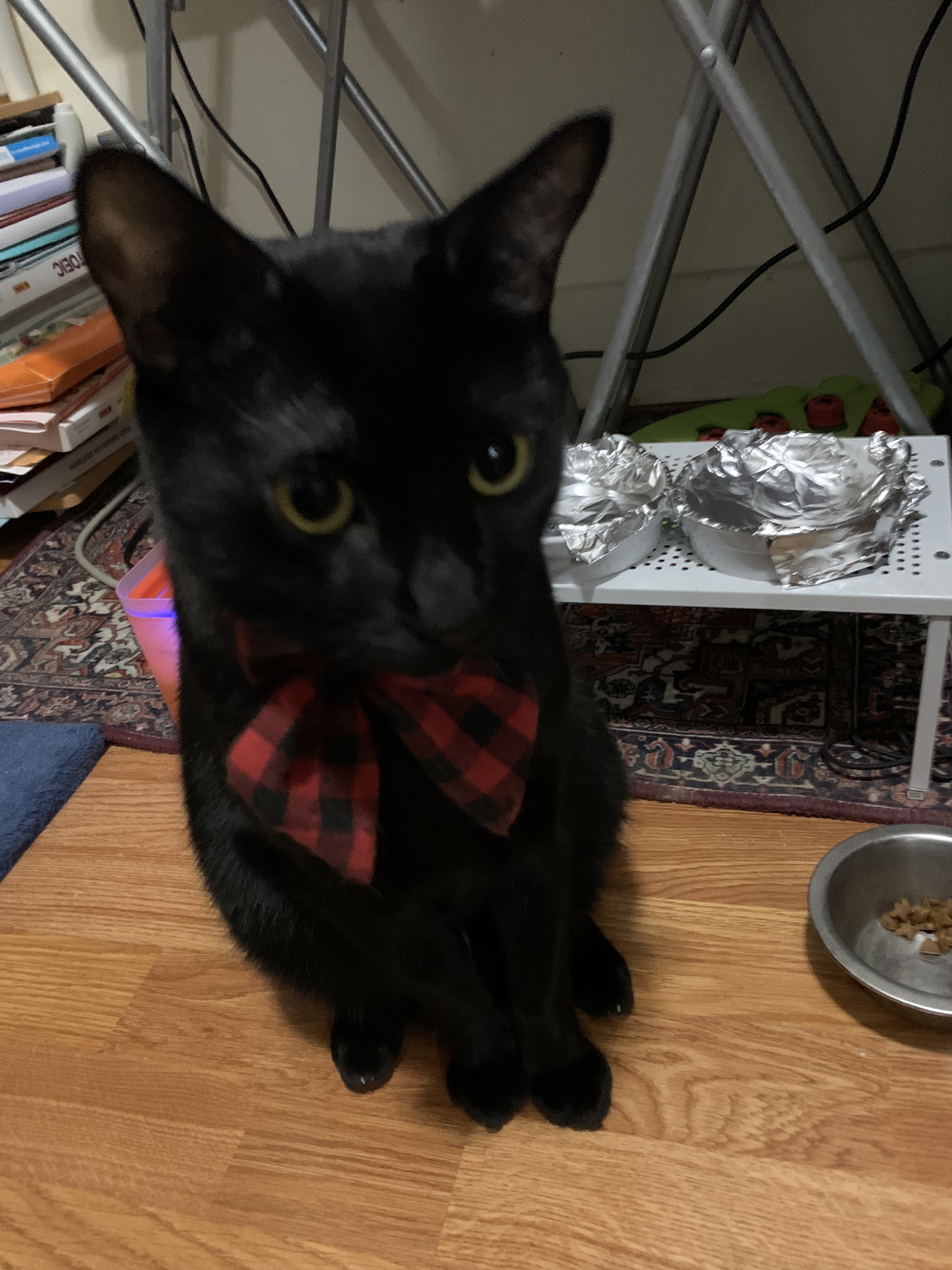
    My Camille is unwell now. He eats, drinks, and defecates, but I know there’s something wrong with his demeanor, mood, and aura. No, it’s not a hyped reaction from an overly protective spinster guardian, but I ohknow. It worries me to death; it pains me to no end. I am so thankful for his little heart pumping beneath his sleek, straight black fur, and on the other hand, I inwardly recoil in fear that what if it begins to slow and then stop? 

    I have noticed that when I pet Camille, he secretes a fluid with a noticeable smell, which isn’t terrible. I thought it was his way of expressing content when petted, and my research shows it’s partly true. Partly it is due to his anal gland charge, which worries me. So, I think maybe it’s a complication of the anal glands and other organ infections, such as liver or urinary. 

    And it plunges me so low into the abyss of grief, echoed in guilt for Camille’s condition because I have not been so loving or patient with Camille’s urge to play. He tends to eat frequently, almost every 10 minutes or so. Even though I always ensure my cats’ bowls are full of dry food with water, Camille prefers wet food. He eats small but many times. It might indicate diabetic symptoms. I feel like a terrible guardian, and more terrible is losing him – which is unthinkable! Let present fears less than horrible imaginings! 

    I just made an appointment with a vet to check him this Saturday. I hope Camille is not seriously ill. 

  • Dark Water (2005) – film review

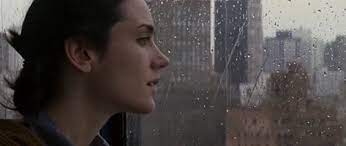
    Here’s a young mother with a five-year-old daughter freshly divorced from her husband who thinks she’s delusional, paranoid even, and wants to keep sole custody of their daughter. The daughter is everything she has reason to live, a life that has been so hard to endure with an indelible traumatic childhood. Yet, because she sees herself in her daughter needing constant unconditional love, which she was not allowed to have, she will do anything to protect her from the harsh reality of life, even from the supernatural peril of the beyond reality.

    So the story of Dark Water (2005) narrates Dahlia, a young divorcee trying to take full custody of her daughter Ceci away from her assiduously hostile husband. Instead, he embarks on a legal battle to claim sole possession of Ceci because of Dahlia’s unstable mental state. Dahlia, a once copy editor from Seattle, takes a low-paying administrative position at a Manhattan Radiology office for livelihood in a delipidated apartment in Roosevelt Island with Ceci. The semblance of the apartment is the working-class version of Rosemary’s apartment. Dark water is leaking everywhere: from the elevator to their bedroom ceiling, and the laundry room, which is a prelude to the finding of a tank on the rooftop where the traumatic ends of a certain young Russian girl abandoned, unloved finds her and her memories. Or is it Dahlia’s phantasmal delusion of confronting her own child self in her painkiller-induced pill to alleviate the cruel migraine caused by the yoke of woes?

    Dark Water is an American adaptation of the original Japanese film Dark Water (2002) by Koji Suzuki, the famous writer of the Ring trilogy, excellently translated to an American audience who will find broad universal themes of human nature, psychology, and behavior. You don’t have to have perfect childhood fed on parental love to be a loving parent. Of course, unhappy childhood will affect the development of one’s character and behavior pattern more or less, but it all boils down to one’s nature to be loved and be loving. Dahlia wants to counteract the demon of the past, which still grabs her with its tenacious tentacle of recurring nightmares and murderous migraine, by being constantly -and eternally – loving and kind to Ceci despite her unhealed scars left in her child self. Perhaps that is why her name is Dahlia, whose flower word is loyalty, dignity, courage, and support due to its withstanding of harsh conditions.

    Jennifer Connelly, playing Dahlia, is not only beautiful but also talented in a way that few actresses on screen possess in our time. Her presence in scenes is unique in that her character is downright realistic yet oddly out of the world in a riveting way, as exhibited in this film. No wonder the late film critic Roger Ebert admired her for the same reason. With her exceptional performance and the storytelling that grips the eyes and ears of the beholder, Dark Water is a worthy film for those who delight in supernatural horror without blood and screams.

  • The Song of the Romp Pomp Bunter

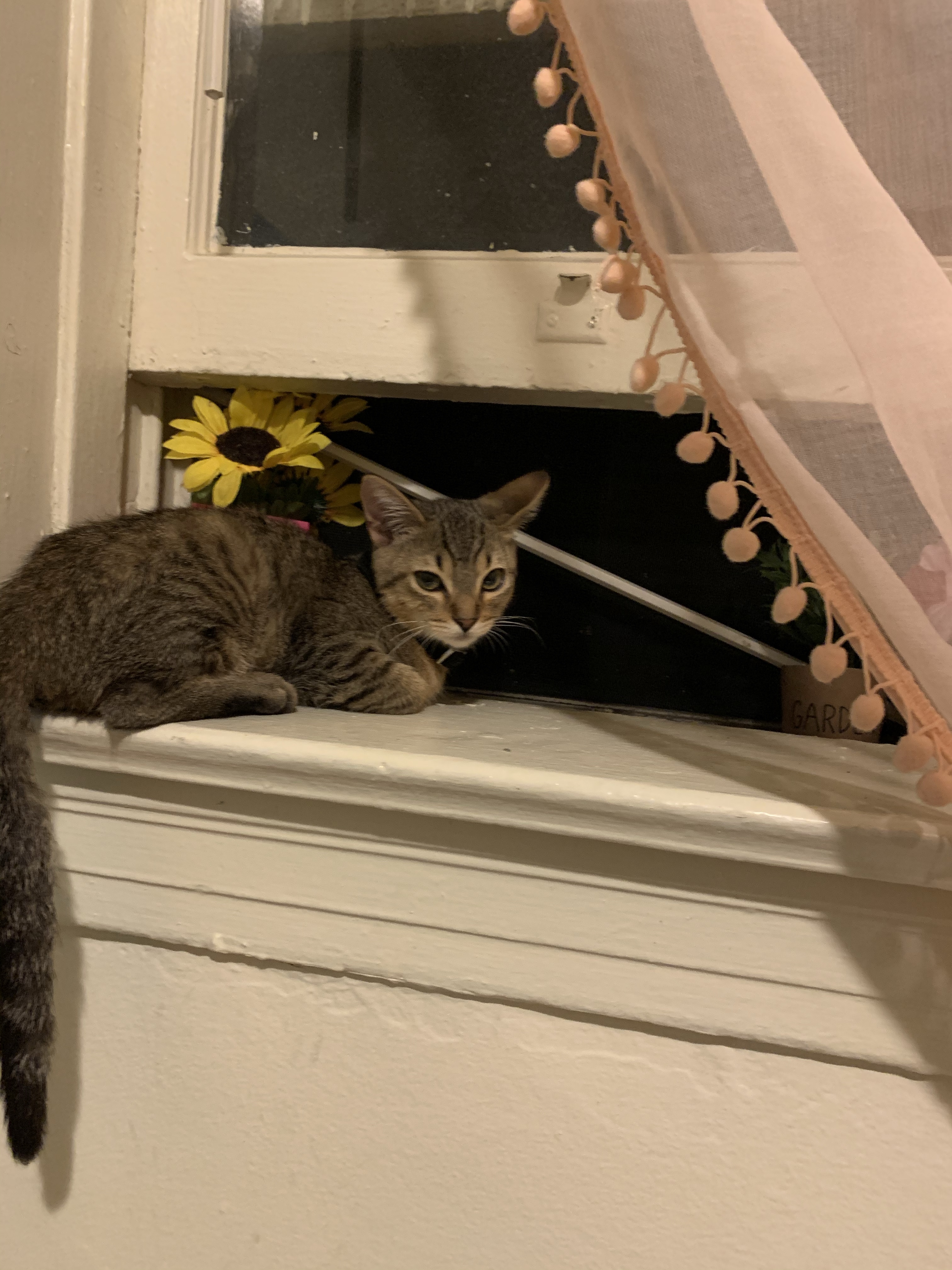
    The Romp Pomp Bunter is a Curious Cat:
    If you give him a toy, he would prefer a bottle cap,
    If you offer him a play, he would rather sit by the window atop,
    If you feed him a chicken pate, he wants a tuna fillet.

    The Romp Pomp Bunter is a Green-Eyed Beast:
    He wants you to be with him when you don’t,
    He wants to eat what you eat when he shouldn’t,
    He wants to play with you when you can’t.

    The Romp Pomp Bunter is a Timid Kitten:
    He would startle at the drop of a needle,
    He would tremble at the sounds of rain,
    He would tremor when birds flap the wings.  

    Yes, the Romp Pomp Bunter is a Curious Cat,
    And there’s no use in changing him anyway.
    For he will do so as he does so, and that’s that,
    And there’s nothing you can do about it!