Tag: bible

  • On Reading “In the Reckless Hour” by Barry Schwabsky

    Two things stayed with me after reading Barry Schwabsky’s essay “In the Reckless Hour,” about the recent English translation of Cesare Pavese’s The Leucothea Dialogues—henceforth, the Dialogues. The first was an existential question: How do we ask mortal questions through stories about the immortals? But don’t let the question weigh on you more heavily than it should. We have always asked essentially the same questions in different ways.

    The Dialogues are twenty-seven short dialogues that bring the Greek gods and goddesses back into the human condition—under law, mortality, and fate—and question why things are the way they are: unfair, absurd, and cruel. What makes the gods and goddesses so deeply engaged in human affairs, and so human that they alter human fates? If they cannot show their strength in the realm of Fate, are they truly superior? These Greek divinities could not care less about humans unless humans offer them satisfying sacrifices to feed their divine egos. Even Shakespeare’s Oberon and his wife are more sympathetic than their Greek counterparts. Free will is unthinkable because Fate takes precedence. Humans are toy soldiers manipulated by Fate and deployed by the gods. Are they worthy of being worshipped? If they are, it is only out of fear of punishment in the form of unfortunate events in human life: the gods play their war games with human lives as pawns to see who will prevail. They do not interfere with human affairs but govern them. Then we do not have to work so hard or hope for anything better if our fates are predetermined. John Calvin must have felt the same way I do—and perhaps Pavese did, too.

    Regarding the translation of the Dialogues from Italian into English, Schwabsky is a strict examiner who questions whether the recent English version is a translation made without fully understanding the book. He also believes that its plain language lacks Pavese’s dark grandeur and the gravity of his language. Although I have not read the Dialogues yet, I can’t say whether I agree with his opinion. But I am a proponent of using plain language to make difficult themes and ideas accessible to general readers, so that knowledge can be shared and enrich their minds rather than remain exclusive to academics.

    This essay is apposite to my current reading of Vergil’s The Aeneid, in which a man’s destination is already predetermined, while everything he does seems like an act in a script written by the divine. Then what is the meaning of being human, and what is the purpose of living? If some people are fated to suffer the most violent pain and cruel injustice, would our hopeful search for the meaning of life be merely another futile act of living?

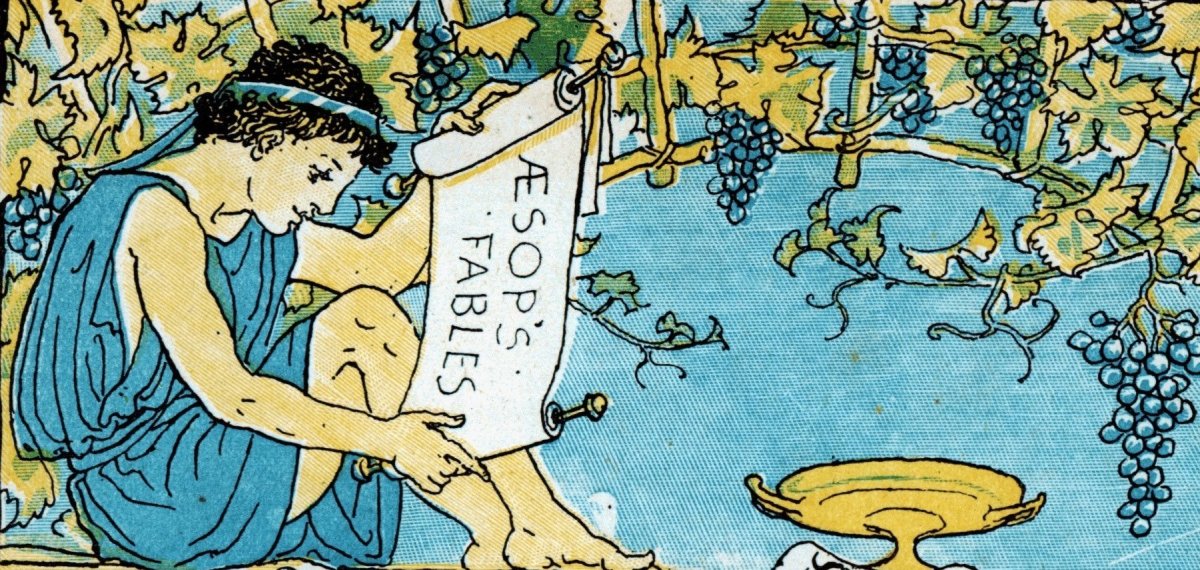
  • Aesop’s Fables

    Aesop’s Fables by Aesop

    My rating: 5 of 5 stars


    Last week, I reread Aesop’s Fables as an adult (that is, in terms of the ages on an evolutionary scale) in the 21st century and found them just as attractive as the first time reading it as a child. What a feeling! A freed slave once, Aesop’s natural wit combined with protean imagination made him able to investigate the essence of things, the nature of things, and attribute it to human nature’s characteristics, which ultimately brought him mortal death and immortal life. He was, in a way, a lot like Hephaestus, the god of fire, blacksmith, presider of the arts, and the only legal husband of the goddess of love and beauty Aphrodite who found him unbearably unromantically ugly.

    Aesop’s Fables still scintillates in the brilliance of affabulation and humor that nicely relates to Nietzsche’s concept of immanence, the understanding of nature of all things; the Natural Law called conscience the supreme ruler of the universe has inculcated in us. The Fables are full of lessons that are akin to Jesus’s parables employed in his teaching of ethical codes for Christians in daily life. Of course, Aesop was of the Pre-Jesus era. Still, his stories bespeak something of human nature that had already existed, which is ongoing and will continue as long as humanity exists. The cardinal virtues of prudence, justice, temperance, fortitude, and Christian values of faith, hope, and charity are all embroidered on the elliptical, imaginative, and impressive episodes of and among humans, animals, and even gods in this immemorial anthology of ancient wits. “The North Wind and the Sun” teaches about the force of gentility over the fear of intimidation. “The Woman and Her Hen” resonates with the timeless adage of everything in moderation. “The Milkmaid and her Milk Pail” corroborates the famous proverb that you should keep a bird in your hand than catch two in a bush. Treating others in a way you want in reciprocity illustrates the dinner scenes in “The Fox and the Stork.” And yes, I believe President Ted Roosevelt must have gotten inspiration from “The Astronomer” that you should look at the stars while keeping your foot firmly on the ground. And there are more stories to wow modern readers.

    Aesop’s Fables are so practical and amusing that all of them collapse millenniums between his telling and our reading it. Besides, all of them read like Book of Proverbs or Psalms in free verse or prose version, which makes the reader unburdened with textual analysis to decipher meanings intentionally obfuscated by the high intellect the academic writers of the sort. The Fables are comprehensive to all, serving a purpose of providing tenets of reading; to bestow pleasure of the sense and satisfaction of reason in a way you do not consult a help of a dictionary or other lexical or literary reference. Reading the Fables gives a feeling of watching a TV cartoon, say Woody Woodpecker, which tells something about man’s nature wrapped in an animal hide. So do not fear reading Aesop’s Fables now. It is well worth spending your free time discovering the universality of the truth with that “A-Ha!” moment regardless of the subjectivity of time.


    View all my reviews