Tag: book blogs

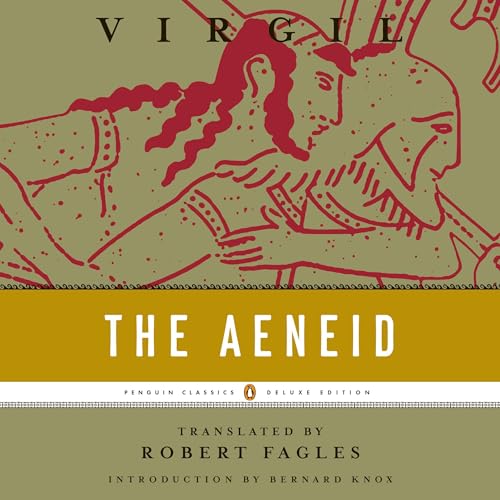
  • The Aeneid — Book I Reading Note

    Version 1.0.0

    Book I begins in the middle of Aeneas’s journey to his fated destination of Italy. Virgil seems to sympathize with the man who surrenders his personal feelings to the public duty of building a new Troy, as arranged by the Fates. Gods can interfere but cannot change his fate. It’s a case of Thus Spoke Zarathustra—but who is Zarathustra here? Aeneas, or Virgil speaking through him?

    If it’s Aeneas who speaks, then he does so through Virgil as his advocate for the glory of fulfilling pietas with gravitas. Cupid is not for him, but for Dido, who became enamored with a man whose vulnerability was braided with virility, clothed in beauty. Then Juno’s absurdly violent rage against the Trojan general, who laments his fate, forces him to wander across the seas through the vicissitudes of gain and loss, loss and gain. But that doesn’t mean Aeneas is a man of steel, because when Venus appears to him in disguise as a wanderer, he rebukes her for behaving like an immortal rather than a mother, even when she is trying to help her son.

    Book I presents Aeneas as a man who agonizes over the conflict between his desire and pietas, born of a mortal father and an immortal mother. It is the dual nature of man: physical and spiritual. This could later be applied to the Christian teaching that the will is strong, but the flesh is weak. In Virgil’s view—his imagination still cloaked in the Republican toga, albeit under Emperor Augustus—Aeneas was the model Roman man and soldier who placed honor and valor before beauty and love. He was Virgil’s kind of man, one who would build the grandeur of Rome.

    Book I ends with a scene in which Dido, the queen of Carthage—Juno’s beloved land—is infatuated with Aeneas after Cupid sprinkles powdered amour upon her. This is Venus’s machination to secure protection and refuge for Aeneas and the Trojans. Would this be a plot of Fate too? Then, does it mean that Venus is also a gambit in Fate’s chess? Then, what is the meaning of living a life in the mirage of hope?

  • On Reading ‘Listen, World!: How the Intrepid Elsie Robinson Became America’s Most-Read Woman’ by Allison Gilbert and Julia Scheeres

    Elsie Robinson (1883-1956) was an unforgettable writer whose nationally syndicated column “Listen, World!” spanned over 30 years and garnered more than 20 million readers. Yet, her legacy has not met with the justice of recognition, forgotten in the careless oblivion under the shadows of her contemporary starry women writers. Nelie Bly was sensational as an undercover in a mental asylum and an ambitious challenger to Phileas Fogg of Around the World in 80 days. But Elsie Robinson was a champion of writers whose heartfelt writings touched the finer tissues of the millions of hearts who found solace and support in her words. She was honest, and her words were real, alive, and alike, and there was none other like her.


    Robinson was my kind of model writer who wrote from her experience and heart. Edgar Allan Poe would praise a type of writer with a passion for intoxicating the heart and the truth to satisfy reason. The fates had let her go through trials of life, but her mind exceeded the compass of her wheels. She didn’t mind working as a miner as a single mother before a tide of fortune finally took her to her literary career in the Oakland Tribune. While her peers and contemporary writers took the naval-gazing, angst-ridden narratives a la mode, Robinson used her writing to communicate with readers seeking elbow room in her column. They recognized themselves in the plight of a stranger and found commonalities in it, making them feel that they were not uniquely flawed. I guess that’s why Robinson didn’t get recognition as much as her contemporary peers, who enjoyed the stardom of literary legacy. She wanted to tell her woebegone readers their problems were not theirs but yours, mine, and ours.


    Like Kurt Vonnegut, Robinson wanted to let readers know that to express ourselves in the form of art is to allow our souls to grow, however poor or good, by encouraging us to write our own columns. In that regard, blogging is a great platform to express one’s artistic self without fear of rejection or ridicule, freed from the devil’s advocates of literary purists intent upon finding grammar faults in anyone’s writings. To that end, Robinson is a scintillating writer with an eye for truth and a heart for passion – like the sun in the twilight, remitting the splendor while retaining magnitude, dazzling the eyes of the beholders with the hearts’ contents. As a result, Robinson has become one of my darling writers.