Socrate was a liberal, Plato was a conservative, and Aristotle? Well, he was an educator, an academic, an intellectual with perks and passions who was never dull. His school of thought dominated western Europe during the Middle Ages. It became a foundation of Christian theology because of the conciliation of humanities with science, especially biology, to approach the hows in the quest of whys and whats.
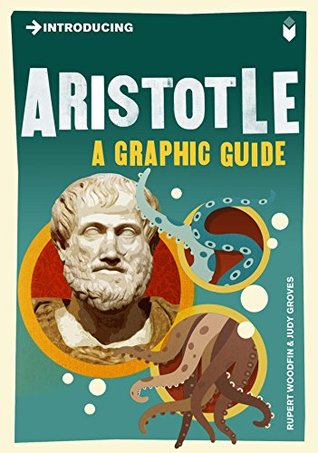
But don’t be intimidated by the dauntingly impressive resume of the philosopher. You don’t have to strain yourself with a burden to know the wondrous truth of our human life and the universe beyond. Woodfin’s illustrated guide to Aristotle will become your scholarly and witty Virgil to his circles of knowledge as seen in his mind’s casements. Through them, you are welcome to appreciate the panorama of Teleology, Thinness, the Four Causes, Beauty, Ethics, and the Cosmos like you never realized in plain language.
Suppose you want to know more about the man who taught Alexander the Great and Thomas Aquinas, the top Doctor of the Church, and assured the distraught that excellence comes from habit. In that case, this book deserves your attention – with delightful Eureka!
We know our brain is our body’s and mind’s control room, but how much do we know about the superlative organ and the supernatural power? So relax. Have no fear because Amaze Yourself: Take a Quantum Leap by Dr. Jill Ammon-Wexler will be your Cumin Sibyl to the mysterious world of the brain where the secret of the universe is locked in and waiting for you to unlock it if you believe in it.
Dr. Jill is a doctor of psychology and a 47-year pioneer brain/mind researcher who has devoted herself to enlightening the public about the psychosomatic effects of the brain that are so wondrous and magical that they give the brain the status of a supernatural being. For example, stress isn’t just an easy, convenient excuse for our burned-out selves; it is, in effect, the evil of psychological and physiological ailments. Also, negative thoughts are not a metaphysical concept without a scientific foundation but are like a cancerous cyst that impedes the production of glucose (the brain food), which hampers a faculty of thoughts and a sense of imagination. The wonder doesn’t stop here. There is a third eye called the pineal gland in the brain that responds to altered mental states. So we all have some degree of ability to foresee the future, but that’s only if we consciously endeavor to access the subconscious mind. No wonder some of us can see and hear ghosts, and that’s true to the end of reckoning by way of a quantum leap from one sphere to another without effort.
Suppose I am being captious by playing the role of Devil’s Advocate in the review of this admirably elegant and inspirational book. In that case, it is this: like any renowned figure of academic researchers, Dr. Jill’s successful experiments on positive thoughts confine to a pool of comparatively well-off human subjects with statuses. Of course, it’s unfair to cavil at her intention to find the truth, as her contemporary peers do the same. But I hope that someone like Dr. Jill, who writes with general readers in mind with her wealth of knowledge, includes a broad spectrum of classes in her study so that none of her readers will feel left out of the selected few. Nevertheless, Dr. Jill is a pioneer in her field, translating the mystery of brain power into our everyday language to make us realize that we are indeed starstuff harvesting sunlight only if we believe in ourselves. Therefore, this book is an excellent primer for the beautiful world of neuroscience, met with the supernatural power of the brain within us.
When you feel that something important about your approach to your current life isn’t working, you should adopt a new way of sailing your ship at life’s sea. Hence, following my read of Aristotle’s Way by Edith Hall, I continued pursuing the answer in Tiny Habits by BJ Fogg, a self-help book based on Aristotle’s dictum that virtue is a habit in 21st-century parlance.
Fogg’s approach to habit-forming practice is categorized into small steps that require no intellectual, or philosophical commitments, as in the case of new year’s resolutions. He refers to motivations and willpower as “fair-weathered” friends who hooray and holler at our resolutions to change at first but disappear into the lost memories of the first initiation when our souls plunge at the lowest later. Instead, we must befriend “Aspirations” and “Outcomes” as faithful friends who will help us build a Behavior Design that best matches our disposition and lifestyle by which we can realize our affirmation as the functionary of noble ideas. For example, if you want to save $500 as an emergency fund, you can start by curtailing your Starbucks visits or bringing your lunchbox to work, rather than saving a lump sum of money from your paychecks; as the saying, “Drop by door fills the tub.” Fogg refers to such small practice as the principle of “Golden Behavior,” which you can do when you feel like calling it a day, even on your most challenging day.
Notwithstanding the noble intentions and the greatness of simplicity in Fogg’s guide to habit-forming, some carbuncles I find incongruent in his examples of his successful people who are comparatively well-off business owners or professionals. Of course, that is not to avert his excellent idea that the simple is the best. Still, I hoped to find examples of everyday working-class people struggling to make their lives better who have fewer resources, such as seeking help from a person like Fogg, a Behavior Scientist at Stanford University. Maybe I could inadvertently judge his study results only with limited information based on my reading. Still, I only wish that he would include a broad social spectrum of subjects in the advantage of Golden Behavior. But then I could be a captious reader feeling left out of the selected successful achievers.
In all fairness, the book is worth reading if you are especially keen on Aristotle’s way of happiness, which I regard as personable and approachable, compared to Plato’s metaphysical way of interpreting how to live a perfect life. But let’s forget about the ancient Greek school of philosophy. Still, Tiny Habits do matter.
Cruel truths are Neither kind nor Justified under The pretext of love Gnawing the spirit Conversant with The finer tissues Of the heart’s chamber When you assail it And munch the heartstrings Because the truths are Not true, and you know it.
“All’s for the best In the best of all Possible worlds,” Says Pangloss, A man who uses His reading against The Human heart As Candide sees it Drowning in the sea And his egalitarian heart has no place In the best of all Possible worlds.
Tolstoy in Anna Kararina knows a thing about the Aristotelian school of subjective happiness thus: “All happy families are alike; each unhappy family is unhappy in its way.” Happiness is an antidote to depression out of hopelessness and envies out of disappointment in a purely subjective sense. It requires only self-will to choose the light and to follow it by constantly taming your brittle spirit via lifelong habit until you find a sense of why you are here in this world. If you doubt it as a cliche, then meet Aristotle, the student of Plato, who was the student of Socrates, and the private tutor of Alexander.
Along with his great predecessor Socrates, Aristotle was a thinker who billeted Philosophy from the heavens at the houses of mortals so that she could show them how to cope with the harsh realities of the world that discombobulated a sense of purpose in life. Aristotle’s main concern was that people weighed heavily on the outward material success as a sign of well-being and a carte blanche to happiness, which would lead people astray with a sense of emptiness inside. For example, we can’t know if all those glossy selfies on Facebook and Instagram reflect the real lives of those uploading them. Or the lives of Hollywood stars who predicate on images and styles are not, in fact, worth admiration, as revealed in the recent defamation trial of Depp v. Heard, in which Depp’s braggadocio of recalcitrant drug and alcohol uses combined with alarmingly repulsive backstage personality, is simply disgraceful. On the contrary, the Uber drivers I have come across appear to be more satisfied with their lives, content with their independent work mode, and love of families. This Aristotle refers to a state of eudaimonia, a feeling of bliss, however small it is, because it comes from a higher sense of pleasantness from within.
Of course, Aristotle’s way is not instant magic and may not show visible effects in one fell swoop, but it is a long-term remedy like a physical therapy that will show improvement. Aristotle’s way is not fanciful but practical with two recipes for the malady of hearts: (1) to keep everything in moderation, called the “Golden Mean”; and (2) training yourself continuously and actively to do the right thing like a habit. Aristotle reminds us that excellence is not an act but a habit. This happiness school parallels Emerson’s dictum that thinking is the function, and action is the functionary. So this is Aristotle’s simple but sophisticated stairways to your happiness, and I think it’s worth trying. No wonder his student Alexander became great.
You must be logged in to post a comment.