Tag: book reviewd

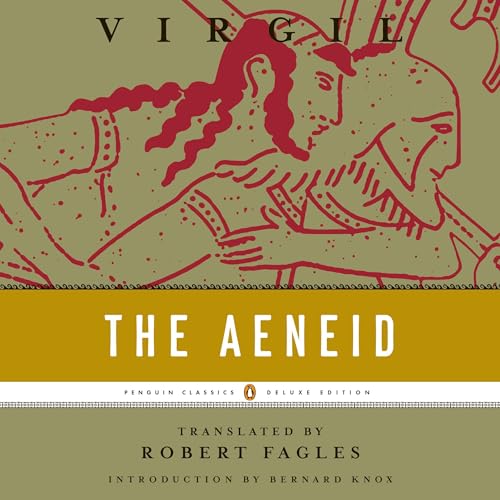
  • The Aeneid — Book I Reading Note

    Version 1.0.0

    Book I begins in the middle of Aeneas’s journey to his fated destination of Italy. Virgil seems to sympathize with the man who surrenders his personal feelings to the public duty of building a new Troy, as arranged by the Fates. Gods can interfere but cannot change his fate. It’s a case of Thus Spoke Zarathustra—but who is Zarathustra here? Aeneas, or Virgil speaking through him?

    If it’s Aeneas who speaks, then he does so through Virgil as his advocate for the glory of fulfilling pietas with gravitas. Cupid is not for him, but for Dido, who became enamored with a man whose vulnerability was braided with virility, clothed in beauty. Then Juno’s absurdly violent rage against the Trojan general, who laments his fate, forces him to wander across the seas through the vicissitudes of gain and loss, loss and gain. But that doesn’t mean Aeneas is a man of steel, because when Venus appears to him in disguise as a wanderer, he rebukes her for behaving like an immortal rather than a mother, even when she is trying to help her son.

    Book I presents Aeneas as a man who agonizes over the conflict between his desire and pietas, born of a mortal father and an immortal mother. It is the dual nature of man: physical and spiritual. This could later be applied to the Christian teaching that the will is strong, but the flesh is weak. In Virgil’s view—his imagination still cloaked in the Republican toga, albeit under Emperor Augustus—Aeneas was the model Roman man and soldier who placed honor and valor before beauty and love. He was Virgil’s kind of man, one who would build the grandeur of Rome.

    Book I ends with a scene in which Dido, the queen of Carthage—Juno’s beloved land—is infatuated with Aeneas after Cupid sprinkles powdered amour upon her. This is Venus’s machination to secure protection and refuge for Aeneas and the Trojans. Would this be a plot of Fate too? Then, does it mean that Venus is also a gambit in Fate’s chess? Then, what is the meaning of living a life in the mirage of hope?

  • Why Magic was popular and why it dwindled – review

    Religion and the Decline of Magic: Studies in Popular Beliefs in Sixteenth and Seventeenth Century EnglandReligion and the Decline of Magic: Studies in Popular Beliefs in Sixteenth and Seventeenth-Century England by Keith Thomas

    My rating: 5 of 5 stars

    Mankind in the face of contemporary existential strains of life has often attributed its frailties to the development of certain religious beliefs, leading to the shaping of the anima mundi of the time it possesses. Such a symbolic interactionist perspective on history is perspicaciously excised in Religion and the Decline of Magic by Keith Thomas that shows us how collective splinters of folklore could influence the Modus Operandi of established religion.

    The pith of folklore is a reputed natural human tendency in dealing with daily life amid double jeopardy of whimsical nature and more capricious mankind that results in finding pain relief in the form of supernatural elements. Keith illustrates the social and cultural climates of 16th and 17th century England where the efficacy of magic was reputed to overwhelm the consolation of the Gospel in the recourse to the powerful being that could supposedly give the supplicants the immediate panacea to their existential malaise. This popular attitude toward the magical measure of putative healing betokens the reason why there was no active mass active involvement in radical social reform or political radicalism; it was their way of mitigating the rigor of their daily duties that life imposed. The concept of chance was a welcome method of diverting the rules of merit and reward in prosperous life that only a select few would and could achieve to the game of luck played by goddess Fortuna’s Wheel of Fortune. By trusting the work of pure luck, people would not jeopardize their self-esteem because fortune was beyond their measures no matter how hard they worked hard to obtain it.

    How the folk belief in magic influenced the established Christianity, particularly Catholicism, is the sine qua non of mesmerism of popular psychology and its portent efficacy of evangelization with a promise of magical healing. The church incorporated the magical elements of pagan belief to its rituals and doctrines of the catechism, such as transubstantiation and holy relics by reconciling the esoteric pagan knowledge with the orthodox Christian teaching. The investment of supernatural power through religious ceremony propitiated the minds of the low and high alike non-discriminately via syncretism until the reign of Queen Elizabeth I and the English Reformation that necessitated the emerging of new natural science and mechanical philosophy and the accordant mode of thinking ultimately debilitating the supreme power of magic and the magical elements used in the church.

    Keith is excellent in disabusing readers what might seem to be a trifle and pettifogging subject to advanced minds with his wealth of knowledge on the subject and human psychology narrated in plain language so that readers of all strata can access the secret garden of knowledge that he kindly invites us to visit and wallow ourselves in. This is my second time reading his work, and I am always amazed by his depth of erudition fabulously conflated with his witty remarks on events and vivacious descriptions of the period, all gleaned from his extensive research on the subject and keen scholarly observations thereon. This book is not a book of magical incantations, but about the power of the populace that made magic popular and unpopular as the seasons of mankind required new kind of belief system synonymous with the ethos of contemporary life.

    View all my reviews