 Your Movie Sucks by Roger Ebert
My rating: 5 of 5 stars
Criticism of any kind is never a pleasantry. It stings the heart and swells in there until the natural amnesia of time heals the wound. Also, criticism is never an easy task, either. Abraham Lincoln defined a professional critic as one who has “a right to criticize, who has the heart to help.” Therefore, being a critic is a daunting profession that can fall out of favor with the public and the criticized. Yet doing it good and right is even more challenging and requires a wealth of erudition and insight to observe all things and all beings in the world without supercilious prejudice. I can think of any such critic no other than the late Roger Ebert, whose brilliantly witty anthology of unfavorable movies Your Movie Sucks discerns constructive criticism from malicious cynicism that most of his peers love to delve.
It’s a collection of movies that Ebert finds distasteful to the taste and reason. Ebert opines that filmmakers and the performers tend to patronize with their selective elements, usually senseless violence, gratuitous nudity, and infantile comedy under the pretext of the screen reflection of the realities. But to miss Ebert as an ultra-conservative white curmudgeon movie critic does a great injustice to his bona fide intention and judicious reasoning of why he thinks the movies suck, most notably, ‘Deuce Bigalow: European Gigolo,’ ‘Chaos,’ and ‘the Pearl Harbor.” The plots, characters, and narratives of these movies ignore the taste and reason universal in all human creatures regarding the principles of sense and judgment common to all humankind. They are either devoid of artistic sensibilities or willfully negligent of the humanity that refuses to cease even in the desolate wilderness of calamities, artificial or natural. Ebert seems to seek in movies a common thread that every one of us, regardless of class, race, and gender, can be bound together to understand what it means to live, ultimately.
Ebert’s credo is the arts of films, paintings, music, and books as a consolation to the hearts that need to relive the yokes of daily lives. Therefore, the artists are to look into people’s realities from all walks of life and illustrate each life’s values, however insignificant it might be, by elevating the ordinariness into arts of life to neutralize the vicissitudes of life that we all experience. In this regard, Ebert agrees with French painter Jean-Francoise Millet’s timeless adage: “It is treating the commonplace with the feeling of the profound is what gives to art its power.”
I always like Ebert’s films’ reviews because they are easy to read and intelligently passionate and witty despite his knowledge of various subjects. There is no hint of malice in the guise of intellectual sarcasm. His views on the world are agreeable to mine, regarded as outdated forseysm in today’s amazingly political world. Maybe we might belong to a previous era where our perspectives of the world would meet with more consensus and fewer disapprovals. In fact, I liken the person of Ebert to that of Samuel Johnson, the great English writer, thinker, and author of A Dictionary of the English Language for their similarities in appearance, weltanschauungs, and styles of writing that thrill the heart and pique the mind with a touch of humanity that is so rare to be found among the contemporary writers. So, if you are a like-minded appreciator of arts in general and curious about what movies someone like Ebert finds distasteful, take heart and read this book. The words leap from pages with wit and wisdom as the time entertains you like you never know. This book may also serve you as a textual trailer of a movie that you might have fallen into the mistake of paying it to watch.
View all my reviews
Tag: books
-
‘Your Movie Sucks’, by Roger Ebert- review
-
Samuel Johnson Rambles on Dictatorship over Feelings

VFS109729 Dr. Johnson (1709-84) at Cave’s the Publisher, 1854 (oil on canvas); by Wallis, Henry (1830-1916); 49.5×59.7 cm; Private Collection; English, out of copyright Temperance is not an abnegation of sensuous pleasure that is innate to our human nature. It is one’s willingness and ability to rein in his or her horse of impulsive id under moderation lest the driver of the mind chariot lose the control and fall by the wayside of life’s journey and leave it in the lurch of spiritual anomy. Yet, to obliterate the pleasure of the taste that our sense requires for nourishing the body and soul will only produce counterintuitive consequences, leading to noogenic neurosis, chronic depression, or existential frustration that life is nothing but a vast vacant lot. That is what Samuel Johnson, one of the great writers of the English language and a trailblazer of the English dictionary, discerned in his brilliantly unbridled and witty essay ‘The Rambler, No. 32, written on Saturday, July 7th, 1750.
Johnson was an intellectual of the best kind: erudite in the scope of knowledge drawn on his wealth of reading, artless in expressing his views on the Pooterish lettered caste that prided themselves on the florid display of arcane words and difficult syntax, and charitable in recognition of the vicissitudes of human life without prejudice. Perhaps, such admirable traits contributed to creating a dictionary of the English language, which required the universal understanding of humanity to comprehend the origins and meanings of a language of any kind. According to Johnson, Stoicism seemed too puffed up with its lofty philosophical principles of restraining feelings that would only beget misapprehension of the old school of thought for denying the most natural human emotions.
Emotions measure changes on a continuum of arousal on the one hand and the pleasantness and unpleasantness on the other. For example, High Arousal and High Unpleasantness produce Fear, whereas High Arousal and High Pleasantness equal to Ecstasy. Low Arousal and High Unpleasantness beget Misery, but Low Arousal and High Pleasantness lead to Satisfaction, which is a positive emotion. It is this physiological state of feeling that Johnson deemed it desirable in the face of existential frustration. One in despair can not eradicate the low tide of an emotional wave but can divert it in a direction that gives a fresh viewpoint on the heart’s malady, thus making life worthwhile to continue with every new try. It is logical reasoning because consciousness predicts the world we live in, a constant revolving hypothesis of reality triggered by neurons in the visual cortex. Since the brain does not have a function to think of itself, it uses a template of emotional scripts based on experience. Thus, instead of willing away unpleasant emotions, one can translate it on a different emotional template, measuring it on the arousal continuum for positive emotional affects.While Stoicism advocates the puritanical governance of the sense and taste for Reason’s eminence, humanity’s natural law revolts against the unnaturally philosophical dictatorship under the disguise of decency and propriety. Stoicism is a school of philosophy that distinguishes the cult from “the sensibilities of unenlightened mortals.” Johnson was right in saying that repressed feelings about pain could only lead to a dormant sense of guilt in a denial of physical reality and later erupt into violent tantrums or perverted forms of debauchery. Pain is part of life, and the way to relieve its severity is by way of finding its riddle with fortitude through doing things that channel the concentration on the pain to something meaningfully pleasant, creating a sense of fulfillment. This concept is also parallel to Viktor E. Frankl’s Logotherapy, a school of psychotherapy about willingness to meaning in life as a result of responding genuinely and humanly to life’s challenges. Both Johnson and Frankl denied no tactile sense of pain, emotional or physical, and prescribed a palliative solution for mitigating a malady of heart.
Johnson’s essay on criticism on Stoicism agrees with my idea of expressing genuine feelings about sadness to effectively communicate to listeners’ hearts in a compassionately empathic way so that pains will be less burdened, griefs shared in halves, and loneliness complemented in companionship. Likewise, I believe that suicidal feelings arise from that utterly helpless loneliness alienated from the world. They are usually concealed by the actor’s self-made barriers, where the emotions are despotically imprisoned. And I believe that Johnson would have agreed with me. -
The bio of seventeen weeks old Tabby Tom
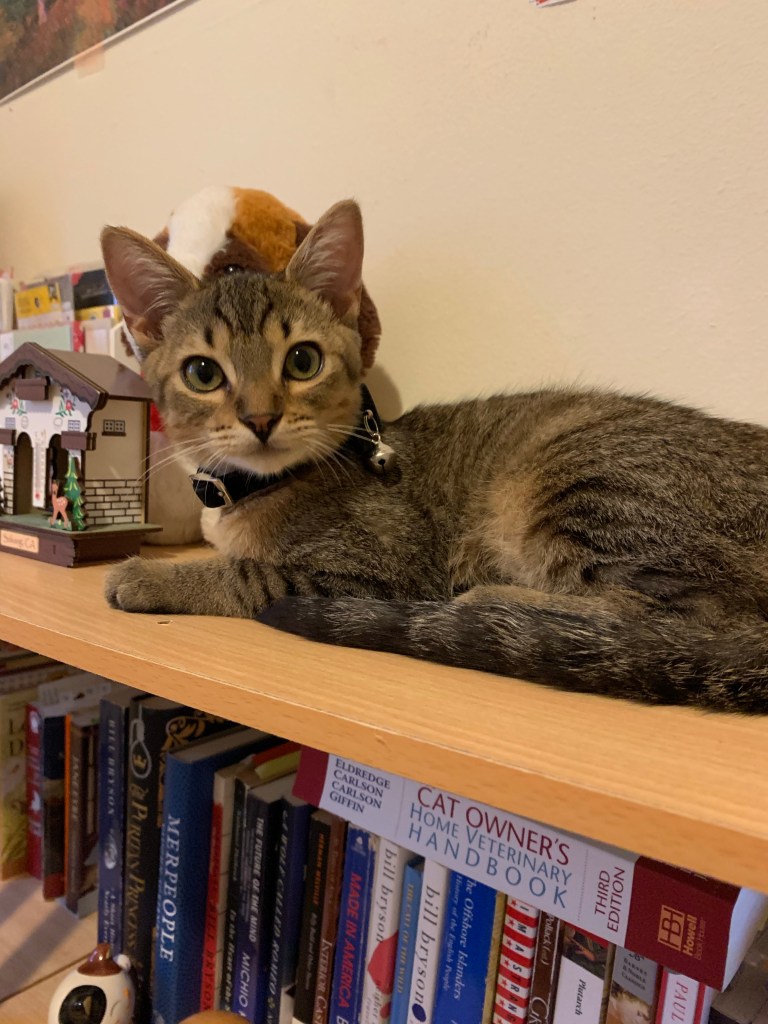
Hi There. Nice to meet you! Ralph Waldo Emerson said: “What lies behind us and what lies before us are tiny matters compared to what lies within us. How rightly so. Despite my sixteen weeks of life thus far, my feline instinct feels that there are unpathed waters and undreamed lands within me. So I deem it high time to unravel the mystery of Me.
My name is Toro, the co-editor at large of this blog with Stephanie. I am sixteen weeks old. I am a domestic short-haired tabby tom, but Stephanie believes that I am of an Egyptian Mau, admired by ancient Egyptians and the divine cat of Ra, God of the Sun, as portrayed in the Book of the Dead. I think Stephanie’s hypothesis of my suspected heritage is due to my beautiful turquoise eyes and dainty figure. She also seems to want to liken her and me to Cleopatra and her beloved Mau. (Wow!) Well, no one can blame her for regaling herself with such lofty imagination of my elated pedigree because – in all honesty – I look like one. What can I say? Seeing is believing, and beauty is in the eye of the beholder. Then the truth is to the end of reckoning, as the Bard chimed in.
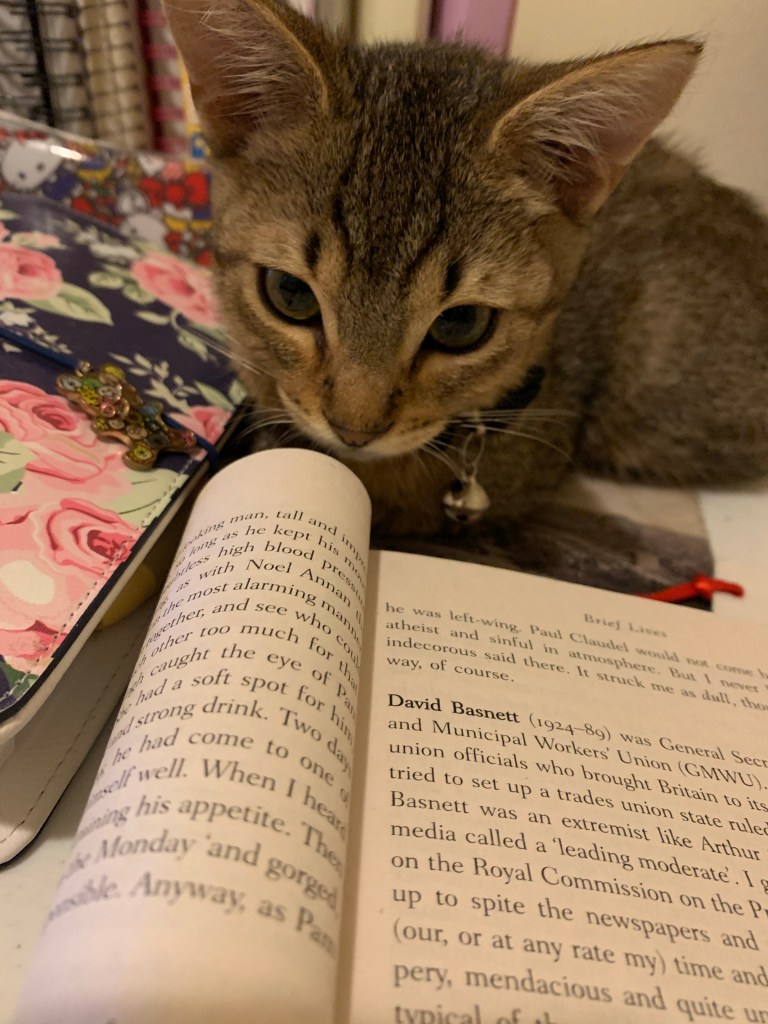
As is the queen, so is the subject. Despite my regal appearance, my biological and family background is that of an orphaned pauper, lesser than the pauper who exchanged his identity with a prince because he had mom and dad. When I was born, my mother left me alone, so a passing old lady took me to a nearby shelter where I met my sister Stephanie. I followed her because there was something that connected us from moods to tendencies and personalities. We share our peculiarities in mutual solitude shared by orphaned patronage of love and care.

How’s the writing going? Because I was left alone to tend myself at so young an age, I am prone to frequent mood swings from high and low, which often makes me frantically run around the room back and forth, up and down, and left to right without stopping. I know this strange behavior of mine startles poor Stephanie, but I can’t help such impulsive pulsing as it is part of my irrepressible feline nature. However, one thing is sure that when I see Stephanie returning home from work, my whiskers are moving all withers, my tail rises to fortune, and my little feline heart fills with meows and more meows.
This much is the bio that I dictated to Stephanie for my new career in publishing. As I am excited about this new adventure with Stephanie on board, I hope readers will join us in our one of a kind literary enterprise in joyous spirit! Meow.
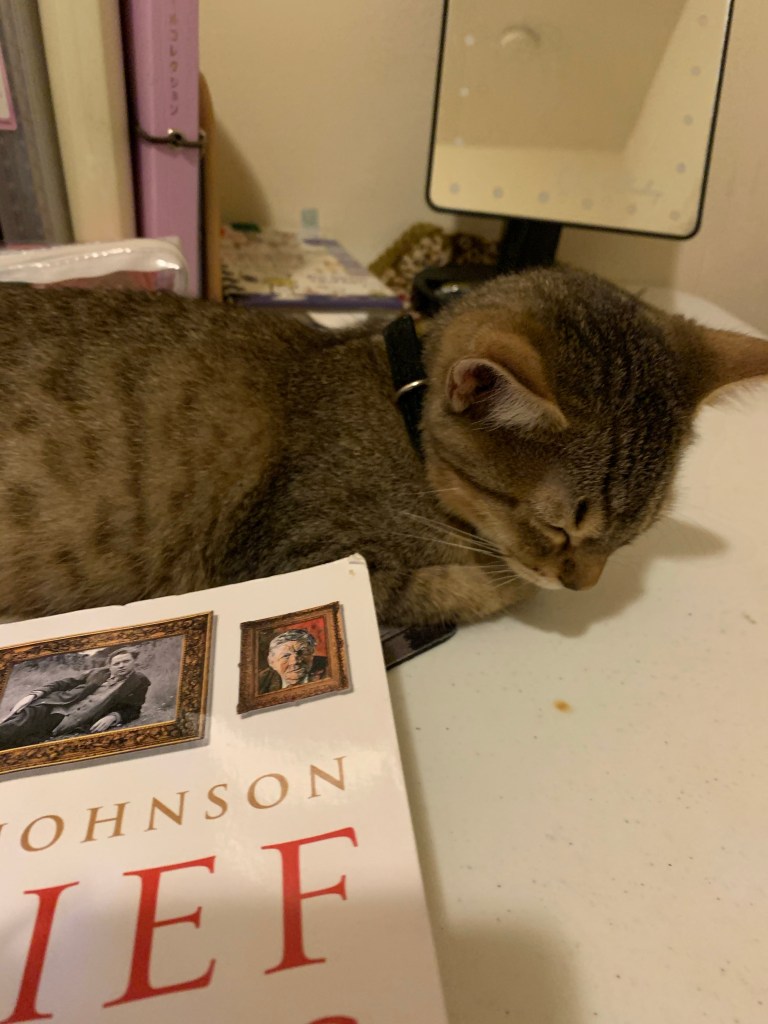
I am done with my share. So, I am taking a break. -
space odyssey

The screen of the universe
Is a magnificent film noir
Starring the stellar stars:
The methane lakes of Titan
The acidic clouds of Venus
The violet radiations of Mars
The frozen moons of Jupiter
In the cinema of Space Odyssey.
-
A Tale of a Cat in Tote

Finding a good vet is a challenging task It may sound funny but finding a good veterinarian seems parallel to Perseus’s finding the Hesperides’ whereabouts, the nymphs holding the weapons for destroying Medusa, as instructed by goddess Athene. The half-god and half-human Perseus had divine help from the goddess to accomplish his terrific mission. Still, the whole human Me, left with my limited mortal device, had to embark alone on a daunting quest for a competently proficient veterinarian who could precisely ascertain the cause of my cat’s gastrointestinal malady with the utmost professionalism and most profound care for animals. So, I want to relate my journey to arrive at the mission accomplished to Hercules’s Twelve labors to fulfill his moral responsibility for the beloved he had slain.

Toro’s Arrival at the Hospital in Tote No, not that I harmed my little sixteen-week old Toro. How despicable! But that he had been suffering from irregular bowel syndrome, aka constipation. Although well-potty trained, Toro had difficulty in releasing excrement completely with heartwrenching yowling, resulting in inappropriate elimination everywhere in my room. As his human caretaker/sister/mother, the onus of relieving him from the pain was naturally on me with an initial frustration of finding the panacea. In a new city with no acquaintance to recommend me an expert on cats, I looked up a list of veterinarians nearby on the Internet, mostly Yelps and Googles’ reviews. As a follower of Thuclyclides on hearsay’s integrity, not on the popularity of the subject from the masses, I eliminated the superfluously effusive complements of reviews suspected of blind bromides advertised by sponsored reviewers. I followed my instinct that led me to a particular veterinarian with less florid advertisements and more evidentiary results of curing cats, one of whom looked a lot like Toro. What can I say? It was more of my intuition, leading me to take Toro to the veterinarian of my choice.

Toro’s X-Ray reveals his inner world, including a microchip The doctor listened to my plea for examining Toro thoroughly with his entire medical history obtained at his adoption from a shelter. He took Toro’s X-ray and explained that it was constipation and that he would inject enema to release due eliminations from his stomach. I was also given a bottle of lactulose solution to be administered to Toro orally three times a day. Besides, he gave me a bottle of Betagen topical spray for Toro’s infected buttocks due to the remnants of dried defecation, free of charge. It was certainly more than I expected of the care, now that the cause of the sickness had already been precisely diagnosed and adequately remedied.

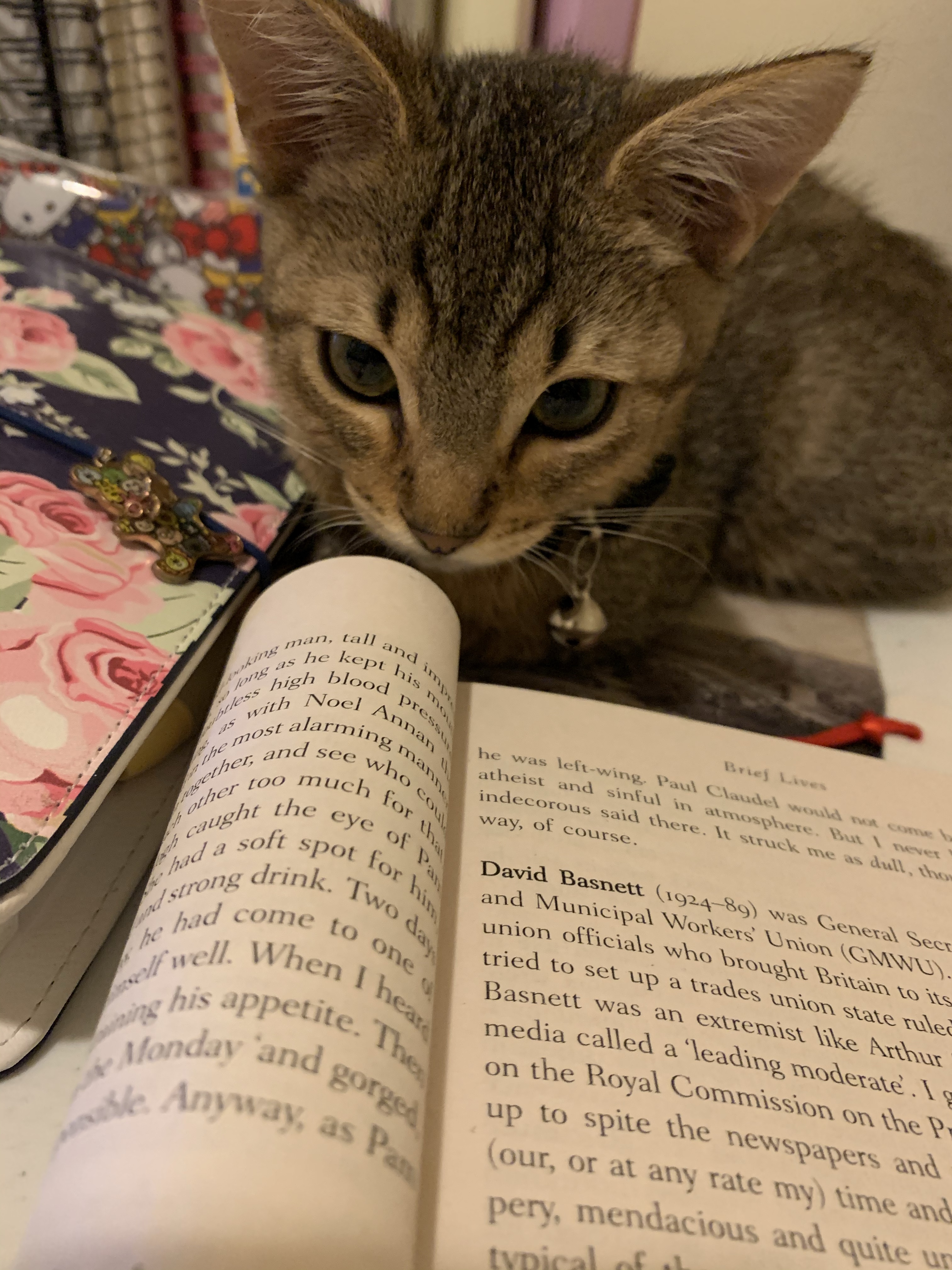
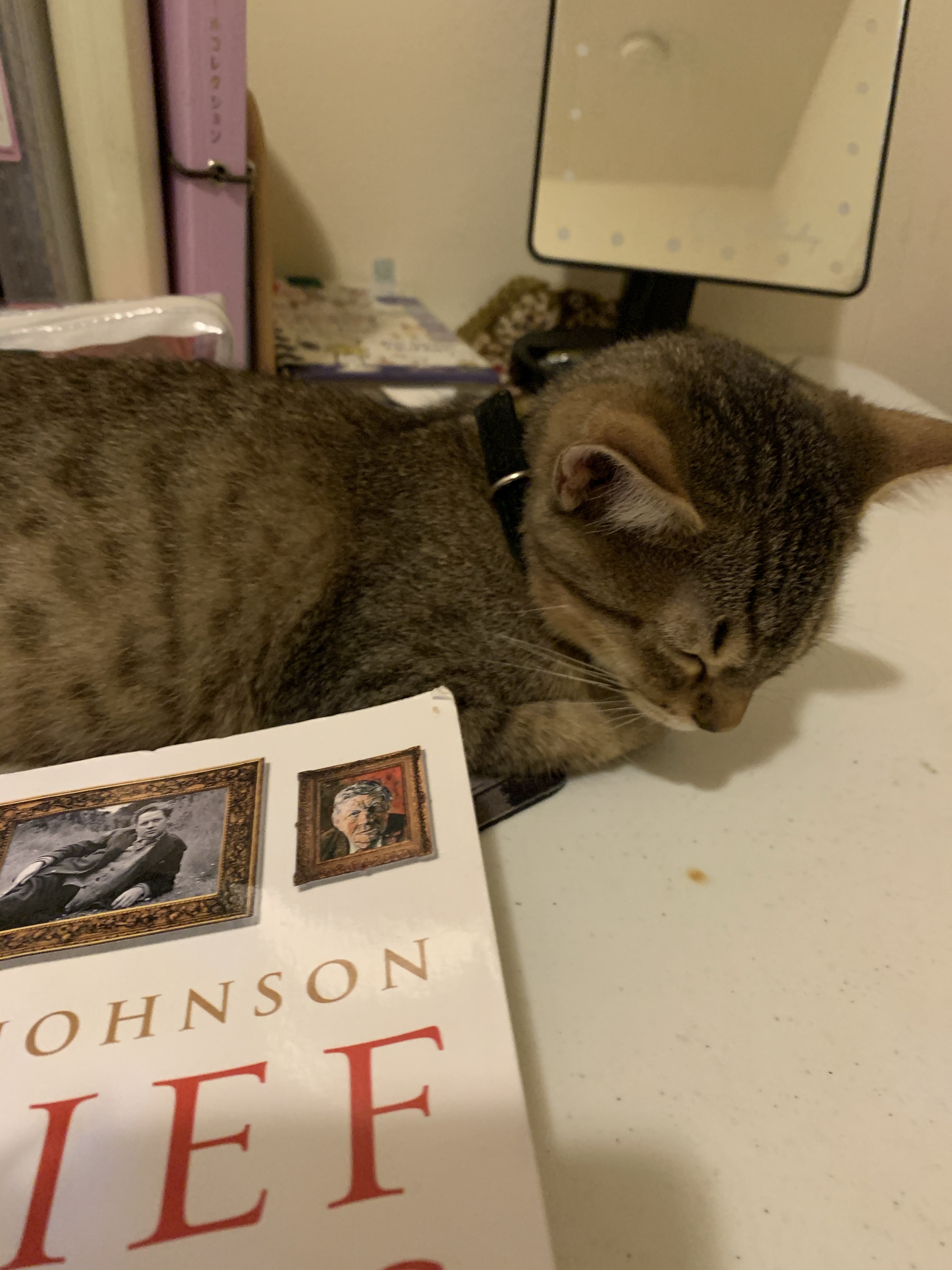
What an adventure I had today! Toro is now easily defecating in the letterbox. However, he seems to be a bit lethargic due to the oral solution that I have been injecting to him, which is a challenging task every time because of his apparent dislike. But Toro knows that he feels better now than before, so I guess he takes his medication as a daily ritual until the solution is finished. At the moment of writing, Toro is sleeping sweetly on the books shelved on my desk, and looking at him produces a phantasmagorical display of images of all things loving and caring and comforting I have seen from paintings and movies. Would this be the same kind of feeling when God sees his creatures made in love? It may be a bit of stretch, but I like the idea of it.
-
friends in loneliness

Looking out the window,
What does he see?
A little chubby sparrow
Twittering on the roof
in his cheerful vivacity
like a new good buddy
with an invitation to play
in their shared curiosity
of each other in loneliness.





You must be logged in to post a comment.