I am awake – I know I dream not,
Making every image in seeing real
The fancy of the mind I know for aught,
Riding on a train of thoughts by a mile.
When I dream – I think myself awake,
Seeing things in fantasy of the obscured mind
Buried in the vales of decaying senses at stake,
Gliding on a Flying Carpet overlooking the world.
For my dreams are impertinent when unguided
By the consciousness of reality – Law of Reason –
Pulling the reins of Rational Truth in on the mystified,
Hunting out the causes of the Revolt against Reason.
P.S: I wrote this poem upon reading “You and Your Dream” by Thomas Hobbes (1588-1679) in which the philosopher assessed the nature of /evidence of supernatural sights and other related matters. So in a way, this is my review on his essay, which I thought would be interpreted better in poetry based on its subject matter and the impressions it evoked.
The violent collapse of the ecclesiastical caste precipitated by the French Revolution has given rise to the secular intellectual armed with their scintillating rhetoric and dazzling display of scholastic aptitudes; these social, cultural elites have become guardians of cultures and devised moral and ideological innovations, thus replacing the ancient regime of the priestly caste. Paul Johnson’s Intellectuals lays bare the human frailties of these beneficent intellectuals – ranging from Jean-Jacque Rousseau to Leo Tolstoy, to Henrik Ibsen to Ernest Hemingway, and to Noam Chomsky – and invites us to question the duplicity of these intellectuals that contradicts what they preached for the sake of humanity.
Intellectuals have traditionally proclaimed themselves to be liberals, torch-bearers of fraternity, equality, liberty since they became new potent oracles of societies dictating modes of life and modus operandi of political, social, and cultural systems. However, they are actually bound to the canons of external authority and to the inheritance; that is, the intellectuals are and were by no means free spirits as they profess themselves to be. They are the substitutes for the pagan gods and the elites of Prometheus, who stole the numinous fire for humankind into the bargain under the pretext of shaping our attitudes and institutions and of prescribing us panacea for the social ills.
However, many notable intellectuals who have influenced the arts and shaped our modes of thinking were deficient in rectitude toward their kin, families, friends, and others in their everyday life. To illustrate, Rousseau was an absolute egoist, a brilliant self-publicist, tending to equate hostility to him with hostility to truth and virtue as such. He disdained women of low birth, such as seamstress, chambermaids, and shop girls, while he claimed to love people of all walks of life. In fact, this trait of egoism can be also found in the figure of Percy Bysshe Shelley, a great English poet known for his proclamation that “the poets are unacknowledged legislators of the world.” A sublime egoist with a strong moralizing bent, Shelley assumed that others had to applaud his decisions and when they failed to do so up to his expectation, he was quick to display a sense of outrage. And there was also Ibsen, who changed the social thinking of his generation and that of posterity by preaching the revolt of the individual against the ancient regime of inhibitions and prejudices. He did not want to help others, let alone his own family, for richer he became, the less inclined he was to make any contract with them.
To encapsulate, Intellectuals serves as a literary stethoscope to examine the moral and judgmental credentials of select intellectuals most known to us throughout the modern western history. However, this is not a book to slander their intellectual contributions to the enrichment of culture and society on the whole by revealing their personal history. Rather, it is to show us readers a peril of effaced humanity undermined by the importance of ideas as held by most intellectuals, for ideas – or ideology – were their new gods or new mammon. They put ideas before their families, friends, and people for the sake of perfection of the arts, politics, or society. Moreover, so many intellectuals have jumped on the bandwagon of liberalism in favor of careerism. It is this hypocrisy that Johnson wants to bring to light in Intellectuals. And I think this book is one of the must-haves we should keep on our bookshelves to discern true intellectuals who practice what they preach, such as Ralph Waldo Emerson or George Orwell from those who are no more than learned careerists or demagogues or just talking heads of abstract ideas.
Fresh-faced April, daintily bedight,
Adorned with a wreath of flowers,
Heralding her arrival in high spirit,
Liberating all from the grim shackles,
Breeding new lives into the gray kingdom,
Lets us leap with Joy of Spring in tandem.
Before Homer wrote about the fearless warriors and extraordinary heroes enshrined in the temples of the Olympians in Iliad and The Odysseys, there were a people of invincible spirits and adventurism on a par with those of the characters – The Mycenaean, the torch-bearers of a great Aegean civilization in the Pre-Classical Greece existing from 2000 to 1200 BC, whose bravery and enterprising minds inspired Homer to pay tribute to them as immortalized in the two great Classical epics in the history of western civilization. Accordingly, The Mycenaeans: The History and Culture of Ancient Greece’s First Civilization by Charles River Editors takes us to look back on the Mycenaean culture in the Pre-Classical era when these ancient ethnic Greeks ruled the Aegean Sea as the maritime power and left their indelible marks on the posterity of the Classical Greek culture.
The Mycenaeans, the first Greeks, were never unified under a central state and were a collection of several kingdoms. Influenced by the earlier Minoan civilization (2000-1450 BC) at Knossos, Crete, the Mycenaean adapted the Minoan art and religious practices and developed them to their highest expectation of militaristic and cultural ideology. For example, the Mycenaeans developed Linear B Script, which was the writing system comprising hieroglyphics, used between 1450 and 1100 BC especially in Knossos and Pylos, the corporate headquarters of the Late Bronze Mycenae. The letters were mostly written in clay tablets largely concerned with documenting economic transactions of the palace administration and various business transactions. In fact, the Linear B Script, preserved as the oldest Greek writing system, indicates that the Mycenaeans were the linguistic and ethnic ancestors of the Classical Greeks.
In addition to transcribing economic activities Linear B Script also lets us glimpse into the belief system of the Mycenaeans with the names of the deities they worshiped, such as the head of the Pantheon and Poseidon, the god o f the seas whom the Mycenaeans paid special due respect for their being sea-faring people. The Mycenaean reverence for Poseidon is worth noting because it betokens the importance of the Mycenaean as the maritime power of the Aegean Sea as well as the most of the Mediterranean Sea. They eclipsed the Minoans and their Aegean neighbors in terms of open sea trade by establishing trade routes with the islands of Sardinia and Sicily as well as the Libyan coastline and importing more goods than exporting, such as grain from Egypt and metal from Cyprus and Anatolia to make weapons.
With respect to artistic and cultural historiography of the Mycenaeans, the art of burial practices entailed the Minoan influence assimilated into the Mycenaean of their own accord, which was akin to the fashion of Hellenism, the spread of the Greek culture through enculturation by Alexander the Great centuries later. Likewise, after then conquest of Crete, the Mycenaeans continued to employ many of the Minoan artistic traditions one of which was burial practices and their beliefs in afterlife as expressed in the Hagia Triada Sarcophagus on the island of Crete. Made in a Minoan style under the rule of Mycenaeans, it depicts scenes of funereal game held in honor of a fallen warriors and dead kings, consisting of the following athletic events as part of the ritual:
Chariot Race – Popularized by the Hittite and the Egyptian as a symbol of power and prestige; powered by 2 to 4 horses carrying a team of 2 to 3 men. The Hittite had 3 men – a driver, a shield bearer, and a warrior- while the Egyptian simply had 2 men – a driver and a shield bearer. The Mycenaeans would most likely to have either of the styles, though not manifested.
Armed Combat – conflated with the Hittite sport
Boxing – popularized by the Minoan and developed by the Mycenaean
In fact, the actuality of the aforesaid athletic sport events is alluded in Homer’s Iliad, suggesting a Bronze Age tradition of funerary games in Greece with vivid descriptions of the games to honor the slain Greek warrior named Patroclus, which were all coordinated by Achilles. However, contrary to the nude events of the Classical Greece Olympics, which were the offspring of the Mycenaean funereal games, the competitors in the funereal sport events wore loincloths called “zoma.”
The demise of the Mycenaean Kingdom resulted from several factors one by one in a period of times, including the invasion of the Sea Peoples and the emerging of the Dorian in the north, all of which represented the end of the Mycenaean Age, coinciding with the collapse of the Bronze Age in the ancient Near East, where the Mycenaeans played an important role as a formidable trade partner with the Egyptian. Notwithstanding the fall of the Mycenaeans as the major sea power in the ancient Bronze Age, the brilliant legacy of the Mycenaean culture still thrives in; (1) the form of Linear B Script, the oldest writing system of the Greek language before the adoption of the Phoenician alphabet system many centuries later; (2) the belief system in which Zeus and Poseidon were first recorded in the writing tablets and revered with due respect; and (3) the initiation of the sparks of the organized athletic events developed into the Olympic Games in posterity. It is this ingenuity imbued with the spirit of adventure and the policy of engagement in adopting cultural traditions of other people that exemplified themselves among other Pre-Classical peoples, which is something we in the modern time should adopt as well, so that our posterity can benefit from what their ancestors learned and experienced, for it also becomes our legacy of heritage and culture to pass it down from generation to generation.
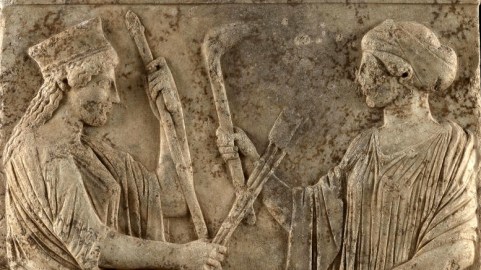
Veiled in the ancient shrine of the mysteries,
Robed in the esoteric knowledge of Olympus,
There appeared a numinous woman on the altars
Of a great temple built by Keleos, King of Eleusis
At the instruction of Demeter, the disguised goddess
Presiding over grains and the fertility of earth in distress,
For her daughter Persephone, deflowered by Hades,
The god of the Underworld was still retained in Hades.
The tale of woes so lachrymose with her eyes so dolorous
With the tears of the goddess welled with pains of heartaches
Began as Demeter called Keleos and other priests by the altars,
All of whom were equally intoxicated by her divine humanities
Of Anguish, Despondency, Dolefulness, and even Wretchedness
And listened to the elegy of their goddess of sacred grains
Of earth where now was barren and fallow for she was without grace .
“My daughter Persephone, the apple of my eyes, Flower of Flowers
On earth was ruthlessly ravaged by Hades, that dreadful Hades,
Of the Underworld, who then abducted her to his realm of darkness
Where only shadowy spirits wander with eyes depraved of lights,
Where the shadowy spirits importune for drops of blood for prophecies
To those a few mortals of valor destined for performing heroic feats.
There, Persephone, my beautiful daughter, was bound to Hades,
Who was also a brother of Zeus, god of gods, the ruler of the Universe,
Who was also an accomplice of this great crime, this god of gods!
Alas! Where’s Justice? Where’s Nemesis? Where’s God of the Universe
When this god of gods connived at his brother’s crime and sealed the mouths
Of other gods and goddesses who were nothing but divine cowards?
Thus, I searched high and low for my dear Persephone for nine days,
And on the tenth day, Hecate, a daughter of Rhea, and the sun god Helios
Came to me, for their pangs of godly consciousness disturbed by the pathos
Of my grief and lamentation was more divine than their divine essences
To tell me the crime of Hades and where my Persephone was that was
Hard to bear, harder to believe when my divineness was betrayed in Olympus,
Where all but I, the goddess of grains and fertility on earth was left amiss!
Thereupon, I fled Olympus, the ghastly place of godly beings in idleness
Who were nothing but abductors of fair maidens, manipulators of wars,
And conspirators of jealousy, all of it was against my nature and sacred office
With righteous contempt for all of it, I left that place of lewdness,
With no regrets, but with a longing heart for my Persephone in darkness.
Into this land of Eleusis, your land of Eleusis I wandered with hopes
Of meeting my Persephone one day as an old slave woman in disguise
Named Doso and met your wife by an old well near your splendid house
Where I became a burse to your son whom I fed ambrosia at nights
For Eternal Youth and put in the center of fire for Immortality, my Graces
To your kindly family till your wife full of foolish speculations
Betrayed my sacred appreciation and divine intentions and thwarted your son’s
Gifts of Eternal Youth and Immortality, the essence of the Immortals in Olympus!
Here, you built me my temple in honor of me, to initiate the Eleusinian Mysteries,
My Persephone will also preside for her four months’ stay on earth from Hades,
Alluring her to eat four pomegranate seeds, so she can’t stay here in bliss
For ever, forever with me, when the land will abound with crops and flowers,
And when you will purify yourselves with nine days of fasting and celibacy
with a consecration of the first grain harvested first of the year for the rites
In honor of me and Persephone, the goddess of spring of blissful liveliness.
Thus was a tale of the goddess, who was the goddess of humanities in essence,
Who was the goddess of the Eleusinian Mysteries with full of arcane principles
Of Purity, Morality, and Humanity, sealed in ancient secret rites so mysterious,
With sacrosanct pledges of select a few mortals mystified by the Mysteries
That would elevate the excitement of the souls and the passion of the hearts
Like no other in this world and in that world, afterlife where the spirits
In bliss promenading in the Eleusinian Fields boundless into the Mystic Universe.
One Saturday morning, Mathilda Bear, who currently works at Bauer Daycare run by Hannah Bauer, stops by at Bonjour Cake Shop to reward herself with a cup of freshly brewed hot French Vanilla coffee with cream and two cubes of sugar and a piece of Ispahan cake that captivates her dormant testing bud and elevates her withered spirit with wonderful rose cream. It’s her weekly treat as a sweet reward for her hard work as a daycare teacher.
Since it’s Saturday, the proprietress of the cake shop, Laura Collie, is at home with her family, attending to keeping the household neat and tidy, doing laundry, preparing for special Saturday menu for her family, and probably taking a promenade with her friends late in the afternoon. So Laura has hired Bonnie Poodle, originally from Paris with her two baby twins, named Nena and Neno, both of whom are one-year old with Nena being five minutes older than her brother. The Poodles lost their parents two years ago by a tragic car accident in Paris. Since the death of their parents, the Collies being distant relatives by their mother’s side have invited the Poodles to live in Avonlea to help start new life in a different land under their aegis.
“Good morning,” greets Mathilda first when she comes into the cake shop. “Bonjour!” is the French reply from Bonnie, who despite the fact that she’s a good English/French bilingual, oftentimes tends to reply in French because her brain’s language facility has already been cemented in her first language. It is said that you can have native-level fluency in acquisition of a foreign language if you learn it before the age of fourteen. Anyhow, Bonnie is getting well adjusted to her new life in Avonlea and likes her new job as a cashier/attendant at her aunt’s cake shop. She likes to talk with her customers with a pretty smile on her face, and always works hard even during a period of lull in the store hours because the word procrastination does not exist in her disposition as it is a hereditary trait in her family.
“May I have a medium hot French Vanilla coffee with milk and two cubes of sugar?” Mathilda orders with her eyes gravitated toward the delicious-looking donuts by the counter. ‘”Anything else, miss?” Bonnie asks with a sweet smile. “Hmm, I can’t decide which one I should have because all looks so very scrumptious. I am wrestling with temptation of getting both donuts and cakes. But I can only take one because I have to watch out my figure. What do you recommend, miss?” “Then I’d like to recommend you our Ispahan, a rose-cream filled cake made by our fine patissier Laura, who is also my aunt.” “Oh, is Laura your aunt? Well, nice to meet you! What’s your name?” “I am Bonnie Poodle, and Laura is a distant cousin of my mother from France.” “Oh, I see. Bonnie is a pretty name for a pretty girl! I am Mathilda Bear. I work at Bauer Daycare. I am a regular customer of your establishment. I love coming here after hard days of a working week. I will have an Ispahan, which is actually one of my favorite delicacies in the world.”
Bonnie thinks Mathilda a bit loquacious but pleasant and affable. Besides, the fact that Mathilda works at a daycare school provides her with a sense of relief that she can take her two baby twins in the care of Matilda when she’s at work without having to take Nena and Neno to her Laura, whom Bonnie wants to alleviate from loads of responsibilities, so that she can enjoy her own private time with her own friends. So she writes down the address of Bauer Daycare School to check it out on Monday morning when she’s off from work. If all goes well, Bonnie wants to learn a new trade that can help her start a new business of her own in future. What trade it will be, Bonnie will do it just fine.
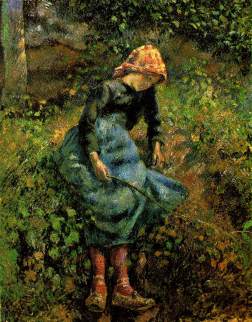



 One Saturday morning, Mathilda Bear, who currently works at Bauer Daycare run by Hannah Bauer, stops by at Bonjour Cake Shop to reward herself with a cup of freshly brewed hot French Vanilla coffee with cream and two cubes of sugar and a piece of Ispahan cake that captivates her dormant testing bud and elevates her withered spirit with wonderful rose cream. It’s her weekly treat as a sweet reward for her hard work as a daycare teacher.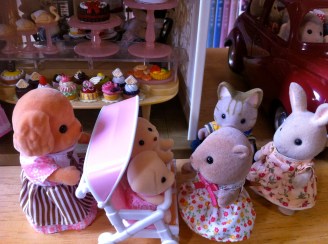
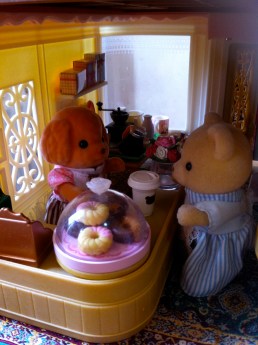

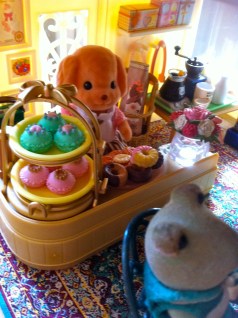 Bonnie thinks Mathilda a bit loquacious but pleasant and affable. Besides, the fact that Mathilda works at a daycare school provides her with a sense of relief that she can take her two baby twins in the care of Matilda when she’s at work without having to take Nena and Neno to her Laura, whom Bonnie wants to alleviate from loads of responsibilities, so that she can enjoy her own private time with her own friends. So she writes down the address of Bauer Daycare School to check it out on Monday morning when she’s off from work. If all goes well, Bonnie wants to learn a new trade that can help her start a new business of her own in future. What trade it will be, Bonnie will do it just fine.
 Flame, Glass and Ink are Poems, essays, and reading notes by Stefania Joori Suh
You must be logged in to post a comment.