Tag: dogs

  • Episode II of the Sylvanians: Before the Weekend

    Click here for Thursday evening

    24879320_502678990099370_2033890894_oThis is an episode 2 of the Sylvanian Series I have written. Although the story might be deemed intent upon children because of the characters being anthromopoistic, it is actually intended for all ages, including the young at heart.
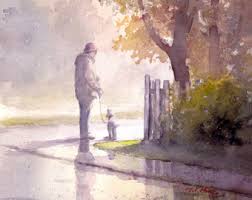
    The theme of the story goes thus: It’s a Thursday evening, when the the residents of Avonlea enjoy their mealtime after a hard day’s work. In fact, Thursdays are much pleasant than Fridays because the impending weekends are all the more enlivened by plans of cherished weekend activities as they deem enjoyable and rewarding on their own accord.

    It’s always heartening and relaxing to expect to do something rather than doing it in actuality. Meet Sally, Mr. Karl’s family, Mrs. Lompstrompf, Mathilda, and a band of little guys for their evening repast.

    *Sylvanians are the residents of Avonlea, the miniature figures that I have. I haven taken pictures thereof and written a few short episodic stories thereabout.


  • How to Be Your Dog’s Best Friend by Monks of New Skete

    How to Be Your Dog's Best Friend: The Classic Manual for Dog OwnersHow to Be Your Dog’s Best Friend: The Classic Manual for Dog Owners by Monks of New Skete

    My rating: 4 of 5 stars

    One of my favorite saints of the Church is St. Francis of Assisi because of his humanity, compassion, sweet nature, and his love of animals with whom he is believed to communicate based upon the story of his converting the Wolf of Gubbio to a tamed animal. The story goes that while living in the city of Gubbio around 1220, St Francis volunteered to take leave and meet a ferocious wolf who devastated the country by attacking people and livestock. When St. Francis finally met the wolf, instead of punishing him for the offenses, he gently admonished the wolf to cause no more plight to the people and the livestock and promised him that he would be fed daily by the people of the city. The wolf was grateful for the compassionate promise and put his front paw on the saint’s hand as a gesture of accepting the advice. Thereafter, the Wolf of Gubbio kept his promise with the saint and became a tamed pet animal of the city.

    With this evocative image in mind of the gentle saint and the tamed wolf I had once seen on a prayer card, I selected to read this book by Monks of Skete of the Eastern Orthodox Church. In this regard, I was piqued by the facts that (1) these monks were reputable German Shepherd breeders and acclaimed canine-human relationship teachers; and that (2) the monks lived with the dogs in accordance with the teachings of the Gospel manifested in their healthy relationship with the dogs. However, the monks of Skete carefully avoid religious jargon in the book lest the book should be interpreted as a promotion of their faith. Instead, their faith is carefully incorporated into the belief of fostering their ideas about dogs with a philosophical and spiritual foundation for personal change because dogs mirror who we are by responding to the way we treat them without deception.

    The gem of this book is the monks’ views on salubrious human-canine relationship as appreciation of truths of the two worlds: one world of our own human prowess as a caretaker and one world of their own pristine nature as a guide to the wondrous natural world from which we have gradually distanced. While we provide them with food, shelter, and veterinarian care, dogs enable us to appreciate the beauty, the warmth, and the compassion that are deeply rooted in our humanity we often overlook or even try to suppress in the face of existential dilemma. In consideration of the aforesaid, I believe that the story of St. Francis of Assisi and the Wolf of Gubbio is not a myth but a truth.

  • Two Fellows – Part I

    two

    So there he was. You could always find him there at the same time, at the same place regardless of a change of four seasons, like it was his duty to do. Looking over the fence smartly seated on a rock on one balmy afternoon, Toto was calm and steady. His big brown eyes full of yearnings and visions glanced at the dancing leaves on the quince tree outside the fence where there were only a few fruits left because Grandma, being of generous and affable nature, had given the well ripe ones to the neighbors. However, such intermittently displayed quinces surrounded by the abundant leaves appealed to Toto’s inquisitive eyes: the way the leaves swayed to the tune of the breeze was a part of the nature’s orchestra that stimulated all of his senses, which ultimately led him to the outburst of his exhilaration in long howling like a wolf pup in the wild.

    Toto was a Jindo mix, aged 9 weeks or so. Toto came to Joe’s home on a cold winter afternoon a year ago with Pa who brought him in his jacket. He was a white puppy looking healthy but a bit apprehensive about the new surrounding. But mind you that there was no sign of fear in his eyes but intelligence. Joe named him Toto after a legendary dog in Korea who returned to his owner, an old woman who had given the dog to her nephew in a city miles away from her home in Jindo. So he wanted to have a dog whose faithfulness and loyalty would be equivalent of those of the legendary namesake. Joe wanted to keep his new puppy till the end of the world because he had lost Lana, a Samoyed mix puppy of 9 weeks old, to distemper 2 years ago. This time, Joe thought, would be the last time to let such thing happen to him and the dog. It was his new bound duty, a duty that suddenly appeared sacred and fateful to his destiny. Boy as he was, Joe was resolute in his new pledge to the life and protection of Toto as his guardian. Looking at Toto who was napping beside him on the rock by the quince tree, Joe could hear the whisper of the breeze that blessed his guardianship and fellowship of the human and the canine. What a nice afternoon it was to both the boy and the dog.

    “Joe, can you come here quickly?” It was Joe’s sister Judy. She was 16 years old, 2 years senior to him. Judy also loved Toto and dogs, although her favorite breeds were Labs, Border Collies, Shiba Inus, and Bichon Frises. She had been secretly entertained having a Bichon Frise until Pa brought Toto home. She had a soft spot for this particular breed since she had read about a homeless elderly man who sailed through the tribulations with his Bichon Frise dog named Willow; the image of the small, curly haired dog with large soulful eyes in the arms of the man still lingered in her mind. But it’s not that she did not lie their Toto. Toto was their another sibling, the youngest brother whom Ma had lost by miscarriage 6 years ago. Judy’s love of Toto was not to be confused with anthropomorphism because she loved Toto the way he was, the way Toto was the closest natural wonder. He was Judy and Joe’s guide to the natural world like Virgil to Dante in his journey to Hell, Purgatory, and Paradise. Through Toto, Judy and Joe could see the wonder of Nature in which all creatures existed and made the human existence all the more conspicuous by appreciating the pristine beauty which was to be beheld in the eyes of the innocent.


  • Through a Dog’s Eyes by Jennifer Arnold

    Through a Dog's EyesThrough a Dog’s Eyes by Jennifer Arnold

    My rating: 5 of 5 stars

    If you are a dog person, reading this book will make you become better understanding of your dog or just any dog in sight – in his perspective. This book is written with knowledge and heart by Jennifer Arnold, the Executive Director of Canine Assistants, a school for educating dogs to help people with disabilities, including epilepsy, paralysis of broken spinal cords, and others that prevent them from functioning their ordinary tasks of daily lives . The author specifically emphasizes on the word “education” of her dogs, not “training” because the student dogs are taught to respond to foreseeable/unforeseeable situations that require their immediate problem-solving skills for the safety of their human partners based upon the author’s belief on ethology, the scientific and objective study of animal behavior, by incorporating Operant Conditioning method to modify a behavior by reinforcement and
    punishment.

    What Ms. Arnold avers in the book actually corroborates what I have always believed to be true: (1) that dogs do have feelings without filtering them through the intellect, which can be found in the cerebral cortex of human. But because of this absence, dogs are artless in expressing their emotions toward us; (2) that dogs’ characteristics of being loyal and empathetic indicates that consciousness, the state of being awake and aware, enables them to do what’s in the best interest of others; (3) that in no way, is a concept of “alpha dog” in a human-canine relationship useful or even sensical; and; (4) that operant conditioning with positive reinforcement (rewarding with a treat)  and negative punishment (not giving it) works the best to reinforce intended behaviors.

    You will find a kindred spirit in this book filled with laughters by the wonder dogs at the Canine Assistants, tears by the pains of those who were and are in need of their canine assistants, heartaches by those fallen dogs because of misunderstanding on our human parts, but most of all, joy by understanding our fido friends in their own paws.

  • My Fido Friend

    Hello, my little furry friend!
    You’re glad to see me again,
    Wagging your little tail like a hand,
    Waving to your friend gone then back again.

    O, how happy I am to see you!
    You’re my friend who welcomes me
    Whatever I do, however I feel, and you
    Are always there and will be here with me.

    저장

    저장

    저장

    저장

  • The Call of the Wild by Jack London

    The Call of the WildThe Call of the Wild by Jack London

    My rating: 4 of 5 stars

    Jack London, who was a fervent follower of Darwinism, contextualized Darwinism as portrayed in Buck’s survival in the wild with his resourcefulness and stamina that enabled him to survive and become a leader of his pack. Also, as Darwin paid a note on the atavism of a dog going feral from being domesticated once he lost contact with human, Buck became unleashed by the death of Thornton, the embodiment of humanness. This book is London’s manifesto of Darwinian atavism and evolutionary theory.