Tag: emily bronte

  • A Real Witch Pretending to Be a Sister

    Reading Nick Holland’s “The Brontë Love of Pets”

    October 4, 2026
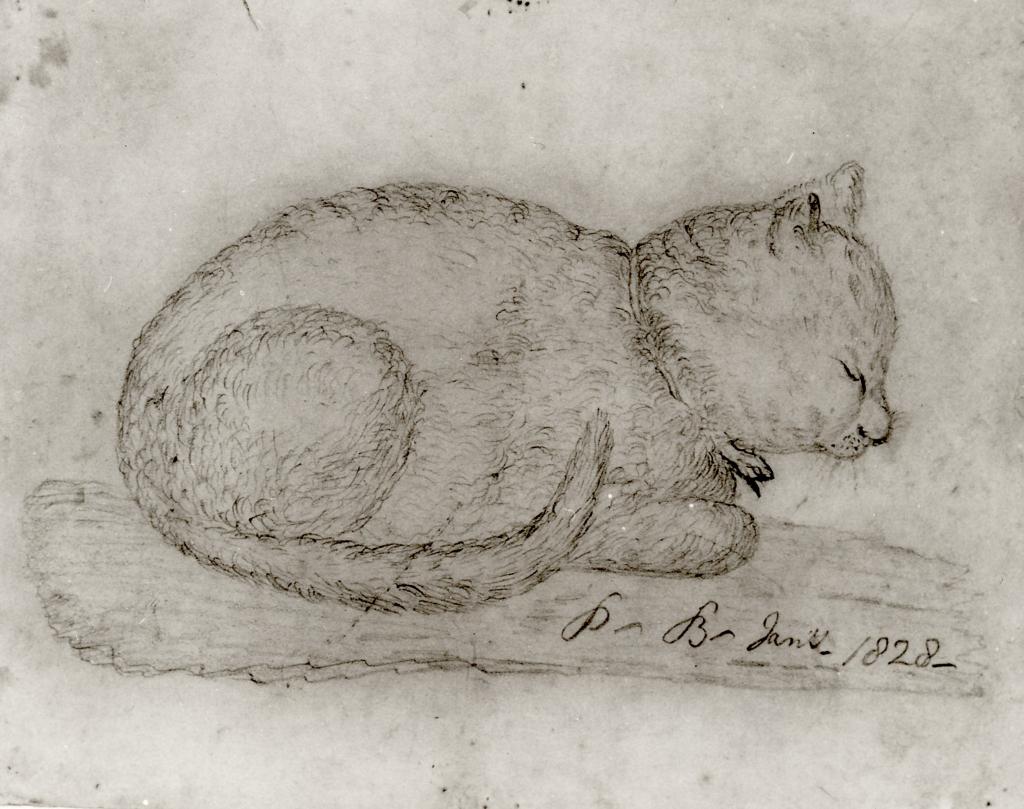
    Branwell drew this cat when he was just 11!, courtesy of Annebronte,org

    Pets are like your children or friends, depending upon how you see them in your own surroundings. I am a sister to my two cats: Toro the Tabby and Camille the Black. Not a Cat Lady or Cat Mom—both burlesque images of a woman living alone with her cats. And I don’t see myself as either—or, for greater atmospheric enchantment, perhaps I am a witch who writes beneath a lustral moon at night. Enough of the self-defense. And Toro and Camille are my lucky stars in my otherwise not-so-lucky life. You got that?
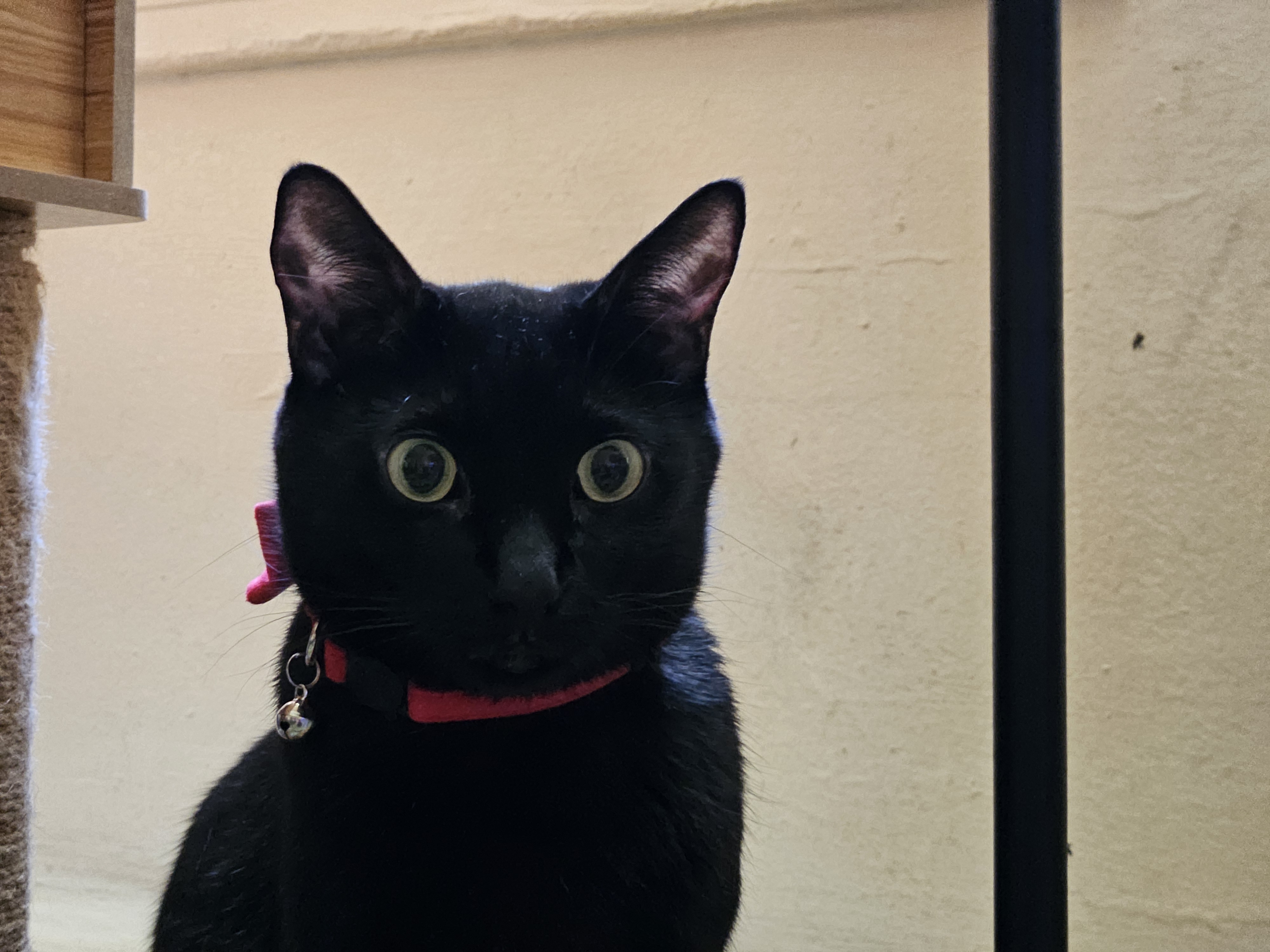
    Camille the Black knows when I cast a spell

    So, reading Holland’s article about the Brontë sisters’ love of their pets at home was a simple pleasure of one Saturday afternoon. Before reading it, I already knew that Emily Brontë had a pet merlin named Nero, whom she fed in the kitchen when Charlotte wasn’t around, since Charlotte wasn’t fond of seeing him there. But I didn’t know they had cats at Haworth Parsonage until I saw their only brother Branwell’s adorable drawing of a cat loafing like bread, much like my Toro. In fact, the Brontës were very fine artists, as seen in their pictures of Nero, Flossy (Anne’s spaniel), and Grasper (Emily’s mastiff).

    The dogs seem more like the sisters’ familiars than the cats do, given the sensibilities and personalities concealed beneath the narrative veneer of their novels. Still, Haworth Parsonage was filled with the pets’ amiability and the family’s moments of contentment. No wonder the sisters frowned upon and judged anyone who displayed indifference or irritation toward pets or other animals beyond the parsonage.
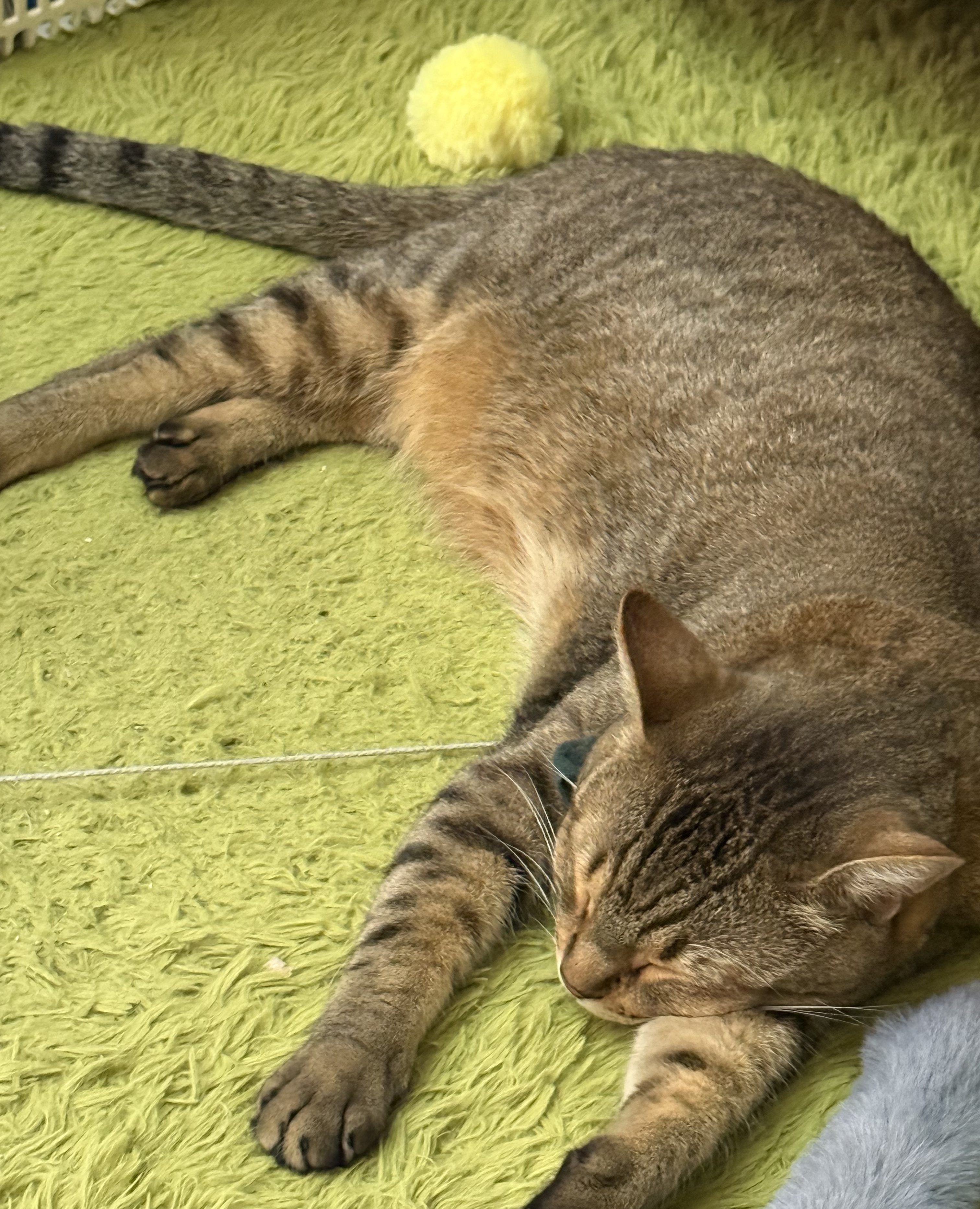
    My Practorian Guard Toro at Ease

    Back in my tiny apartment in LA, I am writing this note with Toro under my legs. He looks at me with large emerald eyes full of liquid tenderness and affection. He knows I am writing, and if he likes what I am writing through our special astral connection, he stays still as a gesture of approval. I know Edgar Allan Poe’s cat Catterina used to do something similar, but Toro is more like my Roman Praetorian Guard, standing watch over my writing. As for Camille, he is sleeping in his secret hideaway in my bedroom, but soon he will come out and look at me with his amber eyes, saying “Meow,” which means, “I am hungry.”

    I don’t care if I am a real witch pretending to be a sister.

  • about Emily Bronte

    file-20180822-149490-1ns34tc

    The 19th century has produced many a scintillating woman writer whose world of imaginations is beautifully interwoven by the gossamer strands of feminine sensibilities and literary sensitivities tinged with a passionate spirit addressing to that of the reader transcendent of times and spaces. Her world is one enchanting realm of the felicity of beauty, the ire of desire, and the tenacity of will in the witchcraft of words. Such a world belongs to no less a writer than Emily Bronte herself, the elder sister of Charlotte Bronte, who was born on the 30th of this month in 1818. This brief essay about Emily Bronte intends to manifest her commendable trait that is deemed inspiring to aspiring writers who feel estranged from the literary cliques that do not see the hidden jewel of their inner worlds.

    Educated mainly at home by reading of the books in her father’s library, Emily Bronte was something of an autodidact who was always seen with a book popped open and a notepad on her side while attending her daily chores at home. Her lack of formal schooling due to her weak disposition and introvert nature might have made her a poor speller. Still, her protean imaginations compensated furnished the marvelous world of her ideation carved by alluring latticework for her literary casements to her stories. Her fascinating imaginativeness creates the vivacities of the emotions, real and alive. Emily Bronte is a forerunner of Beat Generation, whose trailblazer Jack Kerouac championed a tenet of a stream of consciousness in writing. Kerouac, whose mother tongue was French, struggling with the English syntax, urged would-be writers to write without grammatical constraints impeding the flow of thought. The editing should come after the birth of an idea, which proceeds the mastery of grammar. In this regard, Jane Austen and Leo Tolstoy, who were also imperfect in grammatical aspects of writing, are in the libertine society of Emily Bronte and Jack Kerouac. They prove that imaginations precede imperialism of grammar.

    The lionization of Emily Bronte as an austere, astute literary Titaness in our time, obviates her weakness. It gives her a status infused with intellectual solitude of a learned woman writer and egoistic charge of modern-day celebrity writer. It reminds me of the way William Shakespeare, who was also mostly self-educated, is now revered in the grand fortress of the lofty academia as a figure of cultural and intellectual sophistication denoting one’s social status. So many people adulate the greatness of Emily Bronte and her Wuthering Heights in a simulation of her literary style and the romantic notion of solitude while diminishing her human characteristics that they regard dull and prosaic. She attended the household drudgery and took care of her sickly elderly father even in his peculiar habit of firing guns in the air from the top floor window in the parsonage as a warning to the Luddite civil unrest. Besides, she was not an academically brilliant student during her brief school years in childhood.

    I believe that Bronte would feel uncomfortable and discombobulated by such a famous rhapsody of blind admiration without understanding her personality and character that may not appeal to the readers and writers who do not see the beauty of doing simple things in daily life. Emily Bronte was neither Sylvia Plath, a woman of a privileged background whose poetry does not touch the hearts of universal readers, nor Emily Dickinson, a voluntary recluse ensconced in the solitude of leisure. Emily Bronte was an extraordinary writer in the semblance of ordinariness. She possessed imaginativeness that eclipses the brilliance of the other fashionable literary women writers of all ages. That is why her literary world is ao appealing to universal readers and writers, professionals, or amateurs.