Joe loves things Western: ranging from the rugged, restive beauty of mountains and vales to the legend of the ghost riders, to the saga of pony express, and the unforgettable Magnificent Seven. But above all the aforesaid, Joe is fascinated by the sprit of go-aheaditiveness conflated with unquenchable curiosity thanks much to his literary and cinematic proclivities for the history and culture of the West. In the spirit of a Pony Express Rider who used to deliver important mail from California to Missouri on a horse relay in the mid 19th century before the advent of transcontinental telegraphic network, Joe likes to run an errand for his customers in the town. So this video shows one of Joe’s regular routes that is always bustling with activities, businesses, and people, the wholesale picture of life in kaleidoscope that makes you realize you are not alone.
Tag: fiction
-
what i liked about “Upstairs, Downstairs” (TV Series) – review

A long time ago, somewhere in London there lived two families under one grand roof: one lived in downstairs, and the other upstairs, all behaving according to their modus vivendi that seemed only natural to accept without a shadow of doubt to contest. It was the time when a lady would require a parlor maid to groom her in her boudoir and a butler would act in the capacity of a superintendent of a household as well as a messenger incognito for his master. But to dismiss those “good old days” as an obsolete oppressive social institution is to deny the memories of those cherished in their everyday lives as portrayed unforgettably in a British television drama series, “Upstairs, Downstairs” (1971).
This is not like the overhyped “Downton Abbey” in the sense that the plot of the story involves these two opposite classes (the benevolent master and the content servant) in a very fashionable mansion. Contrarywise, this classic series of “Upstairs, Downstairs” is rich with feelings and thoughts that make the viewer empathetic to the characters and absorbed into each episode for the reason that they touch upon the heart of the viewer, let alone the fine performance of the cast and the elegant screenplay attuned to all. On the point of purely subjective note, the character of Rose Buck, an excellent parlor maid who is beautiful both inside and outside is what gives to the ethos of the drama: she is all humanity, showing compassion toward the eccentric but tragic footman Alfred who was shunned from others. Notwithstanding her goodness and beauty, Rose is unlucky with her personal life, ever finding herself out of reach of love like the forlorn nymph Echo. Her character is universally appealing regardless of time, ethnicity, and class. And Butler Hudson may seem prejudiced and stuffy, but he has a heart, too. In fact, he’s a good father figure: stern but fair, strict but kind. No one in Downstairs is sacked coldly, come what may.
The residents of Upstairs are not your proverbial snobbish English aristocratic family whose haughtiness and zero regard for their subordinates are something to be enshrined in the temple of Marxism; the Bellamy family, headed by the magnanimous and highly respectful viscount Richard Bellamy, who was originally a son of a country parson, were all too human, woven into intricate relationships of love and loneliness, betrayal and misunderstanding. To put it in a nutshell, the Bellamys are a paradigm of noblesse oblige. No wonder Butler Hudson and his Downstairs family show such a high, heartfelt regard for the family like they are their real family.
If you are accustomed to the splendid British manor scenes that typify your image of the classic British class distinctions, then you might find this drama rather antiquated and boring as a period drama. But those of you who value stories and characters, not to mention fine scripts, this will feast your senses and sensibilities. What’s more, you don’t have to be British to enjoy this excellent drama that fuses historical backgrounds as factual grounds of each episode with interesting and empathetic characters with stories to tell which we could relate to one way or another. Good dramas are contemporaneous with any period of times, theirs and ours.
Author’s Note: Since the acquisition of a Kindle Fire, I have been wallowing in the enjoyment of quality TV shows of the past. People ask me why I am hooked on the dramas or comedy shows of the bygone eras before my coming to the world. But as I firmly believe that pathos of humankind are transcendent of time and universal in every culture, my sensibilities channel me to the dramas that know no boundary of zeitgeists. I am open to all good TV shows so long as they are worth the viewing.
-
mission impossible
It’s the busiest hour at the Union Station in LA. Trains decant crowds of people rushing toward their destinations like toy soldiers winded to the fullest marching forward at war. Among all this hoopla of rush hour actions, there goes Fido, an unlikely K-9 agent from Terra Canina. Fido knows no fear and always accomplishes its missions with fortitude and loyalty. One of the daily missions is to cross the frontline station to make a rendezvous with another K-9 agent from Terra Canina. With the help of a human ally from Resistance against Confederation of Lumpish Rabble, Fido hurries the way to the rendezvous point with alacrity of speed and a burst of pep peculiar to the species known for fierce loyalty and universal magnanimity. The mission impossible became possible.
Author’s Note: I shot this video last evening at the station on my way home after work because (1) I loved dogs; (2) the dog was right next to me on the escalator to the upper level; and (3) I felt a sudden feat of venturesome temerity to film the trail of the dog. Watching the dog took my momentary existential worries off my mind. Benjamin Franklin must have felt the same when he said the following timeless adage:
“There are three faithful friends – an old wife, an old dog, and ready money.”
Here’s Fido’s secret K-9 agent waiting for Fido at the rendezvous point -
‘Dog Man: Brawl of the Wild’, by Dav Pilkey – review
 Dog Man: Brawl of the Wild by Dav Pilkey
My rating: 5 of 5 stars
Half humanoid, half canine guardian of justice and humanity in league of his unforgettably formidable allies saves the city from evil villains set out to plague it in as much annoying way as fleas on a poor dog’s body. Hip, Hip, Hooray for Dog Man, our unlikely but likable hero that deserves of our heartfelt hoot and hollow. To contradict the usual glorification of hero-worshiping façade, Dog Man is none of your familiar super heroes in Marvel Comic Strips, nor is he like Batman, Superman, or even Iron man who seems to possess vulnerable human traits, and yet is equipped with wondrously technological gizmos or alien superpower. Contrariwise, Dav Pilkey’s Dog Man wonderfully embodies all things related to our unfavorable human tendencies that cloud our wondrous potential abilities – insecurity, disappointment, loneliness, and diffidence as deeply felt by Pilkey himself as a child diagnosed with Dyslexia and ADHD at school.
Pace the generalization of the book as being intent for children, this book is inclusive of literature, philosophy, and sociology contextualized in the story and delineated in the characters without gravitas of the academia. Take Dog Man, who finds himself estranged from his colleagues at his police station except his boss, Chief. Dog Man cannot talk for the reason because he’s a dog with a human body used to belong to his K-9 policeman killed in action. As the title “The Brawl of the Wild” adumbrates, Dog Man is in a way reminiscent of Buck, the sled dog in Jack London’s classic The Call of the Wild that comes to term with his fate and even reconciliation with a treacherous human in the person of Thornton. Then there are Petey, who is supposedly a sinister jailbird, but in fact softy inside, his cute young son Li’l Petey, who never gives up on his jail- bound father Petey in his joint collaboration with Dog Man in rescue operation of the city, and stern but benevolent Chief, who seems to defend Dog Man against unjust and unfair treatments from his fellow policeman/policewomen and the pompous judge. Wisecraking and heartwarming, hilarious and sentimental, intelligent and vivacious, each of the chapters is smoothly linked to the next one with amusing in-between intermissions that deserves of the separate theaters of appreciation.
The book is an enjoyable parade of laugh and compassion wrapped up in delightful amusement of vivid colors and elegantly profound dialogues, which can be made possible by an insightful and observant author who stands with the reader and sees hope and goodness mired in the despair of hopelessness and wickedness at the heart of humanity. I recommend this book to all who want to spend their time reading something jovial and funny after a long hard day or just to fill their minds and hearts with a fresh breath of air. This is a scintillating read that evokes a wide arc of thoughtfulness and imagination in the minds of readers both young and old, and the young at heart.
-
‘Prince Brat and the Whipping Boy (TV Movie 1994)’ – review
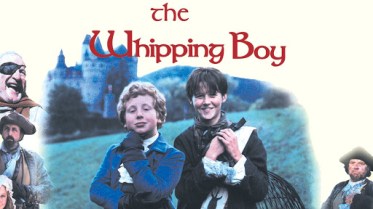
The Unlikely Duo in tandem Tales of mistaken or traded identities between either by the irony of fate or whimsical voluntary submission bespeak our desire of realizing dreams and desires at one fell swoop without drudgery of going through rules and conformations of social norms and mores. From The Prince and the Pauper to Cinderella and to The Trading Places, the basic story lines contextualize the instant social mobility of improving one’s social status and the essence of human nature laid bare in dealing with new milieus. But forget the verbiage of latent sociological theory and academic analysis because after all, we all know that such wish for rapid social escalation is only father to the thought. So why not continue to enjoy the world of wishful thinking entertainingly translated on screen for the sake of art, such as this delightful movie Prince Brat and the Whipping Boy (AKA The Whipping Boy)?
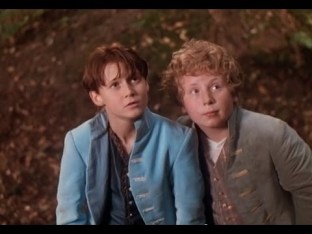
Guess who’s the prince? The movie has a charm of Mark Twain’s The Prince and the Pauper and The Adventures of Tom Sawyer, giving it impression of a spin-off from the two stories in all likelihood. But what makes it worth the viewing are the characters whom you find difficult to dislike and the detailed background setting that conjure up the spirit of the time and bring out the personalities of the characters delightfully rendered on screen. The young prince is not really a brat but a lonely child who needs love and attention from his ever busy king father. The prince’s impudent pranks are signals for sending emotional SOS to the king who puts the security of his kingdom before the attention to his one and only child. And there’s a young rat-catcher about the same age as the prince who accidentally finds himself as a whipping boy for the unhappy prince. What happens next is the gem of this movie in their subconscious quest for their cherished ends, their treasures at heart, through their eventful journey together in the unlikely duo of the prince and his whipping boy.
All in all, it is a little cute feel-good movie intended for all ages about what’s really important in life. Yes, we all may know the answer to it, but it really touches us in the denouement of the movie, leaving us with a feeling of warmth, affection, and jolliness, chiming the emotional, sentimental bells of our childlike imagoes. That said, if you want a movie that takes you away from your worries and sadness arising out of living adult life for some time, this movie might do good for you as it did for me for the day.
-
Jay’s Angels – fiction
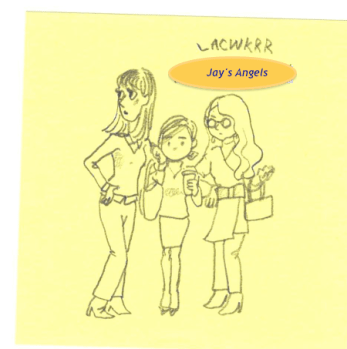
Move over Charlies Angeles. Here come Jay’s Angeles. (from l to r: Stephanie, Gwen and Monica): Illustration by Gwen B. Director/Writer/Producer: Stephanie S.
Illustrator: Gwen B.
Ambiance Coordinator : Monica K.
Stars: Stephanie S. (Legal Assistant), Gwen B. (Accountant), and Monica K. (Legal Assistant)
Synopsis: Three ladies who are recently hired at a downtown LA law firm by a top notch lawyer Jay C. sometimes get together during lunch hour to share their flattering hopes for their futures, remote but not that far-fetched anticipations of meeting white knights on steads, picky valuations of Mr. Rights, and other simple vignettes of their romantic adventures in Love El Dorado, all under the pretext of helping Stephanie to morph into a seductive la femme fatale, so to speak, to elevate her status to that of Irresistible Aphrodite in Pantheon of Love.
The Ladies get kick out of their funny raillery about all and sundry, ranging from a best face washer to their erstwhile significant others or would-have-been, from the pros and cons of their de facto bosses to their next best wishes and wishful thoughts about their better tomorrows. But who can deride their maiden dreams as pettifogging idleness indigenous to womanhood when they are hard-working women fulfilling everyday demands placed upon their daily tasks from within and without?
Mind you that due to their innately highly whimsical and capricious nature laced with covert extraordinary spiritual prowess, they sometimes change themselves into the Witches of the Biltmore. So it’s a league of their own, and it’s members exclusive, and it’s highly selective. But don’t you let them scare you away, my dear reader, for they are also mortals whose blood is red and hot and heart is warm and pumping. They are Jay’s Angels.
Author’s Note: Working in office requires lots of social skills: diplomacy, adaptability, modus vivendi, persona, euphemism… It requires a sense of humor, a handmaid to productivity imbued with can-do attitudes and stoicism to accept misfortunes and fortunes as they are – but with lovely smile all for the love of yourself – . Be it ever so naive or gullible, but one thing is certain that although my life at present is attuned for the office life as my primary reality for livelihood, which is why I lag behind my list of to-read books, this new kind of reality has called my attention to its adventurous digression from my textual existence rooted in reading the worlds of others. No, that does not mean that I trade myself for recklessly rash frolics, but it might help me to widen a social horizon to encounter a panoply of unknown characters, as piped up by Shakespeare thus: “There are more things in Heaven and Earth than are dreamt of in your philosophy.”


You must be logged in to post a comment.