Tag: Film Review

  • Laboratory Conditions (2017) – short film

    Some believe in ghosts, a few see spirits, and many deny souls. How odd that this digital age is when it is, in fact, a kind of spectral age in which Alexa with no face exists without being seen!

    Laboratory Conditions is an engaging cinematic short story about a doctor who puts heart before reason. She also has a brilliant mind, but it’s not corrupted but cherished in her faith in the human spirit. It is an odd combination of sentiment and reason seen in someone like her, or so she may seem. Or is she so? Humans are dualistic and ambivalent anyway, so I can’t say she’s all good, but at least she is sensible and sympathetic.

    Her opposite is the head of medical searchers of the hospital by which she is employed, and she is the only Reason with a face despaired of humanity. She measures human worth by status and thinks those found on the low rungs of the social ladders are unworthy of decent treatment. A modern-day eugenist is on a par with a god deciding who will live or not. She is amoral and negates the existence of human souls, or is she deluded to believe so? Anyway, she doesn’t care about it, an iota. Or has she sold her soul to the devil?

    The film is about 17 minutes long and can be watched on YouTube. It also stars a surprisingly famous cast, such as Marissa Tomei and Minnie Driver, who are excellently cast to play the fitting roles. I have read the comments, an electric mix of kudos to the doctor’s humanity and criticism of her cruelty. But they are all missing the real evil wrapped in a human’s guise among the faces.

  • On Netflix’s “Making a Murderer”

    Brandan Dassey – “The place again. Where none. Try again. Fail again. Better again. Or better worse” – Samuel Beckett

    Maybe I should not have watched it, but alas, I did, and with the afterimages of the faces and scenes still haunting the brain chambers, refusing to leave, I am writing about the Netflix documentary to cast them out to the wilderness of forgetfulness – but with a voice of the heart.

    The documentary revolves around the death of Teresa Halbach in Manitowoc, Wisconsin, who the county and the state justice believe was murdered by Steven Avery and Brandan Dassey. Since the stories about the accused are readily available online, I will not delve into whether they are innocent or guilty in this post. But I cannot help thinking this: Prejudice by social class prevails over the carriage of justice and the great cultural divide between rural and urban, working and middle classes, and state and federal governments in the States. America is arguably a country of no aristocrats, yet class distinctions are apparent, and stratification is broad. 

    In the case of Steven Avery and Brandan Dassey, although they were not poor, their parents were deemed fit to caricature characters of laborers equivalent to medieval serfs or pre-industrial European peasants speaking with the class jargon in heavy dialectical accents. Would the police and courts act differently toward the accused and their families were it not for their family backgrounds and social statuses? Hollywood celebrities and those with money and power can do anything and yet get away with their wrongdoings because they have the status and best lawyers who can make innocence of murderers, and vice versa. 

    That is why I’m not too fond of police profiling, which always seems to accuse those from unhappy childhoods tainted with physical and verbal abuse, especially and mostly from parents. It’s not only about sexual violence but, most of all, about parental verbal and physical abuses that bludgeon their children’s psychs. You can’t just typecast someone because they fit your profiling for a particular crime type. Where is the goddess of justice? Remember, even the goddess of fortune plays the Wheel of Fortune blindfolded to give everyone a fair chance of a lot because she can’t see who is rich, bright, or beautiful to look at. 

  • Weekely Movies Digest

    I know a thing about loneliness: willing and unwilling. It is lovely when it is mixed with white noise, like the sounds of raindrops or bells tolling afar. But too long quiet becoming dead silence unwanted is dreadful and miserable, as if I were forcibly cut off from the rest of humanity. That’s what happened to the spacemen on Neptune in Ad Astra (2019 film) or Mars in The Martian (2015 film) in their fated space odysseys.

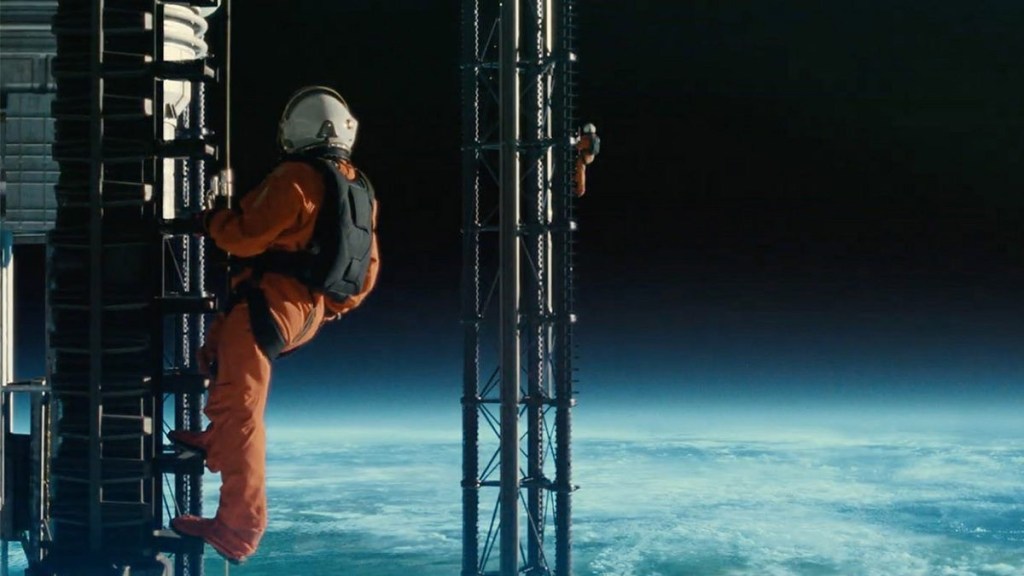
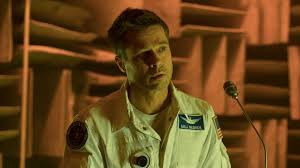
    Ad Astra shows Major Roy McBride (played by Brad Pitt) is a cinematic version of Classical Greek drama. Roy is a hero because he has conquered his fear of not being true to his sensitive nature. It is also an epic tale of man’s voyage to the end of the world in the sense that he reaches his ideation of dream in truth. One of the most memorable scenes is when Roy falls from the ladders of the International Space Station’s spacecraft to the Earth, a spectacular rendering of the Fall of Man from high to low. Still, it also means an escape from darkness to light, which the Blue Marble symbolizes.

    If Ad Astra is sentimental, the Martian is jovial in approaching a man in solitude. Mark Watney (played by Matt Damon) is a resourceful botanist who makes the possible out of the impossible. His brilliant mind, blended with his adorable wit tipped in cheerful disposition, propels him to survive on Mars and never surrender to hopelessness. Watching Mark growing potatoes on Mars and telling jokes to the camera to cheer him up reminds me of Horace Walpole’s following quote: “This world is a comedy to those that think, a tragedy to those that feel.” Charlie Chaplin adapted thus: “Life is a tragedy when seen in close-up, but a comedy in long-shot.”

    Miss Universe

    Man in space seems romanticly adventurous and mysteriously atmospheric. Still, it is a metaphor for being alone, the existential distress with no sense of direction in life with no one to speak to but the sound of silence that echoes loneliness aloud. Yet, those moments of darkness will pass if you let them go away with the will to live. Indeed, Matt Watney is brilliant in figuring out how to live in such an adverse environment, but he would perish soon without his will to live. So is Ron, who could have been lost in space had he given up to disappointment. They are Nietzschean superheroes who have whys to live and thus huddle through any hows. Also, nothing is more beautiful than Earth, sparkling like a gorgeous blue marble. Therefore, there is no point in war, conflict, or any unrest among ourselves because we are all family in Humankind in the universe.

  • All is Lost (2013) – Film essay

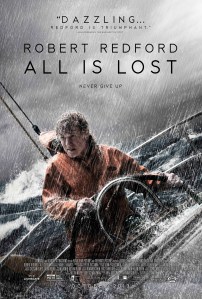
    Some movies should be noted, some memorized, but only a few should be applauded and taken by heart amid the luxurious streams of movies flowing from the screens. These movies chime the bell of your mind, enshrined in your dome of thought, and stay in your heart forever like beautiful memories that have become part of you, an inspirational lamp to give your life cheer and humor in times of need. In that light, All is Lost (2013), directed by J.C. Chandor, is such a movie that sheds light on your life when things are not going well for you, or you are lost in the middle of your voyage of life.

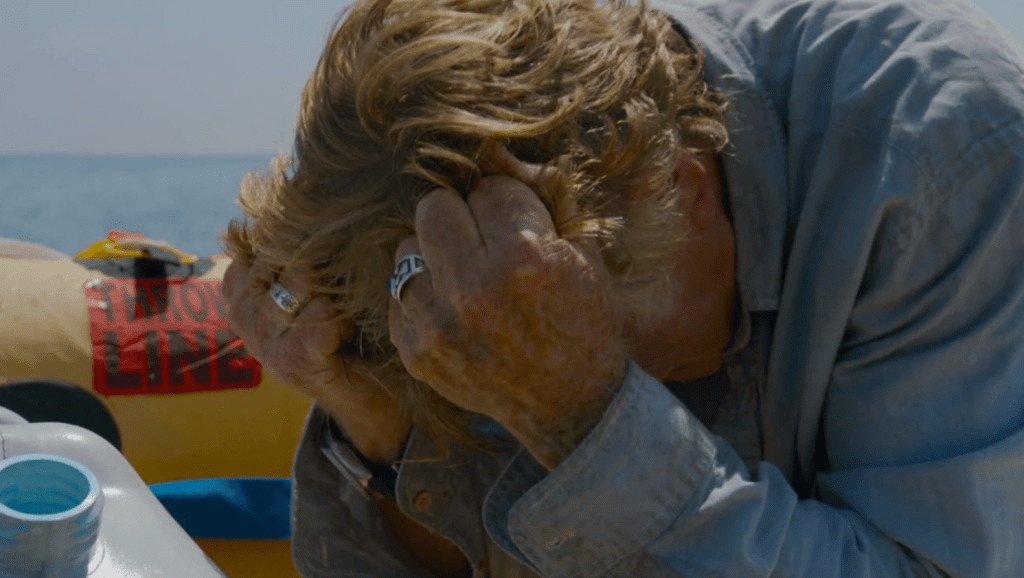
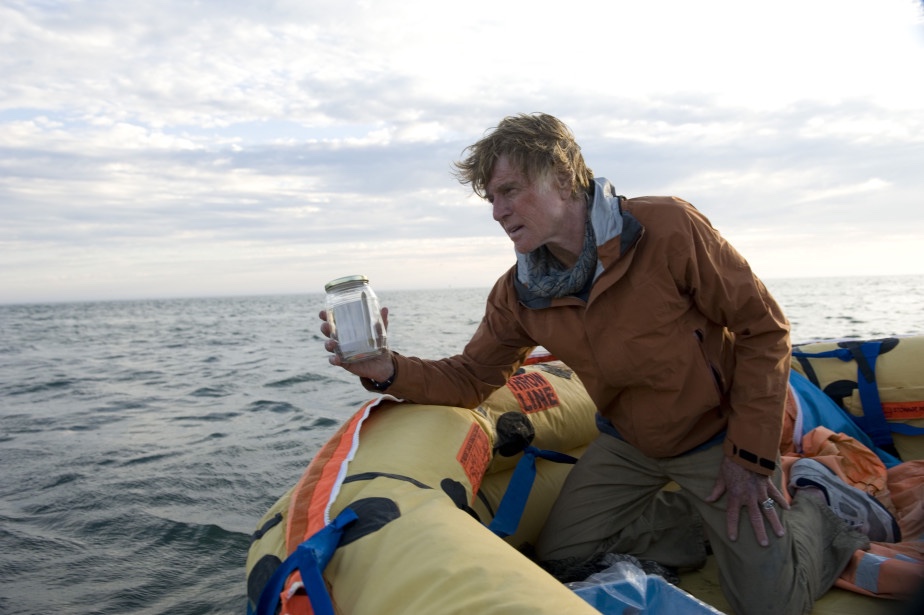
    The movie opens when a man (played by Robert Redford) wakes up, finding water in his quarter from a hall made by a collision with a stray container in the middle of the ocean. We don’t know the man’s name or where he comes from, except that he is somewhere in the Indian Ocean. We know that the man has the ambiance of a seasoned mariner whose demeanor is stoically calm and composed, rendering such an emergency look small and manageable. But it is the prelude to Nature’s test of Man’s Spirit, the beginning of his trial of hope when the damage to the yacht deteriorated due to storms to such a degree that he must abandon the yacht and sail on a lifeboat with a modicum of food and a navigational compass. But his will to survive and hope for rescue seems to be bludgeoned by the play of luck. He lights up rods to signal his location for rescue, but ships leave him alone on a vast ocean.

    Moreover, sharks steal his fish and cherish his flesh, swarming under his half-deflated lifeboat. These images immediately conjure up those of Santiago, a seasoned fisherman, and the formidable great shark from The Old Man and the Sea by Ernest Hemingway. Or the bright-eyed mariner from The Rime of the Ancient Mariner by Samuel Taylor Coleridge. Their silence speaks volumes of the voice of their strong spirits that can be destroyed but never conquered. Their aspirations, ambitions, and arduousness may be bent, but their souls are always ready to be rekindled by a passion for triumph over the darkness and fear, aided by a ray of hope.

    All is lost is an illustrious image of life in which we are alone in each yacht, sailing on the uncharted seas until the tailwinds carry us to the East of the Sun, West of the Moon. Illustrious it may sound, but the movie is never flamboyant, and Robert Redford plays the role of the mariner as if he were playing himself in dignified silence, wonderfully emoted by his face and action alone without overtly elaborating gestures or soliloquy. It is a realist’s story and as real as our daily sailing in life’s voyage. He has lost all his possessions but not himself or his life. And even if hope seems to dissipate into the fathomless abyss, there’s still a chance of hope, and we’ve got to give ourselves a chance to hope because while we breathe, we hope. Dum spiro, spera.

  • “A Man Called Otto” (2023 Film)

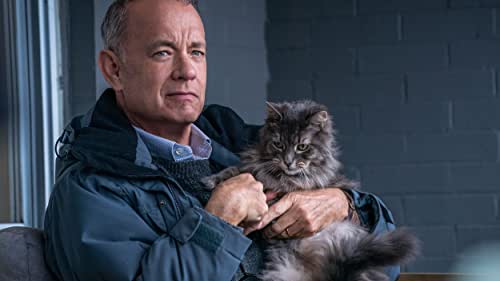
    If you run into Otto on the street or in a store, your eyes will see him as a grumpy old man who would cavil at one cent for everything. But if we look at him with the mind, he is quite a character for sure, and you will fail to dislike him once you know him and his secret. He is very good at fixing machines, from dishwashers to radiators, bicycles, and cars. He is also a fine babysitter and a great driving instructor. But as God is arguably fair in evenly distributing talents in us, Otto has a hard time mastering one thing: the art of killing himself. And boy, shouldn’t he thank God for such failed experience?

    Otto is a lonely man in his sixties who lost his love of life and dear wife, Sonya, to cancer. Sadness comes not in a single spy but in the battalion, for he has just been forced to retire from his long-term job due to the juggernaut of changing generations at his workplace, as with other places. He has no children but himself, and as Sonya was the beacon of Light in his already reticent and shy life, he sees no light, joy, or meaning in life. The world suddenly turned grim and dreary. Otto is wrapped in his sorrow and besieged in loneliness under the roof of distress. We are privileged to look into the psychology of the destitute in the darkest night of the soul distressed in utter loneliness, which can be broken with a light of kindness and humor as shown by Otto’s new lively and lovely neighbors Marisol and her family. 

    Humor is a handmaid of Hope, which Otto needs on the dark night of his soul. So, as the name suggests, Marisol and her pleasantly vivacious family bring the beauty of Sea and Sun to Otto’s Dungeon of Despondency with lots of laughs followed by tears and more laughs that will make anyone harnessed with a yore of life lightened. And since Otto is secretly a big-hearted person – literally and clinically – he slowly but surely warms to the warmth of friendship and love and shows his true colors as radiantly gorgeous as afternoon sunshine showering the brilliantly golden orange trees in summer. Oh, and there is a homeless cat that seems to be Sonya’s familiar in cat skin sent by her from heaven to be his company.

    Otto is one lucky person to be surrounded by a loving community of neighbors, who becomes an alternate form of a family with emotional support and care, often overlooked and ignored by overtly advocated individualism with no face of humanity. Indeed, that doesn’t mean returning to agrarian society or something to the effect of the notoriously puritanical Salem, where everyone cast a jaundiced and suspicious eye on the targeted loner in the community, with trademark gossiping and ostracizing. Showing care shouldn’t be complicated because one can just say hi by trying to understand why the person behaves the way they are. I believe that is how we can prevent suicides by detecting sadness from the person instead of devolving the person to a therapist or counselor or ignoring them as if they were invisible or a burden to care. Just like Marisol and his family have shown, Light defeats Darkness. And everyone deserves Laughter.

  • Dark Water (2005) – film review

    Here’s a young mother with a five-year-old daughter freshly divorced from her husband who thinks she’s delusional, paranoid even, and wants to keep sole custody of their daughter. The daughter is everything she has reason to live, a life that has been so hard to endure with an indelible traumatic childhood. Yet, because she sees herself in her daughter needing constant unconditional love, which she was not allowed to have, she will do anything to protect her from the harsh reality of life, even from the supernatural peril of the beyond reality.

    So the story of Dark Water (2005) narrates Dahlia, a young divorcee trying to take full custody of her daughter Ceci away from her assiduously hostile husband. Instead, he embarks on a legal battle to claim sole possession of Ceci because of Dahlia’s unstable mental state. Dahlia, a once copy editor from Seattle, takes a low-paying administrative position at a Manhattan Radiology office for livelihood in a delipidated apartment in Roosevelt Island with Ceci. The semblance of the apartment is the working-class version of Rosemary’s apartment. Dark water is leaking everywhere: from the elevator to their bedroom ceiling, and the laundry room, which is a prelude to the finding of a tank on the rooftop where the traumatic ends of a certain young Russian girl abandoned, unloved finds her and her memories. Or is it Dahlia’s phantasmal delusion of confronting her own child self in her painkiller-induced pill to alleviate the cruel migraine caused by the yoke of woes?

    Dark Water is an American adaptation of the original Japanese film Dark Water (2002) by Koji Suzuki, the famous writer of the Ring trilogy, excellently translated to an American audience who will find broad universal themes of human nature, psychology, and behavior. You don’t have to have perfect childhood fed on parental love to be a loving parent. Of course, unhappy childhood will affect the development of one’s character and behavior pattern more or less, but it all boils down to one’s nature to be loved and be loving. Dahlia wants to counteract the demon of the past, which still grabs her with its tenacious tentacle of recurring nightmares and murderous migraine, by being constantly -and eternally – loving and kind to Ceci despite her unhealed scars left in her child self. Perhaps that is why her name is Dahlia, whose flower word is loyalty, dignity, courage, and support due to its withstanding of harsh conditions.

    Jennifer Connelly, playing Dahlia, is not only beautiful but also talented in a way that few actresses on screen possess in our time. Her presence in scenes is unique in that her character is downright realistic yet oddly out of the world in a riveting way, as exhibited in this film. No wonder the late film critic Roger Ebert admired her for the same reason. With her exceptional performance and the storytelling that grips the eyes and ears of the beholder, Dark Water is a worthy film for those who delight in supernatural horror without blood and screams.