Tag: films

  • On Netflix’s “Making a Murderer”

    Brandan Dassey – “The place again. Where none. Try again. Fail again. Better again. Or better worse” – Samuel Beckett

    Maybe I should not have watched it, but alas, I did, and with the afterimages of the faces and scenes still haunting the brain chambers, refusing to leave, I am writing about the Netflix documentary to cast them out to the wilderness of forgetfulness – but with a voice of the heart.

    The documentary revolves around the death of Teresa Halbach in Manitowoc, Wisconsin, who the county and the state justice believe was murdered by Steven Avery and Brandan Dassey. Since the stories about the accused are readily available online, I will not delve into whether they are innocent or guilty in this post. But I cannot help thinking this: Prejudice by social class prevails over the carriage of justice and the great cultural divide between rural and urban, working and middle classes, and state and federal governments in the States. America is arguably a country of no aristocrats, yet class distinctions are apparent, and stratification is broad. 

    In the case of Steven Avery and Brandan Dassey, although they were not poor, their parents were deemed fit to caricature characters of laborers equivalent to medieval serfs or pre-industrial European peasants speaking with the class jargon in heavy dialectical accents. Would the police and courts act differently toward the accused and their families were it not for their family backgrounds and social statuses? Hollywood celebrities and those with money and power can do anything and yet get away with their wrongdoings because they have the status and best lawyers who can make innocence of murderers, and vice versa. 

    That is why I’m not too fond of police profiling, which always seems to accuse those from unhappy childhoods tainted with physical and verbal abuse, especially and mostly from parents. It’s not only about sexual violence but, most of all, about parental verbal and physical abuses that bludgeon their children’s psychs. You can’t just typecast someone because they fit your profiling for a particular crime type. Where is the goddess of justice? Remember, even the goddess of fortune plays the Wheel of Fortune blindfolded to give everyone a fair chance of a lot because she can’t see who is rich, bright, or beautiful to look at. 

  • Movies Digest

    Some indulge in drinking, some gaming, but mine is binge-watching supernatural/suspense movies when I am under dark spells. Hence this past weekend, I wallowed in the below visceral world of make-believe with my cats as guardians perched next to me on both sides like Odin’s two crows, Memory and Thought.

    Vivarium (2019): This is one of the most surreal movies I have seen. Some classify this movie as Si-fi, but it is Horror because it has no hope of escaping from the cycle of repetition with no end to the movie’s end. The young couple’s hopes of finding a new home could be this sinful. I am only asking because the movie’s central theme stems from the globally realistic issue of housing problems in the context of planning and paying. And the question of conformity dominates throughout the movie. Readers familiar with the YouTube sensation of the Backroom series will find a kind of deja vu phenomenon while watching this, but this is scarier because it happens to good people.

    The New Daughter (2009): Kevin Costner plays an affectionate father who wants to bring up his two young children to the best he can as a newly divorced father. It’s refreshing to watch such a movie that portrays a loving single father caring for his children when most movies show only single mothers struggling – of course, loving, with their circumstances. Although the film does not feature my favorite ghostly characters who are purely spiritual, it can be forgiven for the sinister consequences that show no mercy to good people.

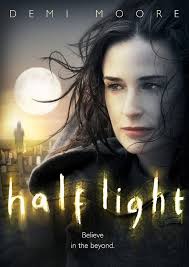
    Half Light (2008) – Demi Moore is a novelist in this movie who can’t get over the death of her beloved young son. She blames herself for him to drown to death while she is writing her new novel. The guilt-ridden mother retreats to a coastal village in Scotland, where she experiences supernatural phenomena so tangibly that it all seems too visceral to accept because of the preponderance of the awe. The lighthouse on a deserted island within such a small coastal village serves as a beacon of her spiritual guide, or could it be an alarm for the impending danger? But one thing is confident that the living must let go of the dead because once the soul leaves the body, then the soul belongs to no one, not even in the streams of love’s salty fires. If you really love them, set the departed free.

    Stephen King, whose name befits the sobriquet of King of Horror, once said that fiction is the mirror image of reality, sort of an alter ego of the real world. Horror reflects fear that hopes are only a vanity of imagination or, as Thucydides says, a dangerous daydreaming made of bodacious hubris. What if what we think of or see as real is not real but only the likeness of truth? That is Horror, which is all reflected in these movies.

  • Old People (2022) – Film Essay

    Old People shows the issue of the generation gaps between the young and the old, not in the adolescent revolt against the adult institution, but in the societal and cultural context regarding the weakening familial bond between wife and husband, child and parent, and grandchildren and grandparent.

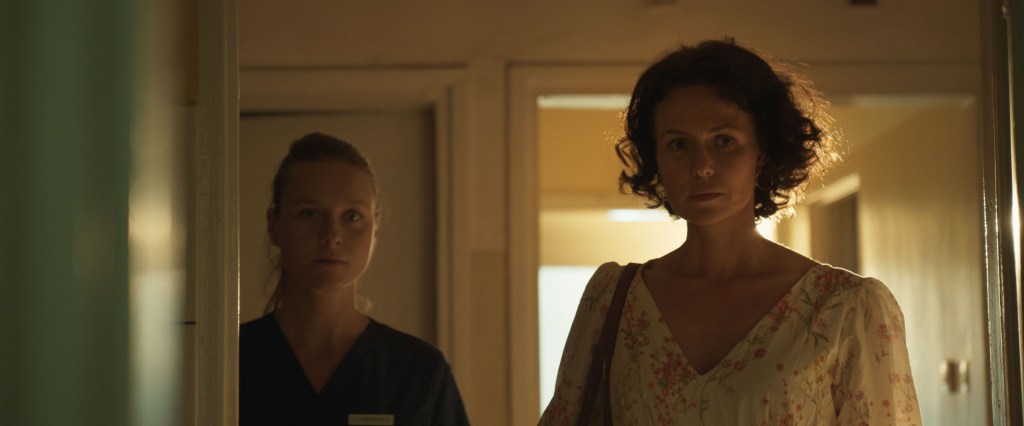
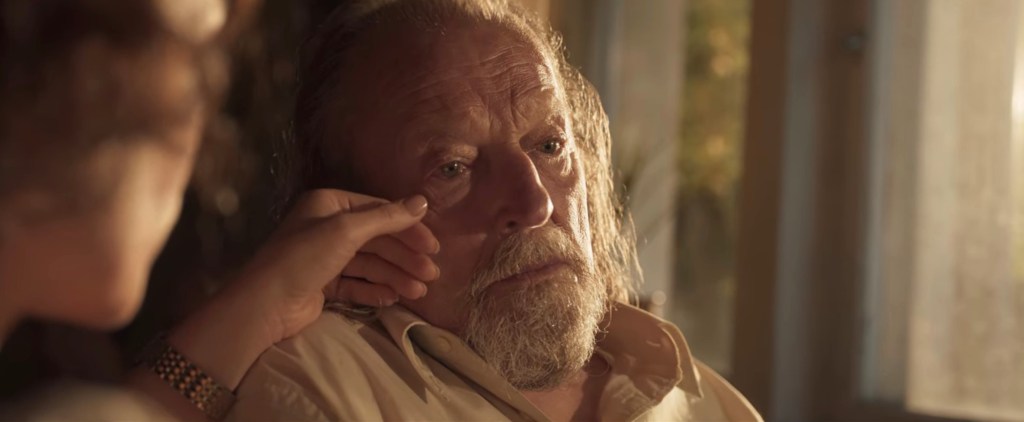
    Melika is a successful lawyer from a city heading with her children to her sister’s wedding at their childhood home in a village. Upon arrival, Melika finds her once beloved father, who loved her and her children so much, is sent to a nearby nursing home whose environment is no better than a mad asylum in atmosphere and appearance. Seeing her father spiritless and aimless alone in a dark room gives her a pang of leaving him behind for her ambitious future as a city lawyer, but she tries to suppress it by bringing him home just for the wedding day. But that is her self-induced wish to relieve herself of guilt, for her father is so broken with a shattered heart that his daughters deserted him, driven away from their home, their happy life that he still longs for. Such sadness is collected among all the old people in the nursing home, abandoned in dreadful isolation from the community that has put them into such an institutional grave and buried alive. The rest is a prelude to a symphony of carnage burning in the fury of the undead and neglected.

    Although this movie is presented as a horror movie, it really isn’t in terms of its thematic and contextual subject. It is a horror that we as a society have become Logan’s World, where ageism and lookism prevail over humanity and discriminate against those who do not fit in their touchstone of the ideal. And what is old, and how old is old? Are we not all advancing in age? Youth is wasted on the young, as Oscar Wilde cleverly concluded. Being old should not be a curse but a celebration of experience in life and, therefore, must be embraced with respect and dignity. Just because we become old doesn’t mean our feelings are dead, as the grandfather tells his beloved grandson: “Oh, yes! I love you so terribly much!”

  • Zom 100: Bucket List of the Dead (Netflix- Manga and Live-Action film) – 1-minute Film review

    Zombie flicks are in vogue. From Netflix to Hulu and others, they are roaming across the boundaries of the digital world, hungry for popularity and craving high ratings. But none of them is ingeniously fresh, and all are infallibly doomed. If you hold on to it, apocalypse doesn’t necessarily kill off a human spirit. A dystopian world may overwhelm your sensory perception, but it won’t kill you if you don’t dwell on it with humor, a handmaid to strength and hope. That is what this film is about.

    The story develops around Akira Tendo, a young office worker fresh out of college, who soon becomes disenchanted with his innocent vision of the work he does because of the unreasonably demanding high workload and gaslighting of his boss. So, when he wakes up the next day and finds himself living among zombies because of an unexpected bio-weaponry disaster, Tendo becomes ecstatic, lest he should go to work any longer. The optimism galvanizes him to pen a bucket list of 100 things to do before he succumbs to the pandemic. What a jolt to live!

    The film stands out from all other dystopian worlds of zombies with humor, hope, and hooray. It weaves a unique perspective to a heartfelt story about a man finding meaning to live amid hopeless situations and ways to huddle through life’s challenging moments, which we can all relate to daily. Nietzsche was right. “He who has a why to live for can bear almost any how.”

  • ‘Buck and the Preacher’ (1971)

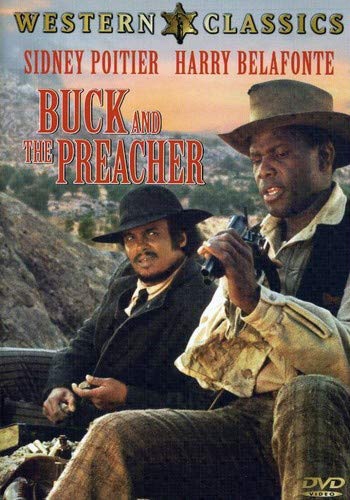
    Rousseau’s dictum of “Men are born free and are chains everywhere.” fittingly describes the condition of what it means to be free from slavery after the Civil War. Even so, freedom was recalcitrant to belong to them, and the hardships that came with the price of liberty from the carnage of the war still beset the newly freed along the trail of exodus to the new promised land in the west as articulated in Sidney Poitier’s classic western film “Buck and the Preacher” (1971).

    Buck (played by Sidney Poitier), a former Union sergeant turned scout, leads a wagon of freed blacks from Louisiana to the west, where they hope to start their new lives without a shadow of slavery. But alas, the shadow of slavery still haunts them. It is up for grabs in the form of renegade ex-soldiers, probably both of the Union and the Confederates, hired by the former enslavers to bring the migrants back to the chains of slavery. They attack the wagon, rape women, and kill the old and the young, constantly intimidating them to return to where they belong. But the pain of loss and death is even less painful than the thought of returning to the past, and the journey marches on. Buck protects the journey, and the self-proclaimed preacher conman artist (played by Harry Belafonte) a former slave, chimed in, despite his original ulterior motive of money-gaining. This unlikely dup proves to be something of Moses and Aaron, so to speak, in a way that they guide and protect the persecuted people from the sordid bondage to a new promised land even if it takes a nearly decimal lot.

    Then there are Indians across the wilderness as gatekeepers to the land of freedom. They are no outsiders to the persecution with their land taken away and their very beings threatened to decimate. The Indians live by the toll fees migrants have to pay when crossing their territories, not the least due to the paucity of livelihood resulting from the government’s confiscation of the land. When Buck implores the tribal chief to help them against the white attackers because they are all brothers, the chief retorts him by saying, “But black people also fought against us with the whites.” The mistrust is natural, as is the confrontation of the two peoples whose rights are put to contests orchestrated by the forfeiter of the rights. The class consciousness between the Indians and the blacks needs a manifestation of shared injustice and empathy, which both of them attest to an objective reality where they prove to be on the same side.

    This film is one of the great Sidney Poitier’s and finest as I have been watching as remembering this brilliant actor who has recently died. Always poised with a commending presence filled with natural confidence and will without being febrile and vociferous, Poitier exudes his irresistibly graceful charisma on screen in this memorable Western about blacks and Indians, who are often seen in the peripheral characters contributing to highlighting main white characters. But this is not a revisionist Western at all to polarize the thematic elements of the genre. Hardly so. Instead, “Buck and the Preacher” is an eye-opening Western film about the peoples who are likely to be cast as outsiders even if they also rightfully belong to, to quote Lincoln, “the family of freedom with a jewel of liberty” called Americans.

  • the real logan’s world

    Since Oscar Wilde said a woman who reveals her age reveals all about her, I will not tell how old I am, but I am still far away from the Shakespearean age of the Old Man. If interested, hark thus. That is about the culture and tendency of the post 9/11 generation omnipresent in everyday life spheres from social media platforms to workplaces. Equipped with computer savviness with a flair for chic insouciance and minimalistic sentiment, this new generation has dominated all. So what’s the rap?

    The cause for such generational distance came in the figures of two young lawyers fresh out of law schools in my workplace. They were both in their late twenties – the post 9/11 generation – didn’t have any practical work knowledge, which could be understandable. Yet their work ethic and attitude were disgraceful because a lack of enthusiasm and willingness to blend in the environment was a sign of defiance of conformity and cooperation, which people mistake for a display of subservience or acquiescence in the surrender of the will. But, of course, diligence is not synonymous with servitude. I am not even talking about Stakhanovism, in which workers spend more time at their work than at home. But the new generation is an entirely new breed, a new type of people aversive to warmth and friendliness on account of personal space because goodwill is suddenly turned malice, goodness weakness nowadays. How about calling them, Les Enfants Terrible? Would the ancient Roman scribbler who wrote on a tablet that the kids in his time were all spoiled have felt the same way as I do?

    My sentiment toward the post 9/11 generation is, I daresay, dystopian, which pitchforks me into a scene in the movie “Logan’s Run.” In the film, everyone on their 30th birthday is executed under the euphemistic pretext of Renewal. It’s a cult of Youth synonymous with Beauty, and the human race means the everlasting beautiful Youth. Agism and lookism are principles of such utopia, conquering Racism, Sexism, and Classism. Women of the utopia use their Beauty to exert their prowess on their targeted subjects. Only young and beautiful rule the world, and the faces of the post 9/11 generation dissolve into the spectators of the Renewal ceremony in “Logan’s Run.”

    Nevertheless, who cares about what I feel about this new type of humankind that will soon dominate the entire generations in our time? Indeed, time is ephemeral, so is culture. Yet, the universality of reason and sentiment common (I hope) in all human creatures has remained since time immemorial. Will the world now turn into the Real Logan’s World in the future? Or maybe am I too serious about it? Suddenly Madonna’s “Live to Tell” sings in my ears.