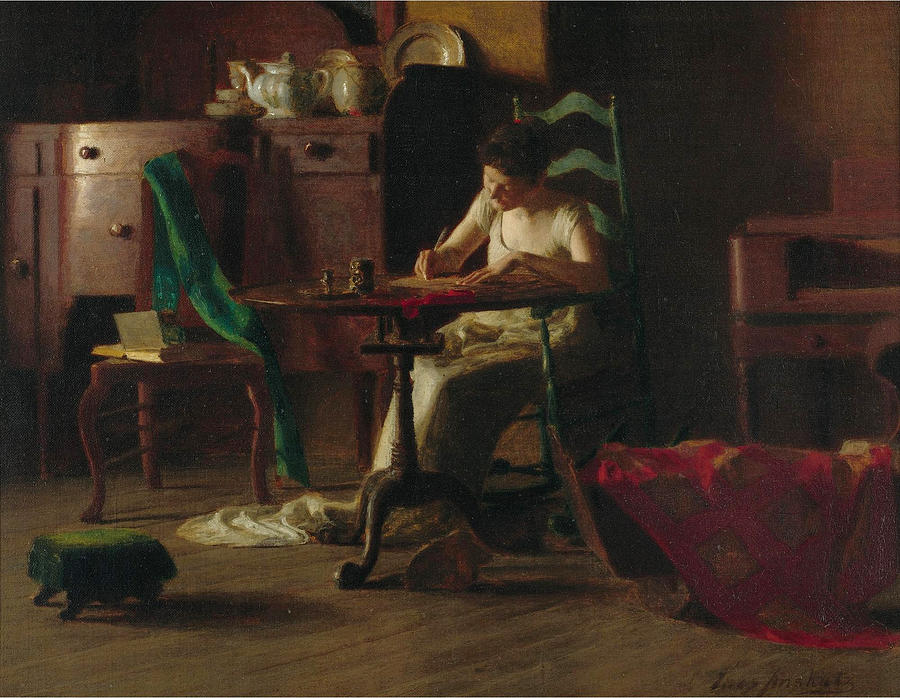
Suppose a brownie or a leprechaun I happen to rescue from a Gargamel lookalike wizard insists what my three wishes are as a quid pro quo (depending upon how friendly the fairy is). In that case, I will say forthwith one of them is the Marvel of Writing, which I have lost somewhere in the course of life. I can turn myself into a great writer with the magical pyramid of power from a hodge-podge reality of indigested letters of reality as black as Persian Night.
Johnson’s essay on the role of the scholar evolves from Francis Bacon’s adage: “Reading makes a full man, conference a ready man, and writing an exact man.” It rings a bell with the Nietzschean idea of Superhuman, superseding any mortals known for their erudition perennially enshrined in the history of human civilizations. A truly knowledgeable person I principally associate with a great writer can digest what he reads, explain it to others in facile terms, and substantialize it in writing, a mental Osmotic process that nourishes the mind and invigorates the body.
Although I agree with Bacon as Johnson did, I am more with their ancient Greek teacher Socrates. Socrates warned his pupils about regurgitating what they heard from his lectures without putting it in their own words. That was one reason why the great philosopher disapproved of writing practice that had just emerged in his time. Copying letters of others without understanding them on his own would stun the cognitive powers rather than promote a broader and deeper range of cognition. Reading was not as popular in Socrates’ time as in ours because it was at the beginning of the new intellectual dawn of Greek Civilization. So, Socrates was a thinker, neither a reader of texts, nor a writer of tablets. Does this make him less of his students Plato and Aristotle?
Does the amount of reading necessitate that of writing? Wouldn’t too many words go undigested inside and clog the pipes of thoughts when writing? For example, an ambitious amateur writer wants to write as if she were possessed by the spirit of Patience Worth, who transformed an ordinary homemaker into a brilliant writer. She adheres to a writer’s gospel of “Read a lot. Write a lot,” but it is easy to be said than to be done. The more she reads, the worse she writes. She wants to reason the perplexing reason with frustration and disappointment. She feels lost in the middle of midtown Manhattan where there are many streets and avenues but nowhere is her niche. Yet once she gets out of town, the state, the coast, her mind becomes clear, imbued with a fresh breath of inspiration that moves her hands on the keyboards automatically. Contrary to Johnson’s opinion that grandstands with all other established writers and academics, the amateur writer feels liberated from a siege of letters that intimidated her army of thoughts equipped in her design of armors and shields with her coat of arms sovereign and beautiful. Her reasoning power was buried under a chaos of indigested learning.
Although Johnson’s magnanimous advice of the equilibrium of reading, writing, and speaking on a writer’s continuum is respectful and worth reading, its reality is subject to the individual aptitudes of learning, ways of reasoning, and natural dispositions. One may write better because of reading more, while the other has the opposite consequence. A hermit – let us say more realistically, an introvert – is not always an incompetent, anti-social, sullen loner whose airy petulance barricades against others whose intelligence may seem intimidating to be dealt with. I think to write more is far better critical than to read more because writing is a sovereign act of expressing an individual mind and spirit, free from the comparison of the florid words of others with the writer’s own that would dispirit the vivacity of the creative spirit. To conclude, I thank Thomas Mann for his affirmative saying:” Solitude produces originality, bold and astonishing beauty, poetry.” Truth is truth to the end of reckoning. Then it is yet another truth of others, not necessarily yours.


You must be logged in to post a comment.