Tag: journal

  • ‘Trail of Crumbs’ by Sunee Kim – Book Review

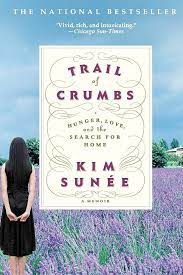
    I first learned of the author from a Korean television documentary about her search for a natural mother in Korea. A successful food editor of a cultural magazine and a writer, Kim returned to the land with the tears of the past and the hope for the future in realizing her ideal figure for the unconditional love she longed for, which piqued me to read this book to know more about her story, hoping to acquaint another kindred spirit.

    So I hoped it was, but her story betrayed my hope. It was about her affair of the heart with the CEO of a famous French beauty product, L’Occidante. Kim seems to have the magic power of charming men – the higher and the smarter – without effort, and she’s never alone, although she wants to think she is. She has never been in poverty of love, money, and opportunity, yet she complains about a lack of love and total freedom. Her parents, who adopted her, have taken care of her, and her sister is also a Korean adoptee. They may not be perfect, but no one is perfect, and they certainly didn’t burden her with the weight of economic support or, worse, the total abandonment that happens to some of the other adopted children. And that’s not it. Kim always escapes from the responsibility of love when the further half showers with love and warms her with kindness. You can’t treat love as it is a business deal. Unconditional love is altruistic and agape. Love is giving and sharing, not owning and demanding. A sense of abandonment envelops Kim like a wandering ghost wailing in perceptual disappointment and howling in forever resentment. Ultimately, Kim finds herself alone, and it’s too late to regret the ancient bliss of love.

    To think that jealousy resulted in such an acrid train of thought is to miss the accurate impression of my heart on the narrative itself. My power of empathy wallowed in the sympathy of humanity and propelled me to read it, in addition to the Korean heritage the author and I shared. The tears I saw from the program pleading for help to find her natural mother in Korea were heartfelt, so I wanted to hear the cry from the heart to know about the death and breadth of her soul. Yet, her story resonates with the outcry of her never-ending angst and constant chasing of mirages springing from the imaginary ideal of love.

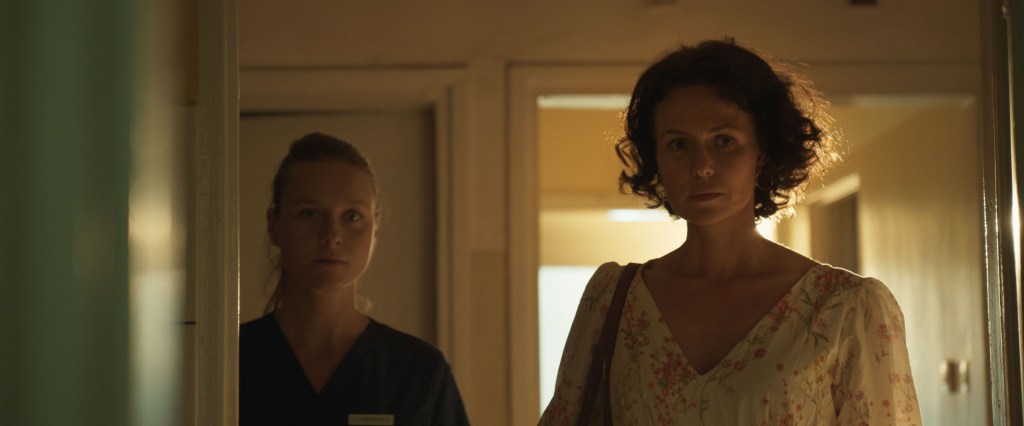
  • Old People (2022) – Film Essay

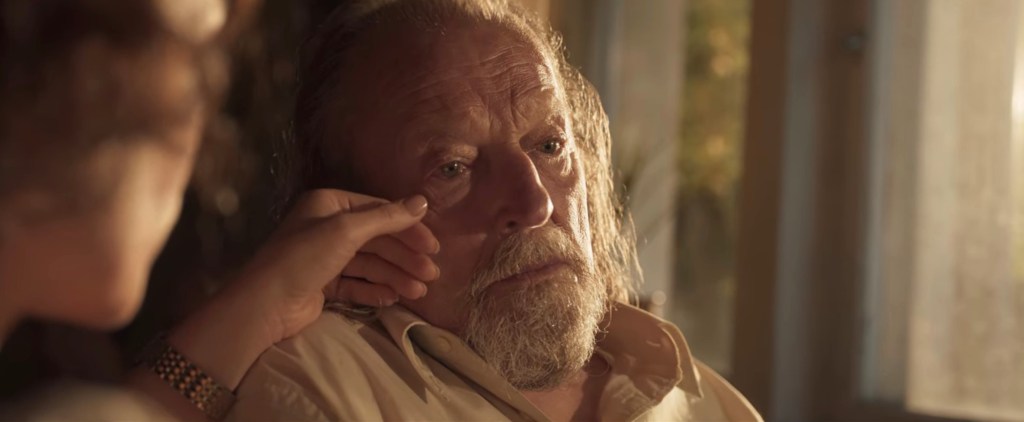
    Old People shows the issue of the generation gaps between the young and the old, not in the adolescent revolt against the adult institution, but in the societal and cultural context regarding the weakening familial bond between wife and husband, child and parent, and grandchildren and grandparent.

    Melika is a successful lawyer from a city heading with her children to her sister’s wedding at their childhood home in a village. Upon arrival, Melika finds her once beloved father, who loved her and her children so much, is sent to a nearby nursing home whose environment is no better than a mad asylum in atmosphere and appearance. Seeing her father spiritless and aimless alone in a dark room gives her a pang of leaving him behind for her ambitious future as a city lawyer, but she tries to suppress it by bringing him home just for the wedding day. But that is her self-induced wish to relieve herself of guilt, for her father is so broken with a shattered heart that his daughters deserted him, driven away from their home, their happy life that he still longs for. Such sadness is collected among all the old people in the nursing home, abandoned in dreadful isolation from the community that has put them into such an institutional grave and buried alive. The rest is a prelude to a symphony of carnage burning in the fury of the undead and neglected.

    Although this movie is presented as a horror movie, it really isn’t in terms of its thematic and contextual subject. It is a horror that we as a society have become Logan’s World, where ageism and lookism prevail over humanity and discriminate against those who do not fit in their touchstone of the ideal. And what is old, and how old is old? Are we not all advancing in age? Youth is wasted on the young, as Oscar Wilde cleverly concluded. Being old should not be a curse but a celebration of experience in life and, therefore, must be embraced with respect and dignity. Just because we become old doesn’t mean our feelings are dead, as the grandfather tells his beloved grandson: “Oh, yes! I love you so terribly much!”

  • prompt 26

    What is a word you feel that too many people use?

    There isn’t one but too many words I find too many people use, and they are all about one’s mental state, often over-generalized either by sheer prejudice or highfalutin malice against the subject of the remark. Here is a list of the words that prick my high-strung sense.

    Weird is considered charming, compared to psychopathic. Anti-social is a new parlance for a witch or a woman who appears socially adroit in public. Depression is an overused excuse for being fashionably morose or rude among peers. And what about bipolar for anyone whose emotional continuum is conspicuously distinctive among melees? But the basest and vilest word is “MAD.” It’s a most convenient word to accuse someone getting on your nerve with a not-so-pleasing face or personal charms that purchase indemnity for arrogance or incivility. Simply artless and innocent it may seem, the word underlines the most acrimonious intention to call someone whom you don’t take a liking to for whatever reason. Forget the key to open your storage of vocabulary in the mind. You use the word like a hidden dagger to do harm on the spirit of the other, and the effect is often long-lastingly advsere and deeply indelible.

    Indeed, you can be mad about your lover without reason, but you can’t call someone mad just because their faces always look agelast. There may be a mad scientist but never a mad, lonely person. If all of this makes no sense, let it be a tale told by an author, full of fury and sound, signifying something.

  • About Backrooms

    It’s gone viral. Sensational it’s been. The latest scare, the newest horror, comes in Backrooms, a YouTube phenomenon that has swept the world’s compass in muffled terror. I have seen it through an algorithm, and I think I have entered the door into the backrooms – willingly by the winks of intrigued moments. Is this the way people get lost in the maze of horror? Even if they are fictional, or so they like to think, nothing is purely fictional without some foundation in reality. Be it ever imaginary, a mental void, emotional distress, continual depression, or perpetual heartaches will be of their backrooms with seemingly no way out. And I think this feeling of utter hopelessness is where Christianity fills or saves the wretchedness of a soul with a promise of hope, the existence of a reason to go on in a seemingly purposeless life.

    Watching a few of the Backrooms series makes me realize that this is how the present-day MZ generation sees a concept of a labyrinth where King Minos of Crete at Knossos kept his illegitimate half-man, half-bull son Minotaur and feeds him on Athenian youths until the Athenian hero Theseus with the help of Adrianne’s thread ball came to the rescue and killed the monster. Is it considered too cheesy for today’s youths to think of Adrianne’s thread ball? Backrooms are all devoid of Christian hope and Greek wit because new generation kids are too smart to believe the existence of such saving grace because there is none of such nonsense, and because they are simply the best of all generations wallowing in the advanced civilization only countable steps below the most advanced extraterrestrial beings in the universe.

    Notwithstanding the ingenious idea of creating such terrifying liminal places within a minimal budget, the whole series will shine in its brilliance as a genre of online game series rather than a film in the fashion of a fake documentary as a new Blaire Witch Project. As civilization gets more technologically advanced, the people become more highly primitive, returning to the laws of an eye for an eye, a tooth for a tooth with no signs of light-heartedness as if it were synonymous with simple-mindedness or backwardness. And I don’t know why Verdi’s “The Chorus of Hebrews” keeps playing in my mind these days.

  • Prompt 24

    What are the most important things needed to live a good life?

    The three most important things for a good life are made of these: good stable employment, love of self, and a sense of humor. As we are both social and individual beings, the aforesaid are the essence of happiness in life that would provide me with a sense of security and a healthy environment in which I can find my inner potential creative power without worrying about the ills of reality.

    While money isn’t everything, anyone must sustain a livelihood, such as clothing, food, and housing. Without it, the deprivation of material necessity will impede a creative, lively spirit’s yearning and opportunity to express under the burden of life. Which will also lead to a despaire of oneself. IT is not to say that only those with secure jobs are self-confident, but it is also challenging to maintain a level of confidence when you are down and out, moving from one job to another, like a wandering nomad. True that even a panhandler can be content with himself, but then it must be he transacendes the ways of this world, completely detached from the needs of this world into his own earthly nirvana. Lastly but not leastly, a sense of humor is a handmaid to goodness that will change a heaven hell and a hell heaven. At the moement of despair, any humorous dialogue or scene from a comedy movie or a funny moment of life will moementarily take off the clouds of disappointment or depression.

    You and I deserve happiness and the good life because we are such starstuff as dreams are made of, harvesting sunlight from the heavens excellently brilliant. I hope my reader will have good lives because we are worth it.

  • “A Man Called Otto” (2023 Film)

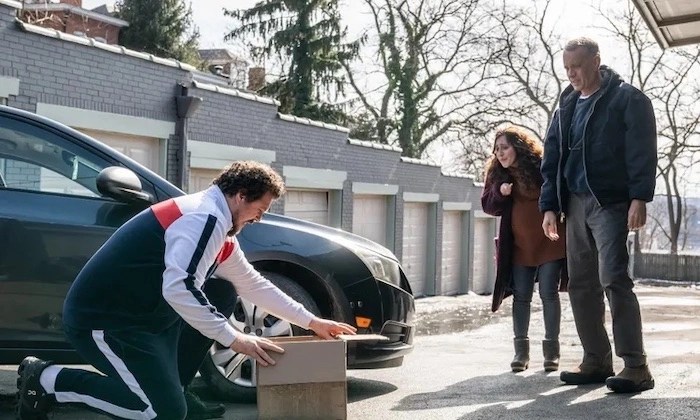
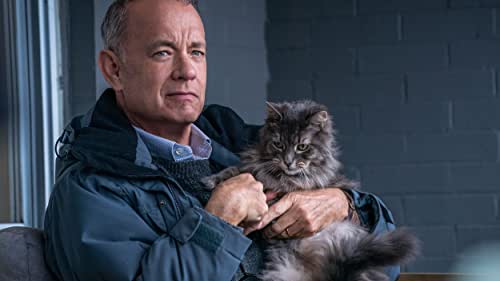
    If you run into Otto on the street or in a store, your eyes will see him as a grumpy old man who would cavil at one cent for everything. But if we look at him with the mind, he is quite a character for sure, and you will fail to dislike him once you know him and his secret. He is very good at fixing machines, from dishwashers to radiators, bicycles, and cars. He is also a fine babysitter and a great driving instructor. But as God is arguably fair in evenly distributing talents in us, Otto has a hard time mastering one thing: the art of killing himself. And boy, shouldn’t he thank God for such failed experience?

    Otto is a lonely man in his sixties who lost his love of life and dear wife, Sonya, to cancer. Sadness comes not in a single spy but in the battalion, for he has just been forced to retire from his long-term job due to the juggernaut of changing generations at his workplace, as with other places. He has no children but himself, and as Sonya was the beacon of Light in his already reticent and shy life, he sees no light, joy, or meaning in life. The world suddenly turned grim and dreary. Otto is wrapped in his sorrow and besieged in loneliness under the roof of distress. We are privileged to look into the psychology of the destitute in the darkest night of the soul distressed in utter loneliness, which can be broken with a light of kindness and humor as shown by Otto’s new lively and lovely neighbors Marisol and her family. 

    Humor is a handmaid of Hope, which Otto needs on the dark night of his soul. So, as the name suggests, Marisol and her pleasantly vivacious family bring the beauty of Sea and Sun to Otto’s Dungeon of Despondency with lots of laughs followed by tears and more laughs that will make anyone harnessed with a yore of life lightened. And since Otto is secretly a big-hearted person – literally and clinically – he slowly but surely warms to the warmth of friendship and love and shows his true colors as radiantly gorgeous as afternoon sunshine showering the brilliantly golden orange trees in summer. Oh, and there is a homeless cat that seems to be Sonya’s familiar in cat skin sent by her from heaven to be his company.

    Otto is one lucky person to be surrounded by a loving community of neighbors, who becomes an alternate form of a family with emotional support and care, often overlooked and ignored by overtly advocated individualism with no face of humanity. Indeed, that doesn’t mean returning to agrarian society or something to the effect of the notoriously puritanical Salem, where everyone cast a jaundiced and suspicious eye on the targeted loner in the community, with trademark gossiping and ostracizing. Showing care shouldn’t be complicated because one can just say hi by trying to understand why the person behaves the way they are. I believe that is how we can prevent suicides by detecting sadness from the person instead of devolving the person to a therapist or counselor or ignoring them as if they were invisible or a burden to care. Just like Marisol and his family have shown, Light defeats Darkness. And everyone deserves Laughter.