Tag: mental health

  • Living with a Ghost: Lessons from Loneliness

    I’ve been living with a ghost since I was a child. She doesn’t speak, but sometimes I hear her in the rain tapping on the windows or in the whisper of leaves rustling in the wind. When I gaze at the stars at night, she leans in and murmurs, You are alone. You are meant to be alone.

    Loneliness — that is her name. And she is the only one who has stayed with me all this time. I suspect she doesn’t like it when I make friends or feel happy. That’s when I stop listening to her and try to cast her out, like an evil spirit haunting me. But she seems to like my cats, Toro and Camille. Perhaps it’s because cats, too, are solitary and spiritual creatures.

    Come to think of it, some people don’t like cats — as if there’s virtue in disliking them. But many writers have lived with feline companions. Edgar Allan Poe once said his cat, Catterina, was his muse. Lucy Maud Montgomery was also a devoted cat lover.

    Loneliness doesn’t have to be your enemy. If you get to know her, she can help you notice the quiet details of life that others overlook or take for granted. In those everyday little things, you may find beauty — and a quiet joy in simply being alive to witness them.

    Ready to say hello to loneliness?

  • Prompt 23

    How do you know when it’s time to unplug? What do you do to make it happen?

    When a toy is wound up, it has to be released to get it moved, or it will be broken without performing its feat of vitality. Likewise, when stress is raised to the highest on a mercury thermometer, my body shudders in a quiver, and my hand turns to a white slate, inhibiting my speech faculty, which results in murderous migraines. It’s a genuinely psychosomatic experience, which makes me dumbfounded and speechless by a poisoned arrow to the heart.

    Such is my present status of mind. The stress from working under a manager who lacks experience in leadership, patience, understanding, and knowledge is so high that going to work every morning feels like a daily ritual of torment. She belittles my ability by magnifying the mistakes I make. She constantly intimidates me in such a toxic environment that I see no point in demonstrating my capabilities to the extent possible. However, this ordeal of mental torture can’t go on any longer because it affects my physical and mental health. I deserve respect and recognition. So, I have decided to bring this issue to my supervising attorney, as encouraged by my colleagues at work, who have also witnessed the mistreatment by my manager. I will tell him on Monday that we are incompatible with working because of personality issues, which prevent me from performing my work to the extent possible. Even if my voicing out will bring about a counteractive result, I must tell it to him in defense of my abused spirit.

    Shakespeare said, “We are not ourselves When nature, being oppressed, commands the mind To suffer with the body.” That is what I am experiencing, and because of it, I have lost my motivation to do things I used to love doing, such as writing and reading. Even if I lose a job, I want to let my crying soul be heard and protect myself from her ongoing raving rants like a foaming rabid dog.

  • the sentence

    Order tends toward disorder. Chaos stalks feeble efforts. Normal is not default, and sadness is nature. I see it all as a gift of the fates that I have to grin and bear with stoic charm like a Sisyphus rolling up the boulder on a hill in Hades. So much so for the morning’s episode that shadows the day’s remains.

    I had to cancel my counseling appointment for tomorrow at 7:00 pm due to training at my new prospective job after work. Should I have rescheduled it instead of canceling? Anyway, the counselor could have asked about such an option if she had been a caring and considerate licensed listener. Writing usually shows a person’s character, however brief it is, as proven by my text communication with her earlier today. Her response was curt and short with a timbre of haste, artful courtesy of an empty reply to her client. I know it because of my divine ability to look through people’s psyche by the mode of speech, writing, or twitching facial muscles. Depending on how you look at it, you can call it a blessing or cursing, but I call it nature. For what’s worth, my extrasensory perception tells me that it’s high time that I prepared a slow parting with her with the pain of disappointment and resentment for betrayal.

    In retrospect, she has never provided me her feedback on my mental state since the onset of counseling sessions. Once I had asked her opinion, she was obliged to tell me reluctantly that I had traumas due to an unfavorable family environment, interacting with lots of missed lucky opportunities and debauched aspirations. Then was heard no more. My understanding of counseling is active communication with constructive feedback about the client’s mental state and what to do. However, she only listened, smiled, said goodbye, and continued. Although my heart is weeping for the loss of paid listener whom I could turn to for talks, sorrow will dissipate into the currents of time. Goodbye to you, Ms. A____. I may see and talk to you again, but my spirit will not welcome you again with all my heart and all my mind.

  • why she wrote

    Like muffled drums in rains of thunder and lightening, her heart was still beating as the intuitive leap within her was on the verge of falling into the crevice of darkness. She hoped that life would be better or that if life wasn’t unresponsive to her hope, she could seek an elbow room in her writings blog, her glass castle of the soul. In this regard, her purpose of writing and that of George Orwell agreed that it was for sheer egoism of being an individual and recognizing it. For all she had read and seen, her spirit wanted to record it in writing before leaving the world without a trace. How pathetic it would be!

    If only. The girl hoped to articulate her thoughts to the unseen public somewhere out there. But above all, the girl used her writing practice as an autodidactic exercise to improve writing skills in the language she fell for. She loved the English language so much that she was ready to forsake the native language if she must choose one. She would have wished to possess the art of English Writing if a benign fairy had asked about what gift she would want. Perhaps she would have made a Mephistolean pact for the craft. Yet her love was alone because she loved the language more than it reciprocated the appreciation to her. How cruel it was!

    To pure lead into an open wound, the girl realized her brain was not as alert as it used to be in the locomotive of thinking. As thoughts shape language, she reasoned that a slowly deteriorating neuroplasticity in her brain might have contributed to her difficulty in reading and writing. Something ominous was happening to her, and it was gripping her spirit under its diabolic aegis for the sheer pleasure of tormenting the soul in hopelessness. Words she saw refused to make a coherently complete sentence and enter a faculty of thinking. The circuits to the control center of the brain felt blogged or damaged to the point of making telegraphic phrases swiveling at a vortex of frustration. It had never happened until last year. But why was it happening to her? Alas!

    She tried to find reasons for the ghastly maladies and self-diagnosed the following:

    1. Moving to California
    2. Demanding nature of her roles and tasks at the workplace
    3. Attending her elderly mother
    4. Approaching her end with no security for future

    She further decided that the existential frustrations were exhausting her will to essay her creative and experiential values in fulfilling her meaning of life to be expressed in writing. All of it was tantamount to the enormous boulder Sisyphus had to roll up on a steep hill in Hades as punishment for his trickery on gods. But the girl was more akin to a Caryatid, a sculptured female figure used as a pillar supporting an entablature of a building on her head. 

    But what then was her solution to untangle the web of the menacing spider? She had nothing but her will and resilience born of eruditeness and level-headiness. It helped her sail through some of the difficult adventures between the Scylla and Charybdis in her life’s odyssey. Like an earthling who never gives up hope on getting a signal from an extraterrestrial being via radio transmission, every day, she would write even if it would receive no response. Thereby hangs a tale told by a mad girl in hopeless love with words, full of words and madness, but signifying something.

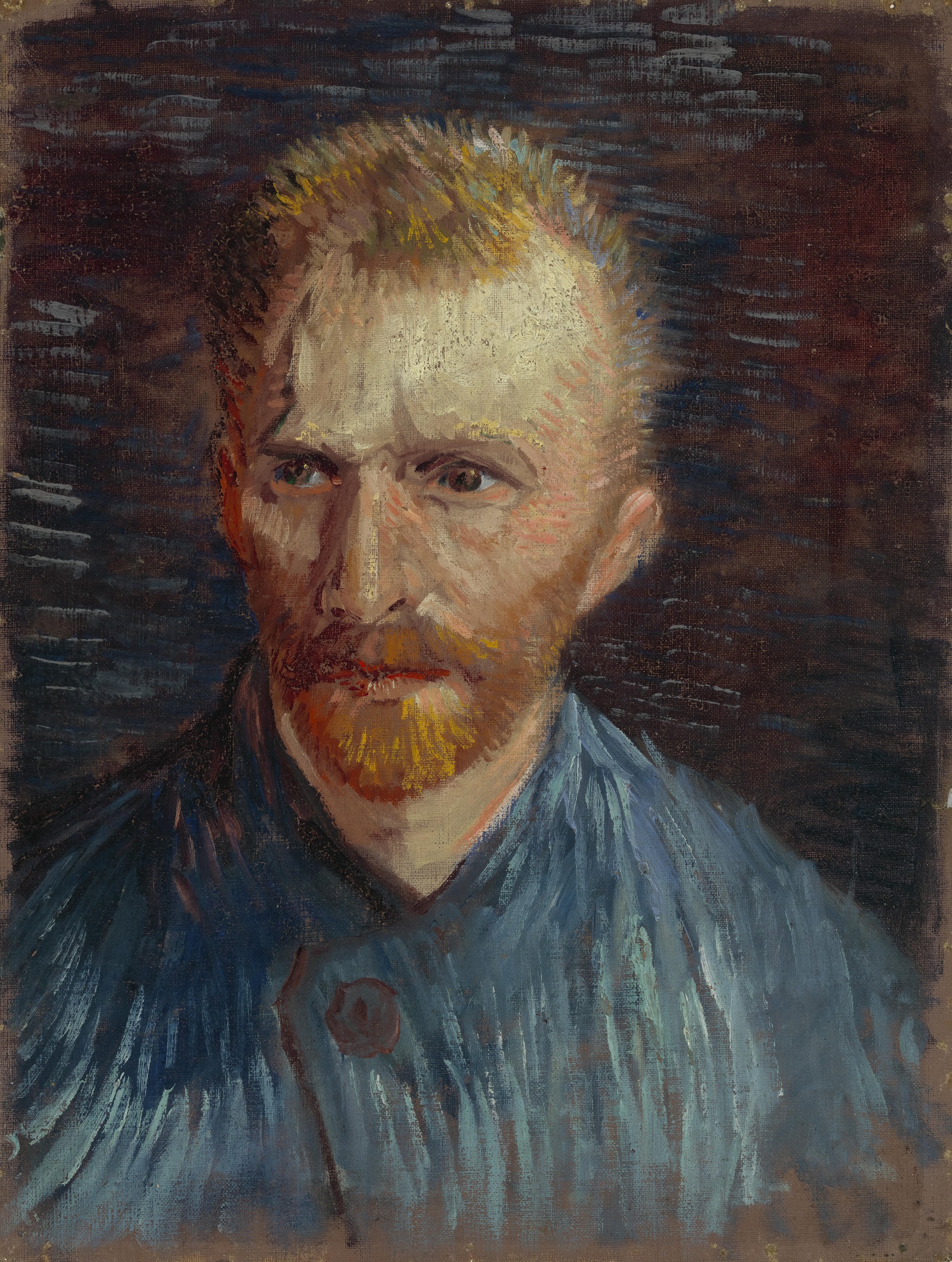
  • portrait of Vincent Van Gogh


    vangoghmuseum-s0135V1962v-3840
    Self-Portrait of Vincent Van Gogh

    A man without an ear had no friends

    To show him the face of compassion

    To lend him an ear to listen always

    To the cries of a soul grim and ashen

    Lost in the gallery of a dark house

    Where nature oppressed ruled the mind

    And commended it to suffer with the body. 

    The Studio of the South in tatters

    assailed a reservoir of dreams;

    The Southern Sun of Arles in shreds

    speared his soul with a shout of taunts

    And made his heart sink in the abyss

    Till it burst with an outcry evermore

    Of the man with the unseen voices

    That grew loud and grew louder

    As he was estranged from himself

    And left the world with a thunder

    Of fire, a fire of freedom from 

    The frights of the broken soul. 

    Thereby hangs a tale of a painter

    Breathed with poetic madness of arts. 

    P.S.: I have recently come across an article about the nature of Vincent Van Gogh’s mental illness that eventually resulted in his suicide in May 1889 with a pistol that punctured his heart in Saint-Paul-de-Mausole asylum in Sant Remy, France.

    It is said that Gogh had shown symptoms of disturbed mental states since he was 17 years old when his parents tried to get him committed. He was later seen eating coals while painting and told of hearing voices and seeing hallucinations. As a matter of fact, Gogh was from a family with a history of mental illness: his maternal aunt was epileptic, and two of his siblings died in asylums and two others by suicide. Surely, this doesn’t aver that mental illness is hereditary and therefore brings grist to the mill of eugenists.

    In my opinion, it seems more likely that Gogh’s tragic life story comes from a combination of Gogh’s disappointment with the failed reception of his works and frustration with his ability to deal with the existential reality interacting with the unfavorable circumstances surrounding his struggles to mark his existence through a medium of art, which deserves of recognition for its beauty of his highly innate artistic sensibilities that glow in the dark night of the soul. To me, whether Gogh was clinically insane is to miss the gift of the artist to humankind that always thrives in the beauty of arts.