Tag: movie reviews

  • On Watching “Adolescence” (2025) – Netflix Season 1

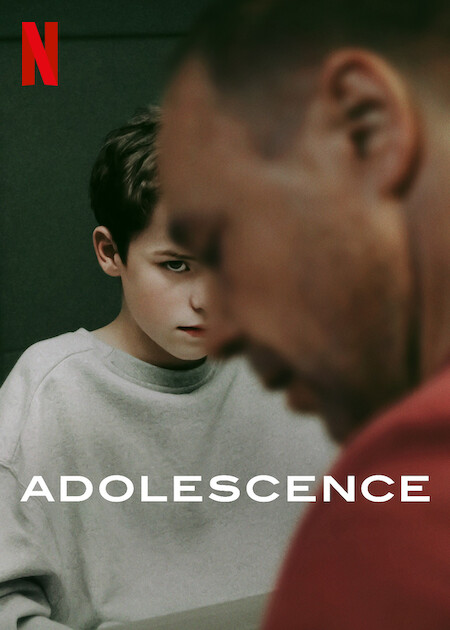
    This Netflix drama series does not focus on an activist narrative that many might passionately debate from various political or social perspectives. Instead, it explores how something unimaginably tragic can affect anyone or any family, regardless of their socioeconomic status, race, or cultural background. Committing a crime is not solely the domain of a degenerate or disturbed mind; rather, it can be seen as a sickness influenced by a combination of social factors and the inherent predispositions of individuals. And yes, this reality includes all of us.

    Here is an adolescent boy from a hardworking family whose father may have a temper but is kind and understanding and has a strong responsibility for his family. Hardly a likely candidate for the head of the dysfunctional family contributed to producing a psychopathic killer. Having a temper doesn’t mean you are automatically attuned to criminal minds. To that effect, the father of the boy is neither a saint nor a sinner, and his son’s problem is not of family but of peers; it’s from peer pressure under heavy intoxication with social media where your worth is valued by lookism and agism vying for popularity as key to success. A loser is an Incel whose insecurity is forced by the number of likes destined for a public whipping boy or walking sandbag. Yeah, it’s easy to label anyone who is not within a safe zone of being accepted, and you become a new outcast. If you are a woman outcast, then you are a new witch to be persecuted. 

    The problem with the boy here is his consequence and punishment, but that should not be relegated to the family. To ostracize the family of the sinner is a time-honored practice that never changes, just as there’s no new thing under the sun. While the drama shows the brutally realistic portrayal of the crime, the doer, and the family without overt display of emotions or elaborated scripts, it does not give the boy light of redemption in the person of the psychologist interviewing the boy. I cannot help but think that she’s there to get what she wants, which is to extort confession that he did kill the girl, and that is why he did it, not trying to help him cure the mind disease. She does not seem to be happy with herself either. 

    It was mind-disturbing and painful to see how the police handled the boy and the preponderance of shock that his family encountered on what might have been one of those ordinary mornings. Seeing his father criticizing himself for not being perfect broke my heart. Yet, no one is perfect; he is a good father with a strong sense of responsibility for his family and a good heart. That’s good enough. You see, bad things can happen to good people. Dad, please don’t blame yourself. You are a good father: good night and sweet dreams. 
  • Movies Digest

    Some indulge in drinking, some gaming, but mine is binge-watching supernatural/suspense movies when I am under dark spells. Hence this past weekend, I wallowed in the below visceral world of make-believe with my cats as guardians perched next to me on both sides like Odin’s two crows, Memory and Thought.

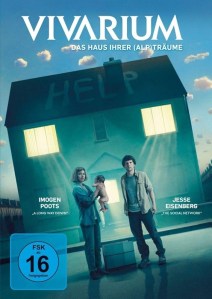
    Vivarium (2019): This is one of the most surreal movies I have seen. Some classify this movie as Si-fi, but it is Horror because it has no hope of escaping from the cycle of repetition with no end to the movie’s end. The young couple’s hopes of finding a new home could be this sinful. I am only asking because the movie’s central theme stems from the globally realistic issue of housing problems in the context of planning and paying. And the question of conformity dominates throughout the movie. Readers familiar with the YouTube sensation of the Backroom series will find a kind of deja vu phenomenon while watching this, but this is scarier because it happens to good people.

    The New Daughter (2009): Kevin Costner plays an affectionate father who wants to bring up his two young children to the best he can as a newly divorced father. It’s refreshing to watch such a movie that portrays a loving single father caring for his children when most movies show only single mothers struggling – of course, loving, with their circumstances. Although the film does not feature my favorite ghostly characters who are purely spiritual, it can be forgiven for the sinister consequences that show no mercy to good people.

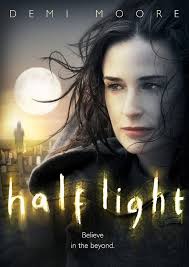
    Half Light (2008) – Demi Moore is a novelist in this movie who can’t get over the death of her beloved young son. She blames herself for him to drown to death while she is writing her new novel. The guilt-ridden mother retreats to a coastal village in Scotland, where she experiences supernatural phenomena so tangibly that it all seems too visceral to accept because of the preponderance of the awe. The lighthouse on a deserted island within such a small coastal village serves as a beacon of her spiritual guide, or could it be an alarm for the impending danger? But one thing is confident that the living must let go of the dead because once the soul leaves the body, then the soul belongs to no one, not even in the streams of love’s salty fires. If you really love them, set the departed free.

    Stephen King, whose name befits the sobriquet of King of Horror, once said that fiction is the mirror image of reality, sort of an alter ego of the real world. Horror reflects fear that hopes are only a vanity of imagination or, as Thucydides says, a dangerous daydreaming made of bodacious hubris. What if what we think of or see as real is not real but only the likeness of truth? That is Horror, which is all reflected in these movies.

  • “Drag Me to Hell” (2009 Film) – movie review

    Image credit: Google

    At first, I didn’t like the movie poster, which was too screaming of “HORROR” aimed at the teenage audience. So, I avoided watching it for over a decade since its release in 2009. But for some reason, unbeknownst to me, the movie advertisement kept popping up on Amazon Prime and NetFlix until I clicked on it last week out of curiosity blended with 90% boredom and 10% of my brother’s words to try it. I know I was destined to watch it now that I have watched it.


    The movie’s protagonist is Christine, a relatable character, a young woman from a country to Los Angeles, the City of Angels, who wants to build her own life as a successful career woman so that nobody will look down upon her. She is more naive than innocent, with a good heart, if not golden. Nevertheless, she cares about people’s feelings and does not have the iron will to harbor her vengeance against those who insulted her. But sometimes, it’s those little people who get the biggest shoutout. She meets her Waterloo and literally crosses the Rubicon to face the demon. Still, the question echoes: did she deserve the curse? Why is it always that the ones who are good ninety-nine times get picked on and punished without mercy for a one-time fault? What makes them scapegoats for an offense in the eye of the beholder?


    The movie’s director is heartless and sarcastic about human nature in the face of reality by being merciless to the protagonist as if he were trying to play God, who he appears to think is remote and unsympathetic to the plight of his children. Otherwise, why does he let things happen to her and do nothing to protect her from evil? Christine might be nervously anxious to prove herself worthy of better opportunities as a single woman away from her not-so-pleasant past, but that cannot be the cause of sinister consequences. She could have loved herself the way she was, and all would have been well. Indeed, we should be kind and attentive to those in need. Still, the politicians and the celebrities with money are evasive of punishments for their wrongdoings because they know they can get away with anything, even from the curse. And I do not pity the spiteful Gypsy woman who drags the meek, not the powerful, to hell.

    Christine deserves no place in hell.

  • Old People (2022) – Film Essay

    Old People shows the issue of the generation gaps between the young and the old, not in the adolescent revolt against the adult institution, but in the societal and cultural context regarding the weakening familial bond between wife and husband, child and parent, and grandchildren and grandparent.

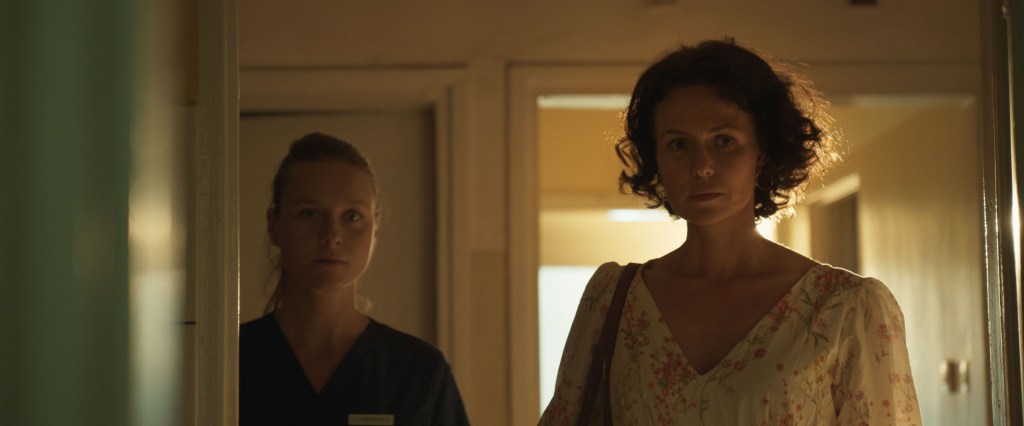
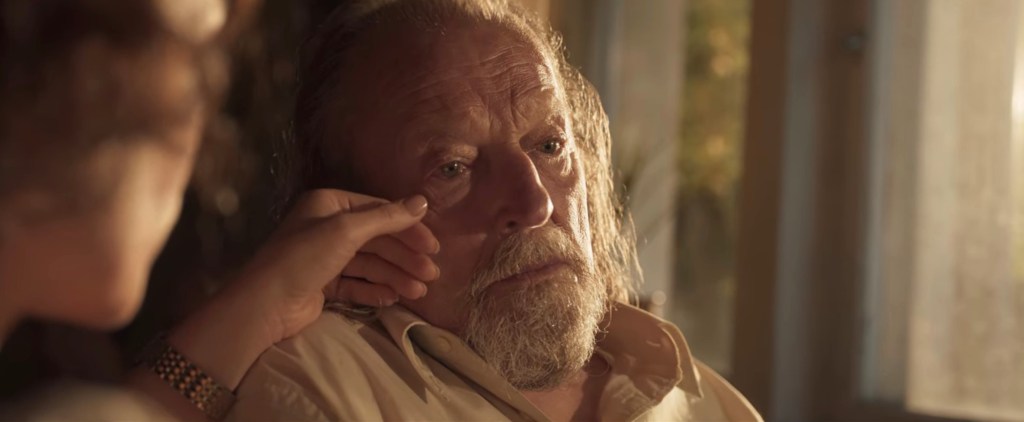
    Melika is a successful lawyer from a city heading with her children to her sister’s wedding at their childhood home in a village. Upon arrival, Melika finds her once beloved father, who loved her and her children so much, is sent to a nearby nursing home whose environment is no better than a mad asylum in atmosphere and appearance. Seeing her father spiritless and aimless alone in a dark room gives her a pang of leaving him behind for her ambitious future as a city lawyer, but she tries to suppress it by bringing him home just for the wedding day. But that is her self-induced wish to relieve herself of guilt, for her father is so broken with a shattered heart that his daughters deserted him, driven away from their home, their happy life that he still longs for. Such sadness is collected among all the old people in the nursing home, abandoned in dreadful isolation from the community that has put them into such an institutional grave and buried alive. The rest is a prelude to a symphony of carnage burning in the fury of the undead and neglected.

    Although this movie is presented as a horror movie, it really isn’t in terms of its thematic and contextual subject. It is a horror that we as a society have become Logan’s World, where ageism and lookism prevail over humanity and discriminate against those who do not fit in their touchstone of the ideal. And what is old, and how old is old? Are we not all advancing in age? Youth is wasted on the young, as Oscar Wilde cleverly concluded. Being old should not be a curse but a celebration of experience in life and, therefore, must be embraced with respect and dignity. Just because we become old doesn’t mean our feelings are dead, as the grandfather tells his beloved grandson: “Oh, yes! I love you so terribly much!”

  • Zom 100: Bucket List of the Dead (Netflix- Manga and Live-Action film) – 1-minute Film review

    Zombie flicks are in vogue. From Netflix to Hulu and others, they are roaming across the boundaries of the digital world, hungry for popularity and craving high ratings. But none of them is ingeniously fresh, and all are infallibly doomed. If you hold on to it, apocalypse doesn’t necessarily kill off a human spirit. A dystopian world may overwhelm your sensory perception, but it won’t kill you if you don’t dwell on it with humor, a handmaid to strength and hope. That is what this film is about.

    The story develops around Akira Tendo, a young office worker fresh out of college, who soon becomes disenchanted with his innocent vision of the work he does because of the unreasonably demanding high workload and gaslighting of his boss. So, when he wakes up the next day and finds himself living among zombies because of an unexpected bio-weaponry disaster, Tendo becomes ecstatic, lest he should go to work any longer. The optimism galvanizes him to pen a bucket list of 100 things to do before he succumbs to the pandemic. What a jolt to live!

    The film stands out from all other dystopian worlds of zombies with humor, hope, and hooray. It weaves a unique perspective to a heartfelt story about a man finding meaning to live amid hopeless situations and ways to huddle through life’s challenging moments, which we can all relate to daily. Nietzsche was right. “He who has a why to live for can bear almost any how.”

  • ‘The Fugitive’ (1993 Film) – film review

    The Fugitive (1993) is an adventure and a drama cleverly put together by the elements of popular entertainment and thought-provoking thematic subject of human nature in dealing with the malice of fortune. It consists of elegant scripts, solid storyline, and outstanding performance of the already cracking cast with Harrison Ford as the Fugitive and Tommy Lee Jones as Senior Deputy U.S. Marshall. Brilliantly, veteran actors do not vie for the best shot of cameras to claim the title of Hollywood aristocracy. Still, they only do their very best to portray their roles as possessed by their fictional characters.

    Ford plays the role of a renowned cardiologist with the brain and the heart to care for patients in need. Then one day, the doctor finds himself on the run for the crime he didn’t commit, and above all, for the love of his wife. He has to find who killed his beloved wife, and the Marshall played by Jones has to catch him alive because, well, it’s his job. So much so that when the doctor confronts the Marshall face to face within an arm’s reach and tells the latter that he didn’t kill his wife, the henchman of law says, “I don’t care!” But the marshal isn’t all grim-faced reaper of death hell-bent on capturing the Fugitive, which makes him hard to dislike. Both the Fugitive and the marshal are alike as the mythological Teumessian Fox that never gets caught and the Laelaps Dog that never fails to catch, whether they like it or not.

    Harrison Ford is one of the greatest American actors whom I think belongs to the last 20th century’s Hollywood nobility of actors, including still alive Clint Eastwood. He has the face of a romantic adventurer, an intelligent doctor, an ambitious corporate man, and a no-nonsense prosecutor. From the galaxy far away to the offices in cities, Ford is a protean actor who can pull out the characters as if conjuring them from his grimoire without trying too hard or with overtly effusive sex appeal. The emotions wanting to outburst are nuanced in the power of his voice carried in the elliptical words. He is an action adventurer who seems so natural living in our real-world yet so ideal on-screen, making us wonder whether life imitates art and vice versa.

    The Fugitive is worth watching again if you want to watch something smart and thrilling to forget about the momentary existential dilemma or frustrations. The movie is at present for free to view if you are an amazon prime member. It is a one-of-kind American movie that has become a classic of our own time, and I wish there would be more movies such as this.