Tag: movie

  • “Drag Me to Hell” (2009 Film) – movie review

    Image credit: Google

    At first, I didn’t like the movie poster, which was too screaming of “HORROR” aimed at the teenage audience. So, I avoided watching it for over a decade since its release in 2009. But for some reason, unbeknownst to me, the movie advertisement kept popping up on Amazon Prime and NetFlix until I clicked on it last week out of curiosity blended with 90% boredom and 10% of my brother’s words to try it. I know I was destined to watch it now that I have watched it.


    The movie’s protagonist is Christine, a relatable character, a young woman from a country to Los Angeles, the City of Angels, who wants to build her own life as a successful career woman so that nobody will look down upon her. She is more naive than innocent, with a good heart, if not golden. Nevertheless, she cares about people’s feelings and does not have the iron will to harbor her vengeance against those who insulted her. But sometimes, it’s those little people who get the biggest shoutout. She meets her Waterloo and literally crosses the Rubicon to face the demon. Still, the question echoes: did she deserve the curse? Why is it always that the ones who are good ninety-nine times get picked on and punished without mercy for a one-time fault? What makes them scapegoats for an offense in the eye of the beholder?


    The movie’s director is heartless and sarcastic about human nature in the face of reality by being merciless to the protagonist as if he were trying to play God, who he appears to think is remote and unsympathetic to the plight of his children. Otherwise, why does he let things happen to her and do nothing to protect her from evil? Christine might be nervously anxious to prove herself worthy of better opportunities as a single woman away from her not-so-pleasant past, but that cannot be the cause of sinister consequences. She could have loved herself the way she was, and all would have been well. Indeed, we should be kind and attentive to those in need. Still, the politicians and the celebrities with money are evasive of punishments for their wrongdoings because they know they can get away with anything, even from the curse. And I do not pity the spiteful Gypsy woman who drags the meek, not the powerful, to hell.

    Christine deserves no place in hell.

  • Dark Water (2005) – film review

    Here’s a young mother with a five-year-old daughter freshly divorced from her husband who thinks she’s delusional, paranoid even, and wants to keep sole custody of their daughter. The daughter is everything she has reason to live, a life that has been so hard to endure with an indelible traumatic childhood. Yet, because she sees herself in her daughter needing constant unconditional love, which she was not allowed to have, she will do anything to protect her from the harsh reality of life, even from the supernatural peril of the beyond reality.

    So the story of Dark Water (2005) narrates Dahlia, a young divorcee trying to take full custody of her daughter Ceci away from her assiduously hostile husband. Instead, he embarks on a legal battle to claim sole possession of Ceci because of Dahlia’s unstable mental state. Dahlia, a once copy editor from Seattle, takes a low-paying administrative position at a Manhattan Radiology office for livelihood in a delipidated apartment in Roosevelt Island with Ceci. The semblance of the apartment is the working-class version of Rosemary’s apartment. Dark water is leaking everywhere: from the elevator to their bedroom ceiling, and the laundry room, which is a prelude to the finding of a tank on the rooftop where the traumatic ends of a certain young Russian girl abandoned, unloved finds her and her memories. Or is it Dahlia’s phantasmal delusion of confronting her own child self in her painkiller-induced pill to alleviate the cruel migraine caused by the yoke of woes?

    Dark Water is an American adaptation of the original Japanese film Dark Water (2002) by Koji Suzuki, the famous writer of the Ring trilogy, excellently translated to an American audience who will find broad universal themes of human nature, psychology, and behavior. You don’t have to have perfect childhood fed on parental love to be a loving parent. Of course, unhappy childhood will affect the development of one’s character and behavior pattern more or less, but it all boils down to one’s nature to be loved and be loving. Dahlia wants to counteract the demon of the past, which still grabs her with its tenacious tentacle of recurring nightmares and murderous migraine, by being constantly -and eternally – loving and kind to Ceci despite her unhealed scars left in her child self. Perhaps that is why her name is Dahlia, whose flower word is loyalty, dignity, courage, and support due to its withstanding of harsh conditions.

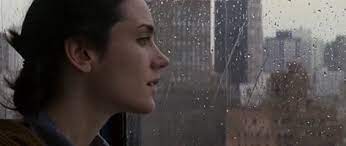
    Jennifer Connelly, playing Dahlia, is not only beautiful but also talented in a way that few actresses on screen possess in our time. Her presence in scenes is unique in that her character is downright realistic yet oddly out of the world in a riveting way, as exhibited in this film. No wonder the late film critic Roger Ebert admired her for the same reason. With her exceptional performance and the storytelling that grips the eyes and ears of the beholder, Dark Water is a worthy film for those who delight in supernatural horror without blood and screams.

  • grave of the fireflies

    I remember when they were happy,

    I remember when they were lonely.

    When only two of them left, there

    I saw the light glowing and growing

    in the silence of darkness of night

    Frolicking in the twinkling starlight

    Becoming two fireflies on the grave.

  • About ‘Ben-Hur’ (1959)

    img_1989

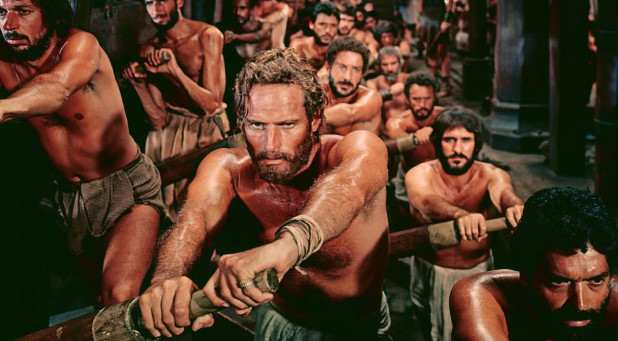
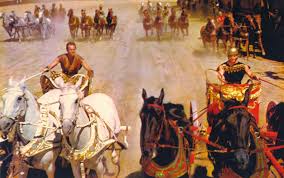
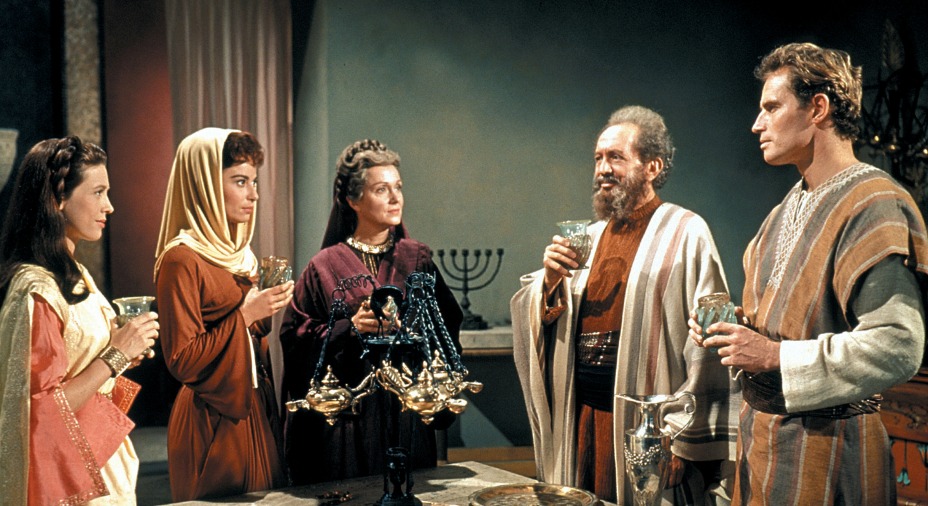
    A great film with a sincere message about life and human nature transcends a divide of time and a boundary of the territory. I believe that a good movie has a lasting sensory impact on the viewer and cultivates the mind with a visual efficacy of precipitation. In this regard, the epic historical drama ‘Ben-Hur’ (1959), directed by William Wyler, is an epitome of masterpiece cinema not for a time but all seasons. The remarkable triumvirate of the outstanding screenplay, the excellent performance of the cast, the fascinating cinematography produces supreme one of art that resonates with spiritual elements of humanity in the witchcraft of motion picture.

    ben-hur

    The film follows a history of Judah Ben-Hur, a young Jewish prince whose life is forfeited by a betrayal of trust and corruption of friendship. From the height of his prime to the fall, then to redemption, it is heroic acts of high human drama wonderfully conjoined with a tale of Christ whom Ben-Hur encounters by Providence. His wrath is untamed, and anger is the roaring of a lion. Ben-Hur chooses vengeance as a will to live in the march of death in the desert and the prison galleys on the Ionian Sea. He feeds on ire and utters curse every day until he intends to execute vengeance upon the perpetrator with recourse to the old retributory law of an eye for an eye, tooth for a tooth. Who can calm the turbulent vortex of the soul in despair and save him from the night of the soul?

    download

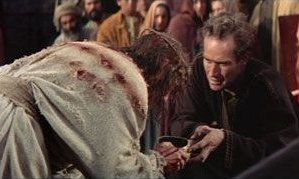
    The film revolves around Christ, and Ben-Hur is another disciple of his teachings through conversion into faith, charity, and hope. The figure of Christ is the central theme of the film, but his face is unseen, and his voice unheard. We can only see his rear, but it is the mysteriousness of the person of Christ that elevates the story of Ben-Hur to the sphere of hagiography. The providential encounters with Christ in the climactic moments of his life lead him to the way of Christ, which mirrors the process of Ben-Hur’s redemption from Wrath to Grace, from Desolation to Hope.benhur-christ-a

    Whether or not you believe in Christianity is not a prerequisite to appreciating this excellent epic drama because it would be a loss to any lover of arts to forego the spectacular beauty of the cinematography, not to mention the spiritual thematic of one man’s redemption from hopelessness. The grand epic scale of cinematography that depicts the tale of Ben-Hur in the trail of Christ from the Nativity to the Crucifixion is akin to watching Michelangelo’s remarkable frescoes of the Sistine Chapel that illustrate the story of humanity from the Genesis to the Last Judgment under God’s mysterious plan for mankind. In conclusion, ‘Ben-Hur’ is not a movie about a hero but about a triumph of hope over the desolation that saves a man’s soul from self-destruction, resonating with ‘Dum spiro, Spero,’ meaning ‘while I breathe, there is hope.’

    ben hur 3

  • ‘After the Storm’, by Hirokazu Kore-eda – review

    After_the_Storm-landscape-600

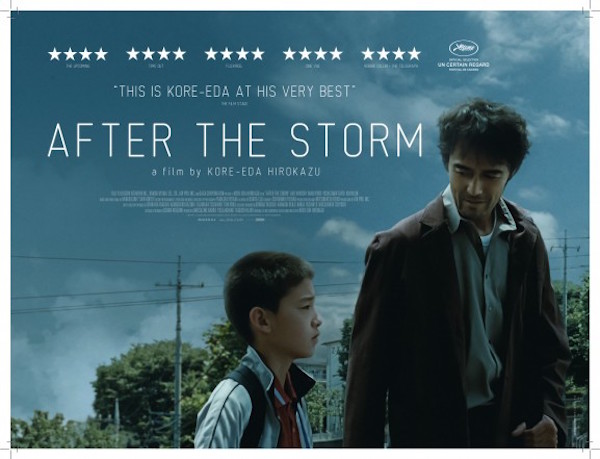
    Life reminds me of a Baroque fugue; it begins with the exposition of a short melody, then develops into busy melodies and finally reaches a dramatic final entry in tonic. It is a continuous surrendering of the old and a trust in new beginnings with lots of in-between episodes, intricately interwoven by multiple strands of occasional chances called “luck,” failed expectations, and grace of hopes that creates a curiously riveting toccata. In this film by Kore-eda, Ryota’s life is a ballad of a soft troubadour, who wants to sing a happy song with his fractured but beautiful family.

    Ryota, once a promising novelist, now a divorced middle-aged struggling writer, makes a living as a part-time private detective under the pretext of enriching his writer’s imaginativeness for his next best oeuvre. He loves his ex-wife and his son dearly, so he always hangs around them surreptitiously. But he does not understand that how he feels about them is unrequited because he is not in their lives any longer. In fact, Ryota is even unsure of himself, of his reason for writing, and of what he wants to become amid his dwindling writing career and growing distance from his already fractured family. There is a sense of drift in his life, that feeling of emptiness, loneliness, and disappointments, all fragmented in the detritus of broken wishes, unpaid dues, and lost dreams. He has nonetheless a heart of gold, and his humor is his saving grace that helps him get going. Ryota’s life has been in the doldrums for so long that he forgets he has to move forward to get out of the stasis binding him in the longing for bygone days. A stream of pathos oozes out to see Ryota thinking, ‘Who would have known my life would turn out like this?’

    Director Kore-eda uses the storm, more accurately a typhoon, as a medium to free Ryota from the memories of the past, from the obsession of his past, in order to give him a new meaning of life, will to meaning. Kore-eda does a beautifully nuanced job of capturing the innermost feelings of the characters without elaborate lines or super-abudance of emotions throughout the scenes. It is a Japanese film, but the sentiments and judgments of the characters are rendered communicative to the hearts of the universal audience.

  • One Man’s Fighting for Justice and Honor: Film Review on The Verdict by Paul Newman

    412KQ55D1DL._SY445_

    Release dateDecember 8, 1982 (USA)

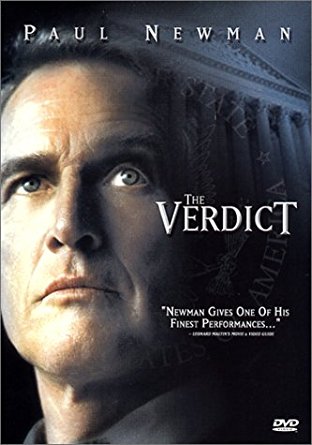
    This is not a movie about a courtroom drama displayed by the verbal theatrics that we can easily see in today’s legal dramas. It’s a movie about a man’s redeeming of his honor tainted by his self-destructive resort to alcoholism and disorientation in life pursuant to the destruction of his youthful idealism as a novice lawyer. Once bitten, twice diffident, the lawyer’s god-sent chance to turn over a new leaf in his later chapters of life comes to him when he is asked by a woman to represent her sister, a young woman whose life is forever bedridden in a coma as a result of inadvertent administration of anesthetics by doctors at a Catholic hospital. As the lawyer works on the case for a trial, he regains his confidence, hope, and meaning for his own life.

    Paul Newman’s excellent performance as the lawyer struggling with his own life is the gem of the movie, rendering the verisimilitude of the character that evokes the pathos. His trademarks of fierce blue eyes that seem to be the only distinct features of his weary, forlorn face symbolize a suppressed light of intelligence, bludgeoned confidence, and vanquished hope, all of which still struggle to be liberated from self-imprisonment at any moment. The viewer will never fail to notice the feelings and the emotions Newman’s character tries to subdue or express by his brilliant method acting.

    “The Verdict” is indeed a thought-provoking movie about the human nature and a light of hope that we all have in our lifetime. Without any courtroom theatrics full of sensational machinations and exchanging of fiery tirades between the lawyers of the opposite parties, this movie proves how a well written script based upon a realistic subject matter that elicits universal empathy in concert with the excellent performances of fine actors could work a wonder.