Tag: paganism

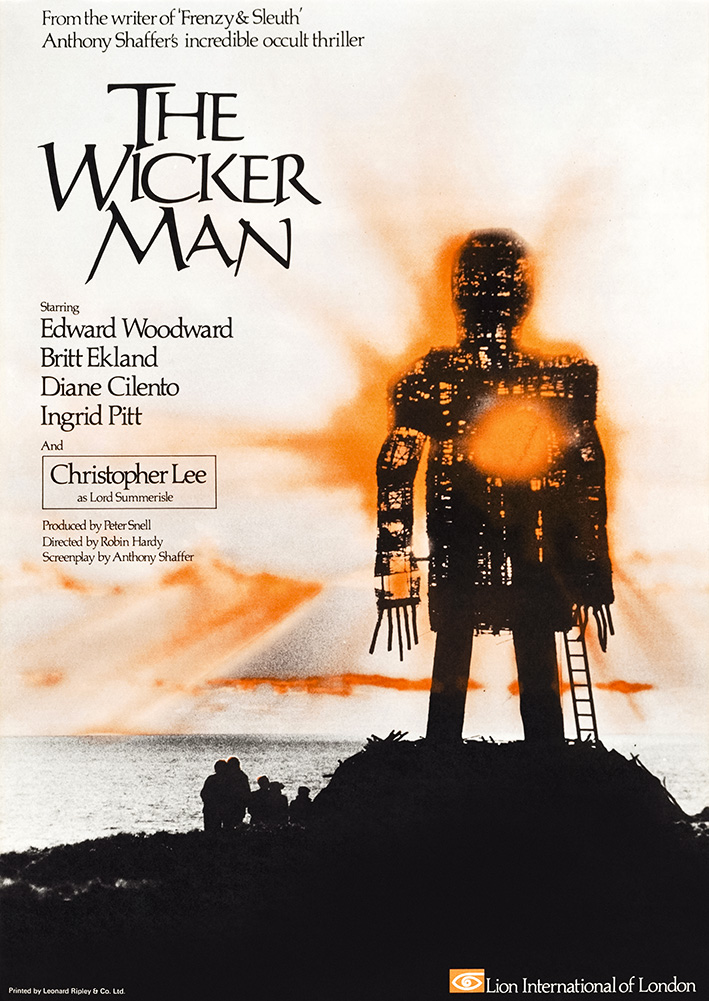
  • ‘The Wicker Man’ (1973) – film essay

    The Wicker Man (1973) directed by Robin Hardy and starring Edward Woodward, Christopher Lee, Diane Cilento and Britt Ekland. Mesmerizing British horror with a screenplay by Anthony Shaffer and soundtrack by Paul Giovanni.

    The mentalese of Horror refers to an intense feeling of fear or shock that generates a feeling of repulsion, which is akin to ravaging terror to the sense. Consequently, horror films of our time, ranging from the 80s to the present, are filled with gory details of anatomical dissection with teeth and blood conjured up by the inflated creatures of scariest nightmares. That is why I have a soft spot for the 70s films of the supernatural phenomena with an intelligent storyline focused on the mysterious force of the beyond that subtly agitates our most primitive fear of the unknown, the uncertain, the unresolved entities lurking in between a thin line of reality.

    The Wicker Man (1973), directed by Robin Hardly, is a unique supernatural film that merits its name engraved on the obelisk of memorable films with the elements of folklore, belief system, music, and history unfolded in a vibrant kaleidoscope of scenes and scenery. It records fear in the ordinariness of landscape and people with the subtly suspected evil power lurking in the hidden alley of defenseless equilibrium. Such fear is not, therefore, forced upon the audience but tantalizing the anticipation of the sensation culminating in the extraordinary frisson of epileptic suspense blocked in a mental airlock.

    The story begins when policeman Neil Howie from Mainland Scotland journeys to the remote island called Summerisle in search of a missing girl. A young devout Christian and virgin into the bargain, Howie soon discovers that the whole island is a pagan territory of old gods to whom the pleasant-looking islanders with names of flora practice a human sacrifice when crops fail for harvest. Besides, eroticism abounds with lovers in the field and the cemetery. Sensuality is ubiquitous and free because the instinctual desire is a ritual practice of appreciation of natural beauty, which elevates the licentiousness into sacredness by the innocently joyful acts of the actors. Howe sees himself in a cultural and religious twilight zone and thinks himself as a lone Christian hero, a sort of Nathaniel Hawthorn’s Young Goodman Brown figure stranded in the deep forest where Satanic Sabbath is taking place. Both characters distance themselves from the diabolical influence. They belong to the tribe of Wicker Man in the reality of supernatural power translated from their most deep-seated terror sealed in dreamscapes.
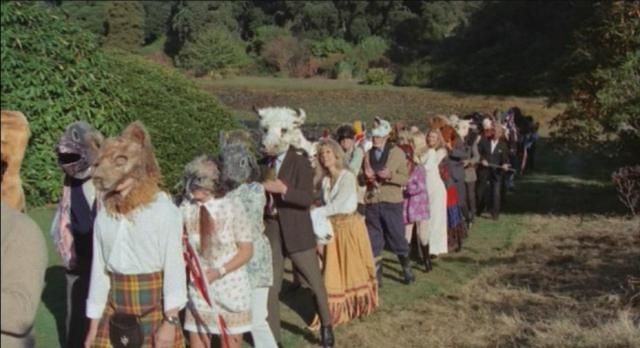
    The efficacy of music used for the insularity of the proudly pagan island away from the Christian mainland shines through the film against the idyllically pastoral scenery and its happy-looking islanders joyfully practicing everything contrary to contemporary norms and mores. They are all beautiful and peaceful in their ways and see Jesus as a loser flopping in changing the world. It is this habiliment of pleasant appearance that insidiously pervades a sense of fear without blatantly exploiting it. Perhaps, that is why some people find this film monotonous or unsatisfactory in their touchstone for the ecstatic sensation. For this reason, it is not a statement film pontificating about the significance of endangered paganism but a visual story that tells a legend of the Wicker Man. If you are a fan of the supernatural tale clear of buckets of blood and chops of mutilated bodies, you will find this film worth watching.
  • Fairy summoning in the Florentine Renaissance period

    41a59389f2e8e71b94e50f9d1ae7d39a--vintage-fairies-vintage-artwork
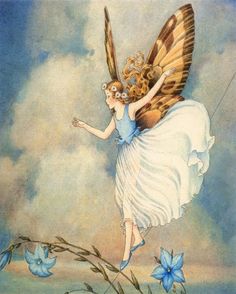
    A supernaturally pretty fairy deludes men’s hearts.

    There are magical elements in religion, and there are religious facets to the practice of magic, as succinctly summed up by Sir Walter Raleigh: “The art of magic is the art of worshiping God.” That’s how I feel and what I see during my Dutiful Sunday Morning Masses, the ancient rite of the Church, a perennial panoply of syncretism with its splendid paraphernalia of prayers and the liturgical ceremony of rites and mechanical recitation of prayers; it is the melding of religions or beliefs of the similar elements but of different origins. Hence, to come upon an article in the recent issue of BBC History Magazine about an academic study by a certain British scholar of the existence of fairies in the context of the validity of cultural and historical artifacts gave me an uncanny pleasure.

    Dr-Faustus
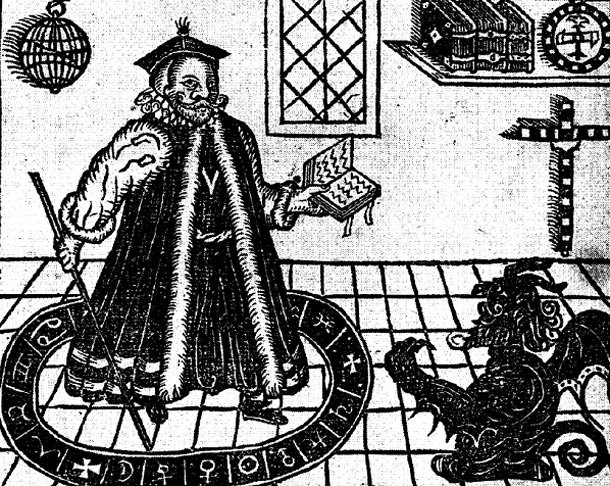
    The famous Dr. Faust, summoning Mephistopheles for his service

    In fact, Religion (that is, Christianity) and Magic (in the forms of divination and sorcery) are not to be seen as polar opposites and antithetical systems of belief because they are interdisciplinary agencies of attempting to seeking and offering a panacea to our dilemmas – physical, metaphysical – competing for supremacy in propitiation. Such mysteriously syncretic elements of the two different agencies of beliefs became the academic subjects of intellectuals, such as Francis Bacon and John Aubrey who accepted the potentialities of physiognomy as an infallible guide to predicting one’s character and argued for the validity of non-Christian practice based on certain intellectual bases therein. With this in mind, you would not be surprised to learn that fairy summoning rituals were all the rage in the Renaissance period (15th~17th centuries), indiscriminately practiced by all strata of society, learned or ignorant, rich or poor, Christian or pagan. The author of the article informed the reader that the early Renaissance idea of fairies was pretty nebulous and varied with a wide arc of wonder and trepidation and that the dainty image of ever famous “Tinker-bell” was a Victorian construction of the whole fairy race.

    Then, how did the “real” fairies look? Although there is no magisterial, definitive version of the physiognomy of a fairy, a collective description gleaned from various records boils down to it as a supernaturally attractive man/woman imperiling the souls of whoever it was summoned to, which is reminded of incubus/succubus, consecutively. Notwithstanding the dubious nature of fairies, the invocation of fairies halfway between angels and devils was widely used in hope to (1) acquire medical knowledge, such as whereabouts of herbs and their properties; (2) delight in the highest degree of sensual ecstasy; and (3) reveal the future and prevent from misfortune in advance. Be it as it may seem wholly pagan, the summoning ritual was surprisingly required for God’s intervention because it included periods of purification through abstinence, fasting, and prayer in preparation, all of which would testify to the sanctity of the performer ministering to the moral and ethical character. God willing, a fairy at request manifested to the summoner, but he should not come out of the circle he had drawn because it protected from sudden maleficence of the ambiguous fairy.

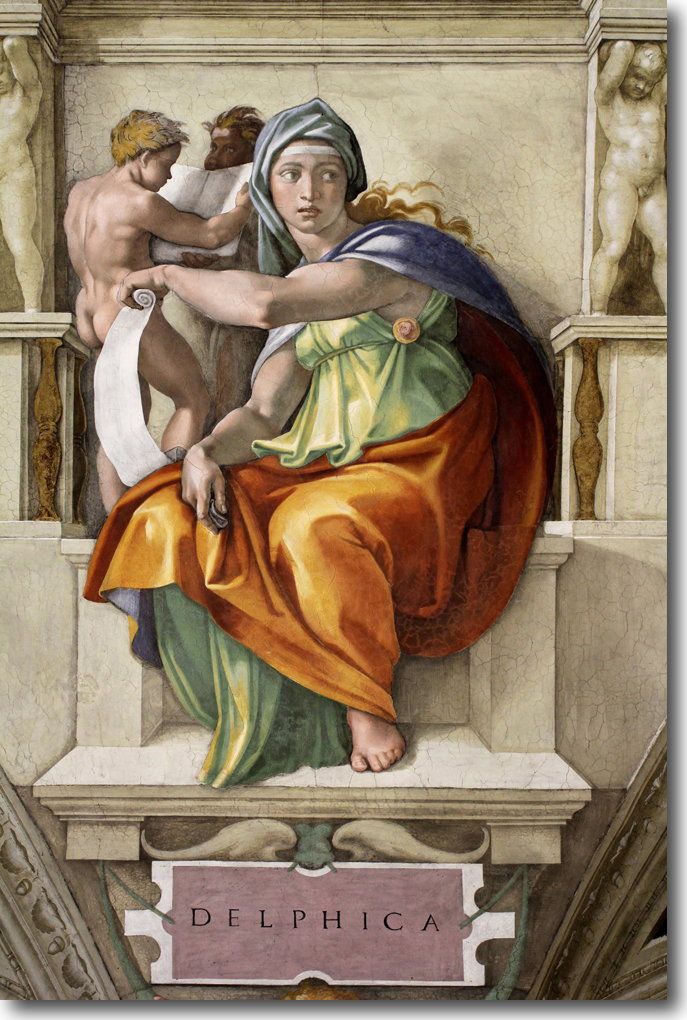
    Delphic_Sibyl_Michelangelo___21969.1501257269
    Delphic Sibyl from the Sistine Chapel fresco by Michelangelo

    In sum, the article was an elegant primer for a further interdisciplinary study of literature, religion, and folklore from the medieval times to the Reformation period and possible stretching to this date. The exemplary texts that spring to my mind are Religion and The Decline of Magic by Keith Thomas and Christopher Marlowe’s version of the legend of Dr. Faust, both of which are excellent testaments to the contextualization of the esoteric knowledge on the grounds of intellectual bases into academic studies of social, cultural, and historical facets of different zeitgeists, which also serve as invaluable literary artifacts to epochal changes. But for all that is worth, this relation between religion and magic is commensal, exhibiting a mesmerizing consilience of gods and God, profane and holy, pagan and ecclesiastical, forbidden, and disciplined, as superbly unfolded in the Sistine Chapel fresco, prodigiously expressed by Michelangelo.


    저장