Tag: pets

  • my life with a cat so far

    The period of four months can be long or short, depending upon how you feel it, and to me, it amounts to a long time that has changed my life in every possible way akin to an epoch of revolution. My life with an orphaned kitten named Toro has become a fugue of meows and voices in multiple strands of more meows and voices that has no coda.

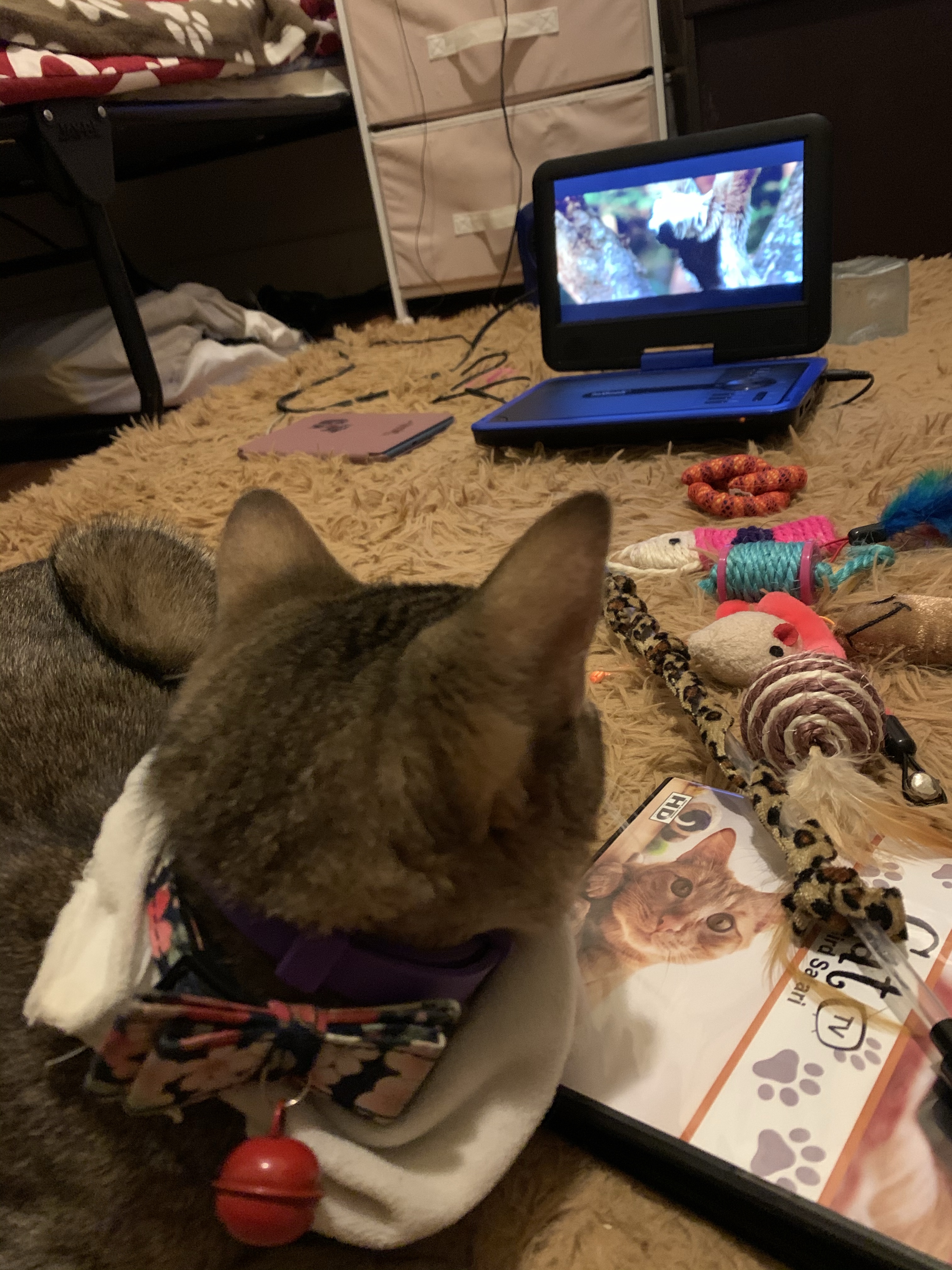
    During the four months, Toro and I had anfractuous moments made of frequent visits to different veterinarians, displays of whims and caprice on both sides, tears and smiles, frustration and understanding, doubts and hopes, wishes and disappointments, all of which are crystallized into a virtue of acceptance. I still cannot believe that I have a cat when I still have a weakness for more domesticated, more trainable, and more approachable canine breeds. This doubt develops into a sense of guilt, a whirlpool of self-criticism of not being good enough to be a loving owner of Toro, who is particularly in need of love and kindness due to his sensitive nature and suspected traumatic postnatal experience. Those educative textual and visual information on raising cats dissipates into a gray area of reality and stay there amid my trials and errors in the course of being a terrific guardian whom Toro wishes to live with. Does Toro want to live with another owner who can make him happy in a bigger house where he can run like his wild ancestors or cousins in nature with his new playmates? I ask Toro, but he returns me with that pensive glance and grooms himself like nothing more is necessary than licking his legs and rectum.
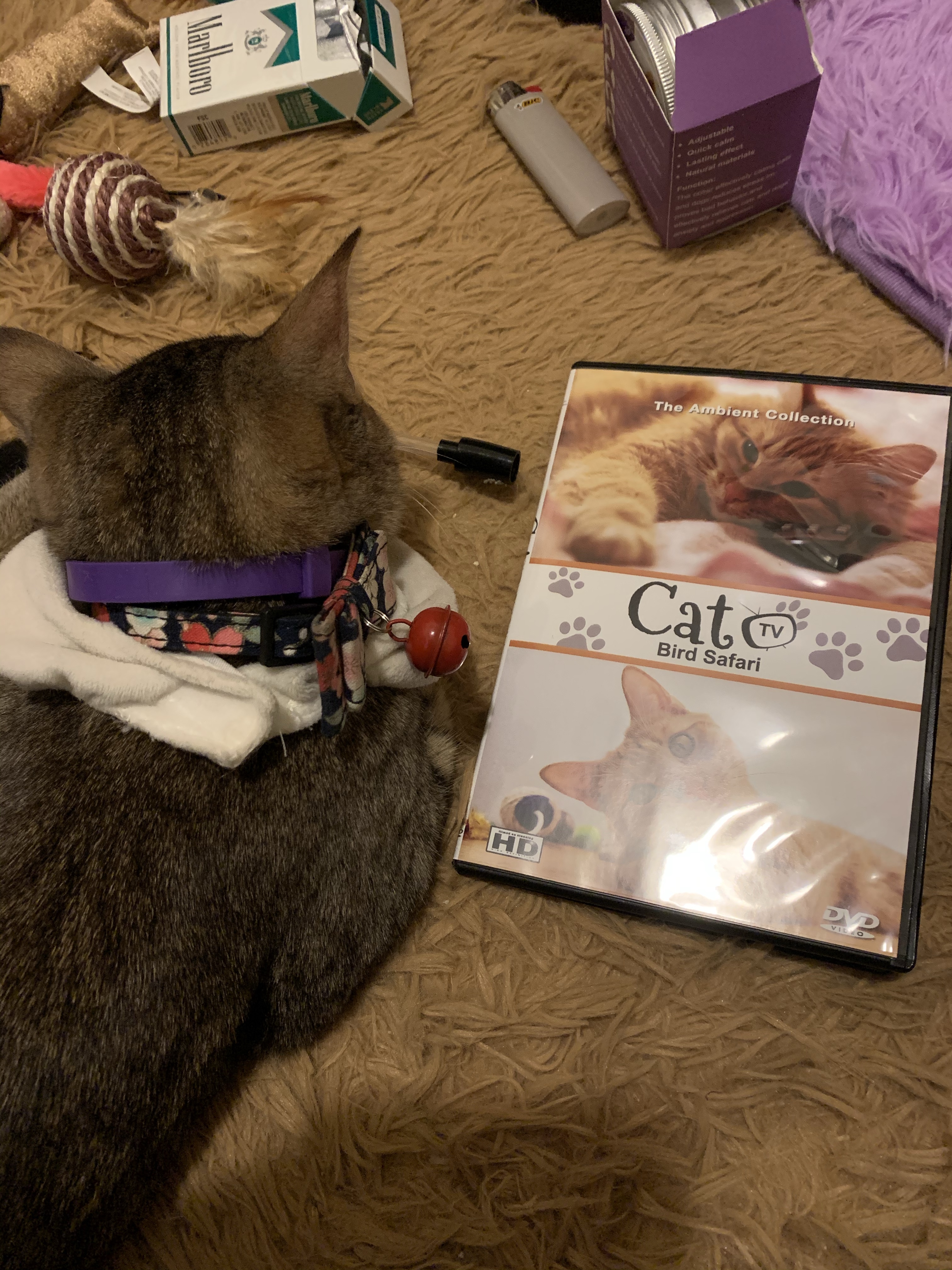


    My mother still wants me to return Toro to the shelter because his burst of pep and temper is unprecedentedly unbridled and insurmountable to be caught up with. Then I read other cat owners’ stories and watch their YouTube channels only to make parallels to their blissful lives with their cats and to descend to the labyrinth of gloom and sorrow without an exit. My previous post about my precipitated proclamation of a mutually beneficiary feeling of dependency becomes a public humiliation, a textual pillory of an incompetent cat owner who has no idea about the animal that does not like to be with her the first place. Or so it seems. Alas, woe to the one whose head is whirled like a potter’s wheel in the vortex of confusion, illusion, and discord in a da capo.

    Notwithstanding all of the above, one thing is sure that Toro’s wellbeing, both mentally and physically, is what I care about the most. I have taken him to three different vets so far due to his frequent diarrhea, constipation, and anal pain repeating like Bach’s Toccata. Even if Toro may indeed secretly entertains a wish to meet a new ideal owner, I want to take care of him as much as I can to the fullest extent within my capabilities because I care about him and want to be happy together. His little heartbeat I feel in my hand and when he sleeps at my feet is the most precious thing I treasure that empowers me with a sense of purpose that I have a life depending on me.
  • From Egypt with Meow: ‘The Cat in Ancient Egypt’, by Jaromir Malek – review

    The Cat in Ancient EgyptThe Cat in Ancient Egypt by Jaromir Malek

    My rating: 5 of 5 stars

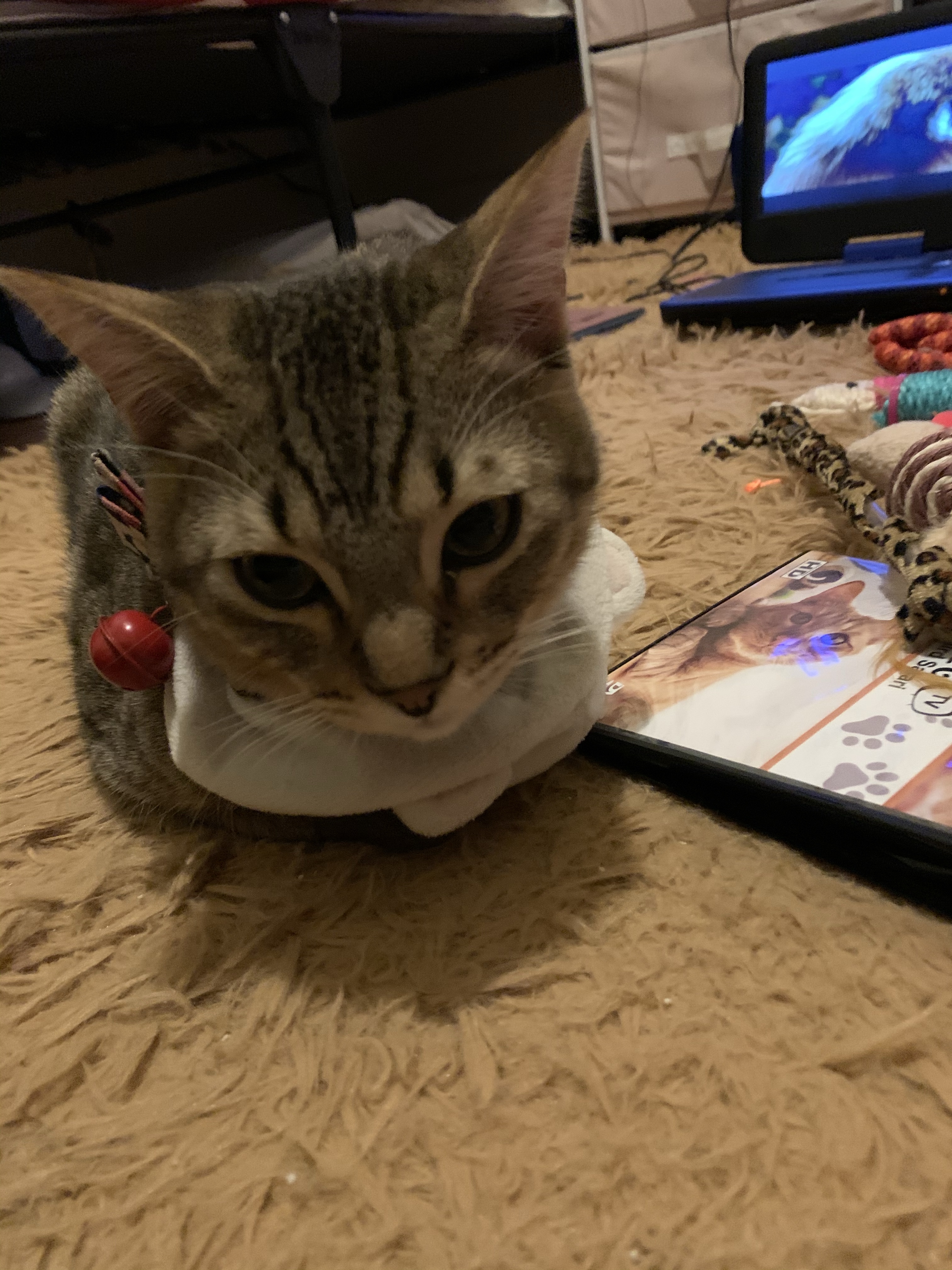
    I admit that most of my posts relate to the cat nowadays. But what else should I write about when an orphan kitten enters my castle and in need of care and love? My five-month-old cat Toro is a domestic short-haired breed as subsumed by a vet at the shelter, but his appearance and characteristics make me believe that he must be a descendent of Egyptian Mau. My conjectural reconstruction of Toro’s possible ancient scroll of his family (paternal) led me to  Jaromir Malek’s  The Cat in Ancient Egypt, which tells all about how cats became naturally harmonious with humans, which played a significant role in the anthropological and social aspects of splendid ancient Egyptian civilization.

    The domestication of cats resulted from the advent of agriculture when man began to settle on the farm, and civilization came to blossom. It was about 1,500 years later than the domestication of dogs as hunting assistants to men. Of all the ancient civilizations, the Egyptians sow the seeds of love between the cats and humankind. Abounded with various fauna and flora benign to the human inhabitants, the jungle cats and African cats thrived and became familiar animals to the Egyptians, who began to use the cats to drive off pesky mice poisonous snakes threatening their lives and crops. Naturally, wild cats gradually learned to adapt their wild instinct to their new protective human environs. 

    The frequency of cats’ representations in ancient Egyptian art is a creditable source to understand cats’ familiarity and recognition as pets in the overall culture and society. The images of cats first sporadically appeared in the tombs of pharaohs built during the Old Kingdom period (2647 -2124 B.C) and became widespread mural art features by the New Kingdom (1549-1069 B.C.), which is also called the renaissance of the pyramids. Maybe it was because of the mysterious aura surrounding the inscrutable demureness of a cat, or it was the otherwordly aloofness wrapt in ethereal agility. Cats became popular hieroglyphic and effigial motifs for artists and priests alike in cultural and religious contexts decorating chambers within sacred tombs and temples. Also, cats were the aesthetic muse for women’s high fashion, used as motifs for the jewelry of queens and women of high society.

    What evolved from a quid pro quo relationship between man and beast for the survival of the species found its way to the high seat in the eternal world. The familiarity and recognition of cats’ usefulness blessed with physical charm elevated the beastly origin into a divine status in the statuesque form of goddess Bastet, the sister of the Sun god Ra, representing female sexuality and fertility, which reflected the specific characteristics of the animal. The Sun god himself was also called the Great Tomcat because the god meowed during what he was doing. So much so that the ancient Persians used to equip the shields with live cats at war with the Egyptians, who dared not to harm their sacred animals.

    On the other hand, cats were not altogether distant from the everyday lives of the ancient Egyptians. The Greek historian Herodotus further corroborated that the Egyptians shaved their eyebrows when their cats died as a sign of mourning. The more cats became domesticated, the more multiferous their features became. Artists started using cats as a caricature of specific human characteristics illustration of fables with a moral content, representing the absurdities of reality in a humorously wise way. Such artistic trend was most conspicuous during the Ptolomy period when Egypt was under the Hellenistic influence to resist foreign cultural force. Cats were symbolized as the animal inherently Egyptian to the land of pharaohs.

    Beautifully written with sentences that conjure up the images of ancient Egyptian cats, Malek’s The Cat in Ancient Egypt serves its purpose of educating and entertaining the curious reader who wants to know more about his or her beloved feline creature at home. That doesn’t mean that this book is reserved only for cat owners or lovers. This book has refreshingly excellent archeological and anthropological knowledge about human civilization, impacting animal life. The affection is the elder sister of the understanding. I personally selected this book to read because I wanted to know more about my cat. Likewise, this book is for readers who want to know more about Nature and People’s history.


  • A Tale of a Cat in Tote

    Finding a good vet is a challenging task

    It may sound funny but finding a good veterinarian seems parallel to Perseus’s finding the Hesperides’ whereabouts, the nymphs holding the weapons for destroying Medusa, as instructed by goddess Athene. The half-god and half-human Perseus had divine help from the goddess to accomplish his terrific mission. Still, the whole human Me, left with my limited mortal device, had to embark alone on a daunting quest for a competently proficient veterinarian who could precisely ascertain the cause of my cat’s gastrointestinal malady with the utmost professionalism and most profound care for animals. So, I want to relate my journey to arrive at the mission accomplished to Hercules’s Twelve labors to fulfill his moral responsibility for the beloved he had slain.

    Toro’s Arrival at the Hospital in Tote

    No, not that I harmed my little sixteen-week old Toro. How despicable! But that he had been suffering from irregular bowel syndrome, aka constipation. Although well-potty trained, Toro had difficulty in releasing excrement completely with heartwrenching yowling, resulting in inappropriate elimination everywhere in my room. As his human caretaker/sister/mother, the onus of relieving him from the pain was naturally on me with an initial frustration of finding the panacea. In a new city with no acquaintance to recommend me an expert on cats, I looked up a list of veterinarians nearby on the Internet, mostly Yelps and Googles’ reviews. As a follower of Thuclyclides on hearsay’s integrity, not on the popularity of the subject from the masses, I eliminated the superfluously effusive complements of reviews suspected of blind bromides advertised by sponsored reviewers. I followed my instinct that led me to a particular veterinarian with less florid advertisements and more evidentiary results of curing cats, one of whom looked a lot like Toro. What can I say? It was more of my intuition, leading me to take Toro to the veterinarian of my choice.

    Toro’s X-Ray reveals his inner world, including a microchip

    The doctor listened to my plea for examining Toro thoroughly with his entire medical history obtained at his adoption from a shelter. He took Toro’s X-ray and explained that it was constipation and that he would inject enema to release due eliminations from his stomach. I was also given a bottle of lactulose solution to be administered to Toro orally three times a day. Besides, he gave me a bottle of Betagen topical spray for Toro’s infected buttocks due to the remnants of dried defecation, free of charge. It was certainly more than I expected of the care, now that the cause of the sickness had already been precisely diagnosed and adequately remedied.

    What an adventure I had today!

    Toro is now easily defecating in the letterbox. However, he seems to be a bit lethargic due to the oral solution that I have been injecting to him, which is a challenging task every time because of his apparent dislike. But Toro knows that he feels better now than before, so I guess he takes his medication as a daily ritual until the solution is finished. At the moment of writing, Toro is sleeping sweetly on the books shelved on my desk, and looking at him produces a phantasmagorical display of images of all things loving and caring and comforting I have seen from paintings and movies. Would this be the same kind of feeling when God sees his creatures made in love? It may be a bit of stretch, but I like the idea of it.

  • Our Mutual Friends

    Some say animals do not have a faculty of mind that translates the sense into meaning.  I always find it ironic that educated people can sometimes be heartlessly benighted, belittling a simplicity of nature. That they do not have the emotional spectrums, ranging from guilty to remorseful, and to resentful, gives free rein on arbitrarily judging animal behaviors according to human rational thinking that supersedes instincts common to all living creatures. Nor does it sound sane to cosset pets with outpourings of maudlin sentiments out of anthropomorphism for our convenience. We are fortunate to live in the age of the Brilliance of Science. Still, the overflux of information sometimes begets counterproductive results. Amid the deluge of information on animal behaviorism available on the Internet, I am often doubtful, if not fearful, of the way I am raising my cat.

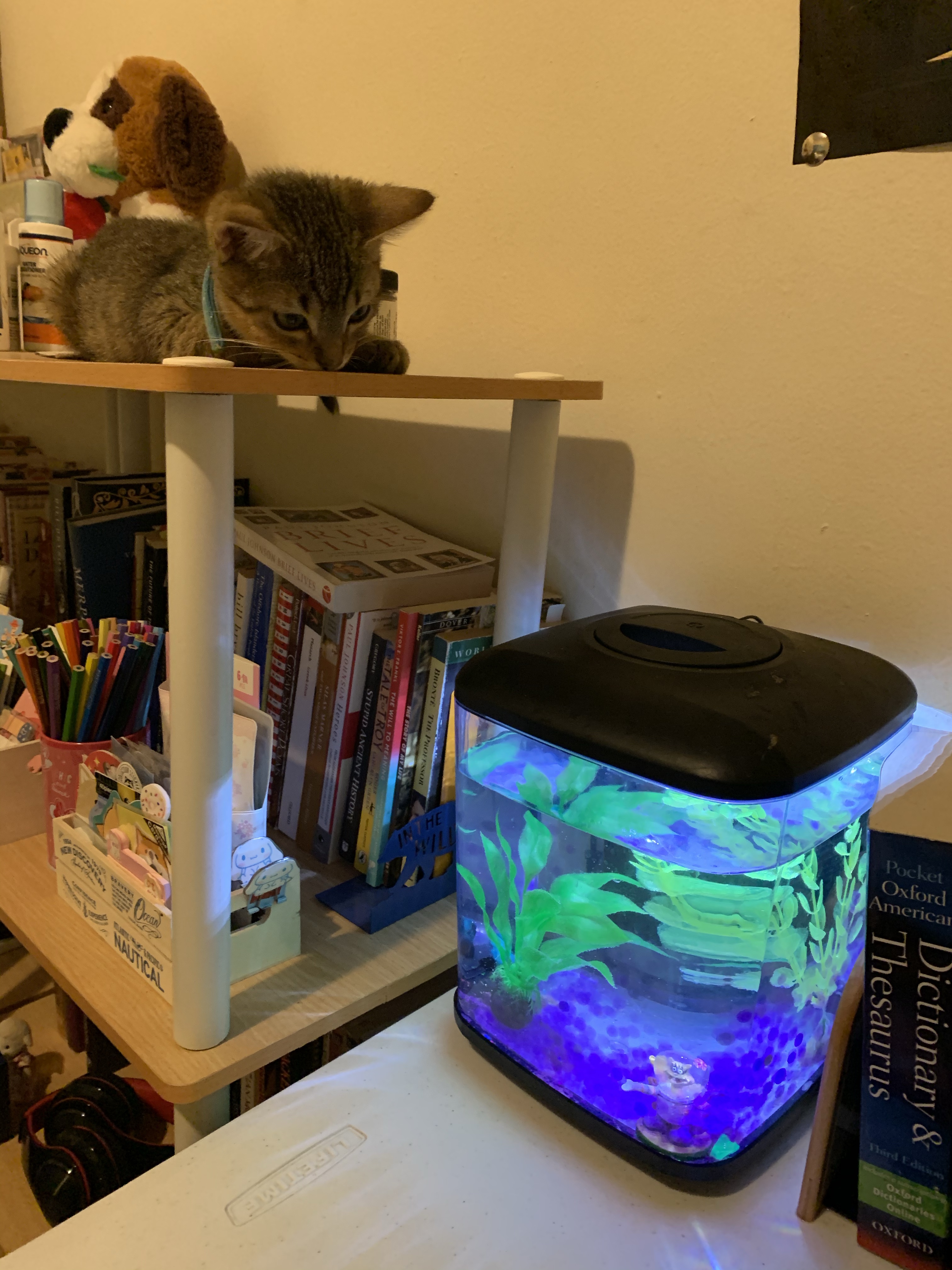
    I observe how my 14-week old tabby Toro behaves from defecating in the litterbox to drinking from the water fountain, playing with his toys, and to watching his new finned friend, Hope, a Betta fish. Although they do not have the faculty to produce physiologically-driven emotional effects as complex as humans, my observation has yielded that cats exhibit a feline version of a continuum from pleasantness to unpleasantness. For instance, when I discipline Toro for not behaving, he does about-face and hides under the bed or goes to a corner of the room, sitting there like a mini sphinx statue, sulking and avoiding my eyes. Then in about 10 minutes or so, he slowly (and stealthily) approaches where I am while still keeping his feline pride in a way he doesn’t want to ingratiate himself with my favor. When finally arriving at his destination of Me, he announces his arrival with the unmissable “Meow,” with his eyes pleading for my petting. Cats may not have the same kind of grudge that we humans secretly harbor as in William Blakes’ ‘Poison Tree.” Yet, they possess the tactile feelings at the primary level, which can be akin to those exhibited by infants. Also, I don’t think raising a single cat will prevent her from socialization or emotional well-being. Most cats do not like to be with other cats unless they are littermates from birth.

    My a posteriori opinion about a myriad of scientific theories and expert dos and dont’s about raising cats happy and healthy is an intelligent hypothesis of feline nature. It attempts to explain why they act the way they do so that we, as caretakers, should take care of them better and more effectively. From my personal experience thus far, it is really up to individuals’ discretion to respond to their cats (or other pets) because each animal has different characters with particular likes and dislikes. So I try not to read more than I need in terms of feline care. (i.g., Toro likes no cat tree, no chasing ball but likes to climb on chairs, shelves, and tables that humans use.) Cats are solitary and egoistic, but that is why they are so affectionate toward us.  As the Victorian British writer George Eliot said, “Animals are such agreeable friends, they ask no questions, pass no criticisms.” Therefore, I would treat my furry little friend as he is, rather than turn him into an obsequious, listless pet whose existence depends on the mercy of his master.


  • Pets are not of a fad but for life.

    I read the Guardian article “A dog is for life, not Just lockdown” by Donna Ferguson (September 13, 2020 issue) with intimately acquainted feeling shared by our understanding of pets as family members with care, not as luxurious commodities treated with whims and caprice. Her search for a Poochon puppy for her daughter reminds me of my own story of the recent adoption of a tabby kitten from a shelter.

    As I was going to move into a pet-friendly apartment, I was excited to bring a dog into my new home to share companionship. However, during my search for a canine company, I became aware of the ugly reality of “pet business” intent on swindling and ripping off naïve would-be pet owners. Ferguson’s experience of encountering sellers of puppies suspected of scamming or deceiving chimed the bell of my experience in which a dubious welsh corgi breeder insisted on “shipping out” a puppy to me in the convenient pretext of Covid-19 protocol. Even legitimate ones are not exempt from my continued disappointment: Shiba breeders in Southern California had their waiting lists closed. One pet shop owner on the phone revealed to me that since the outbreak of the Covid-19 and California state made it difficult to sell and buy a pet at a pet shop. Hence the supply and demand for pets have become disproportionately unbalanced, skyrocketing the price of dogs immensely. Worse, the procedure of adopting dogs from shelters makes it excessively challenging and disheartening for bona fide would-be owners disappointed with the requirements of a near-perfection environment for dogs.

    Maybe all the disappointments and disillusion of having a dog meant to lead me to the world of cats because now I have a 12-week old brown male tabby named “Toro,” a masculine form of Tora, meaning in a little tiger in Japanese. I brought him from Ventura Animal Services three weeks ago. He is a smart, capricious kitten charged with a sudden pop of energy to stalk and play with the toy rat and anything moving from the frills of my skirts to dangling straps of my iPhone cover. Watching Toro peacefully cuddle up on my laps or my desk when I read or write, I can’t agree more with Ferguson that our cat and dog are not for our pandemic solace but our wish to share our homes with the lovely creatures.