Tag: poems

  • ‘Poltergeists: Then and Now’. by Wayne Ridsdel – book review

    Poltergeists: Then and Now

    From Plato, who believed that the dead walked around a cemetery, Pliny the younger who told of his friend’s in Greece encountering a ghost of an old man in a chain, and Arthur Conan Doyle, who himself manifested as a revenant looking for his lost diary in his former early abode, there is no distinction between the learned and the general in acknowledging the existence of spirits. There are more things on earth than are explained in theories. Poltergeist: Then and Now by Wayne Ridsdell revisits the places where the noisy spirits were/are reputedly manifesting themselves and lets the reader judge the veracity of the existence of the century-old poltergeist on his own.

    The book reads like an anthology for the history of poltergeist 101. The author has gleaned several famous poltergeist cases from the Cock Lane Poltergeist to Borley Rectory Haunting, The Enfield Poltergeist, and the Rosenheim Poltergeist. They are all too familiar to stimulate the reader searching for a new case of the subject, even if it may not be as sensational as the aforesaid famous cases. But in all fairness, the instances’ enumeration latently serves as suggestive DYI touchstones for discriminating the genuinely supernatural from the others, including mental illness, fraud, or overt imagination. Take, for example, the Cock Lane Poltergeist and the Mayfair Ghost, aka Berkeley Square ghost. Despite the shocking incidents recorded in the annals, the circumstantial evidence surrounding the cases arises from a jilted lover’s malice, the rage of failed expectation, and rambunctiousness of avarice, manifested in one big hoax of an invented poltergeist. Although the authors do not directly debate the cases’ truthfulness, the detailed accounts of the stories behind the issues bespeak the possibilities of stratagem.

    What lacks in the originality of strange poltergeist incidents makes up in the unveiling intelligence about historical and literary relations to the ghostly phenomena. For example, the haunted 50 Berkeley Square in London inspired Rudyard Kipling’s “Tomlinson,” a poetic version of the Book of Dead retold in his poetic vision is a gem to discover. From London, the reader travels to the ghastly Glamis Castle and finds himself in the secret chamber where the sinister force originates from, which no one but the first-born son at his twenty-one birthday can access to. The secret remains intact to this date in the Bowes-Lyons Family, the castle owner, who included Queen Elizabeth, the Queen Mother, and the unfortunate Nerissa and Katherine, who were locked up in an asylum for their prenatal imbecility till their death, eschewed by their loyal cousins. The reader’s thirst for the supernatural piquancy in the context of historical evidence is adequately quenched in such information.

    The reader keen on supernatural (not paranormal, psychic, or psychological) stories based on real events might find this book mediocre in contents that are a well-organized summation of case studies. Still, the book is a good primer for the world of poltergeist and its historical record that links the past to the present, which the noisy spirit knows no boundary of time and space. What happened before happens now and will happen tomorrow. I think this is what the author wants to ascertain in this book.


    View all my reviews

  • Roger Ebert’s Cinema Paradiso

    A critic, according to Abraham Lincoln, has a right to criticize, but has a heart to help. Being a critic requires erudition drown upon a wealth of reading combined with a natural sagacity grown from enriched humanity wielded into an alchemy of words. A good critic with a poet’s heart guides the public with a lantern lighting the artist’s labyrinth in his world and helps us see the unseen in the far corner of a maze with a wealth of knowledge, sans arrogance of intelligence as Roger Ebert.

    Unlike his other contemporary peers, Ebert was liberal in views, conservative in beliefs, and fair in judgments, the commendable attributes shared by Samuel Johnson, a 17 century English social/cultural critic, essayist, and dictionarian. He wrote a public in his mind and showed no peremptory atmosphere typically attributable to influential critics showing off their mastery of language not accessible to all due to their expensive private high education. Once Ebert trenchantly criticized a specific movie for its crude violence, abject dystopian portrayal of reality, and shuddering absence of humanity. The director of the film remonstrated with him in a public letter that Ebert’s criticism ignored the fact of life, which is akin to earthly circles of hell. Ebert replied to the director that if that was how he looked at the world, then it should not be forced upon the audience’s minds, exerting his raw and one-dimensional creation of reality upon the sentiments and judgments of the audience. Ebert believed that the world was worth living because there’s hope among the odds to sparkle before our eyes with joy flitting at our sides. This belief should be an essence of Arts that gives off beauty, pleasing to our senses that grows into reason. That is the purpose of arts, to which film belongs.

    For this reason and my kindred perspectives on films in general, I miss Roger Ebert, although his writings are perennial. He didn’t grandstand with politically charged views on movies. He believed ‘Art is for Art’s Sake’ because films and books and paintings are not to be used as propagandas for a specific party ideology but to be appreciated for the minds’ food. W.H Auden said of his duty as a poet in society was to defend the use of language. I think Roger Ebert as a film critic in society was to defend the use of film as art to give life a shape.

  • thereby hangs a tale

    Life’s meaning is not from distant, lofty examples of public recognition of personal achievements. It can be found in everyday life; however, it may seem trifle or prosaic. For me, I see my mom in her old, invalid self whose back is arched like a bow and her left knee immobile and think she has reached the stage of the Old Woman as presented by Shakespeare’s poetic view of human life composed of Seven Stages of Man. Gone are the days of parental tyranny built on tirades, a rant of frustration, ire of a disappointed expectation, and a delusion of estrangement. Without the queen’s mighty power, she is now approaching the age of oblivion with one foot in the threshold of the last stage of a play called life.

    I have recently read Samuel Johnson’s essay on authoritarian parenting. Johnson must have written it out of his childhood experience or observation from others. Johnson follows the Aristotelian definition of parenting as being naturally tyrannical. He admonishes the dysfunctional effects on the child’s mind and body, subject to the illogical rants of inordinate temper and crude ignorance on the part of the parent. To be a good parent requires no occasion for the assistance of high education or social standing of recognition, but unconditional love and understanding springing from the parent’s heart. A good parent encourages, nourishes, and loves the child who will return the jewels of parentship at the Latter Stages of Man. Therefore, it is all over but the shouting that a parent whose intermittent bouts of uncontrolled tantrum inflict pain and exact terror on the child will live in malignity of the disaffected child who mistreats now the old, infirm parent without the presence of love and warmth. What a pity.

    Upon reading the essay, I saw the images of a young mom, mature mom, and old mom screened in a phantasmagorial display of the ancient time on a mind’s theater. From childhood until now, mom I have known is lonely, living in her castle where no one would bother or scare her fragile sensitivity that feels too much to confront life’s realities, including parenthood. How I will think of her as a parent is a foregone conclusion not with spite but with sympathy. With her left knee immovable by the osteoporosis combined with calcification in tibial arteries, I now only see an older woman on the verge of extreme pathos about the life she did not like much, among which her regret of not being an ideal mother. Although Johnson had a point in admonishing harsh parentship without love producing revengeful quid pro quo consequences, I cannot turn my shoulders away from my mom, who has none but me to take care of her in this world. I remember Mother Teresa pleading to all of us that charity begins right at home. That’s what I feel when I see my mom asleep like a baby. And thereby hangs a tale.

  • Transatlantic review of my book from the UK

    One of my blog readers, “Dark Tales,” read my short story and gave shining 5.0 out of 5 stars in Amazon UK! Thank you so much! It’s such a great encouragement and supports out of the blue! I have quoted the delightful description of my book herein:

    “A dreamy, engrossing short story well worth the read
    Reviewed in the United Kingdom on 4 January 2021
    Thoroughly enjoyed this short story from an author with a unique and characterful style that lends her prose an almost musical quality. Fans of folklore and mythology, in particular, will enjoy the host of references from a writer with a clear passion for fables and a talent for weaving them into her work.”

  • Playing goddess fortuna

    Aristotle averred that man is a political animal by nature. Anyone uninterested in politics is either a divine being or a beast considering his contemporary volatile political situations in city-states due to the Peloponnesian War. He must have noticed that an unstable government naturally spawned the populace’s grunts, usually in matters of economic hardship and arbitrary measures of civil conduct. That was millenniums ago; you might say, at least not in the United States, some might say. Then why are the scenes of the disaffected ancient Athenians overlapping with those of the disappointed Americans now at the end of this Pandemic Year like an army of living ghosts in my mind’s eye?

    It all began with Covid-19 that showed politicians’ true colors, which are neither bright nor dark but only gray, grayer, and grayest. To add clarity to the grayness, the current tug-of-war in Capitol Hill regarding the Economic Impact Payment (“stimulus check”). The sudden news of the second stimulus check was a dim light of high hope for low heaven for most people whose livelihood depended on paychecks from work, social services, or other possible aid agencies. Then another beam of hope shone from the Congress that they would push for a higher amount of the stimulus check to be passed in the Senate. Woe betides anyone who believed in human kindness! The big wigs in the Senate thought that the increased amount of the check would be spent inordinately by people who would not need the monetary aid, such as the employed and others unqualified for whatever deemed unfit in the eyes of the moralists confusing coldness with principles.

    As the Pythagorean theorem does not formulate life, no one can expect the exact sum of need, subject to individual circumstances. As in other countries, our political leaders do not have the right to measure their political rhetorics with personal egos in the guise of moral rectitude. They should not dictate what people do with the government-issued pittance because that the first and foremost a sign of totalitarianism over individual freedom. Once the money is given, then it’s up to the donee how it is spent, come what may. Besides, the amount of stimulus check is not as generous as the senate majority thinks. It barely covers a month worth of food, transportation, and some utility bills in most households. But then, beggars can’t be choosers. People want it, and they want it now to get by. Does the Senate know about it? I doubt it.

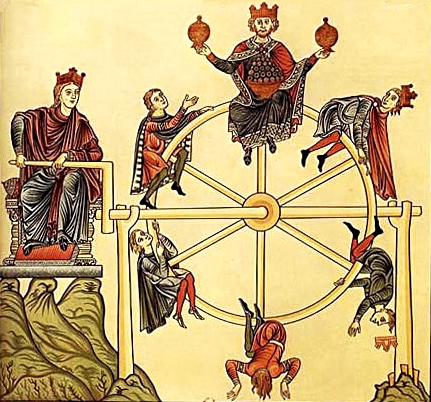
    Those who regard folks in need of financial aid as the annoying mendicants mooching off others’ packets should know that the swift is not to victory, the strong not to wealth, but time and chance befall to all. The government should not play the role of the goddess of fortune blindfolded spinning the wheel of fortune, missing the wheel’s lucky compass to those in need of it.