Tag: poetess

  • Sunday Letter – 2

    Sunday, September 6th, 2026

    Hi Freddo,

    It’s September, and fall will arrive soon. In fact, the cooler temperatures are already its harbingers, and I am all for it. How’s the weather in Rome? And how are your projects coming along? Last time I heard, you were working on a translation of a certain book from English into Italian. Are you still working on it? Can you tell me what the book is about?

    I want to show you my prose poem I wrote yesterday. It’s one of my recent experiments with story-like poems. I write poems that read like prose. The best thing about prose poems is that there is no complication of characters with existential dilemmas and metaphysical questions about who they are—questions that not many people care about. But these days, too many poems and stories can read like ideological catalogs, social agendas, or personal traumas that are not easy to read and take to heart. While I get that shared traumatic experiences may help those who find themselves therein, that is not my cup of tea. I don’t want to write about my ethnicity or race in the context of living in America as an Asian immigrant woman. I don’t want to be labeled as an “ethnic” woman writer whose work is shelved outside of the so-called mainstream book sections in bookstores. That is why I admire someone such as Kazuo Ishiguro, who wrote The Remains of the Day. His background does not prescribe the consciousness, subject, or voice he is permitted to inhabit; you would not necessarily know that a Japanese-British man wrote it in posh British English. There are no boundaries of race, gender, or age in the language of the mind and heart. You can be whoever you want to be and show the world the way you are.

    Today’s letter reads like a rant from an anxious woman irritated by a boisterous party of popular or best-selling writers. So be it. I do not want to be restrained in the realm of written words where I can be myself. I do not like being boxed in by what people expect me to be and write, because that is not who I am. You would find it a bit hard to relate to my literary zeal to write the truth about myself because you would not feel the pressure of ink in your own color, but that is okay. I do not expect you to understand my stance. However, I would be incredibly happy to see you on my side when people scoff at my poems and prose.

    Dreaming of a dusk on the Aventino Hill looking over Rome with you,

    Stefania
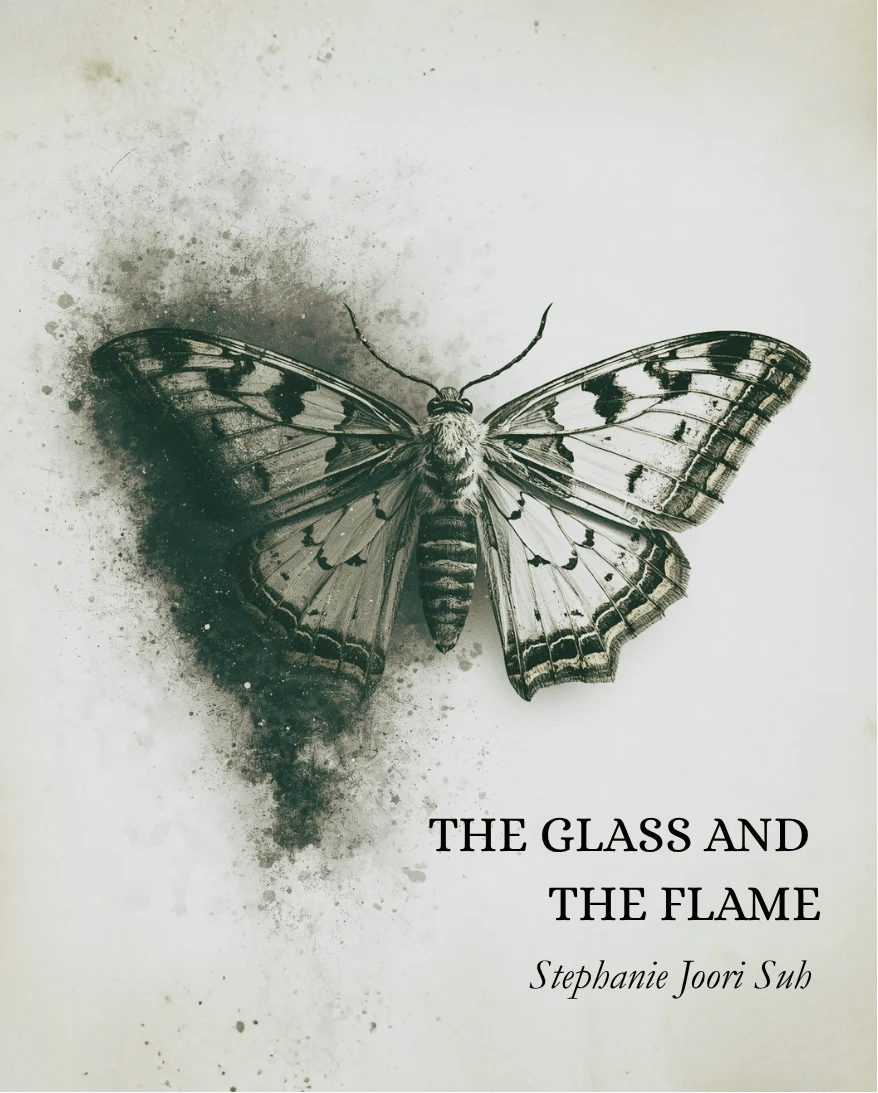
  • So This Is It: The Glass and the Flame

    My First book ever selected and published by an independent press. I knew that one day I would have my own book published. It is not arrogance disguised as confidence. Writing has always been part of who I am.

    The Glass and the Flame is a fugue of the heart, woven from multiple strands of longing and sorrow into a polyphony of eros and psyche. I have learned that you can write the felt without being met.

    The axiom that “you are who you are” is not necessarily true in my writing. Rather, I am what I write.

    In terms of Orwell’s reasons for writing, I write from aesthetic enthusiasm and sheer egoism. Neither political purpose nor historical impulse belongs to my work.

    If you dare, walk with me in the garden where Eros freely roams with Psyche.

    Listen to what I sing.

    The Glass and the Flame now lives in the world.
    You can find it here: https://dulcetshop.myshopify.com/products/suh

    Sincerely,

    Stefania

  • At the Harbour, Before I Know the Story

    Reading Day — Thursday, August 13th, 2026

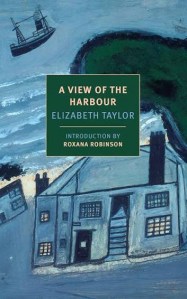
    On Elizabeth Taylor’s A View of the Harbour

    My first time in the harbour: at the dock, standing in the sea breeze. English air. An unfamiliar coast, oddly familiar. But this is not a book about the cozy English sea town in a postcard.

    I have read only the first few pages of the book, and it has already given me its weather and atmosphere. I feel the harbour holding the secrets of the townspeople. I feel the sea carrying the flotsam and jetsam of life quietly and bringing them into the harbour—an always moving inside a never-arrival.

    The characters I have met so far are ordinary in the sense that none of them has that fierce individualism, existential malady, or anything that instantly piques the senses. But people may find pornography in Jane Eyre: the tension, the ache, the desire. They are not spoken but felt. People keep them in the mind, as if giving a voice to the forbidden would desecrate Jane Eyre.

    I think that is what the book wants us to see: what may seem ordinary on the surface, like a calm sea, hides a storm spiraling into a pillar of fury, discordance, and disorientation. I have not yet come to know the characters, except for Prudence, whose two Siamese cats love pushing their small heads against her legs. It is the cats that draw my attention to her, but she seems to have a story to tell as a beautiful young girl who does not act like a beautiful teenage girl.

    Prudence is Prudence: Quaker in name, puritanical in action. But she may turn out to be someone different from what I have seen as I progress through the pages, although I want her to remain as I see her now. I want her to be beautiful without being popular.

    That is life, isn’t it? Change is human, an uninvited grace. You want someone you like to remain the way you know them. That is what I want to know after I complete reading the book.

    The sea will remain the same. The harbour may not.

    — Stephanie Joori Suh