Tag: review

  • Dogs and Psychospirituality

    RE: 9/3/2018 The Los Angeles Times article of “Convicts and canines get a new leash in life”

    No one is either excellently good or extremely evil. It’s this ambiguous nature that we must guard at all times lest we should give free reins to our defiant, recalcitrant horse in our soul which can prompt us to go beyond the pale of Reason and Judgment universal in human societies. Nevertheless, this does not mean that those who are sinned against the principles must be forever stigmatized by their wrongdoings in public and barred from turning over new leaves because by doing so, we not only estrange them from a sense of belonging to society but also oblige them to resort to their former errors. That is why every person deserves of a second chance without question to right the ship of the life with wise, practical, and altruistic supports from good folks.

    Janette Thomas, aged 53, strongly believes redemption of the souls of human and the lives of dogs from whatever predicaments they are put in either by will or against the will. Every human as well as every dog needs second chances. Out of her firm conviction in redeeming the lives of Nature comes in a form of 10-year-old organization named “Cell Dogs”. In fact, the program is for the benefit and behoof of both the inmates and the dogs. Throughout the year, the organization takes dogs from various shelters and brings them to correctional facilities where inmates put the dogs through 8-to-10-week training course. The course begets mutual munificence to both of the estranged spirits; inmate handlers gain new skills with confidence, patience, and responsibility that provision them with new career opportunities. Canine trainees go on to become companions to autistic children, veterans with post-traumatic disorders, and physically disabled individuals. In effect, the records show that there is a low rate of recidivism by inmates who participated in this program and that more than three hundreds dogs found their new homes upon completion of the program.

    This program is indeed all things to all people and our canine friends by giving both of them second chances to start their lives anew. The act of bonding between a human and a canine produces the very essence of trust, security and happiness in a psychospiritual way. An inmate who trained his canine partner attests to his noble ends of turning over a new leaf as corroborated by the following verse from the Gospel of Luke: “He who is faithful in a very little is also faithful in much.” For any possible criticism of cynics jeering at this beneficial and altruistic program and dismissive of bestowal of second chances to the neglected, it is perhaps high time that they should thumb through the bible and read the following Gospel of Matthew:

    “Then came Peter to him, and said, Lord, how oft shall my brother sin against me, and I forgive him? till seven times? Jesus saith unto him, I say not unto thee, Until seven times: but, Until seventy times seven.”
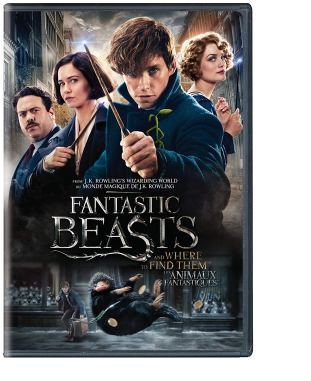
  • On “Fantastic Beasts and Where to Find Them”

    91NQY9pyARL._SL1500_J. K. Rowling bewitches us again with her famed literary magic wand. Her fabulous creation of fantastic beasts, a young brilliant wizard, white witches with hearts of gold, an ominous black magician, and an amiable non-magician all coming vividly alive on the screen, will please your senses and touch your heart in no time with delightful feats of magic and boundless imaginativeness without interventions of boredom or cheesiness.

    Set in the 1920s New York City, the film yields the verisimilitude to the story-line that anchors the world of imagination in reality where magic is smoothly laced with chores of everyday life without forcing you to accept the fictitious ludicrousness and cinematic anachronism. At the heart of the film lies the wonderful chemistry of the actors and actresses harmoniously manifested in their illustrious performance of the characters in their own roles, coupled with a dazzling technical employment of bewitching visual special effects.

    What’s more, this film will get to your heart, so after watching it, you do not want to leave the world of the fantastic beasts and remain with them even though you may be non-magicians. A feast to the eye, a festivity of the mind, this film will take you breathtakingly from the humdrum life to the world of magic, making you wonder if you could also find the fantastic beasts just as I did, for “There are more things in heaven and on earth than are dreamt of in your philosophy,” as Shakespeare believed too.

  • Who’s the Real Ripper of Whitechapel?

    My Review of  9/1/2018 BBC History Magazine article of “The Ripper of our Nightmare”

    It was a diabolical killing spree of the late 19th century that made the residents of Victorian capital shudder with visceral fear, and swivel their heads in incredulity. No one dared to venture the nightly labyrinthine streets of Whitechapel in London’s East End between August and November 1888 when five women were found dead and grotesquely mutilated with surgical precision in a ritualistic fashion. The unfortunate victims of this heinous crime were all prostitutes in the slums of the East End into the bargain. With the evasive killer still forever on the run in the wings of imaginations of many to this date, the stupendousness of the crime and its phantasmal committer still egg the inquisitive minds on coming up with zany theories as presented herein.

    The turpitude of the extraordinary epochal net murder case has gripped the minds of many with journalistic bent who often go to extremes in search of novelty in what is established now as its own field of study. They are called “Ripperologist,” the individuals, as it were, with mission to provide the most feasible cue on who-done-it. Naturally, these Ripperologists have often looked for their suspects in a group of outsiders in the time of the era who were regarded as misfits, introverts, loners with hints of eccentricity because they are easy to be gorged out of the melee without much strains of their cognitive faculties and mental exertions. Yet, out of a pile of idiosyncratic mugshots of their suspects come some profiles I think are worth the noting by sheer dint of ingenious entertainment .

    The Likely Suspects

    • Francis Thompson: A poet with radical religious views was posited as the killer on account of the fact that all of the crimes were committed on Catholic saints’ days. However, this theory is hamstrung by the fact that those days are the feast days of the particular martyrs in celebration of their sacrifice of their lives to the Faith.


    • A Mad Midwife: In 1939, a certain author named William Stewart posited that the killer was most likely a bloodthirsty deranged midwife. But then anterior to Mr. Stewart’s theory, Frederick Abberline, an inspector investigating the kills, had also suggested that it could also be a woman’s act of crime on account of a witness who had seen a female figure leaving one of the victims. Yet, the inspector later concluded that it’s more likely that the killer was a man dressed in a woman’s clothing as a way of quelling his potential victims.


    • Lewis Carroll: Of all other suspects, I think this eminent writer of Alice in Wonderland stands all alone in his prodigality of literary fame and notability. In 1996, an author named Richard Wallace suggested that the Ripper was, in fact, none other than this famous writer and Anglican deacon into the bargain on the ground of the anagrams in his novels which indicated the carnival of killings in 1888. Surely, positing Carroll as the Ripper may be regarded as ludicrous and beyond the pale and even defamatory. However, Wallace must have exerted himself on interpreting the anagrams to decode the messages that Carroll had left as an act of contrition for his mortal sin. Otherwise, he would not have published his theory, knowing that doing so without any factual grounds might have incriminated one of the most renowned English writers and his descendants.

    It is always interesting to see how people become fascinated with crimes and criminals of the most wicked and bestial beyond the pale. Maybe it’s because of the ignoble, recalcitrant horse that we have in the soul, always inclining to a raw, precarious stimuli to our senses, spurring the other noble, reasonable horse toward such pleasure. But why not so when our minds wonder when they spur our imaginations on devising brilliant theories such as the aforesaid? The theories will only remain possible in the domain of poetic justice and in the wings of our imaginations so long as no substantive facts surface out of the mists of the eerie past. And I defy any of the Ripperologists not to come up with any such ingenious theories to that end – all for the Truth of who-done-it in deference to the victims.

  • Vet’s long-lost wallet comes home

    RE: 8/26/2018 The Los Angeles Times article of “Long-lost wallet’s unlikely return”

    For the times passed by, you can just look away and say, “they are gone away” because they are woven by your memories that you have collected through life, willed or unwilled. They become part of you, making you of spirit, fire, and dew, an unique star in a constellation of the universe. Hence nothing could be more pleasingly surprising than discovering that part of you or your beloved kept in photographic images or words of the frozen time, evocative of distant nostalgia that beckons you to reminisce about them, by a happy stroke of serendipity paired with benevolence of a stranger. Something like that happened to Ms. Sharon Moore, a daughter of one former army corporal Robert McCusker.

    When Ms. Moore received a “Friend” request from a certain Frenchman named Patrick Caubet on her Facebook page, she deleted it. But then Mr. Caubet messaged her inquiring about the lost wallet of her father Mr. McCusker with the pictures and documents contained therein that he had accidentally found in a basement of his building presumably used as an America officers’ social club. This time she responded and verified that it was her father’s. Prior to Mr. Caubet’s contacting Ms. Moore, he had launched a campaign for locating the rightful owner of the wallet, which encompassed an aid of his English-speaking friend and inquiries to the Pentagon and the U.S. Embassy for help to no avail. Then the help came from a French military office in Paris that located the names of Mr. McCusker’s children in just days. Being a military man himself with a certain feeling of soldierly camaraderie, he was determined to succeed in his campaign, which ultimately came to fruition.

    Thanks to this benevolent efforts of one French military man, Ms. Moore and her brother living in Dover, New Hampshire, could reminisce about the lost pages of his Korean War veteran father who had died in 1983. The wallet had pictures of their mother and aunt, military documents, Massachusett Driver’s License, and a Social Security Card, all of which were still kept in a mint condition. Ms. Moore said that since she had her father’s Purple Heart, her brother would be in possession of the wallet that their father had lost on his way from the Korean War to home. In return of her gratitude, Ms. Moore sent Mr. Caubet a lovely basket full of sweet jars of maple syrup she had made herself, some of the candy her father had enjoyed, and a New England Patriots Jerky. Thus, the wallet became their treasure of their beloved father’s memories that they had not known – the terra incognita of their father’s memories before they came to the world -. It became the part of their memories that bound them together to the legacy of their lineage, reminding themselves of their father’s valorous war efforts as a soldier and of his tender loving memories of their mother as a man.

    Amid the news of endless politicking, peddling of social media that goes beyond reasonable measures, and a litany of social ills, this article stroke me as a bonanza of altruism that still thankfully kept alive in everyday life, a fresh breath of air that made me feel grateful and hopeful for our future in which so long as we don’t lose a thread of sanity and milk of human kindness, we can make constraints of our lives bearable with a lightheartedness. The kindness of the Frenchman speaks to us that no matter what language you speak, the feelings and emotions that you and I have can strike the chords of our humanness because the principles of reason and of sentiment are universal in all human creatures. The return of the lost wallet as the living record of Ms. Moore’s father attests to the truth.


  • Notes from a Small Island by Bill Bryson

    Notes from a Small IslandNotes from a Small Island by Bill Bryson

    My rating: 4 of 5 stars

    It has been twenty years since Bill Bryson, a writer originally hailing from a small town in Iowa, fell in love with Great Britain where people are delighted in small pleasures, call strangers “Love,” and orderly wait on lines in public without peevishness. So much so that he has even married one. Now it is high time that Bryson returns to the States along the lines of Odyssey, who returned home in Ithaca twenty years after the decade-long Trojan War and another decade of travails. In retrospection of the memories collected on his beloved adopted homeland, Bryson decides to take a valedictory jaunt around the island small but big enough to nurture him with a wealth of culture and a bounty of humanity. And he does it on public transportation and by hiking equipped with his trademark razor-sharp wits, intractably keen intelligence, and his usual touchy-feely way of observing people and things that either irk or pique him. All of it comes to fruition in this highly amusing and genially forthright travel memoir.

    You will be surprised to find out that the British think that the cereals are their invention. You will be overawed by the ubiquitous hedgegrows dated back to Anglo-Saxon times embroidering on the British landscape. Bryson will also take us for a ride in a London cab driven by an affably jocular cabbie who has to pass the Knowledge Test to memorize almost everywhere in the City of London. But London is not his demarcation of traveling. Bryson will further come along with you to Bournemouth, Exeter, Liverpool, which is his favorite city, Manchester, and even up north to Scotland all by train or coach, and by walking. With his truculent feistiness, irrepressible inquisitiveness, and scintillating sense of humor fabulously ingrained in his choice of the apropos words and jovial descriptions devoid of malice, Bryson is a cool cicerone, and your excursion will never be a bore.

    The book seems to be primarily aimed for British readers who might be curious about what a foreigner would think of them and their country as a whole. In that regard, Bryson’s words are predominately British in the sense that the words and expressions he uses in the narrative are familiar to the British. For example, “bank holidays,” “coach,” “lorry,” or “Sainsbury’s” are peculiar to the British ways of life. But this kind of cultural barrier is kindly tackled by Bryson by providing you with a glossary of the British terms at the end of the book.

    I have read other books by Bryson because of the same reason that induced me to select this book: his story-telling like narration is very appealing to me with his proverbial witticism smeared in every word he employs. He may appear to be a grumpy American man, but he has a heart to feel and see milk of human kindness in every quotidian thing or nondescript person by using the most appropriate words in wonderfully lucid expressions. There is a charm in his writing that will make you an admirer of his writings, and this book is no exception. It is Bryson’s long love letter to the small island he has fallen for head over heels with sincerity sealed with kisses and memories.

  • Fiddlesticks! – on Smartphones

    RE: 8/20/2018 edition of The Los Angeles Times on “Your smartphone is a teddy bear”

    We are swimming in a dazzling sea of modern technological conveniences, and we are drowning in it, whether we are against it or not. We have come a long way since the inventions of a talking telegraph (a telephone), an electronic toaster, a walkman, and all other apparatuses that have become inseparable from us, to arrive here in the 21st century where we seldom begin and finish our days without gazing into (or being glued into) monitors with our hands on keyboards. Surely, it’s a marvelous human cultural progress, a fantastic collective enterprise of the human minds for betterment. Hip, hip, Hooray for the magnum opuses.

    Apart from the marvels of our ingenious inventions that have made our lives a bit more bearable to fulfill our daily tasks, how about our non-technological aspects of life then? Do we really think that smartphones provision us with the bells and whistles of our equilibrium? At least two researchers at UC Irvine declare the resounding “Yes.” According to their recent study of psychological impacts of smartphones on our behavioral tendencies, the high-tech gizmo guarantees a feeling of security by saving us from social faux-pas in awkward situations. In fact, they “conclude” that smartphones function as efficacious stress relievers.

    John Hunter and Susan Pressman are the names of such revelation, and they want to debunk the infamy of a smartphone as a mindless gizmo used for killing away our otherwise productive moments. They conducted an experiment that involved 3 experimental groups of those who had (1) the phones but were not permitted to use them; (2) the phones and were permitted to use them; and (3) no phones among a control group of UC students. The results were all over but the shouting: that those with the phones displayed less degree of anxiousness and anxiety than those who had none when they were purposefully estranged from the control group. Conversely, those without the phones exhibited the highest level of the stress hormone alpha anylase in the saliva. Besides, those with the phone but were not allowed to use them showed the least level of the stress hormone. Consequently, the researchers raved about these results, rhapsodizing about the positive effects of a smartphone on our psyche.

    Neither a luddite nor an anachronist adhering to a primeval way of living, I am all for the munificent technological largess of our time with open arms because I also, inevitably, use it myself in my daily life. But the researchers’ triumphant conclusion of their experiment seems rather precarious and cursory in relation to the following speculations: (1) What were the age groups of their experimental groups? Did the researchers target a specific age group? (2) What were the education and social levels of the experimental groups?; (3) were there any variables in the experimental groups and the control group?; and (4) were the researchers by any chance funded by technologically-based companies?  These are the questions that my heart suspects more than my eye can see.

    The image of a devil’s advocate is what I am donning on this topic, but this article pushed me into the position on account of rather superficial results of the experiment devoid of the information on the aforesaid speculations. Also, looking at people wallowing themselves in small smartphones everywhere, especially on the subway and the bus, other than books or kindles, renders an apocalyptic image of the world nearing the doomsday or a scene of horror creatures that turn into zombies every night. “Magnas civitas, Magnas solitude,” Francis Bacon once lamented a great feeling of isolation in a great city. That says it, I should think so. Our sense of belonging and security is not bound by a possession of smartphones, nor does it replace your sweet teddy bears.