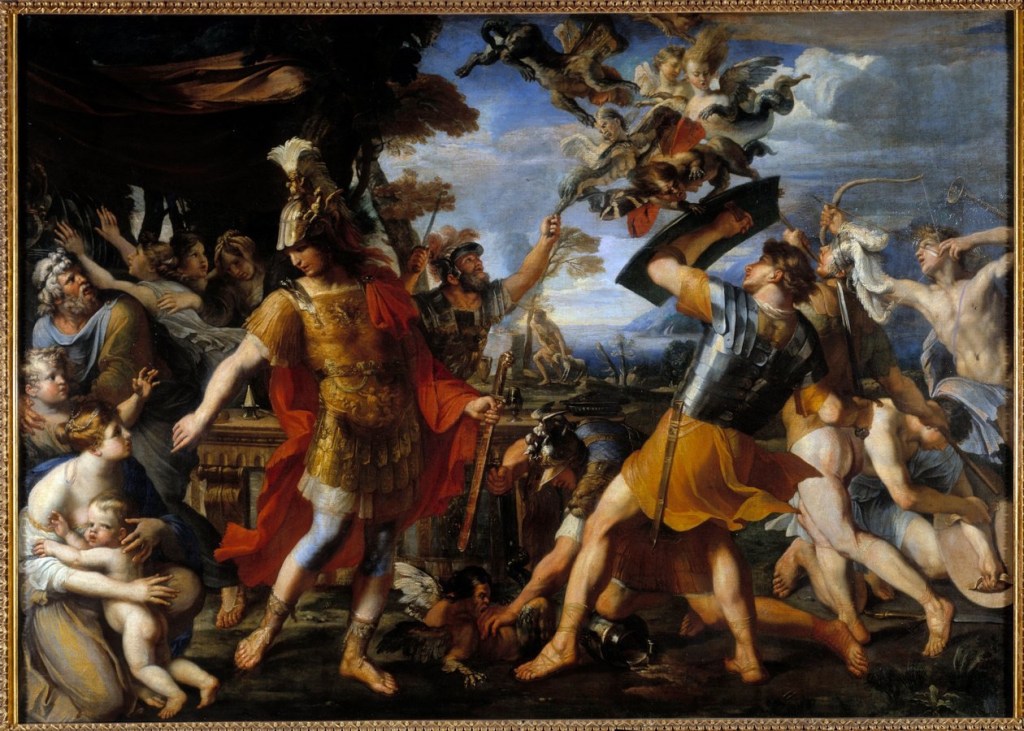
Aeneas is lost. He knows that he has a fate, but he doesn’t know what it is. He tries to find it in his own way, but circumstances do not allow him to do so. Everyone reminds him of his pietas: there are things far more important than life’s simple pleasures. He suffers, complains, misreads. Still, he sails.
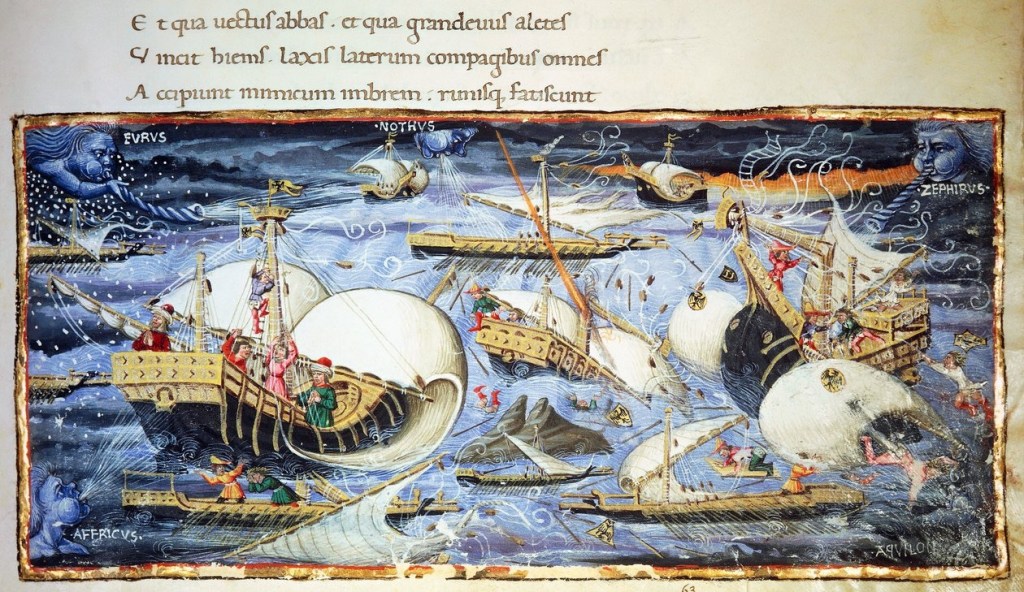
In Book III, we see Aeneas as a leader of his people, a refugee looking for a place where he is fated to land. At first, Aeneas and his father are unsure where their ancestors came from. Then, through the divine intervention that repeatedly directs Aeneas, they come to understand that Italy is the land of their ancestors. Therefore, Aeneas is returning to his ancestral land, which gives him a purpose for the voyage—his fatum, a reason to move away from his personal longings. In terms of logotherapy, such a purposeful voyage becomes a source of meaning in life, requiring him to sail through life’s vicissitudes between Scylla and Charybdis. So, ironically, such a purpose gives him the will to live and to confront the fate that has placed upon him the extraordinary burden of fulfilling pietas. Yet his voyage is never smooth, because fate makes it difficult for him to achieve his divine destiny; the suspense of the voyage makes his sacrifice, born from personal loss, all the more divine and glorious.
My sense of Aeneas’s agony—that the gods do not favor him, given the hardships he must endure for the greater good—has not changed. In fact, the more I read about him, the more I begin to feel like him. Aeneas holds firm, trying to make his voyage as meaningful as possible. Fata viam invenient. The Fates will find a way. He is a reluctant warrior. He is the embodiment of humanity—imperfect, vulnerable, and beautiful.




You must be logged in to post a comment.