Tag: travel

  • “On Falling In and Out of Love With Dead Artists as an Art Historian” by Allison Leigh, published in Literary Hub on November 5, 2026 (Saturday Reading)

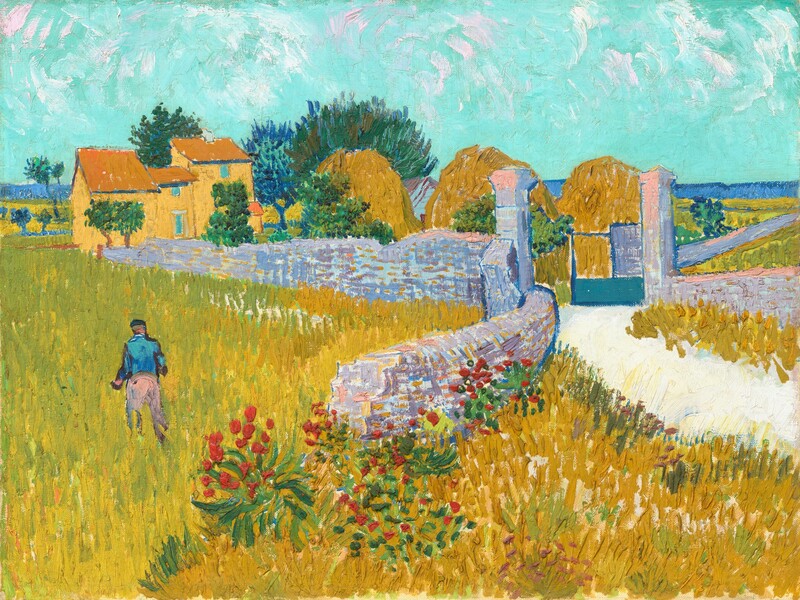
    FARMHOUSE IN PROVENCE
    Vincent van Gogh

    I have a confession to make. I am a ghost lover. A lover who finds love in language made flesh. Aeneas, Virgil, Sappho, Anne Brontë, and Clarice Lispector remain as I have read and thought of them, without the disappointment of their human foibles in life. My ghost love is not necessarily erotic; it is closer to the Elizabethan sense of the word “friend,” which could mean “lover.” Perhaps I don’t belong to the current period of time, or I am simply made that way. And I love it.

    “On Falling In and Out of Love With Dead Artists as an Art Historian” is an Augustinian confession by Allison Leigh, an art historian who fell in love with the artists despite their infamous misogynistic tendencies and appalling behavior towards women. Leigh described her growing attachment in the way a method actor becomes the character she plays. But to me, she seemed more like an investigative journalist covering an artistic scandal who then found herself infatuated with the artist. Or shall I call it erotic Stockholm syndrome?

    Honestly, it seems to me that Leigh’s love of the infamous misogynistic artists must have come from her attraction to men with similar tendencies, such as the handsome Russian Karl Briullov. I say this because I could never feel for an artist who enjoyed painting women being stabbed to death, as Eugène Delacroix did, or for Picasso, who slapped his girlfriends simply because they went out without his permission. And anyway, I never liked Picasso. While people rhapsodized about how creative and ingenious his art was, I found nothing to admire about him except his ability as a businessman.

    Artists, especially painters, express themselves in colors and shapes, unlike writers or poets. I do not feel as close to their minds, and honestly I couldn’t care less, except for Michelangelo, who endured Leonardo da Vinci’s contemptuous comparison of marble sculptors to bakers. I am not trying to stage a pugilistic contest between a painter and a writer or poet, but I see no reason to be attracted to abusive men, no matter how lonely they were when they tried to be artistic by forever sulking and being uncaring. In this regard, Vincent van Gogh was a romantic man before he was an artist, with his generosity, compassion, and warmth.

    You can’t put art before man. I can’t admire the art when I don’t admire the artist. How can you separate the creation from the creator? Artists need not be saints or model citizens. But art does not absolve an artist of vice. That is why my admiration for Charles Dickens has been tainted since I learned that he tried to send his sane wife away to an asylum.
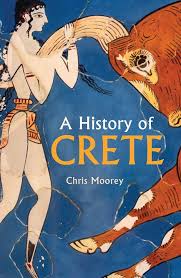
  • Thursday, October 1, 2026 – A History of Crete by Chris Moorey (Reading Note)

    Before the Greeks came, there were the Minoans, with their Linear A, saffron gatherers, bull-leaping boys and girls, and dolphins jumping out of the Aegean Sea. The Minotaur in the Labyrinth was a creature of the island, and the islanders were vibrantly colorful in clothing and facial expression, as seen in the frescoes. The Snake Goddess danced before the klepsydra of civilization’s history, as if her sinewy body uncoiled to birth her children, first in her beloved Crete.

    A History of Crete unfolds the mystery of its people like Ariadne guiding Theseus through the Labyrinth with a ball of thread, allowing us to see the face of the mystical Minotaur: half man and half bull. Rather than producing a stuffy, academically inclined history of Crete, the author organizes each chapter and section chronologically, with Herodotus-like backstories about who the Cretans were, what they did, and how they did it. Crete was Zeus’s home—literally, at least in myth. It was where he was born and where he fathered children in its royal line. Perhaps this home-ground advantage affected Cretan society, whether the god intended it or not.

    One of the most remarkable claims I encountered in the book is that, compared with Sparta, slaves in Crete were not treated as harshly as their counterparts in Sparta. Moreover, the Hermaea festival at Cydonia was a Cretan equivalent of a carnival, in which masters served their slaves and endured their ridicule in a role-reversing psychological drama. Such a custom might have helped the slaves release their emotions and thus prevented them from plotting to subvert the status quo.

    Although I enjoyed reading this book, it was somewhat different from what I had expected; I wanted to know more about the people, such as what they wore, what they ate, how they spoke, and what they did at home or at work. My growing interest somehow stalled as the centuries passed because I wanted to remain in ancient Crete. Call me biased, but I would have been more delighted to read anything about the ancient Minoans than about Crete under its successive conquerors. But then, that is the author’s call, not mine.

    This book is a commanding introduction to more detailed studies of Crete’s mysterious peoples and their lives on the island. And I know that this is what the author wanted it to be. He serves as something of a cicerone, helping readers discover what they did not know. It is also a good coffee-table read to pick up when Netflix has nothing interesting to offer, or simply to dispel boredom.

    No matter where you read this book, you will not close it without a piece of ancient treasure from Crete.

  • Sunday Letter – 1

    Sunday, August 23, 2026

    Hi Freddo,

    I thought the heat had gone and had prepared for autumn clothes, but it was a vain hope. It was a trick of nature. The heat persists, and it is very hot. So, I have been staying in the living room with my cats because it is the coolest room and has an air conditioner. I hear that the heat wave has hit Italy, too. I hope you are okay.

    I just finished reading Elizabeth Taylor’s A View of the Harbour. It is about an English coastal village called Newby, where people’s lives are interwoven through weakness, treachery, and misunderstanding, for which they pay with loss and departures. It is written in the third person—an omniscient point of view that sees all and knows all. The perspective often shifts to that of the elderly, bedridden Mrs. Bracey, who watches people as if she were watching a television soap opera. But she can’t see the stories behind the people she watches, and, in fact, she doesn’t care. I wonder if God would be like her. He sees us from above but doesn’t want to interfere with our affairs, even when we want him to, because God couldn’t care less about them unless they relate to his worship.

    It seems that the sea always provokes the passion smoldering beneath conventions and norms, stirring the urge to let the flame ride the crest of the waves, clash furiously against wave upon wave, and then become one with the deep blue. In this regard, the sea alters none of it: human instinct, desire, the primitive id. The harbour is the superego because we know what we should and shouldn’t do under the community’s safe-harbor rule. Seen from the sea, the harbour is prudence.

    These are the things that came to mind after reading the book. I suspect that this multiplicity of interpretations is what Taylor wanted. In the post–Second World War era, people had lost their collective values and systems of belief, leaving them in an existential dilemma. But the sea doesn’t know it. The harbour keeps all of it inside, like a graceful swan with her legs paddling frantically beneath the water to preserve her poise.

    What do you think? Do you want to read the whole book? If you do, you will feel as though you are watching a British television drama, with various characters who seem ordinary yet harbor extraordinary secrets, and stories that unfold without ostentatious romance, extravagant affairs, or dashing bravado. For me, it’s viewable because it is relatable.

    Are you coming to California after the heat has subsided on both sides of the ocean? Let me know, and we can plan something together, like Prudence and Geoffrey in the book.

    Regards,

    stefania

  • Prompt 11

    You’re going on a cross-country trip. Airplane, train, bus, car, or bike?

    Since I have already crossed the country from New Jersey to California by Greyhound bus, I will choose the Armtrak train on returning trip to New Jersey to enjoy the beautiful scenery across the country without being crammed into a flying compartment on air, not being able to move around for hours at a high price. And forget about driving a car, which may sound adventurous but is dangerous.

    Dangerous because what if I happen to encounter some vile group of people who have pledged allegiance to their secret creed of violent belief hell-bent on harming fellow human beings as in the movie “End of the Road,” in which the Queen Latifah character and his family on the road to Texas future from California past encounter series of manacing racist strangers. On the contrary, traveling in the company of people, although strangers, provides me some sense of security and relaxation, freed from maneuvering navigation and driving, which sometimes will prevent me from appreciating the pleasure of watching scenery listening to music, the moody sweets of my spirit.

    It was in the same manner that emigrants -not necessarily foreigners but those from the east coast- crossed the continent on oxen-driven wagons as accounted in Horace Greeley’s An Overland Journey from New York to San Francisco in the Summer of 1859 in which the renowned editor of the New York Tribune and once a president hopeful opposite Ulysses Grant. This book inspired me to come to California by bus, which I considered a modern-day equivalent of a wagon. What used to take a good 6 or 8 months for the easterners to arrive at West overland by wagon took me a week to reach California by bus. Notwithstanding any inconvenience in the road trip, it was my version of reenactment of the Oregon Trail in the spirit of frontierwoman to start anew in the Wild West.

  • Lonely Planet California by Lonely Planet

    Lonely Planet California (Travel Guide)Lonely Planet California by Lonely Planet

    My rating: 5 of 5 stars

    FORGET La La Land. Horace Greeley, founder and editor of the New-York Tribune, writer, and statesman whose ingenious wit melded with erudition and humanity endeared him to the American public urged the people on the East Coast, especially educated unmarried women in the east – to move to California for its primordial beauty: “Fly, scatter through the country, go to the Great West, anything rather than remain here.” Also, Henry David Thoreau described California as a pristine virgin land where a terrestrial River of Lethe flew the Lethe of the Pacific. The collective literary rhapsody comes to life in this world-famous travel book with its signature vivid colorful pictures and detailed, itemized information on the region in suavely offhand  convivial narrative style that entices you to love California at first sight.

    Abundant with its rustic and restive natural beauty unsurpassed by glamour of tinsel cities and its unique melding of multifarious cultures and rich history, California is a sun-kissed prize of the States. Take a hiking in Mt. Shasta, and this awe-inspiring mountain will stir your imagination and makes you believe it a home of a sky-spirit as the native tribe believe. If you are in mood for being in touch with the caress of the blue waves away from the meele and reality just for one day, you can elope with your beloved or with your own weary self to Big Sur. Nested against mysterious-looking redwood forests, the Big Sur Coast has all the elements for being a lovers’ paradise where you can be in your most unguarded self and be a Phoebe Cates or her lover in movie Paradise. On the next day, a visit to Santa Barbara will be quite a cultural feat by visiting the 18th century villas, shops, and churches built by Spanish conquistadors and priests. Or you and your fido friend can do some super-fun splashes or even venture surfing at Huntington Beach on weekends. And of course, there are Disneyland and Universal Studio if you want to meet your favorite characters from childhood and roll with what the best amusement parks can provide to your wildest dream at the best.

    This book is a comprehensive overview of the places and history of California in addition to rich remedial information on the rates of currency and estimated expenses expected of traveling the region if you come from a different country. Written by several veteran globe trotters and well-traveled Californians in compilation, reading the book will give you a sensation of listening to your friend’s travelogue or experiencing a jolly tour guide by an amiable cicerone all to yourself for free. Moreover, the book will equip your mind with knowledge of the region, so that when you actually go there, you will appreciate the beauty of the region like never before.

  • Italy Dreamin’

    Amalfi Coast photo book, Italy (60 photos) : Europe series 4Amalfi Coast photo book, Italy (60 photos) : Europe series 4 by Akira Okubo

    My rating: 5 of 5 stars


    When my spirit feels weary of existential dealings of daily life and whets a desire of carefree escapade from the reality I am anchored in, I tend to daydream about places I want to travel alone. John Steinbeck once admitted that oftentimes, reading magazines and books full of colorful pictures of foreign countries would be more satisfying than actually going there, save all the hustling and bustling, flotsam and jetsam related to traveling. Hence my choice was this beautiful pictorial read of Amalfi Coast in Italy on my Kindle Fire. The delightful pix of southern Italy will take you out of your humdrum life while looking at them; they bring vibrancy of the ambience of the region to your eyes and allure your heart to the romance with the beauty in a heartbeat, alone with yourself.  The rustic and restive sensuousness of the scenery as vividly illustrated in the pictures will dazzle the reader’s eye like a beautiful paramour secretly pleading with you not to leave.

    저장

    저장