Tag: western civilization

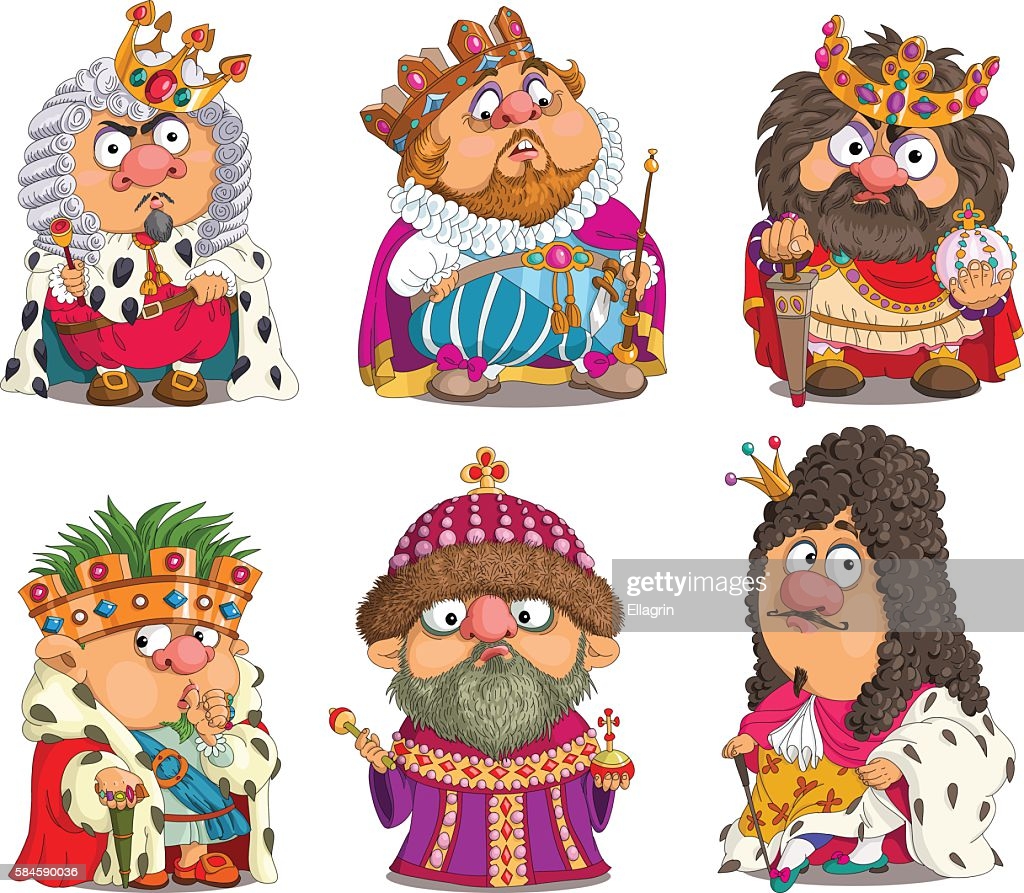
  • ‘Royalty’s Strangest Characters: Extraordinary But True Tales of 2000 years of mad monarchs and raving rulers’ by Geoff Tibballs

    Royalty’s Strangest Characters: Extraordinary But True Tales of 2000 years of mad monarchs and raving rulers by Geoff Tibballs

    My rating: 4 of 5 stars

    It always amazes me that some people can get away with their character flaws and faults under the aegis of social status and wealth, such as modern-day celebrities. The celebrities of the bygone days were kings and queens whose God-given authorities indemnified them from punishment. Their entitled strangeness swiveled my head in wonderment at the stupendousness of freakiness. Ironically, this anecdotal recounting of the cruel-to-be kind potentates reminds me of a tenet of Logotherapy, which explains that a healthy dose of suspense in life helps us escape boredom, resulting in excessive indulgence in perverted pleasure-seeking.

    This book tells of the infamous kings and queens and some aristocrats. They are famous and lesser-known, mainly from Russia and Eastern Europe, which gives a somber ambiance to the tales of weirds born with silver spoons in their mouths. The most memorably horrible and ignoble characters that left indelible marks on my consciousness are as follows:

    1. Elizabeth Bethany: This diabolically perverted Hungarian countess whose uncle was a king of Poland had a fixation on blood and pain in devotion to youth and beauty. Some say she was trained to be cruel, but I think it has to do with her connatural inclination for cruelty passed down in her lineage. Her aunt was a Satan-worshipping noblewoman who sought erotic pleasure in young girls, which Elizabeth also learned and practiced in her castle. She had her trusty three maids lured beautiful young girls, usually from poor families, under the pretext of training them for top-rated maids-in-waiting with generous munificence to the families. What happened next was all over but the shouting. Bethany tortured the girls in unthinkably cruel ways and bathed in their blood because she believed doing it would restore youth and beauty. She deserves no revisionist or appeals on the crime against the girls under her care. Nevertheless, modern-day feminists and the radical leftists are moved to portray her as a wrongfully accused Calvinist woman in a time when sectarian religious rivalry and antipathy were rampant. Her being charged by a Lutheran minister in the town does not ipso facto constitute Lutheran machination of destroying the Calvinist influence in the region. If the minister conspired to concoct any such plot, he would have targeted a man, not a woman whose social status was not entirely regarded as equally significant as a man even in high birth.

    2. Vlad the Lad, aka the Impaler, aka Dracula: The proverbial bloodsucker ruler had a penchant for impaling men, women, and children for leisure and punishment. The point was to give them slow deaths to heighten the apex of pain till the last breath. The legend of Count Dracula is loosely based on this Romanian ruler who might have inspired an idea of shashlik, kebab. Or any skewed food. Thanks to the detailed accounts of how Vlad artistically mastered impaling, I swore off any such skewered food lest it should conjure up the vista of the impaled helpless.

    3. Frederick I of Prussia: A stout and short, the king’s obsession with men in great height was his actualization of ideation. He had the tallest men in all the regions of Europe, especially from the North, to establish the royal military version of a freak company called “The Potsdam Giants.” The recruits, or in many cases, abductees, were consisted of a former woodsman, laborers, and farmers, allured by abundant compensations promising dazzling delights of secured lives. Yet it was an empty promise, beguiling the simple-minded low-class foreigners, who were subjected to mistreatments and even punishments should they attempt to escape. The king’s pastime was to call upon the guards at any time anywhere, including in his chamber at night, and watch them in full uniform, admiring their impossibly imposing physique that he coveted but could never have. Thank God that his son Frederick the Great disbanded the freakish guards no sooner than had he succeeded his father upon his death.

    I wonder if these royal characters were due to in-breeding abnormalities, which were usually customary in European dynasties to preserve their noble royal lineage. It also testifies that keeping means in one’s life is a blessing because extreme wealth and poverty lead a soul astray due to listlessness and exasperation, resulting in amoral walking dead subsisting on the pain of the others. Robinson Crusoe’s sagacious father was right in saying that the best is the upper station of low life. Mel Brooks once uttered, “It’s good to be a king.” Unfortunately, it only applies to these afore-described weird and evil characters. A good king or queen doesn’t.


    View all my reviews
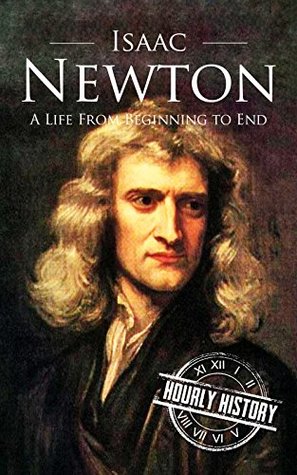
  • Isaac Newton as he was

    Isaac Newton: A Life From Beginning to End by Hourly History

    My rating: 4 of 5 stars


    I never particularly liked Newton despite his paramount discovery of the law of Universal Gravity from the fallen apple tree in his mother’s little garden. Maybe it was his somber, irate facial expression adorned with a long white wig. He was a reluctant spiritual godfather of physicists Albert Einstein, Stephen Hawking, Michio Kaku, whose theoretical findings are based on and upgraded from Newtonian laws of physics. However, being a keen observer of human characteristics, I am inclined to write the review about Newton’s personality traits, not a drab biological chronology and analyses of his laws of motion.

    Isaac Newton was never the kind of chap whom you could be jovial with. If you caught Newton in a cafeteria or a coffeehouse and asked for an autograph, he would first give you a look with an exasperated grimacing and either reluctantly succumb to your request if he was in a good mood or curtly said, “I am busy.” His gaucheness in social interactions might be due to a deficiency in maternal affection and care. Newton’s mother willingly separated from her young and tender son when she married her second husband after the death of Newton’s father, whose name was also Isaac Newton. Although I object to profiling any kind and any person because it leads to a grave miscarriage of justice in many cases, Newton’s character profile doesn’t read favorably in any of his writings. To illustrate, Newton used to be harsh on his family servants, whom he often mistreated with corporeal measures and hit his younger sister. Nevertheless, his genius purchased indemnity for all his character flaws and beautified them as individual eccentricities endemic to the intellectual elites.

    But the illustrated Godfather of Science was also a discreet practitioner of alchemy in search of the Philosopher’s Stone to turn it into gold. I wonder if all of the laws of motion Newton discovered were unexpected comeuppance of his private practice of alchemy. Not surprisingly, Newton kept his behind-the-façade business, and it was until the mid-18th century that the truth came to shine in his journal. Despite its occultist nature and nuance, Alchemy was also not too far from chemistry in studying metals according to three principles: Salt, Sulphur, and Mercury, based on four elements of air, earth, fire, and water. To this fascinating manipulation of heaven and earth, Aristotle added the 5th element of aether that was believed to fill the universe beyond the terrestrial sphere. The weightlessness due to the absence of gravity occurs in outer space full of invisible aether propagating light waves. As Newton’s principal muse to inspire his scientific musings, Aristotle is plausible to understand Newton’s fascination with alchemy. He treated it not as a magical practice but as a branch of chemistry that would have looked magical to the uninitiated.

    Grumpy as he was, Newton was nonetheless a remarkable individual who devoted life to the pursuit of truth, a satisfaction of reason, in the temple of science, believing there are more than material bodies in this world, which became a foundation of quantum physics. With his head filled with the mystery of numbers and frail body subsisted on the nourishment on the mind, Newton was a lifetime bachelor without chivalric anecdotes or sybaritic tell-tales. Instead, he spurred his energy on his studies, wallowing in the delicacy of quiet and uneventful solitude. Newton influenced multidisciplinary studies including philosophy, and music, with his laws of motion, especially making the word “inertia” so democratically popular with the public that British pop band Blur made it a title song in their first Leisure album. You don’t have to like Newton to appreciate his contribution to the consilience of science and humanities. But it wouldn’t hurt you to learn what makes him enshrined in the Parthenon of civilization of humankind, even though he wasn’t a nice person to chat with.


    View all my reviews

  • Democratizing Delicacies

    The delicacy of life that sprinkles flavors to our otherwise mundane routine of everyday life is not a prerogative of the rich. American Catholic saint Dorothy Day once gave a diamond ring donated by a wealthy woman to a poor demented old lady and riposted to a chiding onlooker thus: “Do you suppose that God created diamonds only for the rich?” In this light of democratizing luxuries, Chef Marie-Antoine Careme championed the world of haute cuisine available to all walks of life and shared his knowledge and experience of Haute culinary arts for the use and enjoyment of the public.

    Born into a poverty-stricken peasant family in 1784, Crame was abandoned at ten by his father, who told him to make use of his cleverness for his future. Before long, Careme found an apprenticeship to a famous patisserie. That was the beginning of his long, epoch-making legacy of master patisserie. With an innate intelligence and passion for culinary art, he opened his patisserie within a couple of years. His ingenuity for culinary art and a happy chance led him to a top diplomat’s chef to cook diplomatic banquets, for which he became the most sought-after chef in Paris. The success catapulted him to opening a famous patisserie at 19 on the rue de la Paix, baking the wedding cake for Napoleon and Marie-Louise of Austria. If Napoleon conjures up an image of a scrumptiously layered piece of Napoleon, Careme is smiling in a constellation of artists in heaven. Careme’s popularity endowed him with a celebrity figure in post-revolution, industrial age Europe where the luminary la dolce vita aristocrats commandeered was beginning to shine on those on the low rungs of social ladders. Careme might have been an ambitious entrepreneur to mark his name all over Europe with the crowning glory of lucrative success, but no one else but he tried to share the taste with the crowd indiscriminating class distinctions in his time.

    Careme’s success story has a familiar rags-to-riches repertoire with a combination of chance and apposite time surrounding his rise to success interacting with his talents. But why not the taste of the fame when his triumph of will over strife inspires achievable hopes and approachable aspirations? Careme personifies overcoming the mantra of existentialism that experience precedes essence. The fact that his own indigent family abandoned Careme didn’t dispirit his connatural intelligence nor did it plunge him into a Slough of Despondency. Or that didn’t really matter to Careme with his eyes, nose, and hands tuned for the world of delicacy that used to be exclusive for the rich and whose heart made it accessible to all. Indeed, the man was not a saint, nor do I intend to canonize him. But at least his actions and legacy deserve appreciation and admiration adorned with flowers and bonbons.

  • ‘The Histories’, by Herodotus – review

    The HistoriesThe Histories by Herodotus

    My rating: 5 of 5 stars


    We are all too familiar with the word ‘History.’ Still, we are seldom comprehensive of its original meaning, making its luster dull with the banality of academic subject we commonly associate. History in its Ionic Greek epistemological root means ‘research, investigation,’ a term nurtured by Father of History Herodotus. An inquisitive travel journalist, a tireless peripatetic lecturer, Herodotus is such an excellent raconteur of the ancient worlds that his engaging narratives of The Histories collapse millenniums between his writing and our reading them. The collective history of ancient people is woven into a wondrous tapestry of collective humankind in multiple strands.

    Herodotus uses parataxis, which combines individual storytelling narrative account with associative thinking. It emphasizes the interconnection between ordinary personal lives and the concatenation of events interwoven to humankind’s collective history. Using ‘a-b-a’ strategy with numerous subjects interlocking the thematic of human history, Herodotus does not dictate his historian’s perspective over readers’ views and encourage autonomous understanding of events and causalities universalities of human tendencies in a democratic way. Herodotus is an objective commentator of human dramas in war, cultural customs, artifices, and artificers broadcast in a textual documentary record still appealing to posterity.

    Despite the criticism from Plutarch and Thucydides, who regarded Herodotus as something of a lighthearted reporter of a modern-day travel magazine, Herodotus’s innovative narrative style became a model for latter-day European explorers struggling to describe discoveries of terra incognita to their peoples at home. Take Marco Polo of the Silk Roads, Christopher Columbus’s New World, Magellan’s Voyage to the Far East, etc. The European descendants found vivacious inspirations in entertaining storytelling from Herodotus’s Histories that would attract general readers flocking to the books about undreamed shores and unpathed lands populous with exotic natives in wonderment.

    Herodotus is a polycentric historian who moves among different peoples in different landscapes without prejudice but with an intelligent passion for learning about them. He believed that the foundation of historical events, such as wars and political insurgencies, as part of humankind’s natural order, say, what comes around goes around, injustice giving rise to retribution passing down from generation to generation. Herodotus lets readers reflect on the past and subject its values to an outside standard of rational evaluations. In short, reading The Histories is like viewing a colossal road map, full of routes, roads, thoroughfares, rest areas, mountains, seas, cities, towns, etc., linked together through Interstate Highways. Histories is a textual equivalent of an ancient road map showing who lived where and what and why they did in a mixture of literary favor and historical objectiveness. No wonder Herodotus Still Rocks.


    View all my reviews

  • ‘Socrates: A Man for Our Times’, by Paul Johnson -review

    Socrates: A Man for Our TimesSocrates: A Man for Our Times by Paul Johnson

    My rating: 5 of 5 stars

    In the constellation of philosophers in the intellectual firmament, there is none other than Socrates whose influence on humanity, ranging from academic disciplines to everyday cultural memes, strikes the chords with the contemporary minds at its simplest form. It is this essence of Socrates’s simple but profound moral philosophy that has been enshrined in the pantheon of Immortal Knowledge of our collective human civilization for thousands of years. In Socrates by Paul Johnson, this immortal philosopher is hard to resist and difficult to find fault with through the author’s cicerone guide to the streets of the ancient Athens, where Socrates is in his usual convivial mood to speak in public and welcomes the reader with his genuine warm smile to join his conversation.

    The stratagem of moral education in the form of philosophy is to tame the appetites (the senses or the id) and to guide spirits (emotions or the ego) in man to reach the highest level of humanness, which is the reason (the judgment or the superego). The process of this moral education is civilization, a standard by which barbarism is judged and separated from the educated mind, and Socrates thought it essential to implement it in all aspects of Athenian life because it was the surest avenue to happiness, meaning of human life. In fact, Socrates was the first philosopher to democratize the concept of philosophy from lofty abstraction of an academic plane to practical realism of a living guide. Johnson describes Socrates as something of a Prometheus, who translated the heavenly into the terrestrial in the sense that Socrates wanted to unlock the goodness of life for the benefit of mankind. For Socrates was the one who brought philosophy down from the wondering skies, domesticated it the huts and villas of people, and familiarized it with the ordinary life in examination of good and evil.

    Socrates seems even more likable thanks to Johnson’s historical accounts of Socrates’s personal traits and physiognomy: the corroboration comes from his young, handsome, controversial, but nonetheless valiant aristocratic friend Alciblades that (1) Socrates was a selfless comrade in battle, fearless in fighting, and artless in helping his battle buddies: (2) commendable hardiness enabled him to wear thin clothing despite the cold and the snow; (3) he disliked letting his emotions show on his face; (4) he regarded poverty as a shortcut to self-control; and that (5) he kept fit in the stadium and gymnasium and even danced because he believed that a healthy body was the greatest of blessings. It is also well known that Socrates was an ugly man with a flat, broad nose and beer belly, especially by the standards of Greece in the 5th century that highly valued regularity of features we would call Byronic today. And yet, Socrates, ever imperturbable and optimistic, was not depressed by his ugliness because to Socrates beauty was not inherent in itself but was by the virtue of its use. It was more of utilitarian nature for practical purpose. Socrates’s way of accepting himself as he is relates to logotheraphy, neuroplasticity, and habit of positive thinking, now bestriding the domain of self-help literature.

    I have always been a fan of Paul Johnson’s writing style in harmony with his wealth of erudition and fountain of humor, a fascinating combination that makes his reads so likable and interesting. And here again, he did it again: with his customary witty narrative packed full of lots of unknown anecdotes and personal tidbits on subjects he writes about, Johnson tells the reader about Socrates as precisely and candidly as possible based upon historical evidence to resurrect him in the textual theater of literature. His interpretations draw on his exceptional knowledge of the philosopher and the history of his time, but he wears his learning lightly and always writes with a general reader in mind. Hence, the figure of Socrates in his book is no longer seen as the ancient adumbral thinker but a jovial, avuncular teacher who really cares about the lives of his students of all walks of life in this highly entertaining book. This book presents a pleasant banquet of the mind and spirit hosted by the consummate storytelling narrative of Johnson in the honor of Socrates, the people’s philosopher.