Tag: wildlife

  • Nobody’s property

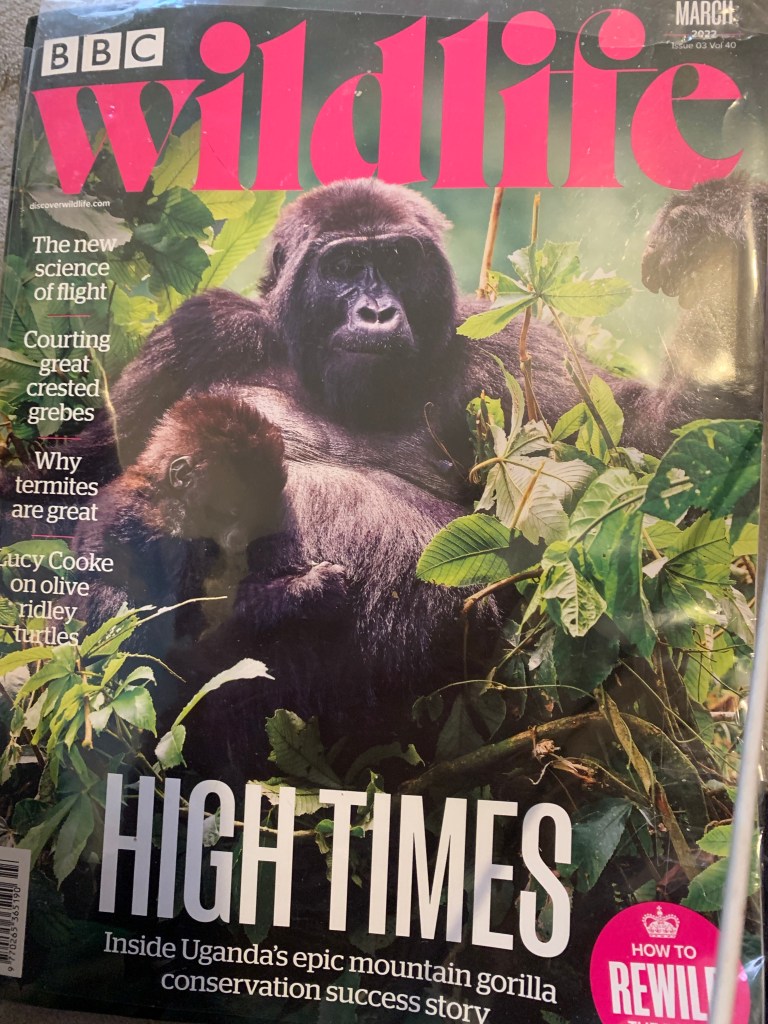
    My letter to the editor of BBC Wildlife was printed in this month’s issue. I wrote about my impression of an illegal primate trade in the UK featured on a previous issue, which reminded me of human slavery where lives were treated as expendable chattel.

    The story of TikTok tells the marmoset baby monkey who was rescued from a miserable life as a pet in a birdcage abandoned alone. It raised awareness of animal abuse in mental and physical forms as pets at the mercy of whims and caprice of the owners, who regard them as nothing more than live, expendable toys. TikTok was first bought for its exotic beauty and rarity in the illegal animal market, but the owner soon lost interest in the new pet, forsaking due care owed to him. When TikTok was finally rescued, he was in a state of fear and shock, so he was put together with another rescued older marmoset who cared for him like his son. Looking at the two photos, I thought of enslaved people who were sold off like commodities seen from Alex Haley’s heartrending saga of American black family “Roots.” In the story, humans are perceived and treated as nothing more than talking stock, and therefore the most basic unit of society in the form of family is unthinkable for slaves. Mothers and children are forcefully separated, let alone husbands and wives are for mating purposes only to multiply the population. Such comparison is not a stretch of the imagination but a sheer fact of association.

    We have come a long way to the progress of the mind regarding human rights and animal rights compared to the past, or we like to think it so. Perhaps it is our animal instinct to dominate what is perceived as controllable. That is why a force of civilization in the form of rules and law is essential to reining in our unruly and crude id in implementing reason as a way to prevent cruelty against lives. But such rationalism should always complement humanism lest we should act on the mechanism of the mind. And let us not forget that those who mistreat animals also do the same to their human brethren.

  • TikTok, the Orphaned Marmoset’s Story

    TikTok rescued from a miserable life courtesy of BBC.

    Whether it is my animal zodiac sign of Tiger that is believed to be highly incompatible with anyone with that of monkey, let me just clarify that monkeys are my least favorite animals. However, that doesn’t mean that I should not feel strongly about the article from a recent issue of BBC Wildlife about the U.K.’s primate trade accompanied by the title photo of the baby marmoset named TikTok. Call it milk of human kindness. I cannot just leave the pages closed and forget about it as a piece of memory. The images and words still haunt me, which prompts an enduring reckoning, resulting in writing this essay.

    The primate trade in the U.K. and here in the States evokes the human history of slavery. Under slavery, human lives were counted as chattel, and the families were continuously disintegrated because of volatile trade-offs. On the same token, keeping primates as pets seems no less different from colonialists or slave owners whose eyes were set upon the exotic physical attributes of the people they subordinated.

    The article has also taken me to my brief research into the U.S. primate trade with the following facts: in 2012, 19 states, including California, where I live, had outright bans on private monkey ownership. The primates are considered a threat to wildlife and public safety and health because their habitats and nature are not agreeable to our environment despite our conventional knowledge of primates as the closest to our species lost in the evolution tree. Come to think of it, the idea of “Planet of Apes” has a point in reversing the directions of gaze from humans to apes, and vice versa, showing us why the two species could not cohabitate by confining them in the opposite environments.

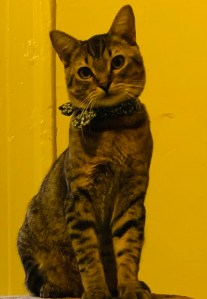
    We should not think of animals as live toys or ornaments that will satisfy our whimsical, capricious tastes. From pets to wildlife, animals are not our property but companions. I know it for sure when I feel a little heart of my cat Toro sleeping at my feet.

  • Dusk murmuration

    I hear the echoes of the screaming skies

    From a distance where a day goes to die

    As Helios’s chariot finishes a day’s race

    With a long scarlet tail of the glowing smokes

    Spreading into heavens and earth ablaze.

    The dusk murmuration has already left me

    In the lurch of neverending longing for love –

    The sweetness of spirit, the warmth of soul

    Carried on the wings of messengers of fate:

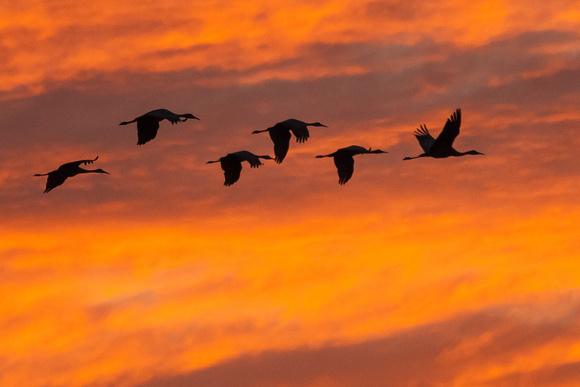
    Owls, Swifts, Blackbirds, Cranes, Starlings… –

    The lonely souls of the dead now together

    Fly the memories of tears and heartaches

    Into the world of nature that never fails them.

    So I wait for a murmuration all over again

    Standing on a top of the hill or on a high cliff

    To catch the screaming flock of ghosts in flight

    And wish that I could become one anon.  

  • the door of perceptions

    My cat sits in front of the door
    Like an ancient statue of Basset
    And looks at me with desire
    To break the spell of the moment.

    In the high night
    When the only light
    is iridescent emerald beams
    from his large green eyes,

    I open the door
    He believes to be
    The door of perceptions
    When there is only darkness.

    But he roams in eager eyes
    With a lamp of his cat’s eyes
    Searching for the wonder
    With neverending hopes.

    Alas, my elderly mother stops
    His hopeful night’s adventure!
    Still yearning, ever curious
    My cat tries it always tomorrows!

  • St Francis and the Wolf of Gubbio

    I have recently read an article about how the prosperous presence of wolves reduces the number of deer road-kills because their very predatory sense intimidates their prey, one of which is the deer. Fewer traffic collisions mean fewer government funds to spend on the aftermath of car and traffic accidents from animal crossings. So far, so good. But what about the resolution about protecting livestock from wolves, which has become an economic issue disturbing the farming community? So here are my small suggestions that I deem mutually benefitting people and wildlife by virtue of Charity, Faith, and Hope.

    The article continues to support recolonization that the reduction of traffic collisions resulted in economic gains, which outweighed the costs of livestock losses by nearby cattle ranchers whose livelihood feels threatened by their lupine marauders. I remember reading newspaper articles and tweets about ranchers in Washington that the multiplication of wolf population engendered their livelihood and that clamoring for lupine rights outright disregarded human rights to make a living. When I commiserate with the woes of the ranchers at the same time, and also hope best for the great grey wolves, my mind’s eyes see the visceral images of the Maasai in Tanzania and African lions living in co-habitation. The Maasai find the most cost-effective and nature-friendly way of guarding their livestock against the lions by establishing chain-like fencing supported by the thorny African myrrh trees. I am sure the American contemporary can take cues from the Maasai and adapt them to their environment.

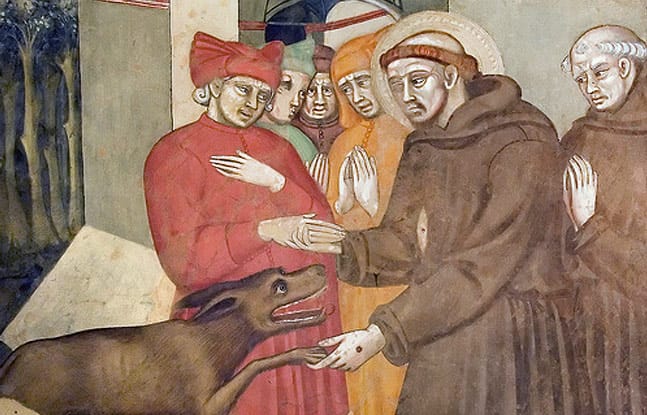
    I like wolves for their commendable fidelity to spouses and respectful sense of a society that emits from their majestic composure. I also admire the fortitude of cattle ranchers who are vigilant of the livestock their families subsist. Both beasts and men have reasons to live for and kill for. Yet, there should/must be a way of satisfying the needs without losses. Indeed, the medieval Italians knew exactly about the problem, but no more understanding and effectively than St. Francis of Assisi in meeting with the Wolf of Gubbio. Francis admonished him for his terror of fear over the people and made a pact with him publicly at a popular marketplace that if he ceased his predations, people would feed him from their very doors. The Wolf put his paw in Francis’ hand as a gesture of agreement, a sort of beastly hand-shaking. Can I make a wish for the miracle once again in my time? I believe I can, if they or we want to, for sometimes we as part body and part spirit can do beautiful things together.