Author: Stephanie Suh

  • ‘Fairies: The Myths, Legends, & Lore’ by Skye Alexander – review

    Fairies: The Myths, Legends, & Lore

    Fairies: The Myths, Legends, & Lore by Skye Alexander

    My rating: 5 of 5 stars


    They are the hidden children of Adam and Eve. They are the minions of Lucifer fallen from Heaven into this terrestrial world when the gate was being closed by the Archangels at the time of the great celestial rebellion. No wonder they are neither good nor evil, although their amorality is felt more akin to treachery and terror to our mortal sense and sensibility. The ancient Greeks called them nymphs, and we call them fairies, frolicking and romping, feasting and dancing deliriously in their own fanciful realm: the slice of seacoast between tides, the deepening foliage between field and forest, and the sloping land between plain and mountain – a parallel universe existent in in their liminal four-dimensional world. Skye Alexander’s Fairies: The Myths, Legends, and Lore tells us all of it with her wealth of knowledge and introspection of these mystical beings as though it were her literary enchantment.

    The ambiguous nature of fairies endows the mystical folk with wonder and terror, glamour and danger, all in the veil of mysterious invisibility that has protected them since the time immemorial. They can be friends or foes, depending upon their moods. In fact, fairies have a status which fuses the capricious powers of demoted deities with the erotic charge of modern celebrity in the kingdom of myth and folklore. So much so that they have consistently appeared in literature and movies, such as ‘The Fairy Queen’ by Edmund Spencer, ‘A midsummer night’s dream’ by William Shakespeare, ‘Rip Van Winkle’ by Washington Irving, and ‘Peter Pan’ by Walt Disney. Unlike educated Christianity of angels and demons, these mystical celebrities have lived among humans because they embody our certain human traits, which are the good and the bad, and wishes that we cherish secretly to live better life. Take the case of glamour spells that will make a plain-looking lady beautiful to impress the onlookers in a favorable light. Fairies are the embodiment of our what-ifs in a land of imagination where our strains of existential life can be forgotten, if not eradicated. This also relates to historian Keith Thomas’s analysis of myth and magic as a mental analgesic. That the concept itself can account for such misfortune explains any conspicuous discrepancy between merit and reward and thus helps to reconcile anyone who believes it to the environment in which he lives. That is, it helps a man to take decisions when other agencies fail him, not jeopardizing his self-esteem because it does not relate existential dilemma to his ascribed social ranks and conditions.

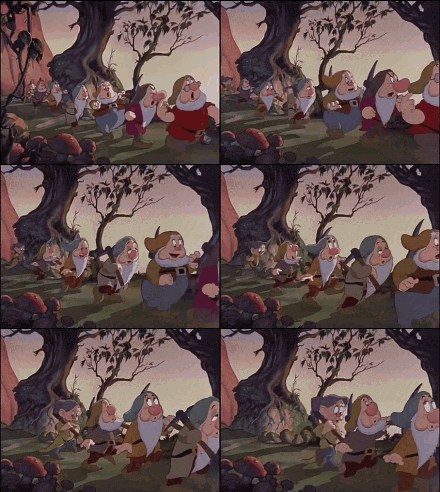
    Changelings, Sleeping Beauty, Pixies, Brownies, Elves, Dwarfs, Selkies, Leprechauns, and Tinker Bell come alive pages upon pages of this enchanted book in an expense of the author’s charmingly kind guide to Fairyland we all have once believed. Since writing is also a peculiar alchemy of literature, this book is a magical concoction of the author’s knowledge of fairies and her alluring invitation to the liminal netherworld that will make the read even more enjoyable and lovable. Believers or unbelievers, this book is a good primer for the world of folklore and myths that we feel losing or lost.


    View all my reviews
  • In defense of Arthur Fleck adv. People

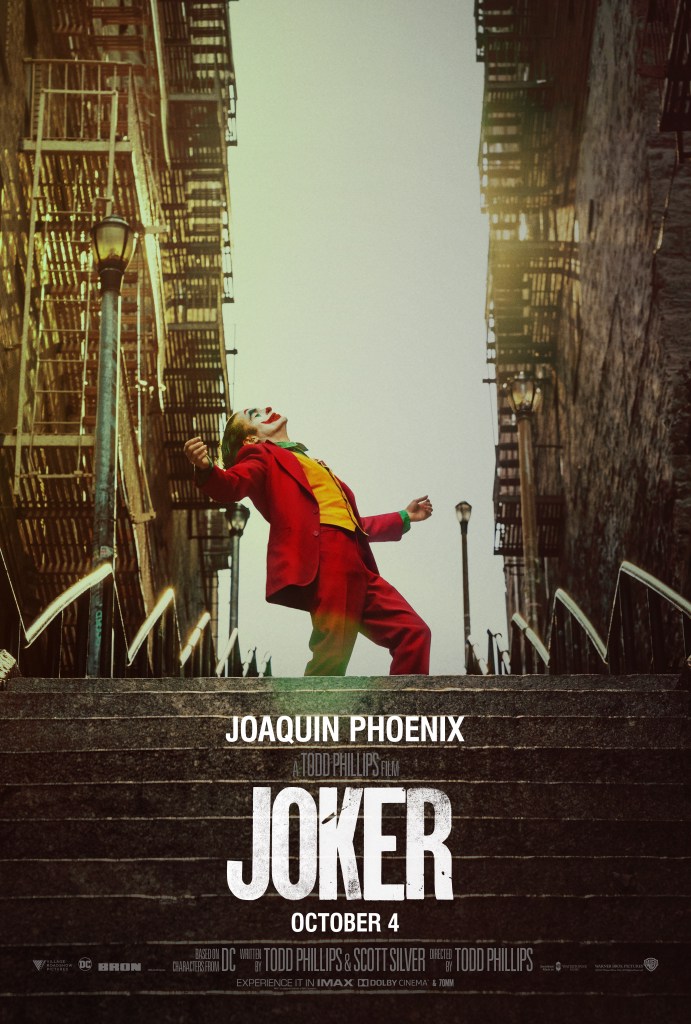
    The movie ‘Joker’ has taken the world by storm. The citizens of the four cardinal directions of a compass all seem to flock to the screening of the movie and feel gobsmacked or spellbound even by the stellar performance of actor Joachim Phoenix in his soul-wrenching portrayal of Arthur Fleck before his rebirth as Joker. The aftercome of the movie is a great legion of tweets rhapsodizing about the character and the man behind, which is deemed meritorious, justifiable, and agreeable. However, most of the tweets about this outstanding movie disappoints me because of their opinions that seem to miss the gist of the movie, the logotheraphical nuance of the movie itself that director Todd Phillips tries to express on the screen. Is this movie about a clinically crazy man, a so-called “psychopath” who wallows in killing-sprees? Why do people suddenly seem to care about a man whose existence is constantly slighted and ignored when they unconsciously or consciously do the same to the ilk of Arthur Fleck in everyday life? Will the movie change their attitudes toward those struggling to make their presence amid constant ridicule and estrangement?

    As I previously stated in my review of the movie, this is about a man whose efforts to preserve a sense of purpose in the world and a tenacious grip on recognition are ruthlessly vanquished. Everyone from all social strata, including those recognized as underprivileged underlings, not to mention the upper crust of society, indiscriminately ignores him. And the reason for such unanimously consented mistreatment of Arthur Fleck is not so much due to his low social class as due to his unlikeness that manifests itself, so visible that it makes onlookers regard him as a tacitly public domain of disdain and estrangement. He is a public whipping boy, a modern-day equivalent of a cunning man accused of witchcraft or dark magic, bestriding on the verge of madness as a result of concerted social alienation, which forces him to choose none other than being Joker. Hamlet’s existential question of “To be or not to be, that is the question.” seems too pat and gives a fillip to the loneliest, darkest, and saddest moment of Arthur Fleck when he feels pushed into the edge of his conscience. He surrenders himself to the death of his old, bullied, slighted self because it’s better that way than spends his life misunderstood and ignored to the end.

    Alas, poor Arthur Fleck! I know him, my dear reader. For however fictional the character may be, an Arthur Fleck is here in our ordinary landscape of everyday life. Workplaces, schools, supermarkets, buses, trains, streets, hospitals, and houses that you go and live are where you see him but not regard him, hear him but not listen to him, speak to him but not talk to him. If you protest, then you are probably feeling guilty of doing the same thing that they did to Arthur Fleck whom writers call a misfit, employers an incompetent, social workers/psychiatrists a basket case, and a detective a psychopath. That whom we call him by any other names will remain the same as neglectful and insignificant.

    In sum, those of you who rave about the movie in terms of the outburst of the suppressed shall regard it not as a liberal cause of partisan ideology or a demotic social manifesto but as a visual memoir of a very lonely man who cries inwardly every day for the wounds of his estranged soul. For what Arthur Fleck wanted was very human and basic as appreciated by American philosopher and psychologist William James many years ago: “The deepest principle in human nature is the craving to be appreciated.” Praising what is missing and ignored makes the remembrance dear. This is about one man’s struggle against finding a meaning of life, will to meaning, stumbling into a vertigo of his existential horrors of daily life. That is the message.

  • ‘Joker (2019)’, directed by Todd Phillips- review


    He’s nobody to whom people neither listen nor talk. He’s alone, alone, all alone on a vast gaping sea of people who continuously berate the person and the dream and the existence of himself ruthlessly. Francis Bacon’s phrase of ‘Magna Civitas Magna solitude’ bethinks the case of Arthur Fleck. The Joker is a man trying so hard but futilely to preserve a sense of purpose and a tenacious grip on social recognition at the bottom rung of social hierarchy. Even the goddess Fortuna seems to vent her usual aeonian capricious nature on the fate of this unfortunate man whose Wheel of Fortune is destined to be positioned to True North of Tragedy. If this sounds maudlin enough to frown over that “just a movie” façade, then think of what Charlie Chaplin elegantly sums up thus: “Life is a tragedy when seen in close-up, but a comedy in long-shot.” This is a life of Arthur Fleck, and it is here where he becomes Joker, the archenemy of Batman and the good citizens of Gotham City. It all begins here in ‘Joker,’ directed by Todd Phillips, who seems to have an eye for the absurdities and hypocrisies in our society.

    fragileArthur Fleck is said to be mentally insecure, seeing a social worker every week who only cares about her civic duty to talk but not listen so that he can get his usual five different psychotic medications. He is conditioned to be mad amidst the licensed incivilities of the people indiscriminately. He is a victim of severe bullying and taunting for his bouts of uncontrollable laughers and gawkish rail-thin appearance in which his piercing blue eyes are the only resilient torches of his soul that defy the injustice and humiliation by society. It is the society that slowly maddens Arthur with those multiple chemical prescriptions and willful neglect of his presence. Must I chant his litany of woes further?

    The clown mask of Arthur Fleck becomes the persona that gives him a new personality with a sense of empowerment by freeing him from conscience in the heat of passion. According to the ancient Greek thespian idea of drama, the tragic actors were heavily disguised with a religious purpose in honor of Dionysus, the god of ecstasy, for the actor was to give up his identity to let another (i.e., the mask character) speak and act through him. In this regard, Arthur’s clown face betokens his suppressed self, drenched in vindication against the tyranny of societal conformity that allows no place for anyone like him. It’s certainly a tragedy in the sense that the painted mask becomes paradoxically the real character that imbues people with fearful attention to him, not the entire bare face of the man. The Joker’s face is stark defiance to the hypocrisies and absurdities that slight his existence as a person. As Melpomene, the muse of tragedy is portrayed as wearing a mask of sadness and a buskin, Arthur Fleck wears a clown mask with a buskin hiding his tears from his heart. The uncontrollable bouts of his laughter are, in fact, a cry of his wretched soul.

    At the heart of this film lies a heartfelt performance of actor Joachim Phoenix, who is said to have lost about fifty-two pounds in response to the director’s request to portray the linchpin as a gaunt man to render his vulnerability and alienation from people. The dedication to the character that is never easy to play shines through Phoenix’s stellar performance on the screen. The deliverance of the characterization is so realistically touching that it pains my heart to follow through the life of Arthur Fleck, oozing out insurmountable pathos and that even his chain-smoking is deemed less toxic and vice-signaling. We see him alone in his apartment, on the bus, and on the street, even among the crowd. We see him slowly abandoning himself to a bottomless pit of despondency as the world around him, including his mother, shuns him from humanity. His crime is to be condemned, but is this not a man who is more sinned against than sinning? Joker is a kind of movie that makes you go thinking after the lights are off.

  • dances with birds

    A high blue sky

    It hangs a rainbow

    Its sight reigns

    Its colors glow.

    Lark is ascending…

    Sweet caroling is a melody

    Small wing stroke opens a new day

    Misty eyes see hope ascending…

  • Legally Haunted, Really.

    1 Laveta Pl., Nyack, NY 10960

    I enjoyed reading “10 Horrifying Haunts,” from November issue of “BBC History Revealed” on my Kindle, which inspired me to share with my fellow readers the story of a “legally” haunted house here in the U.S. Compared to the famed haunted castles, pubs, or inns with colorful histories in the U.K, it might be deemed rather commonplace, but it is the real McCoy in the supernatural phenomena devoid of hoaxes and mass media hysteria. It’s so spellbinding and real into the bargain that it’s worth the noting.

    It’s the house built circa 1890 that sits right on the Hudson River in Nyack, New York. It had been used as both a boarding house and a family residence before one woman by the name of Helen Ackley moved in with her family, who soon realized that the house was also inhibited by the restless poltergeists of the supposedly Revolutionary War era. The Ackley family and the spirits began their tacitly mutual ghostly cohabitation until late 1980s when a young Yuppie couple from the New York City bought the house, not being aware of the haunted history of the house because neither owner Helen Ackley nor her real estate broker revealed the haunting to buyer Jeffrey Stambovsky before and at the time of a sale of the house. The aftermath of purchasing the house was all over but the shouting; the new Stambovsky family could not cope with the daily disturbances of poltergeist activities and wanted to rescind the contract with the former owner, who failed to inform them of such historicity of the house. Hence, the matter was eventually brought to the Appellate Divisions of the Supreme Court of the State of New York, which rescinded the contract, ruling that a seller was duly to let a buyer aware of all the information about the house at sale resulting in a proverbial case law entitled “Stambovsky v. Ackley”, aka the “Ghostbuster Ruling”.

    Bizarre or preposterous even the situation might seem, it was certainly a paramount case of a haunted house that a court of law, the authority of Reason and Judgment, officially declared it to be. The house with a spooky and celebrated litigious history still stands still at the same place but with a series of new residents always giving way to the old spectral residents. The story of the famed haunted Nyack house sends the chill down my spine because it even persuaded a solemn court of law to accept the phantasmal existence in this otherwise lovely old house in the ordinary landscape of everyday life that could be in my town and your town. By the way, the house is currently on the market. The address is: 1 Laveta Pl, Nyack, NY 10960.