 Proust and the Squid: The Story and Science of the Reading Brain by Maryanne Wolf
My rating: 4 of 5 stars
The act of reading is a noble achievement of mankind that has been developed through a succession of ages; it is a collective biological, cultural, and spiritual progress because human beings were never born to read according to Maryanne Wolf in Proust and the Squid. Wolf guides the reader in the capacity of a learned cicerone to the ancient worlds of Sumer, Egypt, and Greece to show us the cultural history and the neurological development of reading through a succession of ages. Wolf’s provocative theory that we were never meant to be natural readers corresponds to Darwinian evolutionary theory in terms of its illuminating reconstruction of fundamental beliefs in the reading brain that we take for granted in this book about the magic and mechanism of reading.
As the title of the book indicates, Wolf’s analysis of the history and development of reading encompasses the two dimensions in the reading process. – biological/neuronal as symbolized by the squid with tentacles of each different function vis-a-vis cognitive/spiritual by Marcel Proust, a French visionary writer who sublimated a reading experience into a sovereign miracle of transcendence into a spiritual realm. These two complementary dimensions in reading process are a testament to evolutionary traits of our reading brain and our innate spiritual essence that is our prerogative. Wolf starts with explaining the neurons and the brain structure responsible for decoding letters and grasping their meanings in coherent linguistic arrangements. We come to understand the context of reading by dint of retinotopic organization of the eyes and capabilities of neural circuits until the received information reaches the frontal lobe, the control room of all our cognitive activities. What seems to happen in a blink of eye is the grand beginning of a wondrous phenomena of human psyche from the moment of perceiving letters to passing over to the world of the book itself and mind of the writer. In fact, this reading brain is an epigenetic manifestation, which explains a modification in our genes can upend the whole functions of neuroplasticity (the ability of the brain to rewire the connections between neurons) and neurogenesis (the ability of the brain to form a new neuron). The epigenetic revolution in the brain started with the invention of writing in the form of Sumerian cuneiform developed out of accounting necessities. Then came the Egyptian hieroglyphs, the Phoenician, Linear B Script of Crete, the Greek, and the modern day global lingua franca English, and what’s more fantastic is that the evolution still continues in our time.
The leitmotif of this book is to know the history and development of our reading brain, which are a remarkable collective human biological, cultural, and cognitive progress, and to preserve it against the prohibitive surge of the Internet on which we mindlessly surf the on-screen letters for instant information. Wolf’s concerns about the increasing dependency on the Internet for easy information relate to Socrates’ disagreement to the encouragement of reading at the time when the ancient Greece was in transition from the oral tradition into the written culture. It was not that Socrates was a Greek version of luddite against reading, but that he distrusted the effects of the written words to become internalized knowledge itself in the minds of readers because by reading, readers would absorb the letters without wholly understanding the gist of the meanings. The mutual misgivings of Wolf and Socrates are understandable, but I opine that they stem from the unfamiliarity of the new modes of learning at their incipient development. Just as Socrates were unfamiliar with the power of the written words as an unlocking key to the inner dialogue with the mind of the other, Wolf seems to magnify the manifest and latent dysfunctions of the Internet that can be used as an effective educational tool for spreading knowledge under sagacious guidance. For instance, nowadays volumes of classic literature can be retrieved from the Internet, let alone be downloaded as e-books on Kindle. Books are books in whatever form they are fashioned. A book is merited by its content, not by its design or form. Moreover, it’s up to the reader’s ability to merit the content of the book and to reach the most profound realm of spiritual experience, which Wolf seems to disregard.
Perhaps, Wolf should have considered the case of Maximilian Kolbe, the Polish Roman Catholic priest who volunteered to die instead of a married Polish man in a Nazi concentration camp; he was all for the advantages of modern technological inventions, such as films and radios, to use them for the benefits of mankind under wise discretion, instead of worrying about the presumed dysfunctions. All of the human inventions are neutral, and whether or not they are harmful to our human enterprise boils down to our own wisdom and guidance of how to use them to our advantage.
Written in a kindly tone of an altruistic scholar trying to explain the modus operandi of the reading brain and process as easily as possible, the book is not entirely intended for the uninitiated without basic knowledge of neurological terms and the brain structure in the background information on the ancient civilizations. Also, Wolf’s frequent dichotomy between the Chinese language and the English language in attempt to differentiate the neuronal and cognitive functions in the mechanism of the reading brain is less effectual than her assumed efficacy, for the syntaxes of the two languages are not totally apples and oranges. It could have been more apt for Wolf to pinpoint a language whose grammatical structure is wholly different – say, Japanese or Korean belonging to the Ural-Altaic lingual family that also includes Turkish, Finnish, and Hungarian – from English of the Indo-European lingual family.
Notwithstanding the dissension as aforesaid, the book is an informative guide to the history of how our brain has been geared to read through the ages, which speaks to the wondrous capabilities of the brain and the infinite varieties of the human mind that is always in progress of evolution. All in all, the book transforms an act of reading to an act of magicking in the panoply of the biological, cognitive and spiritual dimensions that creates the wonders of connecting us to the minds of the others in solitude, uniting us with the souls of the book, and thus making us a citizen of the world. For this reason, we become what we read, and we are never the same ones we were before reading the books of our choice. And Wolf wants to make sure we know of this secret magic of reading. That is the beauty of this book.

 “Hello, this is Sally Lamb of 62 Errant Terrace, Apt 1C, Ritterford. May I speak to someone in the accounting department?” Sally really did not want to call her apartment management company. She would avoid calling them at any cost because it was operated by the descendants of Scrooge; or so they seemed. Despite the fact that Sally had been a conscientious tenant who paid her monthly rent fees on time, the company never responded to her requests for any repair of out-of-order fixtures through no fault of her own. Their response was always uniformly scripted as thus: “Put it in writing.” She had acceded to the blimpish command as dutiful tenant to landlord, but she then gave up pleading for any mercy with the shylock company. You see, it took Sally’s guts to call the management and asked for the particularly supercilious woman dealing with her apartment matters.
 “Yes, what is the matter?” the usual callousness of the woman on the other line punctured her heart, but Sally tried to muster what vestige of courage left in her spirit. She was Lamb to the slaughter. “Yes, I just would like to know when you can pay me back for the overpayment of my apartment rent fees? Can I get it next week?” Upon decanting what had troubled her spirit and soul for long, Sally was still unsure if she had done the right thing because she had a premonition that the request would be thwarted. “No, it will not happen soon. You have to wait at least for 30 days to get your money back. It’s our company policy!” Then came silence on the other line. The minion of Scrooge hung up on Sally after shooting off her mouth. This made Sally godforsaken and dumbfounded. How could anyone possibly do such an inhumane thing? Sally wondered if that woman would still attend Sunday morning Mass tomorrow and receive the Communion for the sake of her family and her shamelessly haughty self.

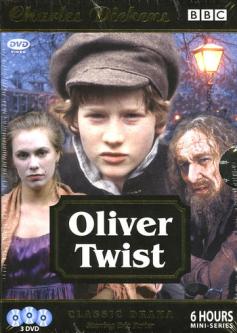 What distinguishes Charles Dickens from his contemporary writers is his belief in redemption, forgiveness, and benevolence of a human spirit triumphing over poverty, guilt, and death, the three cardinal ordeals of existential phenomena. For almost every character in his oeuvres, including villains, heroes/heroines, and even minor characters, has some shred of redeemable traits, if not goodness in the case of swindlers, pickpockets, or murderers. The question of morality in the Dickensian world is never proprietarily imposed upon the reader, and thereby leaves out harsh puritanical judgment of a character because humans are more sinned against than sinning. That’s the beauty of Dickensian reality set in the background of the stuffy Victorian reality. That’s why I can’t hate any of his characters, such as Bill Sikes, The Artful Dodger, and even Fagin from Oliver Twist in the parade of humanity.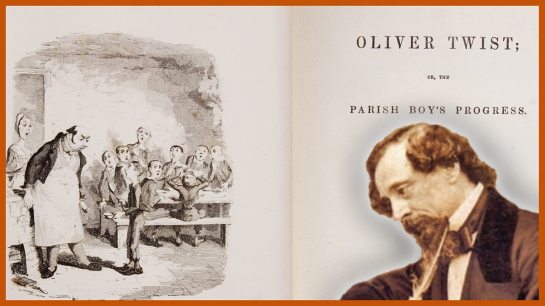


You must be logged in to post a comment.