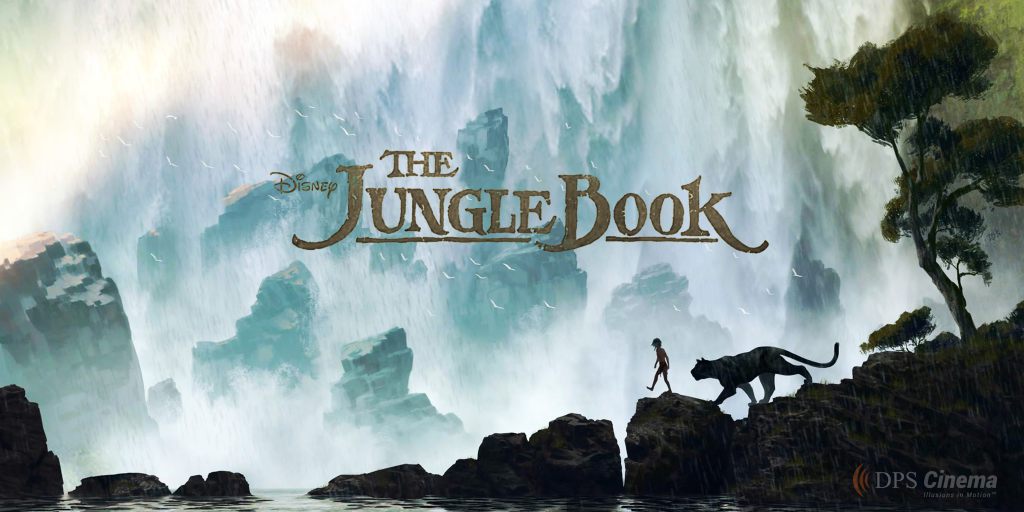
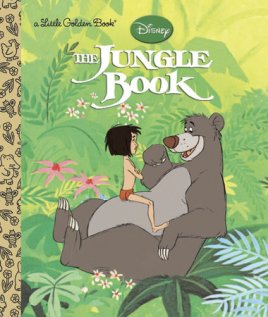
It was my first moment of spiritual Eureka mixed with awesomeness and bewilderment in terra incognita when I first read The Jungle Book by Rudyard Kipling. It was a wonderful pictorial book painted with the scenes from the Disney’s classic animated film version. To the child’s eye, it was like a fiesta of vivid colors and vivacious characters set in motion in the heart of jungle I had never seen. What’s more, the animals were so humanlike and likable into the bargain that while reading the book, I almost forgot that they were beasts speaking their own language, which I was able to understand through the presence of Mowgli, who looked a lot like Tarzan in diminutive stature and size wearing only a loincloth and long dark hair. Mowgli’s knack of communicating with his beastly friends who were always there for him even compelled me to try talking to my domestic puppy Nena at that time by using a quaint conflation of the human alphabets and the doggie phonetics to a moderate success.
Now I am pitchforked forward in 2018, but the childlike sensation of reading The Jungle Book still resonates strongly with me in defiance against the existential horrors of life that I deal with everyday. Amid the the detritus of daily chores and duties, I turned to Disney’s remake of The Jungle Book (2016), which I chose to watch on my Kindle Fire a few nights ago. At first blush, I had a certain indisposition to watch the highly-acclaimed film: although I am not altogether unreconstructed in terms of watching a film version of classic literature, I tend to shun adopted film versions of classic literature because of the gratuitous rendering of post modernist revisionist interpretations of the books they put on screen. But such misgiving was proved to be an unnecessary mental albatross.
The Jungle Book is a cinematic eye candy to children and adults with its stunning visual impacts and a spectacular scale of the story set in the background of a deep jungle somewhere in India populated with a cast of magnificent characters representing human characteristics in different forms. To classify this film as an anthropomorphic children’s film is to miss the essence of Kipling’s allegorical allusion of our human nature to multifarious animal forms: Sloth, Integrity, Conscience, Humor, Greed, and Vengeance, all of which is manifested in contact with the nature itself whose essence is of neutrality. It is in this background of nature, which is neither paradise nor hell where our human nature becomes conspicuous in its very essence, a primeval form. The manifestation of such human traits is a fortiori overcome by the figure of Mowgli, a feral child brought by a benevolent wolf family. Mowgli is an emblematic of resilience, independence, and courage against the gravitas of trepidation, death, and despondency.
 Given the authenticity of the storytelling aligned with the original context by Kipling and the performance of the characters studded with breathtaking scenes of nature so characteristic of Disney’s creative imaginativeness, it is a film worth of the spending your time on screen. It is a kind of film that stimulates your mind by inviting you to think about a meaning of our human life and existence and of our purpose of life. It will also thrill your heart with the adventures of Mowgli in the heart of the jungle and the stereoscopic views of the nature on screen created by a wonderful collaboration of our timeless human imaginations and 21st century feats of technological bona fides.

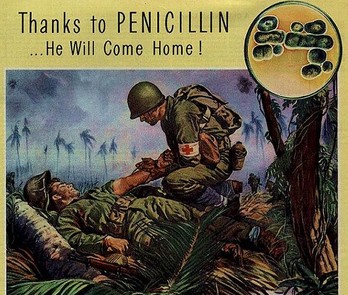
 Dr. Fleming’s finding of Penicillin was something of serendipity or more likely divine providence. Dr. Fleming, an erstwhile captain in the Royal Army Medical Corps during World War I, began researching antibacterial substances at St. Mary’s Hospital in London after witnessing so many deaths of soldiers due to rampant pervasiveness of infections even though the wounds were not seriously intractable. Then one day in August 1928, Dr. Fleming left his bacteria cultures stacked up on a bench before embarking on his family holiday. On his return in September, he found a mould growing in one of his sample cultures, destroying the bacteria. What’s more, the mould produced a substance that destroyed the bacteria responsible for scarlet fever, diphtheria, pneumonia, and meningitis. Dr. Fleming first named it “mould juices” in 1940. Then in 1940, two medical researchers from University of Oxford named Ernst Boris Chain and Howard Florey succeeded in mass-producing penicillin. The concerted collaboration of the three trailblazers of the first modern antibiotic awarded them with the Nobel Prize in Physiology in 1945. Indeed, the laborers were worthy of the rewards.
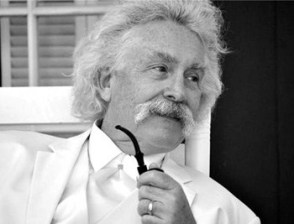 Let’s go back to the time when the great American humorist and writer Mark Twain (1835-1910) regularly featured in the nationwide newspapers with his trademark scintillating remarks on just about any subject that piqued him; but none other than reading articles about his own deaths twice in the New York Times would have perturbed his otherwise usual sanguine nature. After the first ignominy, the writer told the Times that it was an exaggeration. But after the second occasion, when the Times suggested that he had been the victim of a yachting accident, he thought he had it enough for such media farce and remonstrated to the Times with a public complaint that he would make a thorough investigation of the fallacious report. To think that a respectful newspaper such as The New York Times published such fake news of the famous writer of the time twice is something of a bitter pill to swallow, but it also shows that reputation isn’t necessarily likened to integrity or even probity.

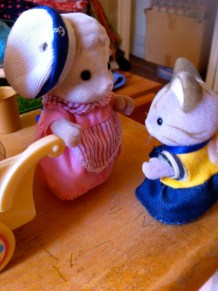 Anyone around Julie is flabbergasted by her sudden change of mood. None has seen her this lugubrious, saturnine, and crestfallen. This perturbs the heart of ever altruistic, magnanimous Sally, who is tending her aunt Mary’s Sweet Cart today and tomorrow during her brief jaunt to Lake Leda 10 miles away from Avonlea. Having known Julie for over ten years since she and her vagabond intellectual father Willie made their debut entrance to Avonlea. Although the father and the daughter have been living in a hut with limited bare necessities, they are rich in humanity, knowledge, and imagination. Knowing this eggs on Sally to ask Julie if all is okay with her and her father.”No, Sally. Actually, I am deeply worried about my father. Last Wednesday, he went to see his physician for his result of a blood test. And the doctor told my father that his kidneys were damaged and that he needed to take medications everyday for two months until the next appointment with the doctor. My father has been diagnosed with “Acute lobar nephronia”. That was why my father was often dizzy and stumbled on the ground as flat a pancake.”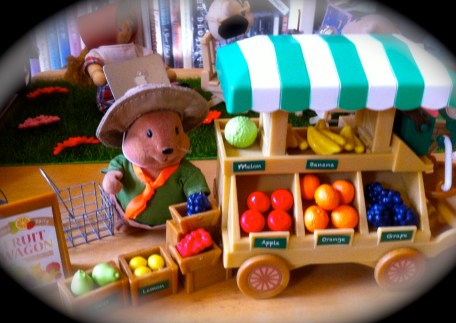


You must be logged in to post a comment.