Author: Stephanie Suh

  • Onward: How Starbucks Fought for Its Life without Losing Its Soul by Howard Schultz

    Onward: How Starbucks Fought for Its Life without Losing Its SoulOnward: How Starbucks Fought for Its Life without Losing Its Soul by Howard Schultz

    My rating: 5 of 5 stars

    It was eight years after the founder of Starbucks Howard Schultz had resigned from the position of CEO when the company that he had sown with the wind and reaped in whirlwind was at stake amid the catalytic financial crisis in 2008. The perilous state of Starbucks called for its creator’s return to take the helm of a distressed ship on the verge of sinking into the abyss of obscurity with all its hopeful expectations, respectful achievements, not to speak of all of its shipmates from the management down to the store employees. Schultz could not let all of it happen. He accepted the calling in the capacity of CEO to save the ship and continued sailing onward, which forms the basis of this book.

    What might be considered as an autobiography of a business tycoon at first blush of the title of the book will lead the reader to an interesting peek-a-boo of a successful enterprise that is armed to the teeth with its unique philosophy of practicality and idealism rooted in operational rigor and accountability striving for a healthy balance of profit and social conscience to provide customers with prime quality coffee proprietary to the brand. Schultz’s ambition to perfect the art of making fine espresso as the company’s distinguishing attitudinal value of coffee-making from the competitors is akin to that of craftsmanship of a seasoned artisan of a medieval guild. For example, in the afternoon of one Tuesday in February 2008, Schultz closed all of the US stores to improve the making of espresso because pouring espresso was something of an art, and therefore required a barista to attend to the quality of the beverage even though it meant the huge loss of profits for closing the stores just for one day. To Schultz, taking the ordinary to elevate it to an art also relates to a business principle of putting the sincerest endeavors to the foundation and innovation of the company; it is a right way to win as he believes, “Coffee can’t lie,” which is also reminiscent of what Theodore Roosevelt commented on his favorite coffee as being “good to the last drop.”

    In addition, Schultz offers many more interesting tidbits of the company without disclosing its trade secrets in an informative way: That Starbucks is company-owned and not franchised is something new to learn. Unlike William Rosenberg, the founder of Dunkin’ Donuts, who was a fervent believer of a franchise, Schultz adamantly opposes the idea of franchising Starbucks because ceding ownership of stores to individuals will most likely to mar the enterprising spirit of the company and loosen the cohesiveness of esprit de corps, let alone the principles of providing a customer with the best quality beverage in a social yet personal environment between one’s house and job. Besides, the company’s provision of full health care benefits to all employees, ranging from the corporate heads to part-time attendants in stores points to the veracity of Schultz fostering of social conscience in the course of making profits, withal.

    Onward is a testament to the steadfast adherence to cardinal principles of playing a good clean competition in a business world without becoming a tainted soul. That is, achieving success in promoting its entrepreneurial profit growth and humanistic idealism is all over but the shouting. It might make the reader wonder if Schultz has heard the adage of Ralph Waldo Emerson during his lecture to the audience in the height of the Lyceum Movement: “Knowledge, plus moral character, promotes business success.” All in all, Schultz’s touchy-feely narrative surprisingly devoid of self-aggrandizement or ostentatious display of his lifetime achievement, relates a tale of a man whose ambitious but admirable philosophy of entrepreneurship rigorously kept against the insurmountable odds with  the heart of a man responsible for his legion of employees and their families appertains to the reader in one way or another. Upon reading the book, the reader will feel a bit privy to his/her regular Starbucks on a next visit in a nice sort of way.

    저장

  • A Thousand Nights and a Day

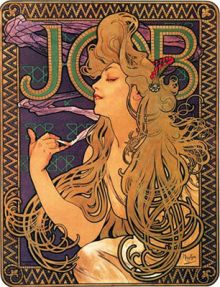
    24a4d19ce3bfe66d40cee566f9702d1f--lautrec-toulouse

    The night has a thousand lights,
    And the day only one;
    The light of radiance vanishes
    With the escaping sun.

    The mind has a thousand reasons,
    And the heart only one;
    The light of the soul dies
    When my love is gone.

    저장

  • Hostages to Franchisers; on No Poaching Clauses

    Re: July 10, 2018 article of “Fast-food hiring practices are probed” by Jeff Stein of The LA Times

    Working at a fast food store is often the only possible choice of laboring men and women out of steady, well-paying employment under unfavorable circumstances that push them to choose provisional jobs to eke out living, just as some of aristocratic and educated middle-class men used to work at the docks at a harbor in Victorian England. To add insult to the injury, be it ever known that any such worker who finds himself/herself in the labor limbo gives hostages to employment security in exchange of his/her sovereign principles, dreams, and wills.

    I was appalled by this article of modern-day version of indentured service term called “No-Poaching Clauses,” which restricts managers from hiring employees from another store in the chain. Such arbitrary employment practice oppresses not only the livelihood but also dignity of employees working at well-known fast food franchises in the U.S.

    By binding employees only to one store in the chain, an employer violates the quintessential elements of what makes us human: to quest for freedom of will, will to meaning, and meaning of life. Anyone striving for a new opportunity in life should do so to achieve individual values of life of which the acquisition of sustenance is indispensably requisite.

    Forget sectarian political tendencies and partisan ideologies that are nothing but airy doctrines and demagogic campaign leaflets that are not in touch with the reality. Although it is reassuring to learn that there are at least seemingly some conscientious politicians (thank God for exerting their statesmanship on the existential matters of citizens’ daily lives) who are investigating such proprietorial contractual clauses, there should be many more bipartisan politicians willing to join the force to voice out the injustice done by the employers of the franchises and stop the exploitation of their workers at once.

    Never forget  “The laborer is worthy of the reward.”

  • Cycle and Epicyle of Evolution

    cliff-fecamp

    Out of the void a chaos,
    Then, a flash;
    Out of the sea a silence,
    Then, a splash;
    Out of the heart an ecstasy,
    Then, a pain;
    Out of the dead, names dusted,
    Life again.

    저장

  • Poisoned Arrows

    2045d11aa3e3d3594351186d48d522ab

    What are the three arrows of Cupid’s?
    The first is inflamed with fire;
    Your heart yields to burning chaos
    And you call it DESIRE.

    His second is wet with poison,
    The name is JEALOUSY:
    It fills your eyes with green
    And burns all of you with hearsay.

    The third of his arrows golden of all,
    And it is named SADNESS:
    It pours gushing lead into your heart’s well,
    And leaves you in a sea of tears.

  • ‘Creators: From Chaucer and Durer to Picasso and Disney’, by Paul Johnson – review

    CreatorsCreators by Paul Johnson

    My rating: 5 of 5 stars

    Kurt Vonnegut encouraged anyone dabbling in the act of creativity: “To practice art, no matter how well or badly, is to make your soul grow. So do it.” Accordingly, the art of creation is a noble act of finding a meaning of life in which man searches for his freedom of will and will to meaning by translating the principles of sentiments and reason that are universal in humankind to various forms of creativity, ranging from writing and painting to music and dance, and to even gardening and making people laugh. Such act of making something out of nothing requires Herculean feats of courage and spirit that serves as a sovereign remedy for the existential ills of everyday life, however ordinary or exceptional. Paul Johnson’s Creators, which looks into the bright side of clever, talented individuals contrary to his previously published Intellectuals in which he recounted the hypocrisy of historically famous intellectuals, presents his thesis: that we all have creative traits in us is our divine prerogative of humanity; and to produce works of the arts involves prodigies of courage as well as talent that is sublimated to the aesthetic expression of intellect and beauty, such as to be in the cases of luminous artists whose oeuvres marked their standing in literature, painting, and music.

    Each chapter on each different artist draws up on the artist’s unyielding courage and creativity, which is a quintessential element of creative originality of outstanding quality. Johnson admits that an artist tends to be egotistical due to his extravagant faculty of creativity into which the artist pours out everything that is in him. An unusual degree of courage that is akin to physical courage of a soldier on the front is demanded of the artist unless he bows to the final enemy of creativity, such as age or increasing debility. Take Beethoven’s struggling against his deafness by using a toothbrush in his mouth to feel the tonality of each piano key while composing his immortal symphonies. Great impressionist painter Toulouse-Lautrec’s inherited disabilities and grotesque deformities as a result of hereditary inbreeding could not stop him from producing beautiful paintings with his triumphant willpower and courage until his death at the age of thirty-seven. Robert Louis Stevenson wrote incessantly despite his chronic illness due to his weak and unreliable lungs that eventually killed him in his early forties. Emily Dickinson wrote poetry without encouragement and public response, while David Hume failed to receive public recognition upon publishing Human Understanding. So did Anthony Trollope of The Macdermots of Bally Cloran that was neither reviewed nor sold of a single copy.

    The life of an artist is full of peculiar aspects and strange satisfaction often spurred on by personal weaknesses, such as in the cases of Jane Austen and George Eliot whose real name was Mary Ann Evans. Both of the women led lonely and lugubrious lives without experiencing felicities of love and adulation by men despite their brilliant spirits and ingenious minds. Surely beauty was in their time and still is only skin-deep, but their plainness left them in spinsterhood and forced themselves to spur loneliness on writing that was the solace in which they could fall in love with the men they desired. In effect, the reader will learn that it was the courage to express their spirits and feminine aspiration to be loved that fed on their creativity. Also, self-awareness, careful nursing, and restricting of the talents and subject matters, rather than audacious rampant criticism of society in general in undisciplined tempest of words, were added to the wings of their creative spirits.

    In light of the above, art is not genius but a work born of love and labor of its creator whose Herculean degree of courage and desire of expressing imaginations and intellect perform a painful but delightful feat of ingeniousness. Johnson avows that rational and professional methods of using skills, experiences, creative industriousness, and self-confidence are the ingredients to create the work of art. Also, he affirms the reader that there is no need to make a pact with the devil or perform a magical ceremony to invoke a creative spirit because inspiration comes from within. It is how to find it and reveal it like a hidden diamond in its most radiant luminescence. Written in common words devoid of academic locutions and once again his usual consummate narrative skills, this is Johnson’s another scintillating book to be acquainted with the human face of geniuses whose works have produced pleasure in our senses and minds.