Author: Stephanie Suh

  • The Avonlea Story – Fruits, Cakes, and Popcorn

    IMG_3913

    Uncle Willie has recently started his private enterprise of selling organic fruits from his at affordable prices in the town of Avonlea. A proud proprietor of his new business venture, Willie’s business prospect is full of auspicious anticipations of making high profit; his business motto is “Honesty makes best policy,” which is a quotation from Cervantes, the author of Don Quixote. Also, Uncle Willie has adopted a business principle of Sam Walton, the founder of “Walmart” who became a business tycoon by means of a mass sale at everyday low prices. But above all this business blueprint for his new enterprise of fruit wagon, Wille’s goodness of heart and simplicity of character, not to speak of his freshy organic fruits picked up from his farm in Green Gable, is the mainstay of his economic and social activities. With his innate diligence, the fruit wagon opens from 8:00 am to 7:00 PM, Mondays to Saturdays at 113 Kingsbridge Street nearby Elysian Park. The fruits are so fresh and scrumptious that you will always come back for more.

    IMG_3875

    The news that his fruits being tested like Ambrosia of Mount Olympus traveled fast all over the town. It’s the case of great power of the grape vine, especially when it is stirred up by women. Brenda Beaver took her daughter Betty last Monday to Uncle Willie’s fruit wagon to to see if she could be a regular customer of his establishment because Betty’s priority was to take utmost care of the health of her family. And Voila! It’s no surprise to see Betty enthralled by the pretty sight of her favorite fruits that looked all lovely to her beady eyes: Grapes, Bananas, Apples, Melons, and so forth… Betty wanted all, but in accordance with her family motto of “Moderation is a Virtue,” she ended up choosing a melon, a bundle of bananas, and an orange.  Her mother Brenda encountered Laura Collie, the co-owner of the “Bonjour Cake Shop” with her husband Paul Collie in the town, who also came to check the new wagon establishment. Of course, the housewives of Avonlea raved about the freshness and affordability of Uncle Willie’s organic fruits, which meant that his business success was a foregone conclusion.
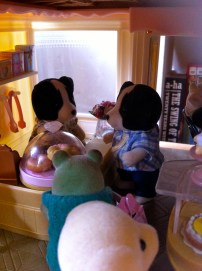
    IMG_3892The “Bonjour Cake Shop”is also a new enterprise in Avonlea; Operated by Paul and Laura Collie originally from Scotland, the cake shop has also been busy with newly acquainted customers in the town who come back to taste the homemade cakes for all occasions. The cakes are all made by Laura, who is no only a fine seamstress but also a lovely patissier who learned the art of cakes by working at the famed Patisserie Valerie in London in her maidenhood. In fact, making cakes and cookies has been Laura’s true passion because that’s what she really likes; however, she first had to deprecate her love of making cakes to support her family along with her husband Paul in a new land by working as a highly skilled seamstress. So when she and Paul (who was employed as an assistant manager at a supermarket) saved enough funds to start their own private business, they chose to open a cake shop without hesitation. Surely, Laura’s spirit was elevated when she and Paul signed the contract for the shop at a real estate agent’s office a month ago.
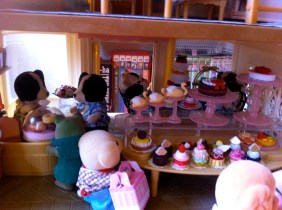
    IMG_3904Laura’s cakes are of supreme quality, second to none in comparison with the cakes of  Patisserie Valerie or Laduree or Pierre Herme because first of all, the cakes are all made fresh by Laura herself whose culinary skills are divine. Besides, she makes all her cakes with utmost care for authentic pleasure that can make her customers truly happy when they taste her cakes. In fact, it’s not merely a kind of eatery but a creation of art that provides people with genuine pleasure of life. Viktor E. Frankl, the founder of Logotherapy attests to this principle by telling us that a moment of pleasure, such as from listening to our favorite piece of music, doing things we enjoy, or appreciating a pleasurable sensation therefrom, can equal to a meaning of happiness, which is not at all a grand abstract idea. In like manner, Laura’s homemade cakes can be a good source of happiness to her customers regardless of who they are.


    Sally’s sundry wagon is also newly launched; it has popcorn cooked on premise according to her aunt Mary’s family recipes from England passed down from generations. Topped with butter and salt per request, Sally’s Popcorn cups are sold like hot cakes at $1.50 for each. In addition, she also sells candies and cold beverages, all less than $2.00 per each. She likes to talk with her customers when her spirits feels jovial and delightful. Judging her as a moody person is injustice to her true character, however. Sally is something of an artist who wants to dabble many things that she has in mind to express herself against self-doubt and obscurity. She’s well-read, compassionate, and creative. But she does not suffer the fool, the uncouth, and the uncivil gladly. After all, she is just very honest about her feelings and acts upon her principles, for how can one always smile and be pleasant like a robot? Hasn’t anybody heard that a psychopath can be extremely pleasant?

    So the new enterprises by enterprising spirits are well established now. They might look a bit anachronistic for the modern time and incongruent to today’s business trend as regards to the business principles set by the owners as aforesaid. But nothing is insignificant or less meaningful in the sense of size or value than any of their contemporary competitors in other places. However simplistic their business ventures may seem, what’s important is their dedication to their work and care for the people they serve, which has become a rarity in our today’s society.


    0682e26f337825b366e8e3e3e0003ad1--folk-disc-golf

    저장

    저장

  •  Anticipation

    800x600_spring-wallpaper-spring-desktop-wallpaper
    from google.com

    Flowers spring from the grounds,
    Spirits are high above in the sky.
    Spring will come in seconds,
    Winter will soon leave in gray.

    Monday, March 28th, 2011

  • A Wreath of Wrath

    o-FROLLO-570
    from google.com

    He was angry with his foe
    And his wrath grew strong
    Till his wrath became aglow
    With his vengeful wish all along.

    He went to an old witch on a hill
    As his wrath was growing stronger
    And asked her for a portent spell
    To fill his foe with wrath of an avenger.

    Thus was laid a wreathe of wrath
    On his foe by the paragon of wrath
    That consumed his everything to ashes
    Ere it bore a fruit in his foe with gashes.

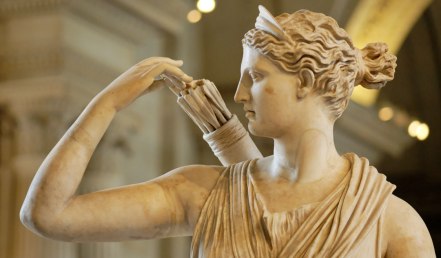
  • In the Ruins of the Temple of Artemis

    f
    Artemis, a Goddess of the Moon (from google)

    Over the relics of the marvels that belonged once
    To a sacred dwelling of a Lunar Goddess, a divine
    Maiden of Wild Beauty and Eternal Chastity destined
    To chase the wild from dawn till dusk with her golden
    Arrows missing nothing even from the top of Olympus,
    A High Moon spoke with full of pathos of her immortal story.

    “I once lived on the isle of Sicily with Athena and Persephone,
    Gathering flowers in the Elysian Fields during the days,
    Weaving our father Zeus’ robe at nights under the Moon and Stars
    Enjoying our muliebrity unscathed by the lust of amorous men
    Whose lascivious desire of women would forever be inordinate,
    Spurning Eros, Aphrodite, Songs of Love, and Bliss of Marriages.”

    “Then heard was no more; a mirth of our Persephone was heard
    Nowhere, for Hades, the god of Underworld, swiftly abducted her
    In his chariot and disappeared into the pit of the world down under,
    Where I and Athena could not penetrate even with our divine aide,
    Ending the blissful companionship of sisterhood for once for all – forever!
    And thus I left the isle in quest of eternal pursuit of wild beasts alone.”

    “Immune from the spells of Aphrodite and the arrows of Eros,
    I am an eternal maiden who is free from marital obligations
    So that I can chase down wild beasts with my ever loyal hunting
    Companions of a Bear, A Wolf, and a Stag behind me all day long
    And dispense my vengeful justice to all devoid of decency and civility,
    Like the ones who were cruel to my mother, my brother, and me!

    Such was the litany of woes told by a Goddess of the Moon
    On a night when a Full High Moon filled the night alone,
    Shining brightly alone above a lonely traveler listening to her
    Tale of her divine destiny of solitude chasing her objects of
    Pleasure for ever- forever continuing till her father Zeus takes
    Away her immortality in pity and makes her a star next to Orion.

    저장

  • The Library of Alexandria: The History and Legacy of the Ancient World’s Most Famous Library

    The Library of Alexandria: The History and Legacy of the Ancient World's Most Famous LibraryThe Library of Alexandria: The History and Legacy of the Ancient World’s Most Famous Library by Charles River Editors

    My rating: 5 of 5 stars

    The first time I visited the New York Public Library to write a research paper on female monasticism in the High Middle Age, I was amazed by the volumes of book it possessed and its classification system of organization staffed by knowledgeable librarians, as well as the colossal architectural building in the middle of Manhattan, New York. Perhaps it might have been this kind of awe and wonder kindled in the minds of ancient travelers or scholars who had seen or visited the Library of Alexandra, one of the largest and greatest of the ancient libraries in the history of civilization, which is said to exist from the 3rd century B.C. until the Roman conquest of Egypt in 30 B.C. The Library of Alexandra: The History and Legacy of the Ancient World’s Most Famous Library by Charles River Editors presents a comprehensive history of this great ancient library from its genesis to demise on the grounds of historical accounts and logical scientific reasoning thereof.

    For centuries when libraries were still few and far between as written knowledge had been exclusively held by the religious classes in private repositories, the image of this ancient library once existent in Alexandria had been evocative of mysterious ambience of esoteric mystical knowledge of the bygone eras and thus inspired imagination to create myths and legends. In fact, libraries as we know now and find ubiquitously are fairly a modern invention born of the cultural legacy of the Library of Alexandria as the apotheosis of two ancient literary and cultural traditions converging the Greek and the Egyptian.

    • The Egyptian Background
      When Alexander the Great and his army conquered the ancient Middle East in the 4th century – one of which was Egypt -, they were encountered with cultures with long literary traditions and traditions of literary documents in repositories called, “the House of Life” and “the House of Books” that housed thousands of documents written in papyrus-made scrolls for the Egyptian and clay tablets for the Mesopotamian under the administration of the priest class. Of these two houses of documents, it is the House of Life, the ancient Egyptian equivalent of a library, from which the majority of texts have survived until the present time. Consequently, Alexander and his army were overawed with the rich literary culture of their conquered land, took the ancient Egyptian concept of a library and transformed it from a religious to a secular institution by providing a bridge of knowledge from the most ancient concepts of libraries to the modern libraries in the process of Hellenization of the Egyptian.
    • The Greek and Hellenization (The spreading of the Greek culture)
      Alexander’s Hellenization was a two-fold political program consisting of (1) acculturation by performing and accepting certain religious and cultural traditions making him look “Egyptian” to gain acceptance by the Egyptian elite class; and (2) the promotion of the Greek culture, “Hellenism” by spreading the Greek culture throughout Egypt. The process of Hellenization in Egypt was well succeeded by his general named Ptolemy, (the founder of the Ptolemy dynasty from 304 to 330 B.C., including Cleopatra VII) who made Alexandria the capital of Egypt and the cultural center of the Hellenistic and the famed Library of Alexandria as the centerpiece. In fact, the Ptolemies’ subsidization of the Library was their way to link their dynasty, which was in a foreign land far away from their homeland Greece, to the greatness of their culture. They also banned the export of papyrus from Egypt, which resulted in increase of prices for books and creation of the industry of forgeries and plagiarism.

    According to the Greek historian/geographer Strabo (64 B.C.-24 A.D.) upon visiting the Library of Alexandria, it was part of the royal palace and an annex to the museum, which was a community of academic and religious scholars gathering in the shrine of the Muses of the arts and intellect. The membership was exclusive to the men holding property in common with a priest in charge of the museum. The library housed over 500,000 papyrus book-scrolls written by the ancient notables, such as Homer, Euripeds, Sophocles, and Herodotus, all in Greeks as most of the documents stored therein had been translated from their original languages by priests under the Hellenistic influence. Besides, the Library organized all the entries into alphabetical order as a classification system of library organization that is akin to modern library information system.

    • Destruction of the Library of Alexandria
      Since there has been no definite archeological evidence of the Library discovered, myths and legends concerning its end are still rampant in the imaginations of creative minds. It is said to be burned down by the Civil Wars in 48 or 47 B.C. by Plutarch in Life of Caesar, the theory advocated by Seneca, a famous Roman orator, and later popularized by Edward Gibbon of “The Fall and Decline of the Roman Empire.” However, the most plausible and logical theory of the destruction of the Library is that the humidity must have ensued the destruction of books in papyrus and that the process of destruction would have taken place over hundreds of years contrary to a popular dramatic version of its being burned to ashes by Caesar’s men in one night. Also, another speculation is that after Egypt was annexed to the Roman Empire in 30 B.C., the presence of the Library of Alexandria became an afterthought to the Romans, who imported Greek Scholars and books into Rome, rather than made a long trip to the foreign land. The Romans were more concerned with building their own architectural building, including libraries and schools, in their own land by sending their book agents to the Library of Alexandria to take the originals back to Rome, which contributed to a gradual demise of the Library, by making its presence obsolete and unnecessary for the upkeep of the maintenance.

    The great ancient Library of Alexandria as an architectural artifact might have disappeared into history, but its cultural inheritance of civilization preserving intellectual act of learning in appreciation of arts and beauty still strongly resonates with its historiography and contribution to our modern world by continuing to inspire our minds to carry it on for posterity. The Library of Alexandria still exists in the presence of any place of learning or knowledge as long as we appreciate such cultural influence on what we take for granted, such as using our own library. Now that I have read this book, the next time I visit any library, I will think of those ancient librarians and appreciate the legacy of the Library of Alexandria and Alexander the Great for making it all possible.

    저장

  • Gone with Tears


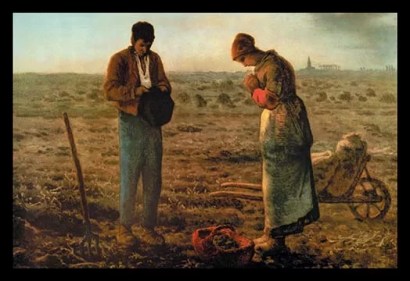
    The+Angelus+by+Jean+Francois+Millet+Painting+Print
    ‘The Angelus’ by Jean Francois Millet

    Gone with tears are the four hearts of four souls,
    Weeping for the world pitiless, merciless, cheerless,
    Overawing and expiring the tiny flames of four lives, and
    Leaving their remains soaked with tears with no friend.

    Hope? Forget about the vanity of ethereal remote longing,
    Unavailable to them, unthinkable to them, for their suffering
    Was theirs, theirs only, theirs alone, not ours, not yours, not mine,
    Thinking “Thank God, it’s them, instead of me” with a glass of wine.

    Where was Charity when the four souls- two parents, two babies-
    Were forced to wander around in the vacant lot nights and days
    Facing daily unkindness, hopelessness, rejections, humiliations
    Gnawing every part of them till their spirits plunged to a low bottomless?

    Woe is to the four souls aborting their Fates so hard, so harsh
    In defiance against such Fates that even allowed no remote wish
    For instant happiness and now wandering the Place of Grief where
    They tell us their failed dreams and disappointments hard to bear.


    P.S. : This poem was written in memory of the family of four found dead in the backseat of a van in the parking lot of a CVS store located in Garden Grove, California. It is said that the family seemed to live in the van for about six months or so. The family was composed of a father, a mother, a two-year old daughter, and a nine-month old son. Although the Police is  investigating the cause of death, I can’t shake away my strong speculation that it must have been a case of suicide… Hence, this is how I feel about these souls who had no choice but ending their own – including the little ones of their own- . If the father or the mother could have gotten a job, or if anyone could provide them information on how to get public assistance, such as acquisition of housing and food stamp, they would have been with us… They should have not died… I wish they would rest in peace., especially those little ones as my heart is crying…