Author: Stephanie Suh

  • I say Meow.

    I am a dog person. I like their playful innocence and adorable artlessness. And I still believe all dogs go to heaven because of their innate goodness that brings joy to our overtly complexed human life. Also, dogs and humans have been living together for about 15,000 years as family members. Remember Argos, the loyal dog of Odyssey, who was the only one who recognized his old master in rags and tatters? Also, there were the dogs who saved the lives of soldiers during historical manmade wars in the expanse of their own lives. So, if the circumstances give me the green light, I would love to have a dog at home. Who wouldn’t anyway?


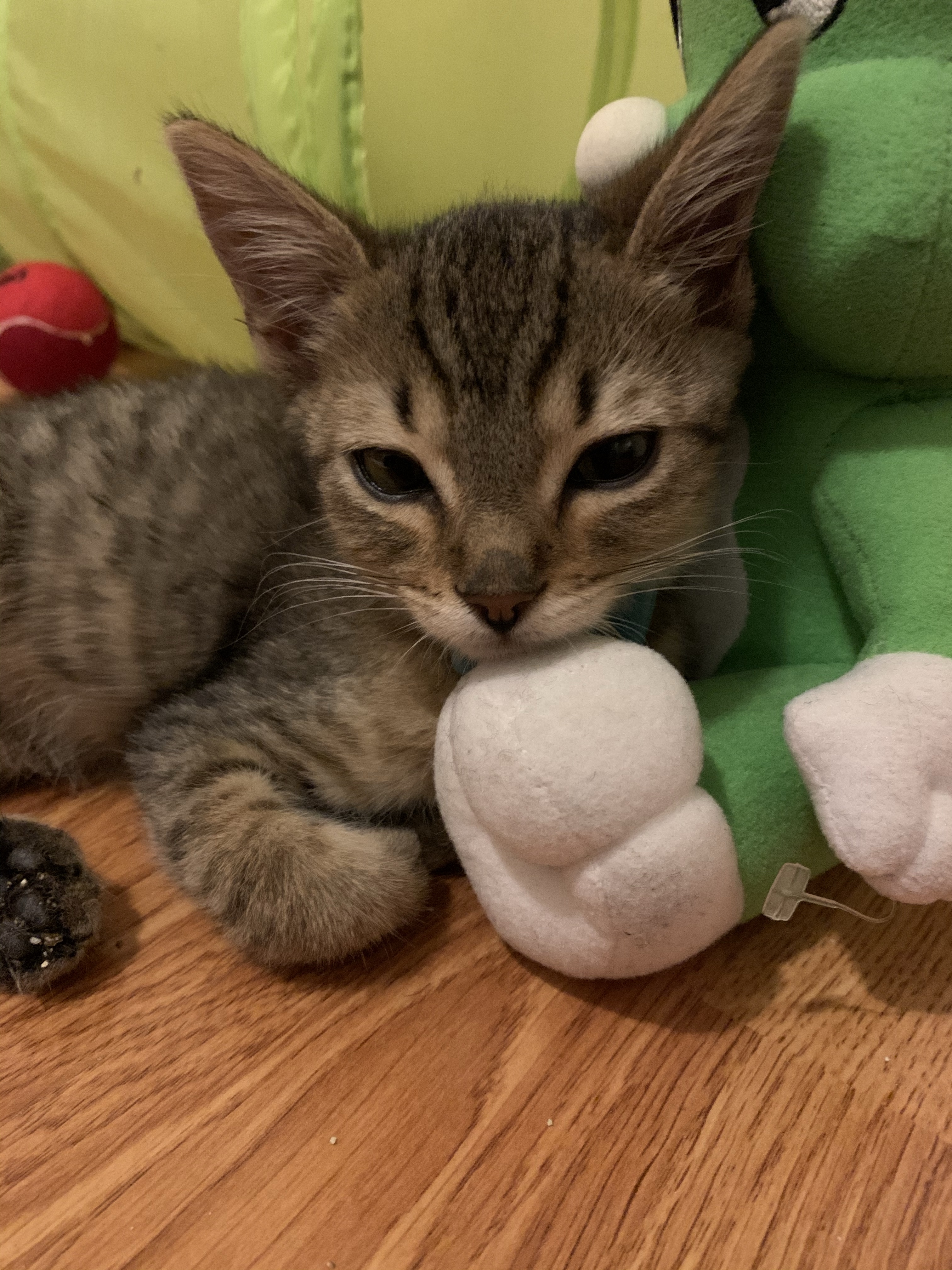
    Then, given the express affection toward the canine race, how could my living with a cat be explained? The truth is still a mystery as  I still can’t believe I have Toro, an 11-week old male tabby I adopted from a shelter two weeks ago, at home with me all the time except when I am at work. Toro, which is a masculine form of ‘Tora”, meaning a tiger in Japanese, is a curious paradox of a beast; he is a little cutie with lovely big green eyes but shows all the characteristics of a predator just like his wild cousins. Toro shows he will grow into a formidable hunter contrary to his small and thin body with acute audibility and olfaction. Watching Toro playing with toys and the frills at the bottom of my skirts fluttering underneath the chairs, I wonder if Toro will turn out to be a Gremlin one day when I wake up in the morning. But his cuteness dominates fear, and he likes to sit on my laps when he feels like it. Toro seems to have crafted Ovid’s the Art of Love with innately feline caprice and whims turning it into an irresistible magic spell. What a kitty.

    Toro and I moved from the pastoral Ventura County to the heart of Los Angeles during the inferno heatwave of the labor weekend. We both suffered a sense of vertigo in new urban surroundings and a little bit quizzical about how we should adopt to smaller spaces in an apartment. Maybe Toro doesn’t like our new den because he does not wake me up by climbing on my back and meowing in the morning any longer. Besides, he seems to suddenly develop attention deficiency by frequently stalking, jumping, scratching, and biting. Worse still, Toro hissed a lot and aloud for the last two days. Although I force myself to think that it’s due to the diabolical heatwave, I cannot stitch up a little hole in my heart to the immaculate condition.
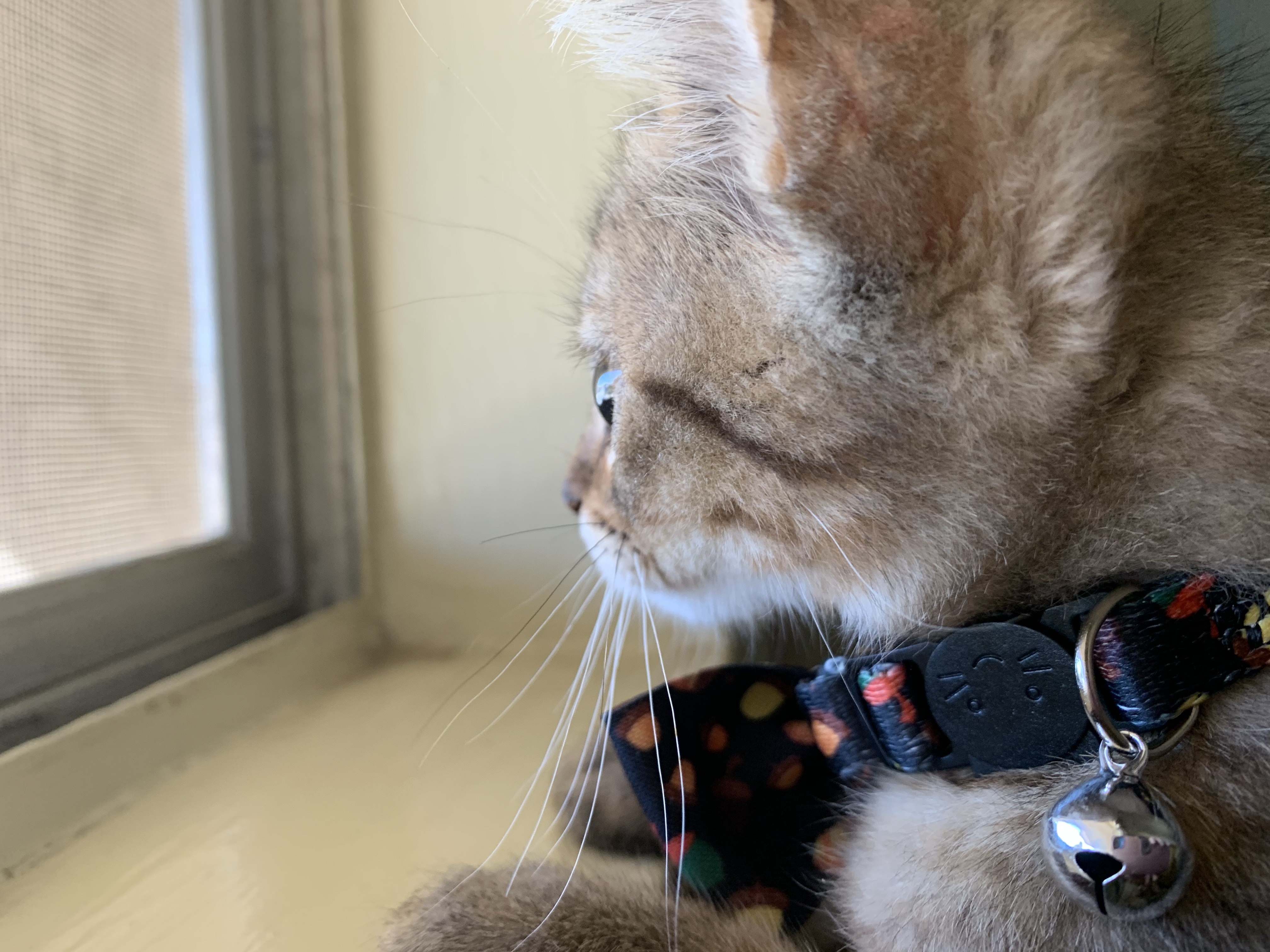
    Freud said the time spent with cats is never wasted. I want to believe it even if these days I spend most of the time tending Toro, instead of reading and writing. Certainly, unconditional love toward a living thing is noble and esteemed. Yet the Bard sums my state of mind thus: “Love sought is good but love unsought is better.” Still, there is a long way ahead of us to live according to the natures of our different species. Our inclinations are contralateral as our needs are egotistical for our own ends of the survival of the species. If so, then let it be – with pleasure.

    Maybe, I am more feline than my kitten. Who knows? Meow.

     

  • Dreams end

    Gone are the scenes of verdure
    Where the tired mare rests
    And the tepid soul flits
    When Faerie Queen jaunts
    On her chariot of two unicorns
    With fairies and changelings as courtiers
    Following the trail of fancies
    Looking for mortal recruits
    Willing or unwilling as subjects
    becoming more than the mortals
    Less than the immortals
    In exchange of magic promises
    In the guise of fantastic deals
    With the kindly counselors
    To whom I willingly will lose
    Every trace I have in this world
    Without regrets, not even memories,
    Until the compass of Fortune’s Wheel
    Moves to the city of drifting angles.

  • Minor Earth, Major Sky

    As a hobbyist dilettante writer, I have been writing this and that on my beloved blog for four years. Despite English being my Second Language, I dare to write in it against criticism of solecism regarding all the prescriptive rules of the most popular language of the Indo-European linguistic superphyla. The reason I continue to and love to write is no more than the justice of my meek self, smothered under the mask of exoticness that has become my sole identity, and a written touchstone for the neural activities of the mind. I sometimes wonder affected by the progress of neurological or physiological maladies as I slowly walk toward the end of the mortal journey on earth. So, I want to leave the mark of my existence. Welcome to My Invisible World, the Minor Earth.

    The provenance of today’s post comes from my reading of a Saturday edition of the Guardian subscription on my Kindle two days ago. It featured a book review of Must I Go by Yiyun Li, exultantly described as a cracking read written by a Chinese-American woman writer deserving of the commendation. The article began with her illustrious academic background as an immunologist and a recipient of a prestigious MacArthur grant bestowed on geniuses. While such introductory curriculum vitae is undoubtedly relevant to denote her intellectual brilliance, I wonder if such a decorative prerequisite is necessary for the book’s worth. What if Li were just an obscure Chinese writer delving into English writing without the decoration? Such a hypothetical question might be regarded as nothing but an incoherent rambling of a jilted would-be writer. Yet, I have noticed that ordinariness is off-putting, unglamorous, and unworthy of recognition. Call it a groundless presumption or jealous subjectivism even, but it’s the truth. Charlotte’s Bronte’s author’s tenet of faithful allegiance to truth and nature seems to apply to the otherness of the Far-Eastern writers whose ordinariness is merely invisible and regardless. That is, they exist in an invisible habiliment of mysteriousness from Shangri-La.

    The review analyzes Li’s literary reality of uprooted sentimentality in the background against America’s wilderness, so to speak, in which her existential question of who she is based. Li also rides on the crest of the waves of cultural identity, as is the principal thematic element of most Far-Eastern writers. Rather than striking the chords with the universality of human life, they tend to focus on the egoistic litany of alienation with their selfsame egoist emphasis on otherness. In this regard, Far-Eastern writers themselves foster this strangeness, this otherness, these less-than-ordinary images based on their literary tenet they believe truthful and appealing to selective, not universal readers. That is why I, who is also from the far east tend to eschew their stories, void of the common ground of empathy, no other than the shared physical reality.

    Enter Kazuo Ishiguro, author of The Remains of the Day, whose literary world is not limited in his racial and cultural backgrounds. A good writer is capable of travel and metamorphosis beyond the existential terra, where the vision becomes a reality of its own. Ishiguro wants to be all that he can be away from his physical context to manifest his views on human nature, which aims to chime the bells of universal emotions. However, such transfiguration of physical reality into the universal realm of consciousness does not betray Ishiguro’s ascribed biological characteristics because creative force, in conjunction with desire for aesthetic values of literature, is mightier and higher than physical reality. In this sense, Ishiguro gloriously triumphs over racial barriers, and splendidly demonstrates that what you look like and where you are from cannot confine you who you want to become.

    I still write despite my imperfect command of English simply because I love the act of writing as a valve for opening myself dying for a fresh breath. My book has sold only five digits of a hand. I recently received a comment on one of my book reviews I posted three years ago on amazon with 32 likes that callously slighted my ability to write in general because of minor violations of grammar rules. Yes, I am an amateur writer of Far-Eastern backgrounds with an ordinary job as a legal assistant with a B.A. in English from a state university. Yes, my English is far from the perfection of English Undefiled. Yet, writing is no longer a prerogative of the academically privileged whose selfish seclusion of lettered cases is adulated. Writing is a democratic vehicle in which anyone can morph into whoever she or he wishes without restraints. Take Tolstoy, Charlotte and Emily Bronte, and Jane Austen, all of whom put their literary aspiration into reality despite their spelling weakness. No one shall bully my writing skills, nor belittle my volition to write for universal readership. Forget how I look and speak. It’s the heart’s passion and satisfaction of reason letting out of the cocooned physical reality that deserves manifestation. For this reason, I write with or without public recognition with a myriad of likes.

    P.S.: I don’t believe that you can follow my blog without liking what I have written. Also, even if you fulfill the requirement above, if you are regarded as a marketing puppet, then I will drive you away. Therefore, I will not treasure your subscription to my blog if you just press the button on caprice and whims. Certainly not for my blog.

  • After Rain

    A night’s serenade ends
    In a mist of morning rains
    ere the golden chariot shows
    as the sunflower becomes
    alive, anew, aglow -as ever
    radiant with the eternal desire
    for the indifferent charioteer
    reflected in the drops of dew
    shimmering in petrichor.

  • ‘This Sporting Life’ (1963) – film essay

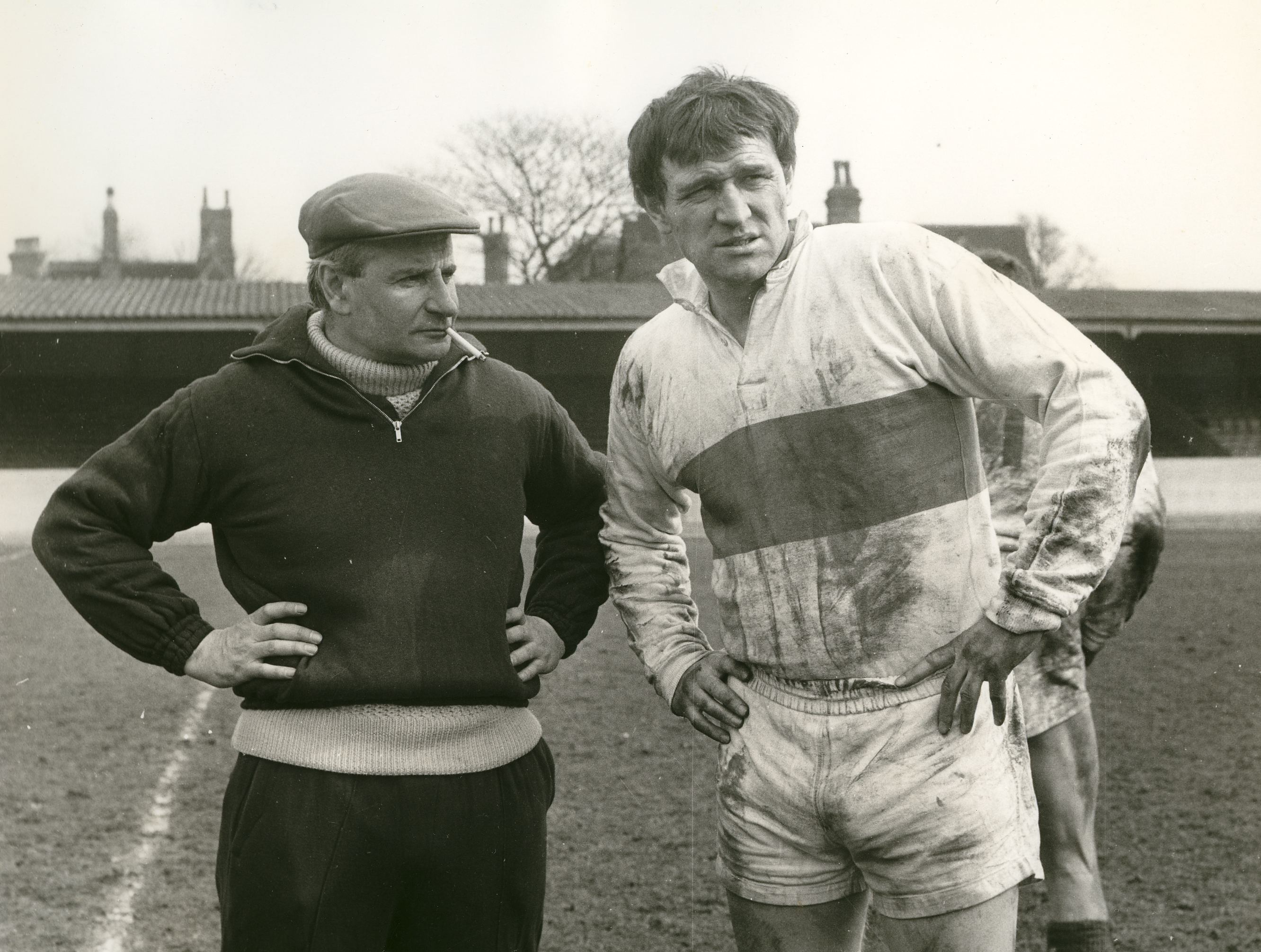
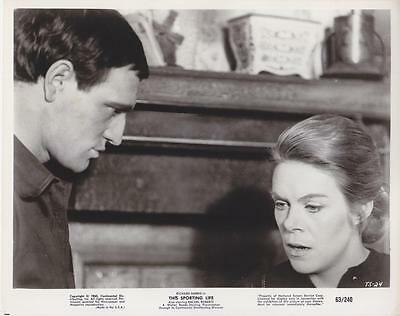
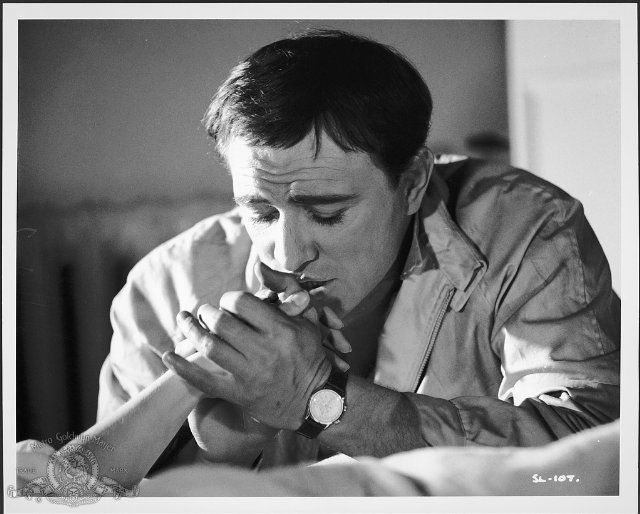
    We all have our natural registers and best leitmotifs to talk about our lives, however trite or banal they may seem. The subjectivity of individual experience is more compellingly tactile than the objectivity of the essence. The sporting life of one Frank Machin, a young rugged Yorkshire miner turned rough professional Rugby player, is a fugue of restlessness, passion, love, longing, and sorrow played by his instinctual drive in allegretto from beginning to end in the binary world of black and white. This Sporting Life (1963), directed by Lindsay Anderson, is gloriously innovative in its genre and triumphantly influential in its narrative in the fashion of La Nouvelle Vague, ‘French New Wave,’ despite the unanimous consensus of labeling this film as an epitome of the kitchen-sink film. Shot in blank and white without a glamorous, star-studded cast, nor memorable intelligent lines of the script. The film creates a tactile perception of realism seen through a lens of a celestial telescope as though by guardian angels who are with us but cannot interfere with our lives without divine permissions. We can see not only Frank playing the act but also why he does it the way he does, which makes him less of a hateful jerk but more of a pitiful man unfamiliar with the civil code of behaviors and the gentility of emotional intimacy. This Sporting Life is a powerfully moving narrative of a man confined in a field of his limited vision of the world and disoriented in the sense of purpose in life. The story begins with the segmented flashbacks when Fran) becomes unconscious under the anesthesia in a dentist’s office. However, the numbed pain receptors bring back the painful memories of his widowed landlady and object of love Margaret (played by Rachel Roberts). She outwardly resists against his amorous advances but inwardly fights her temptation to love him in tandem. Frank tries to find a meaning of his existence in life by holding onto Rugby as a vehicle to achieve self-worth and love by sporting his masculinity to the fullest extent possible. Still, he’s not tough enough to endure all of the pain and erase it all as if nothing happened. Frank often stumbles into moments of existential vertigo and even chooses to love his landlady Margaret, but it only plunges him to existential frustration. Franks loves her, in the same manner, he plays Rugby in the field because it is the only best way of showing his virtue of being excellently rough and tough. Rugby is a combatively aggressive sport, tackling and attacking whoever gets in the way for the goal. Still, Frank continues to play the game even outside the field with the attitude and mindset of the sporting Rugby player. The sport becomes his identity, selfhood that dominates his mode of thinking and acting, which Margaret feels too formidable to embrace. So, she also sports her love-and-hate tug of war with her dauntingly masculine lodger equally roughly.

    Frank is in a way like Stanley Kowalski in Streetcar Named Desire in terms of masculine physique and their similar fierce personalities. Yet, Frank, whose love for Margaret is uncompromising and loyal in his outcry in the darkness of aloneness, seems more vulnerable and sorrowful, hence deserving of our sympathy and understanding. His lack of regard for civil manners and the refined cultural taste is forgivable by his churlish naivete and artlessness manifested in his primordial way of dealing with emotions and feelings. This Sporting Life is not a movie about those Young Angry Men whose selfishly cosseted dissatisfaction with the world sounds no more than spoiled children’s whining. It’s about a man who wants to live a meaningful life but knows not where to find it. The film dramatizes one ordinary man’s existential dilemma in search of the purpose in life in defiance of resorting to being a provisional being as a wandering sportsman. This film will imprint the outcry of Frank in your mind’s wall and resonate with echoes of his pain for a long time.