My rating: 5 of 5 stars
A good memoir amid the detritus of in-vogue memoirs is a gemstone, like a treasure island descried by a weary sailor. Marry Ralph Waldo Emerson’s appreciation of travails of life as the best teachers with George Orwell’s no-nonsense realistic credo for writing. You will see that Stephanie Land’s eternal spirit fills the pages at the expense of her will with a sense of purpose and a tenacious grasp on intellectual superiority. It was a tide in her affair Stephanie Land was waiting while wiping a stranger’s dirty toilet bowel due to fortune’s malice or, shall I say, whims and caprice of the supreme beings?
Land’s memoir applies to Orwell’s tenets of “Why Am I Writing?” In it, four elements of writing are (1) aesthetic purposes, (2) sheer egoism, (3) political/social purposes, and (4) historical record. Contrary to most reviews of focusing the book on her single parenthood, I deem it to be her testament to her self-worth in a society where external achievement determines your character. In fact, Americans have a Calvinistic cast of minds in a puritanical cultural foundation that poverty is a priori resultant from laziness and that it should be dealt with scorn. American Catholics are not altogether generous because of John F. Kennedy’s adage to Americans: “Ask not what your county can do for you… ask what you can do for your country….” Land feels the hostility of the skewed, confused, maligned conservatism masqueraded as patriotism in an ordinary landscape of daily life. In writing, she potently and victoriously wields her pride smothered in want of bread and roof with her daughter.
Memoirs of rags-to-riches are thought to inspire readers with can-do attitudes fused with a dangerous combination of ephemeral hope and flippant desire that Thucydides warned of his progeny. However, they are self-treaties of achievements, usually despite the biological or sociological plane, and almost always with people who help them achieve their goals. Jeannette Walls of The Glass Castle was from a low-income family, but her family was loving, and she had scholarships and went to Barnard College and became a journalist. Hillbilly Elegy was touching, but the poor white boy who had a loving mother went to Yale and became a lawyer. But Stephanie Land is intelligent and honest, down-to-earth, and her issues and circumstances are more existential and relatable than what the mentioned above have famously accounted. Forget the dialectic classicism, forget the social reform, forget the right for single parenthood. It’s all about Stephanie Land’s dignity, her right to be happy, her yearning to be what she wants to be. So be it ever the nominative determinism, and it’s in the name. All who have the name Stephanie have that feistiness. Well done, Stephanie!
View all my reviews
Category: book review
-
‘Maid: Hard Work, Low Pay, and a Mother’s Will to Survive by Stephanie Land’ – book review
-
Triumph of the Will
Like Hecate, the goddess of underdogs, I have a soft spot for writers and thinkers who arose above personal hardships and triumphed in the will. If they have not experienced human highs and lows, how could they write and explain the meaning of life? Take the Russian writer Fyodor Dostoevsky whose near-death experience on the gallows and subsequent travails shaped how he viewed humanity, the purpose of God, and the dichotomy of good and evil. I compared the life of Dostoevsky with that of Victor E. Frankl, the father of Logotherapy, who survived five death camps during World War 2 because both men’s intellectual fervor saved them from self-destruction in the darkest hours of their lives.
Dostoevsky (hereinafter “D”) was a political prisoner sentenced to death for reading banned books. But the most incredible feat of luck pulled him out of the gallows, and he was sent to a Siberian work camp. He forced himself to channel a danger of hopelessness and resignation in such a squalid environment into the world of imagination. His characters were his alter egos trapped in a cycle of solipsistic containment of morality, religiosity, and social justice. In these attitudinal and creative values as a way of relieving himself from the slough of despond, D finds a kindred spirit in Frankl (hereinafter “F”), whose spirit never succumb to the hopeless situations in death camps where life seemed to be a curse. Instead, f kept himself busy by constantly devising his school of thought, analyzing it, and structuralizing the concepts in his head and on any writable medium he could find discreetly. The result is Logotherapy, the third Viennese school of psychotherapy that encompasses philosophy, religion, neurology, and psychoanalysis, whose nature and method are common to all humans and applicable to all regardless of age, gender, race, and culture.
So much so for the reading of the brief article, but the effect is magnanimous and resonant with a pellucid tenor of a victorious high human spirit with humor as a handmaid to intellect (wit), which would otherwise be grim and dreary subject to temperamental bouts of depression and pessimism. Both men in their prime of youth had their sovereign rights of individualities in tatters and shackles, but their willingness to live and achieve their goals exceeded the compass of the malicious fortune and triumphed in perennial glory. They are, as Ben Jonson in his humor might have concurred, men not of an age but for all time.
-
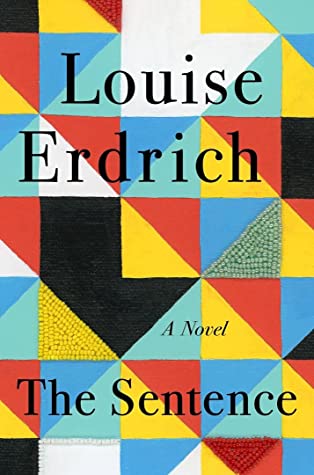
Why I will read the Sentence by Louise Erdrich
People usually don’t want to hear your problems, pains, and premonitions unless they know you or relate to you. In the case of Tookie’s existential distress that seems to be an inexplicable sentence on her life, I will say it’s the latter case for me to be piqued with a kind of sisterhood attached to it.
Malcolm Jones’s review of The Sentence by Louise Erdrich from the Nov. 14th issue of the New York Times Book Review was the most brilliant. I found it so straightforwardly moving and personally related to my own narratives of life, both existential and philosophical, that I felt like finding a friend in the protagonist Tookie. Jones’s interpretation of Fiona’s ghost as one of Tookie’s many as though the ghost itself were a mock to her pitiable wish to have a sense of security in the normalcy of life was particularly impressive. It created unfathomable pathos for Tookie, who seemed to believe that she was kept away from anything happy happening to her.
So thanks to the review, I will get to read more about the kindred Tookie and look forward to seeing if there is indeed plenty of light in the book that sheds upon life’s predicaments.
-
The Truth About Horror
Stephen King, the King of Horror, said we make up horrors to help us cope with real ones. Some people drink themselves to numb their existential maladies of daily life, or some abandon themselves to unguarded sensual or psychedelic pleasure. But I seek refuge in the stories about the supernatural world that have to be the actual, not the second-hand replica of the author’s imagination that I find hard to be connected. That said, to descry the headline title ‘The Horror’ from a recent issue of the New York Times Book Review delivered on my kindle seemed too pat not to feel psychic about it with a jolt of fillip bolted to my neural circuits. Reading it allowed me to reflect on my affinity for supernatural scare about whys and wherefores.
The article posits that horror movies scare us through exteriority with image and sound to create the illusion of danger, whereas horror fictions are more sophisticated and cultured to understand the complex interiority of the characters by passing over to the creator’s mind. But why do I have to play an amateur psychologist to analyze the inner world of an author when I try to find a niche for my battered spirit in a supernatural realm where no bullies, despots, or melees would follow me? My kind of horror has nothing to do with overtly thought-provoking fictional narratives that are more like psychological thrillers than supernatural ones. That is why I favor the Japanese ghost stories bereft of bodily fluids and materials but full of silent terror in the presence of a sorrowful dead refusing to depart for the Otherworld. Fear is universal. However, its expression is nuanced in the ordinary landscape of daily life, with the undead still among the living in their everyday attire as if they were still alive, not least because Japan is a country of spirits and gods dwelling in nature among the people.
The article is correct in saying that a love of the horror is a part-time love with a mysteriously eerie beautiful parvenue in Howl’s Moving Castle. By wallowing myself in the supernatural, I feel anxiety loosened, nervousness coaxed, anger diverted, sadness halved, and depression diluted to a certain degree. You may say it is another form of a psychedelic illusion of escapade from reality, then let it be. After all, aren’t we all addicted to something to that effect to relieve ourselves from existential frustration in a socially acceptable way?
-
Letters on England by Voltaire
My rating: 4 of 5 stars
Voltaire’s Letters from England, originally published in 1733, is a solipsistic treatise on political, religious, and cultural observation during his stay from 1726 to 1729 of the benign nation that welcomed the thinker with open arms when he fled from persecution in his native France.But the book is not a blinded paean to a rival country with a long sophisticated warring history with an intent to retribute his spites to his mother country as an expatriate. Instead, Voltaire takes a stance of a piqued paratactic storyteller in the fashion of Herodotus’s Histories or a trenchant journalist in the school of George Orwell’s Down and Out in Paris and London. In Voltaire’s eyes, that the English are practical folk with a propensity for realism: reflective, respectful of etiquette, cool-headed, and effusively proponent of scientific discoveries are conspicuous in the overview effect of France seen across from the other side of the Channel.
From the manners of English Quakers to Isaac Newton’s (whom he admires as the brilliant sun of Halios) quantum physics and the law of the universe in great detail, the subjects of interest and the depth of knowledge demonstrate that Voltaire is more than a rebellious French enlightenment thinker. He is a true intellectual whose reason is constituted by the consilience of multidisciplinary subjects in depth. The book is a testament to a genius of a particular kind who embodies a man of letters in its truest sense.
View all my reviews


You must be logged in to post a comment.