For a person like me who likes to read genuine supernatural stories free from dramatic accounts of witnesses, psychic, paranormal investigators, and/or parapsychologists, this is a perfect read consisting of historical cases in France, England, Canada, and the States that were rendered haunted by the court of law.
For example, the case of Stambovsky v. Ackley in the appellate division of New York Supreme Court has become a bedrock case law of caveat emptor, which is literally translated as “Let the buyer beware,” meaning that the buyer alone is responsible for checking the quality and suitability of goods before a purchase is made. The appellate court ruled that since the buyer should not/could be able to ascertain a condition in which haunting occurred upon reasonable investigation in due diligence on the buyer’s part, the plaintiff Stambovsky was awarded the rescission of the contract of sale of the house.
All of the stories contained in this collection of the cases are recorded in historical as well as legal documents, which weigh heavily against sensational TV programs and hyped-up accounts of psychics and the like in its genuineness. And it’s a light read readers can finish at one setting. Mind you, truth can be scarier than fiction.
This magazine deserves of its honors in History and Literature: the prime qualities of the articles it features on every monthly issue result from its writers who appear to master the Art of Practical English (along with the writers of The Spectator) that should exemplify all others, especially here in the States, where big words and intricate sentence structures are modus operandi of fine writing. In addition to the beauty of writing, the magazine deals with many an interesting historical fact that strikes the chords of the present era, making us realize that as long as the human race exists, human nature remains unchanged. To top it all off, this magazine is a lovely read easily and perfectly downloaded on a Kindle Fire in its entirety and keeps you amusing company on the train and at a coffee shop.
P.S. Happy Friday proffered me a delicious respite at the office today. Then came one of those inconsequential e-mails sent by Amazon asking its Prime members about a review of goods or a book one had ordered. As a way of improving Craft of Writing and compensating for recent lack of writing activities under the pretext of my learning a new trade and exerting my herculean power on a long commute to and from home, I deemed it productive to write this bullet review of this great magazine that has become a darling of my regular routine reads. How much I wish I could write like the writers of this intelligently entertaining magazine! Hence, Henry Wadsworth Longfellow’s axiom always resonates within me: “Still achieving, still pursuing, Learn to labor and Grow…”
Calming signals are genetically inherited canine language used for communicating with each other to maintain healthy social hierarchy, since dogs, like their wolf ancestors, are pack animals dependent on sensory input, such as olfactory, auditory, and visual perceptions. Accordingly, dogs communicate with themselves through body motions, such as turning their heads to the other side (as a goodwill gesture in greeting between two dogs), lifting a front paw (showing peaceful intentions), yawning (as a way of reducing stress), bowing (releasing tension), etc. In this book, Ms. Turid Rugaas, an internationally acclaimed Norwegian canine behavioral counseling trainer, primarily focuses on the needs of understanding these signals from dogs as their way of communicating to and with their canids and humans alike. In the context of regarding the essence and importance of calming signals from dogs, this book offers a visual glimpse of what they are like with pictures of the dogs in each accordant motion, which I find helpful to perceive it.
However, the book does not provide the reader with more in-depth knowledge on the calming signals on the grounds of scientific terms; rather it is more of a pamphlet introducing the basic concepts of the calming signals. In fact, this book of less than 100 pages recounts the author’s personal experience with her beloved dog Vesla, who had been her faithful and effective assistant in helping other dogs’ behavioral problems solved, in her close observation of their calming signals expressed and exchanged. It is needless to say that such personal experience saturated with her firm conviction in positive training of dogs is deemed highly valuable and thus contributes significantly to the purpose of this book, which I wholeheartedly appreciate as a kindred spirit. But it is also equally tantalizing to whet my desire of discovering more about the origins of the calming signals, the comparison with those of wolves in terms of evolutionary aspects, and more examples thereof.
In summary, this book is a lovely quick read about dogs’ calming signals at a glance. In addition, the reader cannot help agreeing to the author’s view of dogs not as her subordinates to be trained with dominance but as her “children” who need love and patience because dogs as being of conflict-solving nature want to keep us in their company by trying to speak to us through calming signals. So if you just want to see what these calming signals are about in a nutshell, this is an informative and affectionate read.
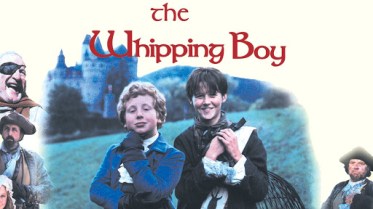
Tales of mistaken or traded identities between either by the irony of fate or whimsical voluntary submission bespeak our desire of realizing dreams and desires at one fell swoop without drudgery of going through rules and conformations of social norms and mores. From The Prince and the Pauper to Cinderella and to The Trading Places, the basic story lines contextualize the instant social mobility of improving one’s social status and the essence of human nature laid bare in dealing with new milieus. But forget the verbiage of latent sociological theory and academic analysis because after all, we all know that such wish for rapid social escalation is only father to the thought. So why not continue to enjoy the world of wishful thinking entertainingly translated on screen for the sake of art, such as this delightful movie Prince Brat and the Whipping Boy (AKA The Whipping Boy)?
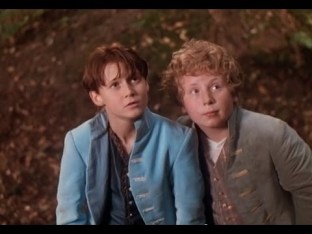
Guess who’s the prince?
The movie has a charm of Mark Twain’s The Prince and the Pauper and The Adventures of Tom Sawyer, giving it impression of a spin-off from the two stories in all likelihood. But what makes it worth the viewing are the characters whom you find difficult to dislike and the detailed background setting that conjure up the spirit of the time and bring out the personalities of the characters delightfully rendered on screen. The young prince is not really a brat but a lonely child who needs love and attention from his ever busy king father. The prince’s impudent pranks are signals for sending emotional SOS to the king who puts the security of his kingdom before the attention to his one and only child. And there’s a young rat-catcher about the same age as the prince who accidentally finds himself as a whipping boy for the unhappy prince. What happens next is the gem of this movie in their subconscious quest for their cherished ends, their treasures at heart, through their eventful journey together in the unlikely duo of the prince and his whipping boy.
All in all, it is a little cute feel-good movie intended for all ages about what’s really important in life. Yes, we all may know the answer to it, but it really touches us in the denouement of the movie, leaving us with a feeling of warmth, affection, and jolliness, chiming the emotional, sentimental bells of our childlike imagoes. That said, if you want a movie that takes you away from your worries and sadness arising out of living adult life for some time, this movie might do good for you as it did for me for the day.
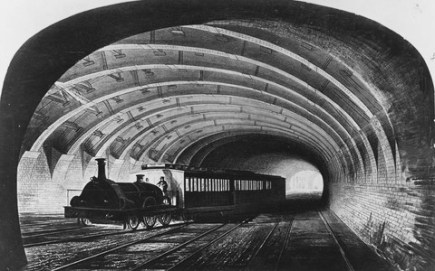
1863: A contemporary lithograph of a steam locomotive on the Metropolitan line near Paddington Station, courtesy of the Telegraph
As a commuter taking trains – that is, both overground and underground – to work, I deem it appropriate to pay a historical tribute to the opening of the world’s first subterranean railway in London, England on January 10th, 1863. The London Underground is the genesis of all the world’s trains running under the surface of earth, such as the New York City Subway, the Los Angeles Metro Rail, Paris Metro, the Tokyo Subway, et al, and for its perpetual legacies as one of the greatest inventions in human history that reconstructed social substratum as well as cultural setting, the commencement of the Underground 156 years ago from today deserves of its deferential recognition and universal commemoration. Thus is my reason I write this post as a personal token of my appreciation for the use of the Metro on a daily basis.
When the idea of operating underground railways was proposed, the public and the critics alike decried it, demanded it should be offloaded, for they all shuddered at the thought of going under the surface of earth, which Dante indicated in Inferno as where Hell existed, or a pit fit for the condemned prisoners only. Those who had their disbelief on such daring idea of tunneling underground simply dismissed it as stark nonsense or one big hokum. Some even feared about a remote prospect of the tunnels collapsing due to the weight of the houses. And to some, it’s an express ride to Inferno, because the very thought of traveling underground by train seemed so preposterous, so blasphemous, so revolting that round trips should be used as a severe form of punishment for convicted criminals. Besides, like their modern counterparts grumbling about cacophonous environment of construction nearby, the entire procedural only instigated noisome puncturing of the equilibrium of locals.
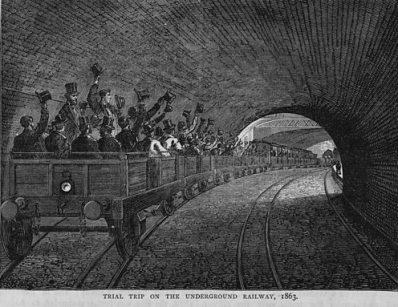
Commuters waving their hats in the air during a trial journey on the London Metropolitan Underground railway, courtesy of BBC.com
However, to the consternation of all those critics and public, the result of the Underground, the subterranean train of Hades, came to fruition of its revolutionary speedy efficiency and cultural experience that was truly one-of-kind. In fact, it proved a triumph of determination and Victorian engineering feat, creating a dazzling combination of Arts and Science in terms of its technical prowess and the novelty of uniqueness in all things creative and venturesome. In fact, on January 10th, 1863, 38,000 people rode between Farringdon and Paddington stations. There were 3 compartment lit by gas, and each of the compartments was designed with care for passengers because efficiency and beauty could accompany one another, never rival.
When I will be on the Metro tomorrow morning, I will think of those Victorian London passengers on the Underground and will likely to thank Directors and Engineers of the London Metropolitan Railway Company for opening a new era of public transport that has upended our patterns of life and shapes of our perspectives on our everyday life.
A good detective drama propounds you with an jolting twist in a story line with verve and gusto, making it an enjoyable and enlightening view. In this regard, Life on Mars is an ingeniously crafted TV drama, packed full of elliptically well-written scripts, impressively executed performance of a fine cast, and highly detailed periodical background setting that renders all the more convincing verisimilitude of each episode that resurrects the past in a mind blowing way.
The story evolves around the protagonist Sam (brilliantly played by John Simm), a clever, sharp-witted DCI with a heart who after a near-fatal car accident, finds himself awake in the year 1973, four years later he was born, as DI in the Manchester Police Department. The cause of the mysterious teleportation to the decade and the dilemma of Sam trapped in the past are the gist of this wonderfully thought-provoking drama which otherwise would be just another cop/crime drama with gratuitous hot car pursuits, bloodshed crime scenes, and mindless half-nude scenes. Sam constantly wants to return to what he believes to be the present or the reality, but the police department of the past needs his help. And that’s how the entire two seasons of the drama are unfolded.
Life on Mars is fun to watch with a delightful combination of 70s American cop drama appeal in appearance and scintillating synthesis of SCI-Fi and Psychological Suspense in content. It is a modern detective procedural worth the watching. You will have no guilty feeling of indulging in the entire two seasons at one setting on your Kindle Fire because it will both entertain your senses and spur your mind on to think about your own reality.
 Legally Haunted Houses by Dylan Clearfield
 This magazine deserves of its honors in History and Literature: the prime qualities of the articles it features on every monthly issue result from its writers who appear to master the Art of Practical English (along with the writers of The Spectator) that should exemplify all others, especially here in the States, where big words and intricate sentence structures are modus operandi of fine writing. In addition to the beauty of writing, the magazine deals with many an interesting historical fact that strikes the chords of the present era, making us realize that as long as the human race exists, human nature remains unchanged. To top it all off, this magazine is a lovely read easily and perfectly downloaded on a Kindle Fire in its entirety and keeps you amusing company on the train and at a coffee shop.
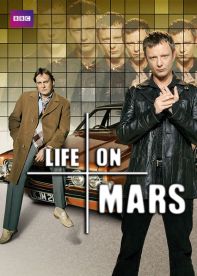 A good detective drama propounds you with an jolting twist in a story line with verve and gusto, making it an enjoyable and enlightening view. In this regard, Life on Mars is an ingeniously crafted TV drama, packed full of elliptically well-written scripts, impressively executed performance of a fine cast, and highly detailed periodical background setting that renders all the more convincing verisimilitude of each episode that resurrects the past in a mind blowing way.

You must be logged in to post a comment.