Category: Miscellany

Anything that’s on my mind.

  • Living in the historical moment – the Collapse of Kabul

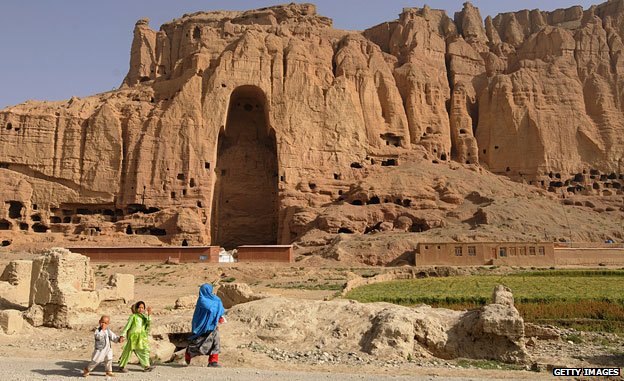
    The Buddhas of Bamiyan Valleys before the destruction by the Taliban

    One of the four reasons why George Orwell wrote was to record historical events in his time with a sense of writer’s responsibility to witness the moments for posterity. Imbued with the Orwellian spirit, but more egged on by the concern for the reign of terror, as a citizen of the world, I care to write about the current volatile situation in the Taliban regime of Afghanistan. Now I can see a danger of theocracy in which religion is a leviathan consistency master computer that controls people’s lives and psyches. Religion becomes an authoritarian Big Brother, the Demiurge that plays the absolute moral and ethical being in the mask of profoundly sacred deity leading to hatred of the physical world we live in. In this situation, the beauty of art intrinsic to our human essence is a decadent luxury, expendable to the bargain in the politics of heritage.

    The fate of Buddha before the killing

    The reinstatement of the Taliban government in present Afghanistan provokes the image of the great Buddha statues located in Bamyan, Afghanistan, until the Taliban obdurately and proudly destroyed in 2003 because the statues were idols opposite the teachings of Allah. The Taliban ignored pleas from the UN, including Islamic countries, that urged them to preserve the world’s treasure of civilization for humanity. The statues of Buddha represented Gandaha art, a wonderous syncretism of Hellenism of ancient Greek culture and Buddhism of Indus Valley civilization. It’s an exquisite synthesis of the West and the East, which tells us that people found a way to cross vast continents and seas and mingled to blossom into a new civilization even a millennium ago. Thanks to the one and only Macedonian Alexander the Great, emblematic of the wise and cultured political and military leader of all seasons, our human civilizations dispersed farther. They prospered further, as evidenced by the now begone great statues of Buddhas built by Bactrians, the descendants of soldiers in Alexander’s army who remained in modern-day Afghanistan by force and perforce and founded Hellenistic Bactria. By the way, there are still the descendants of the ancient Greek forefathers living in the area, even though their cultural expectation in the form of the statues of Buddhas have become mysterious wonders of the ancient world.

    The artifact of humanity is gone

    I am not condemning the religious whose faith is commensurate with their regard for others because a true believer of any faith is also a good person. The world’s representative religions do not promulgate violence and antagonism, at least not in their sacred texts per se. Still, misinterpretation or over-interpretation of the words have been the seeds of discord in history. I remember Mother Teresa of Calcutta once said that you don’t have to be a Christian to be a good person. If you are a Hindu, be a good Hindu, a Muslim, a good Muslim. I wish people of all faiths would take her words to heart. Then we could place the Republic of Heaven on earth.

  • On Philip Pullman’s Republic of Heaven

    A great writer of our time is Phillip Pullman in his moment of pleasure.

    Great writers are great because they know how to tell entertaining and enduring stories without religious and didactic overtones. Moreover, they are unafraid of speaking their minds without a qualm of conventional belief or sectarian principles. Yesterday, I read an essay called “The Republic of Heaven” from Demon Voices by Philip Pullman, a renowned British best-selling writer whose intelligently tongue in cheek styled narrative raises the dander of the Catholic Church for his acerbic view of the orthodox teaching. With my reading of Candide by Voltaire still fresh in mind, I find Pullman and his philosophy of free thought familiar with that of Voltaire and realize that true intellectuals think among people and live in social companions of public spirits for the good of humanity. Thus, here is my discursive impression of Pullman’s “The Republic of Heaven.”

    Pullman urges us to step aside from habit, a banal molded frame of life, to see the world outside the box, which will lead to an immense world of delight, the Republic of Heaven, for we are worthier than we think we know because we are such stuff made of wonder. Pullman’s heroine is Charlotte Bronte’s Jane Eyre, who has resisted against the magistrate of grim and gray puritanical ethos that decries an expression of feelings and emotions under religious disciplines. She remonstrates against the cold-hearted Mrs. Reed thus: “You think I have no feelings and that I can do without one bit of love or kindness, but I cannot live so.” Her demand for love stems from her need for it, which is an essential food for the soul that serves a purpose and pique for life. This sense of love so wanting in Jane cannot be quelled by false optimism that such distress is the best for the best of all possible world. On the contrary, it is an outcry of the soul desirous of warm and soft human touch that thrills the heart and invigorates the mind. Human beings cannot live by Reason alone, forced to utilize when the right of five senses is forfeited and bound by misconceived religious concepts and false moral measures.

    The founder of Logotherapy, the third Viennese school of psychotherapy, Viktor E. Frankl, witnessed a learned Jewish woman in his concentration camp killing herself despite daily recitation of wise sayings of the Torah supposedly being a consolation. Frankl affirms that we humans cannot live without the joy of life, that is, an appreciation of pleasure to the senses because otherwise, we will degenerate to a provisional being living day to day like prisoners of dreary dungeons in the darkness of hopelessness. Pullman agrees with Franklin the creative and experiential values of pleasure that keep a journey to live a purposeful and meaningful life.

    The creation and experience of art spark the joy of moments that can be synonymous with a meaning of happiness in life. Some find consolation in religion, but it does not give them whys to live for, nor kindness to show hows. Pullman’s concept of the Republic of Heaven comes to a head prominently when we are stranded in the chaos of existential vacuum, the kind of which the loyal and conscientious butler Stevens felt when he lost his faith in his idealized employer in Kazuo Ishiguro’s The Remains of the Day. However, if Stevens pursued his love for Miss Kenton and appreciated the pleasure of love he consciously denied, he would not have felt the sudden void in his life. The sense of delight in the physical world is the essence of the Republic of Heaven that he and we are conditioned to ignore. The point of Pullman’s philosophy is that we are too serious about the pleasure our physical world provides. And it’s not a chemical-induced euphoria for escape from the world but a new attitude toward our perspectives of it. Elenore Roosevelt also knew how to become a citizen of the Republic, thus: “Do one thing every day that scares you.” I should try that.

  • Philosopher, Poet, and Doctor

    Edgar Allan Poe’s tribute of “To the glory that was Greece” sprang from my mind when I received this month’s subscription to a British history magazine BBC History Revealed. It came in the magnificent package of ancient Greece Special, ranging from the Archaic to Hellenistic periods, from slaves to Socrates, and from Auspices to trepanation. I feel dutiful that writing about my thoughts from the reading serves a purpose of writing to achieve experiential value to gain refreshing knowledge about the famously glorious ancient Greece and creative value to record my thoughts about following impressive findings.

    Surprising Opponent of Democracy
    Socrates was the one who called upon Philosophy from celestial paradise into the world, took her to the villas and huts of mortals, and persuaded her to stay among them. He was indubitably the father of philosophy as Herodotus was of western narrative history. His submission to drinking fatal poison as execution for corrupting the Athenian youth by saying “Bad law is still law” is immortalized in works of art from painting to engraves, poems and plays. Woe betides anyone who would disbelieve that the most democratic thinker opposed democracy in his time. Yet don’t let sorrow turn into disappointment in betrayal because democracy in Socrates’s time was different from our modern concept and practice of republican democracy. Athenian democracy directly involved people of all classes in politics without representations for constituents. Any Athenian citizen- excluding women, slaves, and foreigners- could voice out and execute their wills however uncouth and unreasonable. This form of mob-style demagoguery without desires being reined by the judgment is what Socrates criticized, not freedom of human spirits. Naturally, having seen his venerable teacher killed by the will of demagogues, Plato was an even stronger opponent of Athenian democracy that ceased to reign in the early 4th century BC following the Greeks’ unsuccessful revolt against Macedonia rule.

    Nothing is better than the simple.
    Anyte of Tegea was a very popular poet of circa 3rd century BC. Anyte is considered one of the first poets to focus on the simplicity of beauty found in nature and life, which is different from most ancient Greek poetry eulogizing the mighty achievements of heroes and the majestic powers of gods. Her eloquently crafted poetry with comprehensively accessible use of simple language gorgeously manifests richly delicate emotional sensitivity that collapses the millenniums between her writing and our reading them. Although her popularity earned her the sobriquet of “Female Homer,” a comparison to nineteen-century American poet Henry Wadsworth Longfellow is deemed more apposite and understandable for both poets sublimated the ordinary to the sublime with the feeling of beauty and love for nature and life.

    A hole into the skull
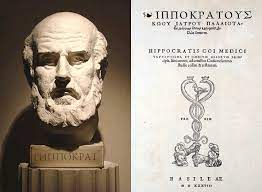
    Trepanation was a medical technique that Hippocrates, the father of medicines and doctors, codified in circa 5th century BC. He believed that there were four humors in the human body: Blood – Air, Yellow bile – Fire, Black bile – Earth, and Phlegm – Water. The idea of humourism consisted of thus: if one of them was redundant or deficient, ailments of spiritual and physical kinds arose. Therefore, drilling a hole into the skull of the affected suffering from depression, headache, fractures, or other symptoms of a mystical condition, would relieve the patient of malady. The Inca civilization was indeed famous for successful cases of trepanation, more favorably effectuated than those of 19th century American Civil War experience. However, it was Hippocrates who contextualized the procedural and impacts of the prehistoric operation. Trepanation is still performed today in the name of craniotomy.

    The mists of the past seem strangely distant due to our conditioned sense of evolutionary scale in the continuum of prehistoric and modern times. However, history shows us in today’s world that the people who lived before us millenniums ago had emotions and concerns similar to ours and that human cultural progress is a collective enterprise without fully recognizing it within the circumferences of time and space. Just as Herodotus was gobsmacked by the sight of great pyramids built centuries before him, our descendants will be awe-struck to see the ancient ruins of the Statue of Liberty or the Empire State Building and the tires of the New York City or of Los Angeles. Time and culture are ephemeral, but cultural heritage and artifacts in the treasure of works of art and humanities passed down to posterity are eternal as long as the human race exists.

  • ghost whispers

    The plain girl who thought she was kept away from all things pleasant and pretty because of a suspected hex cast on her was walking toward the setting sun sinking into the west end of the horizon, smearing the sky with scarlet halos. The sky was burning, burning with a day’s unfulfilled passion, aborted wishes, and ridiculed hopes until a moon and stars appeared from the west and calmed the fiery sky that was still ablaze with shattered dreams. The sky was her heart as though someone with magical power had been watching the poor, plain girl all along, or so she thought.

    Nothing miraculous would happen to her unless a kindly immortal being made her life merry and worthy of living because the plain girl was heading to her death. So first, through the forest paths out into a field of flowers, then upon the hill overlooking the wavering ocean, she loved so much for its wild, untamable nature that resembled her own.

    The moon was full and high now, and the world became alive with spirits and sprites rejoicing the serenity of the night and the silence of the day. The plain girl saw the souls of the dead at sea rise from the tidal waves and walk on the crest of waves toward the mysterious melodies coming from the west of the moon. They all looked enchanted, so she coveted the enchantment and followed the watery paths she believed would lead to meet the Fates and ask them to give her a new fate.

  • The young heart at flame

    Who would have thought of it? The evening was alight with pillars of fire, and Washington was burning. The heart of the young republic streets was filled with a cacophony of screams, footsteps, and hollers as the king’s soldiers from the old country unfurled the British flag over the capital city. It was August 24th, 1814, thirty-eight years after the U.S. become a sovereign independent country from Great Britain.

    The British invasion of Washington resulted from a combination of a longing to bring back its former colony and vengeance upon the former colony’s brazen-faced act of independence. The U.S. invaded the British territory of Canada in 1812, attacking the city of York, modern-day Toronto as well as Port Dover, which saw American troops destroy a large number of food supplies. However, thanks to the Canadian militia and the Native American forces, the U.S. attempt to take over British-ruled Canada flopped and only fueled the British fury for the imperious behaviors of the young country. To destabilize American power from within, the British supported the Native Americans, who continued to resist the U.S.’s westward expansion and impressed American merchant seamen to become crew on British ships, alluring them with better pay and higher career prospects. Moreover, the British could devote their time to the American affair when the war against France ended triumphantly, exiling the French leader Napoleon to St. Alba in 1814. So, it was ripe time for the British to march into the streets of the American capital city during the presidency of James Madison.

    However, the British army was not altogether barbaric in ransacking civilian houses and burning historical and cultural artifacts like the Taliban. For example, the Taliban destroyed the ancient Buddhas of Bamiyan in Afghanistan in 2001 that were incredible historical artifacts showing a spectacular combination of Indus and Hellenistic civilizations. The British didn’t harm the U.S. Patent Office, whose then-superintendent Dr. William Ornton’s plea for preserving the artifacts of humanity chimed the bell of the universal mind. They also didn’t set ablaze on civilian houses or buildings, except for the Capitol Building and the U.S. Treasury building. However, they did capture many of the valuable pictures and works of art, including the paintings of George III and Queen Charlotte from the President’s House (modern-day White House), later transported to Bermuda. How duplicitous it was to find the portraitures of the royalty from which Americans bled to gain independence owned by the American President’s House!

    That might have become a great war between the two countries ended in the British retreat, thanks to the American blessing of untamed natural climate. An unexpected tornado pushed the British back to their ships and carried them back to their motherland, the Queen’s land. Come to think of it, America has been blessed with luck and timing, not to mention everlasting youth. Yet, this relatively unknown part of American history I have recently learned from a history magazine confirms that history is a series of vengeance on generations upon generations, as Herodotus observed. In that regard, the British burning of Washington reminds me of Julius Caesar’s burning of the library of Alexandria, the Greeks’ burning of Troy, and Nazi Germany’s burning of Paris. American is certainly no exception to the natural cycle of human history, invading and invaded, continuous in cycle and epicycle.

  • the world’s oldest musical instrument

    A team of scholars has recently reexamined a conch horn discovered around the Marsoulas Cave in southern France, the famous cave art site, and concluded that the conch was more than just an ornamental artifact used for a drinking vessel or any other trivial purpose in Upper Paleolithic Age, aka Old Stone Age, dating from around 17,000 to 12,000 years ago. It was an age when Cro-Magnons, a Homo Sapiens nomadic tribe in western Europe, emerged as formidable hunter-gatherers of reindeers and horses from a new cold and gray prehistoric horizon in the dawn of the ages of man. They were Magdalenian, named after a rock shelter located in the French Pyrenees where the artifacts and human remains were discovered. They left the prehistoric legacy in the form of the Magdalenian conch.

    By using a carbon dating system and other state-of-art scientific apparatuses, the scholars posited that the conch horn was a musical instrument to enjoy the prehistoric Magdalenian symphony in the cave. The cause of reason for the hypothesis is a purposefully cut-off apex of the conch horn as if to adjust for blowing and making sounds. In fact, a modern music player tried playing it at its initial discovery and found out that the tunes were ranged close to the notes of C, C Sharp, and D, making it the oldest wind instrument of its kind to this date. Moreover, the conch patterns were similar to those appearing in the pictures of cave walls, which scholars deduced that they were significant in denoting cultural functions in the communes.

    However, although the connections between the cave art and the conch horn are intelligent hypotheses, the idea of the conch as a musical instrument doesn’t quite hold water to me. First of all, the image of a conch horn always conjures up the dystopian vision of the boys in William Golding’s Lord of the Flies. In the story, boys blow the conch whenever they convoke meetings, which usually spring from sinister motives resulting in gloomy consequences. Also, the god of sea Poseidon blows a conch when he heralds his formidable divine presence, shaking the waves of the oceans. The use of the conch was to be more of notification of alarm for political or social events, not of a musical instrument for cultural appreciation. Besides, as aforesaid, a conch is often associated with the sea, unfittingly matched with hunter-gatherers in the mountain or sea-locked regions. Although scholars pointed out that the Magdalenian could travel to the shore and brought a conch as a souvenir, using it as a pastime wind instrument is a bit of stretch, a romantic imagination about the cave people differentiated from ruthless, animalistic, highly advanced kinds of ape.

    If the scholars’ educated guess becomes a theory, then the Magdalenian conch horn will be entitled to the first place in the history of musical instruments. But considering the geographical reason and natural tendency related to a conch shell drawn upon historical and literary contexts, the Magdalenian conch shell must have been either a curiously collected souvenir from a trip to the shore or a valuable instrument to call upon meetings in the communes. Also, it could have been a convenient alarm to indicate a sight of animals for a hunt or protection. For melodious variations pleasing even to uncultured ears, the sounds of strings made from the leftovers of hunted animals hung on pieces of wood would be perfect for their hunter-gatherer entertainment.